Silence

We present this work in honor of the poet’s 155th birthday.

Edgar Lee Masters
American
1868 – 1950


I have known the silence of the stars and of the sea,
And the silence of the city when it pauses,
And the silence of a man and a maid,
And the silence of the sick
When their eyes roam about the room.
And I ask: For the depths,
Of what use is language?
A beast of the field moans a few times
When death takes its young.
And we are voiceless in the presence of realities —
We cannot speak.

A curious boy asks an old soldier
Sitting in front of the grocery store,
“How did you lose your leg?”
And the old soldier is struck with silence,
Or his mind flies away
Because he cannot concentrate it on Gettysburg.
It comes back jocosely
And he says, “A bear bit it off.”
And the boy wonders, while the old soldier
Dumbly, feebly lives over
The flashes of guns, the thunder of cannon,
The shrieks of the slain,
And himself lying on the ground,
And the hospital surgeons, the knives,
And the long days in bed.
But if he could describe it all
He would be an artist.
But if he were an artist there would be deeper wounds
Which he could not describe.

There is the silence of a great hatred,
And the silence of a great love,
And the silence of an embittered friendship.
There is the silence of a spiritual crisis,
Through which your soul, exquisitely tortured,
Comes with visions not to be uttered
Into a realm of higher life.
There is the silence of defeat.
There is the silence of those unjustly punished;
And the silence of the dying whose hand
Suddenly grips yours.
There is the silence between father and son,
When the father cannot explain his life,
Even though he be misunderstood for it.

There is the silence that comes between husband and wife.
There is the silence of those who have failed;
And the vast silence that covers
Broken nations and vanquished leaders.
There is the silence of Lincoln,
Thinking of the poverty of his youth.
And the silence of Napoleon
After Waterloo.
And the silence of Jeanne d’Arc
Saying amid the flames, “Blessed Jesus” —
Revealing in two words all sorrows, all hope.
And there is the silence of age,
Too full of wisdom for the tongue to utter it
In words intelligible to those who have not lived
The great range of life.

And there is the silence of the dead.
If we who are in life cannot speak
Of profound experiences,
Why do you marvel that the dead
Do not tell you of death?
Their silence shall be interpreted
As we approach them.
from Oedipus at Colonus

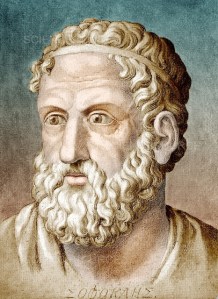
We present this work in honor of National Senior Citizens’ Day.

Sophocles
Greek
c. 497 BC – c. 406 BC


What man is he that yearneth
For length unmeasured of days?
Folly mine eye discerneth
Encompassing all his ways.
For years over-running the measure
Small change thee in evil wise:
Grief draweth nigh thee; and pleasure,
Behold it is hid from thine eyes.
This to their wage have they
Which overlive their day.
And He that looseth from labor
Doth one with other befriend,
Whom bride nor bridesmen attend,
Song, nor sound of the tabor,
Death, that maketh an end.

Thy portion esteem I highest,
Who was not even begot;
Thine next, being born who diest
And straightway again art not.
With follies light as the feather
Doth Youth to man befall;
Then evils gather together,
There wants not one of them all—
Wrath, envy, discord, strife,
The sword that seeketh life.
And sealing the sum of trouble
Doth tottering Age draw nigh,
Whom friends and kinsfolk fly,
Age, upon whom redouble
All sorrows under the sky.

This man, as me, even so,
Have the evil days overtaken;
And like as a cape sea-shaken
With tempest at earth’s last verges
And shock of all winds that blow,
His head the seas of woe,
The thunders of awful surges
Ruining overflow;
Blown from the fall of eve,
Blown from the dayspring forth,
Blown from the noon in heaven,
Blown from night and the North.

Translation by A.E. Housman

The torn flag

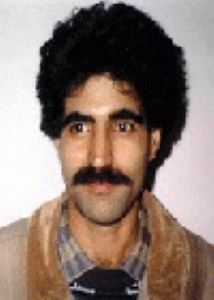
We present this work in honor of the Moroccan holiday, Revolution Day.

Ahmed Barakat
Moroccan
1960 – 1994


Long live the general
Down with the general

The voices
were the same voices that were of old

Distributing their pain of longing
On reed grown in the wind

These loud voices
Are they her voices?

Long live the general
Down with the general

Is this the female inhabiting the holy lands
The owner of the old territory
And the guardian of jars full of names?
And the flag tattooed with the surprised blood
Is it her flag?

Blood is the only wanderer in the whole land
From desert to desert
And from the desert to the firmaments of Arabic

Long live the general
Down with the general

The wandering blood
Is the same blood left on the padlocks
Since very long
And on the keys
Hanging
In the void

And the door
Which is heavy
Like a corpse

Long live the general
Down with the general

Let the birds lay their eggs
In the mouth of the cannon

Translation by Norddine Zoutini

Summer

We present this work in honor of the Italian holiday, Ferragosto.

Carlo Betocchi
Italian
1899 – 1986


And it grows, the vain
summer,
even for us with our
bright green sins:

behold the dry guest,
the wind,
as it stirs up quarrels
among magnolia boughs

and plays its serene
tune on
the prows of all the leaves—
and then is gone,

leaving the leaves
still there, the tree still green, but breaking
the heart of the air.

Translation by Geoffrey Brock

A Truce

We present this work in honor of the Moroccan holiday, Allegiance Day.

Hassan El Ouazzani
Moroccan
b. 1970


At its
peak,
war leaves the battle-front, wipes
with oblivion its own eyes, passes by the hairdresser’s,
hurls down the world from the tenth floor,
to be free for the evening show

For sure
the land will offer
new dead people as sacrifice,
processions of the blind,
and more medals.

At its
peak, I will weave other battle-fronts,
straw leaders, trenches and taverns,
wine-blood, and letter processions

And in the well of oblivion I bury
names not meant for oblivion, a perplexed woman,
hearts that didn’t stop at my port, eyes
that didn’t keep watch over me,
paradises I never inhabited.

I have
time for grief
And time for love

And I trust
my fits of sorrow to the womb of amazement.
Did the child know
that I would lead him into a dark tunnel and weave
from his shadow a king that will feed on lovely grief?
Did I know that vertigo will hurl me
far away from the palm-tree of oblivion,
and that I will force my crimes
onto heaven?

This
war toppled down the towers of Babel
The mills of Aden, the voices of Rimbaud, the majestic silence of Hawi.
This war exhausted me, I will stop it
for a little while till the battle-front cools down
or the cloud of questions
takes shape on my shoulders

This
war might come to an end. But not
my obsession which flows from the turmoil that renders
names,
things,
and lovely passion to fragments

my eyes
will only ever
leave her lips
to inhabit her eyes

I mean
the most gorgeous female
not the war of oblivion

Translation by Widad Mountacer

This Is Me

Awlad Ahmed
Tunisian
1955 – 2016


This is me..
I thought of a people that says, Yes & No.
I adjusted what I had thought of because – simply – I
adjusted what I had thought of.
I thought of a people that says, Yes to No.
I thought of the number of victims, orphans, widows,
and thieves.
I thought of letters fleeting from the texts.
I thought of a people leaving its land
with its women and men, camels and dogs.
I thought of that orphan – the government –
It was solely importing clapping
from a concert of a soprano that is singing to the gazelle,
to justice, and to the Christ.
I thought of an eloquent silence.
Life has gone as it has gone.
Life has gone in rushing & in vain.
I’d read a poem to Al-Asha al Kabir in the bar
when wine ran out and the cock and the crow of the city
cried in its night:
“– O, folks!
There is no tomorrow – after now – over there.”

Translation by Ali Znaidi

At the Blue Note

We present this work in honor of the poet’s 75th birthday.

Pablo Medina
Cuban
b. 1948


for Karen Bentivenga

Sometimes in the heat of the snow
you want to cry out

for pleasure or pain like a bell.
And you wind up holding each other,

listening to the in-between
despite the abyss at the edge of the table.

Hell. Mulgrew Miller plays like a big
bad spider, hands on fire, the piano

trembling like crystal,
the taste and smell of a forest under water.

The bartender made us a drink
with butterfly wings and electric wire.

Bitter cold outside, big silence,
a whale growing inside us.

Dirty August

We present this work in honor of the poet’s 95th birthday.

Edip Cansever
Turkish
1928 – 1986


That too the hard-heavy nothingness of existing
There as daytime stirred
The white organ of scattering: heaps of salt
Like daytime
Lifting nature’s thick shells

Down comes the opposite of a fisherman
Dirty August! Things that drag me from here to there
A few hotels stick in my mind
Or they don’t stick in my mind
But not that the hotel itself
The brown coloured organ of loneliness: a heap of dreams
Made out of brown coloured flames

Nothing else needed, to see nothingness
Dirty August! In the end I set my eyelids on fire too

Translation by Neil P. Doherty