We present this work in honor of the poet’s 250th birthday.
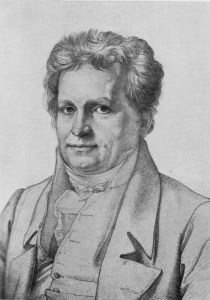
Johann Ludwig Tieck German 1773 – 1853
So she wanders in the eternally same circle, The time, in its old way, Deaf and blind on their way. The impartial human child Always expecting from the next moment An unexpected strange new happiness. The sun goes and returns Comes the moon and the night falls, The hours guide the weeks down The weeks bring the seasons. From the outside nothing ever again.
We present this work in honor of the poet’s 220th birthday.
Ralph Waldo Emerson American 1803 – 1882
It is time to be old, To take in sail:— The god of bounds, Who sets to seas a shore, Came to me in his fatal rounds, And said: “No more! No farther shoot Thy broad ambitious branches, and thy root. Fancy departs: no more invent; Contract thy firmament To compass of a tent. There’s not enough for this and that, Make thy option which of two; Economize the failing river, Not the less revere the Giver, Leave the many and hold the few. Timely wise accept the terms, Soften the fall with wary foot; A little while Still plan and smile, And,—fault of novel germs,— Mature the unfallen fruit. Curse, if thou wilt, thy sires, Bad husbands of their fires, Who, when they gave thee breath, Failed to bequeath The needful sinew stark as once, The Baresark marrow to thy bones, But left a legacy of ebbing veins, Inconstant heat and nerveless reins,— Amid the Muses, left thee deaf and dumb, Amid the gladiators, halt and numb.”
As the bird trims her to the gale, I trim myself to the storm of time, I man the rudder, reef the sail, Obey the voice at eve obeyed at prime: “Lowly faithful, banish fear, Right onward drive unharmed; The port, well worth the cruise, is near, And every wave is charmed.”
‘Why was Adam driven from the garden?’ The pupil asked his master. ‘His heart was hardened With images, a hundred bonds that clutter the earth Chained Adam to the cycle of death following birth. He was blind to this equation, living for something other Than God and so out of paradise he was driven With his mortal body’s cover his soul was shriven. Noblest of God’s creatures, Adam fell with blame, Like a moth shriveled by the candle’s flame, Into history which taught mankind shame. Since Adam had not given up his heart To God’s attachment, there was no part For Adam in paradise where the only friend Is God; His will is not for Adam to imagine and bend.’
We present this work in honor of the 150th anniversary of the poet’s death.
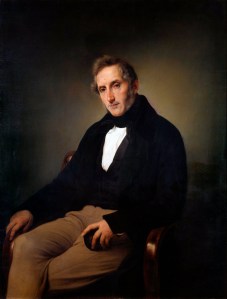
Alessandro Manzoni Italian 1785 – 1873
He was – As motionless as lay, First mingled with the dead, The relics of the senseless clay, Whence such a soul had fled, – The Earth astounded holds her breath, Struck with the tidings of his death: She pauses the last hour to see Of the dread Man of Destiny; Nor knows she when another tread, Like that of the once mighty dead, Shall such a footprint Leave impressed As his, in blood, upon her breast.
I saw him blazing on his throne, Yet hailed him not: by restless fate Hurled from the giddy summit down; Resume again his lofty state: Saw him at last for ever fall, Still mute amid the shouts of all: Free from base flattery, when he rose; From baser outrage, when he fell: Now his career has reached its close, My voice is raised, the truth to tell, And o’er his exiled urn will try To pour a strain that shall not die.
From Alps to Pyramids were thrown His bolts from Scylla to the Don, From Manzanares to the Rhine, From sea to sea, unerring hurled; And ere the flash had ceased to shine, Burst on their aim, – and shook the world. Was this true glory? – The high doom Must be pronounced by times to come: For us, we bow before His throne, Who willed, in gifting mortal clay With such a spirit, to display A grander impress of his own.
His was the stormy, fierce delight To dare adventure’s boldest scheme; The soul of fire, that burned for might, And could of naught but empire dream; And his the indomitable will That dream of empire to fulfil, And to a greatness to attain ‘T were madness to have hoped to gain: All these were his; nor these alone; – Flight, victory, exile, and the throne; – Twice in the dust by thousands trod, Twice on the altar as a god.
Two ages stood in arms arrayed, Contending which should victor be: He spake: – his mandate they obeyed, And bowed to hear their destiny. He stepped between them, to assume The mastery, and pronounce their doom; Then vanished, and inactive wore Life’s remnant out on that lone shore. What envy did his palmy state, What pity his reverses move, Object of unrelenting hate, And unextinguishable love!
As beat innumerable waves O’er the last floating plank that saves One sailor from the wreck, whose eye Intently gazes o’er the main, Far in the distance to descry Some speck of hope, – but all in vain; Did countless waves of memory roll Incessant, thronging on his soul: Recording, for a future age, The tale of his renown, How often on the immortal page His hand sank weary down!
Oft on some sea beat cliff alone He stood, – the lingering daylight gone, And pensive evening come at last, – With folded arms, and eyes declined; While, O, what visions on his mind Came rushing – of the past! The rampart stormed, – lie tented field, – His eagles glittering far and wide, – His columns never taught to yield, – His cavalry’s resistless tide, Watching each motion of his hand, Swift to obey the swift command.
Such thoughts, perchance, last filled his breast, And his departing soul oppressed, To tempt it to despair; Till from on high a hand of might In mercy came to guide its flight Up to a purer air, – Leading it, o’er hope’s path of flowers, To the celestial plains, Where greater happiness is ours Than even fancy feigns, And where earth’s fleeting glories fade Into the shadow of a shade.
Immortal, bright, beneficent, Faith, used to victories, on thy roll Write this with joy; for never bent Beneath death’s hand a haughtier soul; Thou from the worn and pallid clay Chase every bitter word away, That would insult the dead: His holy crucifix, whose breath Has power to raise and to depress, Send consolation and distress, Lay by him on that lowly bed And hallowed it in death.
We present this work in honor of the 50th anniversary of the poet’s death.
Charles Brasch Kiwi 1909 – 1973
I have come to the end of doubt And to the beginning of the knowledge of self; I have described a circle round the earth And reach my starting place, And I am ready for that which awaits me there.
We present this work in honor of the poet’s 125th birthday.
Faruk Nafiz Çamlıbel Turkish 1898 – 1973
Whinnied the dark horses; cracked the leather whip in air, The wagon paused in its tracks for a moment. For a long while rattled the springboard beneath me. Caravanserais one after another passed in front my eyes… With a heavy and homesick heart, I was on my way, Along the Ulukişla road heading into Central Anatolia. Like a first love, a first hurt, a first separation! The air was warmed by the fire burning in my heart, Yellow sky, yellow land, yellow bare trees… Behind me, the high range of the Taurus Mountains, Ahead, foothills faded by a long winter, On spun the wheels, moaning with each turn…. My hands clutched the mane of the wind Our wagon advanced along the mountain slope. Everywhere was steep, everywhere was quiet, Only the driver had a whistle on his lips! The winding roads responded to his whistle Snaking roads which appeared asleep Raised their heads to listen to the emptiness. The skies clouded over, the wind cooled down. It began to drizzle. As the last slope opened up onto flat a pasture An endless plain dawned in front of us The road connected us in one long ribbon to the horizon. This strange land steadily drew me into it. The road, nothing but the road, ever the road…flatness with no end in sight. Nary the vision of a village or a house anywhere to be seen, In the end, it is nothingness the road declares to man, Now and then passed a rider on horseback, or a couple of foot-travelers. Rattling over broken stones on the path, The wheels conveyed something to the route, The long roads vibrated amidst this clatter…. I surrendered unto the noise of the wheels and stretched out on the thin blanket of the springboard.
A sudden jolt…I woke up from a deep sleep; The wagon was passing over the road as smooth as water. Ahead of us like a castle loomed the town of Niğde, Sounds of small bells on the right: Ahead, a camel caravan plodded slowly forth, At the edge of the city emerged a ruined han. A dappled darkness enveloped all, We entered the han and unfettered the horses. Searching a salve for throbbing wounds, Sojourners had now gathered in the han. Wayfarers from every corner of the land had come together here in one place, Souls filled with homesickness clustered near the campfire. All eyes were riveted to the glow, Chests heaved to breathe. The kerosene lamp blackened with soot Drew gloomy streaks across all their faces. The marks on their cheeks and the grief in their eyes Gradually deepened into verses… There was a dark wall beside my bed, Covered with all kinds of marks and writing; Whoever slept here had left his mortal trace on the wall, Languid lines and lewd drawings… I retired early at the end of this sorrowful day, And as my wakeful eyes wandered over the wall, Suddenly a few lines in bright red burned forth It did not seem as a stanza of four lines, but rather like four drops of blood. As I struggled by parse these lines on the wall I felt I had met up with an old poet friend; “I have been gone from Kinadağ for fourteen years now Away from my sweet home, away from my love Never gathering a flower from the garden of my love Banished from one corner of the earth to the next.” Underneath was a date: eight March, thirty seven… I did not see any name in the place of a signature. Destiny is in front of you, don’t be sad, my friend! Finished now are borders, army service, wars; Do not regret that your youth has slipped away. The glory you took from the frontiers will reach your love!… We moved on before sunrise on the following day, A cold March morning… each breath froze in air. The first rays of dawn enflamed the horizon. We left behind us the houses at the edge of the city. The sun rose and set behind the clouds; In the distance appeared mounds as hulky as mountains … Caravans slowly strode beside us, Old hans seemingly built by a feudal lord passed in view. Our journey kept moving ahead along these endless roads, There, through the pass choked between two mountains. There, where the frigid northwest wind scared me to death I was filled with joy after crossing the mountain pass: The places I left behind will meet the spring, The land ahead of us was still covered with snow. The mountain pass separated winter from summer, Here, the final storm snapped off the last branch… The carriage continued on at the same speed, Snow began to hurl around us. It buried all in a white darkness; It was not snow that fell from the sky; but rather death… Inside of me perished the longing to reach a village The carriage driver yelled out: “Over there… Araplibeli!” May God help those who remain on these roads At the end of a day’s journey, we led our horses into a han. Three or four travelers had arrived ahead of us They sat cross-legged before the open fire, The crackling wood enlivened all four with spirit, One told a story of a bandit, the other the fable of a wolf… As I began to doze off to sleep, The black soot left petal-like images on the wall. These lines in my heart emerged from the black soot, “If the remembrance of my love enflames my desire; My strength is not enough to fight it I journey forth like a dried leaf The wind decides my destiny.” In the morning, the sky was bright and the horizon clear, Our carriage headed out on the road to meet a sunny day Along these endless roads passing from one foreign land to another. It has been but three days since I left, but it feels as long as three seasons. After a long ride, we arrived in Incesu, Exhausted, we fell into a sweet slumber in a han. At sunrise I awoke from a dream of death, I felt much sorrow when I read these lines above my bed! “I am a stranger, people call me Kerem They took my beloved Asli away from me and said she was forbidden to me I am ill; they say it is tuberculosis My name is Satilmiş, I am the son of a sheik from Maraş.” One feels that it was his epitaph writ in those lines, I fear you never made it home from this foreign land. O You! Son of a sheik from Maraş, saint’s vow! Cursed was your luck that you could not cross this mountaın! Let it be, for you are not the only one who never made it back home, Many have perished among nameless bandits and wolves in the wilderness!… Our carriage headed out on the road towards Mount Erciyes: “Han Keeper”, I asked, “have you ever met the son of a sheik from Maraş?” His startled eyes peered at me for quite a while, He then replied: “A while back he entered this han a healthy man and he left it dead!” Everything changed now in front of my tear-filled eyes, Şeyhoğlu, our sojourner far from home, never made it beyond this han… The sad news of the fellow wayfarer from Maraş tore at my heart. Many years have passed since that day until now Yet still I shudder each time I pass a han along the road. For I know the secret sorrows held within their walls O! These ancient roads which connect villages to frontiers, Ancient roads grieving for those who will never return home! O! These han walls writ with such mournful lines O! These han walls which wring my heart!…
The price seemed reasonable, location Indifferent. The landlady swore she lived Off premises. Nothing remained But self-confession. “Madam”, I warned, “I hate a wasted journey – I am African.” Silence. Silenced transmission of pressurized good-breeding. Voice, when it came, Lipstick coated, long gold-rolled Cigarette-holder pipped. Caught I was, foully. “HOW DARK?”…I had not misheard…“ARE YOU LIGHT OR VERY DARK?” Button B. Button A. Stench Of rancid breath of public hide-and-speak. Red booth. Red pillar-box. Red double-tiered Omnibus squelching tar. It was real! Shamed By ill-mannered silence, surrender Pushed dumbfoundment to beg simplification. Considerate she was, varying the emphasis— “ARE YOU DARK? OR VERY LIGHT” Revelation came “You mean – like plain or milk chocolate?” Her accent was clinical, crushing in its light Impersonality. Rapidly, wave-length adjusted I chose. “West African sepia” — and as afterthought. “Down in my passport.” Silence for spectroscopic Flight of fancy, till truthfulness chaged her accent Hard on the mouthpiece “WHAT’S THAT?” conceding “DON’T KNOW WHAT THAT IS.” “Like brunette.” “THAT’S DARK, ISN’T IT?” “Not altogether. Facially, I am brunette, but madam you should see the rest of me. Palm of my hand, soles of my feet. Are a peroxide blonde. Friction, caused – Foolishly madam – by sitting down, has turned My bottom raven black- One moment madam! – sensing Her receiver rearing on the thunderclap About my ears—“Madam,” I pleaded, “wouldn’t you rather See for yourself?”





 Poets Corner