To the Rainbow

We present this work in honor of the poet’s 245th birthday.

Thomas Campbell
Scots
1777 – 1844


Triumphal arch, that fill’st the sky
When storms prepare to part,
I ask not proud Philosophy
To teach me what thou art; –

Still seem; as to my childhood’s sight,
A midway station given
For happy spirits to alight
Betwixt the earth and heaven.

Can all that Optics teach unfold
Thy form to please me so,
As when I dreamt of gems and gold
Hid in thy radiant bow?

When Science from Creation’s face
Enchantment’s veil withdraws,
What lovely visions yield their place
To cold material laws!

And yet, fair bow, no fabling dreams,
But words of the Most High,
Have told why first thy robe of beams
Was woven in the sky.

When o’er the green, undeluged earth
Heaven’s covenant thou didst shine,
How came the world’s gray fathers forth
To watch thy sacred sign!

And when its yellow luster smiled
O’er mountains yet untrod,
Each mother held aloft her child
To bless the bow of God.

Methinks, thy jubilee to keep,
The first-made anthem rang
On earth, delivered from the deep,
And the first poet sang.

Nor ever shall the Muse’s eye
Unraptured greet thy beam;
Theme of primeval prophecy,
Be still the prophet’s theme!

The earth to thee her incense yields,
The lark thy welcome sings,
When, glittering in the freshened fields,
The snowy mushroom springs.

How glorious is thy girdle, cast
O’er mountain, tower, and town,
Or mirrored in the ocean vast,
A thousand fathoms down!

As fresh in yon horizon dark,
As young thy beauties seem,
As when the eagle from the ark
First sported in thy beam:

For, faithful to its sacred page,
Heaven still rebuilds thy span;
Nor lets the type grow pale with age,
That first spoke peace to man.


At Home in Winter

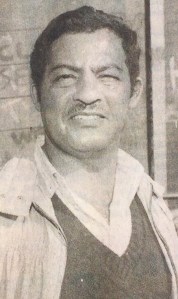
Eamon Grennan
Irish
b. 1941


I.

We sit across from one another
in front of the fire, the big logs
clicking and hissing. Outside
is bitter chill: branches stiffen,
grow brittle as crystal. You’re
sewing a skirt, your mouth
full of pins, your head swimming
with Greek and Latin. You frown
so not to swallow any pins when
you try to smile at me
slumped under my TLS and bewailing
the seepage of my days, the way
my life runs off like water, yet
inexplicably happy at this moment
balanced between us like a tongue
of flame skiving a pine-log: seeming
to breathe, its whole involuntary life
spent giving comfort. This
could be a way to live – nothing
going to waste, such fullness
taking off, warm space, a fragrance.
In plain matter of fact it’s
the sight of you bending to baste
the blue skirt before you pleat and
sew the waistband in, that enters
and opens inside me, so for a moment
I am an empty centre, nothing
at all
then back to this home truth
unchanged: you patiently taking
one thing at a time as I can’t,
all the while your head beating with
hexameters and foreign habits. So
I go on reading in silence as if
I hadn’t been startled into another life
for an instant all fire, all fragrance.

II.

I blow in from the noonwhite bite of snow
to find the whole house fragrant as a haycock
with the soup you’ve stirred up, its spirit
seeping into closets, curtains, bedrooms –
a prosperous mix of chicken-stock, carrots,
garlic, onion, thyme. All morning you’ve
wreathed your head in it, and turn to me now
like a minor deity of earth and plenty,
your hands dipped to the wrist in the flesh
of vegetables, your fingers trailing
threads from the glistening bones
cairned on the counter-top. You stand
on the edge of a still life – twist-strips
of onion peel, papery garlic sacs, bright
stumps of carrots, the delicate grass-green
stems of parsley, that little midden
of bones. Spell-stopped, I see how
in the middle of my daily life a sober house
with its feet on the ground, snowbound,
turns to spirit of chicken, airs a vegetable
soul, and breathes on me. Wooden spoon
still steaming, you turn away and say
in no time now we’ll sit, and eat.

Balloons

In honor of Revolution Day, we present this work by one of contemporary Egypt’s most evocative poets.

Mostafa Ibrahim
Egyptian
b. 1986


To know the strength of things, sometimes we need to break them.
To know we want some things, sometimes we need to lose them.
Craving certainty, how many friends did you call liars?
Attaining certainty, you lost your friends.
How many balloons did you burst inflating them beyond their limit?
Discovering that limit, you found regret.

I now know why I burst balloons:
I longed for something never-ending –
or with an end I’d never reach.
Walls that have my back.
Walls that will stay standing, even when I knock them down.
Something certain that, when tested, will not break.

Translation by Nariman Youssef

A Highly Valuable Chain of Thoughts

We present this work in honor of the 110th anniversary of the poet’s death.

Andrew Lang
Scots
1844 – 1912


Had cigarettes no ashes,
And roses ne’er a thorn,
No man would be a funker
Of whin, or burn, or bunker.
There were no need for mashies,
The turf would ne’er be torn,
Had cigarettes no ashes,
And roses ne’er a thorn.

Had cigarettes no ashes,
And roses ne’er a thorn,
The big trout would not ever
Escape into the river.
No gut the salmon smashes
Would leave us all forlorn,
Had cigarettes no ashes,
And roses ne’er a thorn.

But ‘tis an unideal
Sad world in which we’re born,
And things will ‘go contrairy’
With Martin and with Mary:
And every day the real
Comes bleakly in with morn,
And cigarettes have ashes,
And every rose a thorn.

In Detention

We present this work in honor of the poet’s 65th birthday.

Chris Van Wyk
South African
1957 – 2014


He fell from the ninth floor
He hanged himself
He slipped on a piece of soap while washing
He hanged himself
He slipped on a piece of soap while washing
He fell from the ninth floor
He hanged himself while washing
He slipped from the ninth floor
He hung from the ninth floor
He slipped on the ninth floor while washing
He fell from a piece of soap while slipping
He hung from the ninth floor
He washed from the ninth floor while slipping
He hung from a piece of soap while washing.

The Plains of Abraham

We present this work in honor of the poet’s 200th birthday.

Charles Sangster
Canadian
1822 – 1893


I stood upon the Plain,
That had trembled when the slain,
Hurled their proud defiant curses at the battle-hearted foe,
When the steed dashed right and left
Through the bloody gaps he cleft,
When the bridle-rein was broken, and the rider was laid low.

What busy feet had trod
Upon the very sod
Where I marshalled the battalions of my fancy to my aid!
And I saw the combat dire,
Heard the quick, incessant fire,
And the cannons’ echoes startling the reverberating glade.

I saw them one and all,
The banners of the Gaul
In the thickest of the contest, round the resolute Montcalm;
The well-attended Wolfe,
Emerging from the gulf
Of the battle’s fiery furnace, like the swelling of a psalm.

I head the chorus dire,
That jarred along the lyre
On which the hymn of battle rung, like surgings of the wave
When the storm, at blackest night,

Wakes the ocean in affright,
As it shouts its mighty pibroch o’er some shipwrecked vessel’s grave.

I saw the broad claymore
Flash from its scabbard, o’er
The ranks that quailed and shuddered at the close and fierce attack;
When Victory gave the word,
Then Scotland drew the sword,
And with arm that never faltered drove the brave defenders back.

I saw two great chiefs die,
Their last breaths like the sigh
Of the zepher-sprite that wantons on the rosy lips of morn;
No envy-poisoned darts,
No rancour in their hearts,
To unfit them for their triumph over death’s impending scorn.

And as I thought and gazed,
My soul, exultant, praised
The Power to whom each mighty act and victory are due,
For the saint-like Peace that smiled
Like a heaven-gifted child,
And for the air of quietude that steeped the distant view.

The sun looked down with pride,
And scattered far and wide
His beams of whitest glory till they flooded all the Plain;
The hills their veils withdrew,
Of white, and purplish blue,
And reposed all green and smiling ‘neath the shower of golden rain.

Oh, rare, divinest life
Of Peace, compared with Strife!
Yours is the truest splendour, and the most enduring fame;
All the glory ever reaped
Where the fiends of battle leaped,
Is harsh discord to the music of your undertoned acclaim.

Secret Ode

In honor of Bastille Day, we present this work by one of France’s brightest poets.

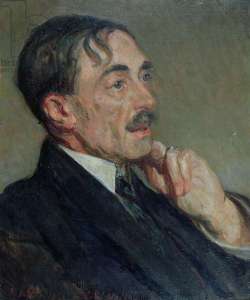
Paul Valery
French
1871 – 1945


The fall so splendid, the end sweet,
The struggle forgotten, what bliss
To stretch the glistening body out
Against the moss, after the dance!

Never has such a glow
Shone out in victory
As these bright sparks of summer
Across a forehead sown with sweat!

But touched at last by the Dusk’s light,
This body that achieved so much,
That danced, that bested Hercules,
Dissolves among the clumps of roses!

So sleep, beneath sidereal steps,
Conqueror slowly come undone,
For now the Hydra in the hero
Unfurls its endless rows of heads…

Behold what Dog, what Bull, what Bear,
What signs of sweeping victory,
The soul imposes, entering time
Without resort, on formless space!

Supreme end, sparkling light
That by these monsters and these gods
Universally proclaim
The glorious acts that are in the Skies!

Translation by Nathaniel Rudavsky-Brody

At Night

We present this work in honor of the 75th anniversary of the poet’s death.

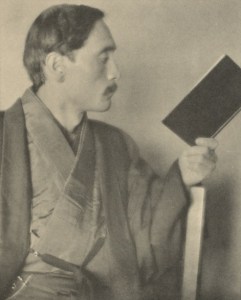
Yone Noguchi
Japanese
1875 – 1947


At night the Universe grows lean, sober-
faced, of intoxication,
The shadow of the half-sphere curtains
down closely against my world, like a
doorless cage, and the stillness chained by
wrinkled darkness strains throughout the Uni-
verse to be free.
Listen, frogs in the pond, (the world is a pond itself)
cry out for the light, for the truth!
The curtains rattle ghostlily along, bloodily biting
my soul, the winds knocking on my cabin door
with their shadowy hands.

Music when Soft Voices Die

We present this work in honor of the 200th anniversary of the poet’s death.

07-08 Shelley
Percy Bysshe Shelley
English
1792 – 1822


Music, when soft voices die,
Vibrates in the memory—
Odours, when sweet violets sicken,
Live within the sense they quicken.

Rose leaves, when the rose is dead,
Are heaped for the belovèd’s bed;
And so thy thoughts, when thou art gone,
Love itself shall slumber on.