Rose of Roses, and Flower of Flowers

01-13 Alfonso
Alfonso X, El Sabio, of Castile
Spanish
1221 – 1284


1.

Rose of beauty and fine appearance
And flower of happiness and pleasure,
lady of most merciful bearing,
And Lord for relieving all woes and cares;
Rose of roses and flower of flowers,
Lady of ladies, Lord of lords.

2.

Such a Mistress everybody should love,
For she can ward away any evil
And she can pardon any sinner
To create a better savor in this world.
Rose of roses and flower of flowers,
Lady of ladies, Lord of lords.

3.

We should love and serve her loyally,
For she can guard us from falling;
She makes us repent the errors
That we have committed as sinners:
Rose of roses and flower of flowers
Lady of ladies, Lord of lords.

4.

This lady whom I acknowledge as my Master
And whose troubadour I’d gladly be,
If I could in any way possess her love,
I’d give up all my other lovers.
Rose of roses and flower of flowers,
Lady of ladies, Lord of lords.
 

Translation by James J. Wilhelm

Striking the Tent

We present this work in honor of the Moroccan holiday, Proclamation of Independence.

z 01-11-21
Ibn al-Khabbaza
Moroccan
? – 1239


The pretender yields the crown;
See, his red tent tumbles down
When it sees red Mudar’s hosts
Standing nigh, to prick his boasts.

Tell me, if you can descry:
Who has better right to high
Sovereignty—foreign churls,
Or their lawful Arab earls?

Nay, he was too negligent
Of his duty; so his tent
Wonderfully bit the dust,
And foretold the way he must.

Shine, Perishing Republic

We present this work in honor of the poet’s 135th birthday.

01-10 Jeffers
Robinson Jeffers
American
1887 – 1962

While this America settles in the mould of its vulgarity, heavily thickening to empire
And protest, only a bubble in the molten mass, pops and sighs out, and the mass hardens,
I sadly smiling remember that the flower fades to make fruit, the fruit rots to make earth.
Out of the mother; and through the spring exultances, ripeness and decadence; and home to the mother.

You making haste haste on decay: not blameworthy; life is good, be it stubbornly long or suddenly
A mortal splendor: meteors are not needed less than mountains: shine, perishing republic.
But for my children, I would have them keep their distance from the thickening center; corruption
Never has been compulsory, when the cities lie at the monster’s feet there are left the mountains.
And boys, be in nothing so moderate as in love of man, a clever servant, insufferable master.
There is the trap that catches noblest spirits, that caught-they say-God, when he walked on earth.

Touch Me Now

We present this work in honor of the 15th anniversary of the poet’s death.

01-09 Sepamla
Sipho Sepamla
South African
1932 – 2007

Touch my heart
here where the beat pounds
is it faint
is it louder

Touch my face
here on the cheeks
is the tear drying on its own
is it flowing salted warmly

Touch my hands
here where a stone is enfolded in one
is it a hard rock
is it hot with waiting

Touch my brow
here where it meets its own madness
are the folds hardening
are they sweating out the anger

There’s nowhere you can touch me
without the realization that
I am not the person of yesterday
The fangs are bared for action

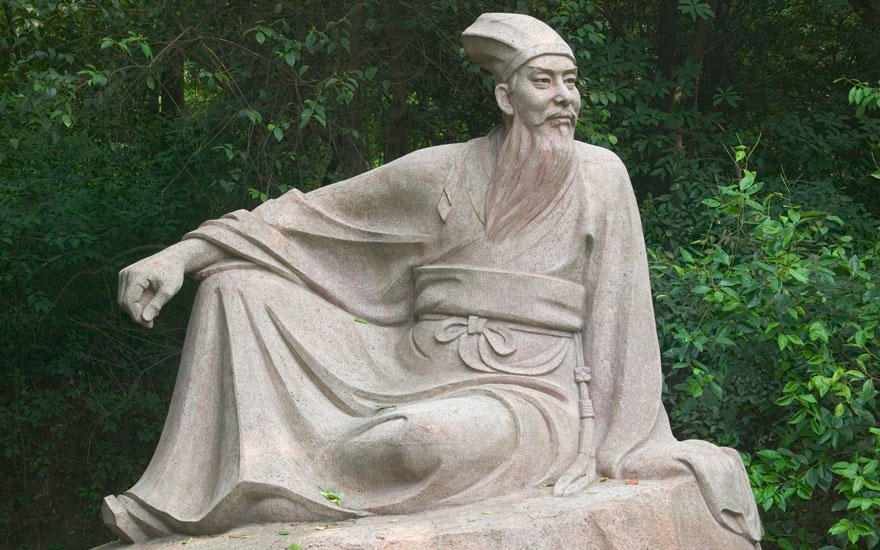
Pu Suan Tzu

We present this work in honor of the poet’s 985th birthday.

01-08 Su
Su Shi
Chinese
1037 – 1101

A fragment moon hangs from the bare tung tree
The water clock runs out, all is still
Who sees the dim figure come and go alone
Misty, indistinct, the shadow of a lone wild goose?

Startled, she gets up, looks back
With longing no one sees
And will not settle on any of the cold branches
Along the chill and lonely beach

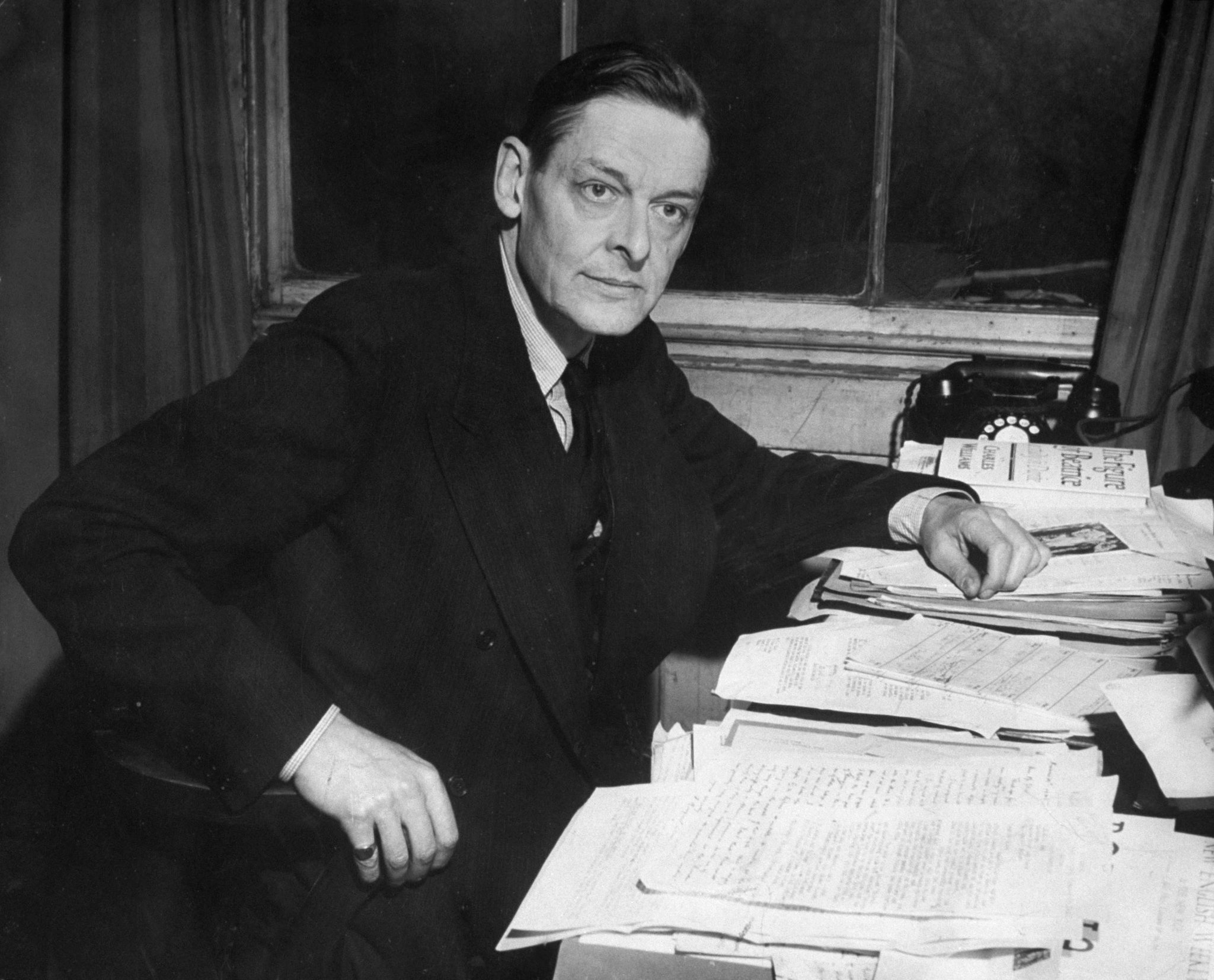
The Journey of the Magi

We present this work in honor of Three Kings Day.

01-06 Eliot
T.S. Eliot
American
1888 – 1965

A cold coming we had of it,
Just the worst time of the year
For a journey, and such a long journey:
The ways deep and the weather sharp,
The very dead of winter.
And the camels galled, sorefooted, refractory,
Lying down in the melting snow.
There were times we regretted
The summer palaces on slopes, the terraces,
And the silken girls bringing sherbet.
Then the camel men cursing and grumbling
and running away, and wanting their liquor and women,
And the night-fires going out, and the lack of shelters,
And the cities hostile and the towns unfriendly
And the villages dirty and charging high prices:
A hard time we had of it.
At the end we preferred to travel all night,
Sleeping in snatches,
With the voices singing in our ears, saying
That this was all folly.

Then at dawn we came down to a temperate valley,
Wet, below the snow line, smelling of vegetation;
With a running stream and a water-mill beating the darkness,
And three trees on the low sky,
And an old white horse galloped away in the meadow.
Then we came to a tavern with vine-leaves over the lintel,
Six hands at an open door dicing for pieces of silver,
And feet kicking the empty wine-skins.
But there was no information, and so we continued
And arriving at evening, not a moment too soon
Finding the place; it was (you might say) satisfactory.

All this was a long time ago, I remember,
And I would do it again, but set down
This set down
This: were we led all that way for
Birth or Death? There was a Birth, certainly
We had evidence and no doubt. I had seen birth and death,
But had thought they were different; this Birth was
Hard and bitter agony for us, like Death, our death.
We returned to our places, these Kingdoms,
But no longer at ease here, in the old dispensation,
With an alien people clutching their gods.
I should be glad of another death.

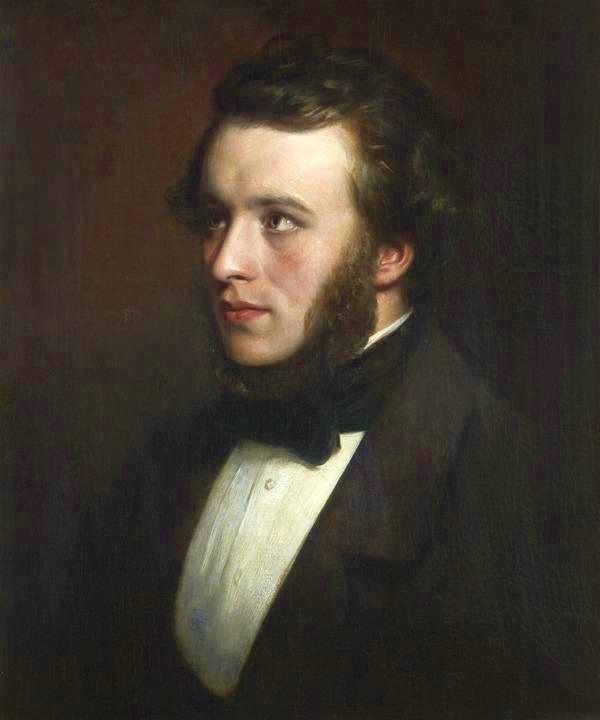
I Cannot Deem Why Men Toil So for Fame

We present this work in honor of the 155th anniversary of the poet’s death.

01-05 Smith
Alexander Smith
Scots
1829 – 1867

I cannot deem why men toil so for Fame.
A porter is a porter though his load
Be the oceaned world, and although his road
Be down the ages. What is in a name?
Ah! ‘t is our spirit’s curse to strive and seek.
Although its heart is rich in pearls and ores,
The Sea complains upon a thousand shores;
Sea-like we moan for ever. We are weak.
We ever hunger for diviner stores.
I cannot say I have a thirsting deep
For human fame, nor is my spirit bowed
To be a mummy above ground to keep
For stare and handling of the vulgar crowd,
Defrauded of my natural rest and sleep.

Song of Durin

We present this work in honor of the poet’s 130th birthday.

01-02 Tolkien
J.R.R. Tolkien
English
1892 – 1973


The world was young, the mountains green,
No stain yet on the Moon was seen,
No words were laid on stream or stone
When Durin woke and walked alone.
He named the nameless hills and dells;
He drank from yet untasted wells;
He stooped and looked in Mirrormere,
And saw a crown of stars appear,
As gems upon a silver thread,
Above the shadow of his head.

The world was fair, the mountains tall,
In Elder Days before the fall
Of mighty kings in Nargothrond
And Gondolin, who now beyond
The Western Seas have passed away:
The world was fair in Durin’s Day.

A king he was on carven throne
In many-pillared halls of stone
With golden roof and silver floor,
And runes of power upon the door.
The light of sun and star and moon
In shining lamps of crystal hewn
Undimmed by cloud or shade of night
There shone for ever fair and bright.

There hammer on the anvil smote,
There chisel clove, and graver wrote;
There forged was blade, and bound was hilt;
The delver mined, the mason built.
There beryl, pearl, and opal pale,
And metal wrought like fishes’ mail,
Buckler and corslet, axe and sword,
And shining spears were laid in hoard.

Unwearied then were Durin’s folk;
Beneath the mountains music woke:
The harpers harped, the minstrels sang,
And at the fates the trumpets rang.

The world is grey, the mountains old,
The forge’s fire is ashen-cold;
No harp is wrung, no hammer falls:
The darkness dwells in Durin’s halls;
The shadow lies upon his tomb
In Moria, in Khazad-dûm.
But still the sunken stars appear
In dark and windless Mirrormere;
There lies his crown in water deep,
Till Durin wakes again from sleep.

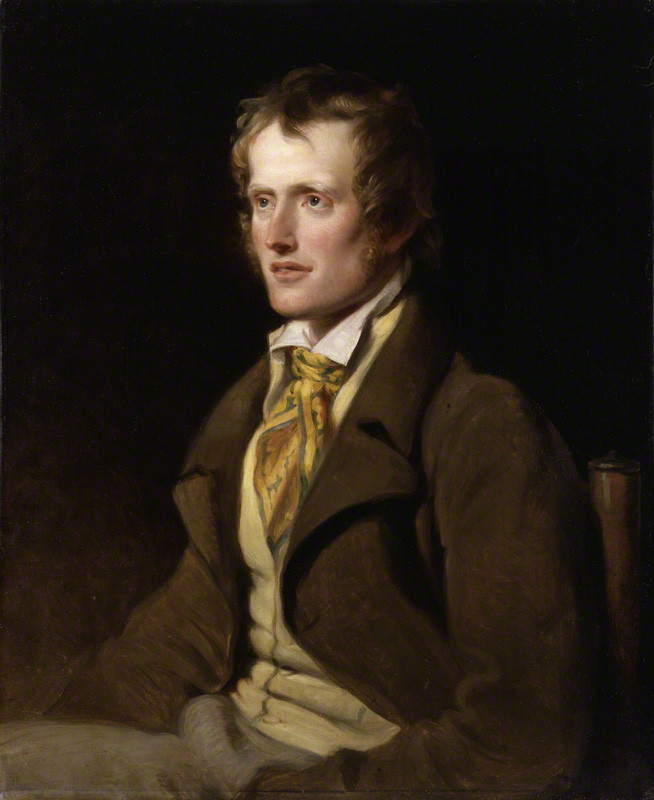
The Old Year

We present this work in honor of New Year’s Eve.

NPG 1469; John Clare by William Hilton
John Clare
English
1793 – 1864


The Old Year’s gone away
To nothingness and night:
We cannot find him all the day
Nor hear him in the night:
He left no footstep, mark or place
In either shade or sun:
The last year he’d a neighbour’s face,
In this he’s known by none.

All nothing everywhere:
Mists we on mornings see
Have more of substance when they’re here
And more of form than he.
He was a friend by every fire,
In every cot and hall—
A guest to every heart’s desire,
And now he’s nought at all.

Old papers thrown away,
Old garments cast aside,
The talk of yesterday,
Are things identified;
But time once torn away
No voices can recall:
The eve of New Year’s Day
Left the Old Year lost to all.