Infantry

We present this work in honor of the poet’s 110th birthday.
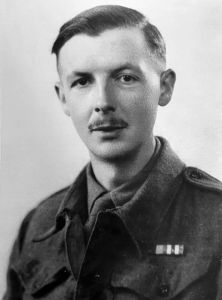
M.K. Joseph
Kiwi
1914 – 1981


In the land of Longago we learned in books
To recognize a hero by his looks
Hector and Achilles and the rest
With hams and biceps of enormous girth
And measured tread that sounding shook the earth
And brow of brass and buckle-bursting chest.

So different these whom no descending god
Begot nor goddess succours as they plod
North through the ruins in a wool-soft rain,
Nineteen-year-olds, round-cheeked, whose innocent eyes
See danger with indifferent surprise.
The guns’ concussion jars the windowpane.

The sergeant-major chivvies them along,
Stolid and swift they march without a song
Bent stiffly forward underneath the load.
“Hector and Troy are gone beyond recall,
Perhaps there are no heroes after all.”
So thought we, staring up the muddy road.

Hermann and Thusnelda

We present this work in honor of the poet’s 300th birthday.

Friedrich Gottlieb Klopstock
German
1724 – 1803


Ha! there comes he, with sweat, with blood of Romans,
And with dust of the fight all stained! O, never
Saw I Hermann so lovely!
Never such fire in his eyes!

Come! I tremble for joy; hand me the Eagle,
And the red, dripping sword! come, breathe, and rest thee;
Rest thee here in my bosom;
Rest from the terrible fight!

Rest thee, while from thy brow I wipe the big drops,
And the blood from thy cheek! — that cheek, how glowing!
Hermann! Hermann! Thusnelda
Never so loved thee before!

No, not then when thou first, in old oak-shadows,
With that manly brown arm didst wildly grasp me!
Spell-bound I read in thy look
That immortality, then,

Which thou now hast won. Tell to the forests,
Great Augustus, with trembling, amidst his gods now,
Drinks his nectar; for Hermann,
Hermann immortal is found!

“Wherefore curl’st thou my hair? Lies not our father
Cold and silent in death? O, had Augustus
Only headed his army, —
He should lie bloodier there!”

Let me lift up thy hair; ‘tis sinking, Hermann;
Proudly thy locks should curl above the crown now!
Sigmar is with the immortals!
Follow, and mourn him no more!

Translation by Charles Timothy Brooks

Millionaire and Barefoot Boy

We present this work in honor of Canada Day.

George Thomas Lanigan
Canadian
1845 – 1886


‘Tis evening, and the round red sun sinks slowly in the west,
The flowers fold their petals up, the birds fly to their nest,
The crickets chirrup in the grass, the bats flit to and fro,
And tinkle-tankle up the lane the lowing cattle go,
And the rich man from his carriage looks out on them as they come—
On them and on the barefoot boy that drives the cattle home.

“I wish,” the boy says to himself—“I wish that I were he,
And yet, upon maturer thought, I do not—no siree!
Not for all the gold his coffers hold would I be that duffer there,
With a liver pad and a gouty toe, and scarce a single hair;
To have a wife with a Roman nose, and fear lest a panic come—
Far better be the barefoot boy that drives the cattle home.”

And the rich man murmurs to himself: “Would I give all my pelf
To change my lot with yonder boy? Not if I now myself.
Over the grass that’s full of ants, and chill with dew to go—
With a stone bruise upon either heel, and a splinter in my toe!
Oh, I’d rather sail my yacht a year across the ocean’s foam
Than be one day the barefoot boy that drives the cattle home.”

Salt

We present this work in honor of the poet’s 85th birthday.

Jose Emilio Pacheco
Mexican
1939 – 2014


If you want to study its essence, its purpose,
its usefulness in the world,
you’ve got to see it as a whole. Salt
isn’t the individuals who make it up
but the solidary tribe. Without it
each particle would be like a fragment of nothingness,
dissolving in some unthinkable black hole.

Salt surfaces from the sea. It’s petrified
foam.
It’s sea baked by the sun.

And so finally worn-out,
deprived of its great water force,
it dies on the beach to become stone in the sand.

Salt is the desert where there once was sea.
Water and land
reconciled,
matter of no one.

It’s why the world tastes of what it is to be alive.

Translation by Katherine M. Hedeen and Víctor Rodríguez Núñez

Upon a Spider Catching a Fly

We present this work in honor of the 295th anniversary of the poet’s death.

Edward Taylor
English
1642 – 1729


Thou sorrow, venom Elfe:
Is this thy play,
To spin a web out of thyselfe
To Catch a Fly?
For Why?

I saw a pettish wasp
Fall foule therein:
Whom yet thy Whorle pins did not clasp
Lest he should fling
His sting.

But as affraid, remote
Didst stand hereat,
And with thy little fingers stroke
And gently tap
His back.

Thus gently him didst treate
Lest he should pet,
And in a froppish, aspish heate
Should greatly fret
Thy net.

Whereas the silly Fly,
Caught by its leg
Thou by the throate tookst hastily
And ‘hinde the head
Bite Dead.

This goes to pot, that not
Nature doth call.
Strive not above what strength hath got,
Lest in the brawle
Thou fall.

This Frey seems thus to us.
Hells Spider gets
His intrails spun to whip Cords thus
And wove to nets
And sets.

To tangle Adams race
In’s stratigems
To their Destructions, spoil’d, made base
By venom things,
Damn’d Sins.

But mighty, Gracious Lord
Communicate
Thy Grace to breake the Cord, afford
Us Glorys Gate
And State.

We’l Nightingaile sing like
When pearcht on high
In Glories Cage, thy glory, bright,
And thankfully,
For joy.

My Words

We present this work in honor of the poet’s 135th birthday.

Abbas al-Aqqad
Egyptian
1889 – 1964


My words, where are you now? What say you to me?
Come to my rescue, I’m delirious, don’t let me be.
What benefit can fulfill this hand’s goal
To claims due of nourishment for my soul.
But all minds of men appear to be in retreat
Faced with a gesture of solidarity so discrete.
In my hands it feels like a budding sheath,
Other times I behold a Gladiola wreathe.
In my mouth, at times it is a cheek so vermillion
Other times it is a kiss, like none in a million.
And my heart, oh my words! What lies within unseen?
Call upon the heavens and see if gods will intervene.
Or remain quiet, because to have silence is better
But then, come! Give! You can do nothing greater!

Sonnet II

Tomás António Gonzaga
Brazilian
1744 – c.1810


In a fertile field of superb Douro,
Sleeping on the grass, she rested,
When I saw that Fortune showed me
With joyful countenance her treasure.

On the one hand, a lot of silver and gold
With valuable stones the ground curved;
Here a scepter, there a throne stood,
Thousands of grass and laurel wreaths hung.

– The misadventure is over – he tells me then:
Of how many goods I show you, which one pleases you,
For I grant them with kindness, go, seek.

I chose, woke up, and saw nothing:
I settled down with me as soon as the adventure
It never goes beyond being dreamed.

The Dancer

Ibn Kharuf
Arab Andalusian
1155 – 1212


His manifold movements
toy with hearts.
He removes his garments
and is clothed in enchantment.

Supple as a branch
playful as a gazelle
his undulating motions
dally with the intelligence
of onlookers
as fate makes playthings of men.

And when he presses down on his head
with his feet
he is like a well-tempered sword
bent double
tip touching the pommel.

Translation by Cola Franzen

Emotion

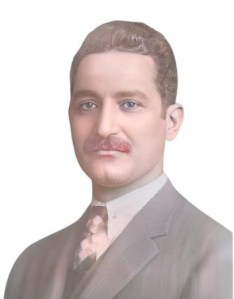
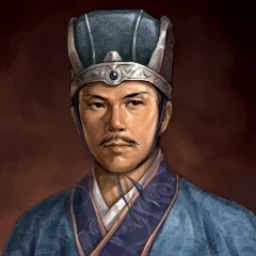
Zhang Hua
Chinese
232 – 300


A pure breeze billows bed-curtains and blinds,
The moon of dawning lights the secluded room.
My husband is away on a distant journey,
The light of his face has gone from the orchid chamber.
I clutch the vacant shadows to my breast,
Only a light quilt covers the empty bed.
At the height of our joy, we grieved the nights were so short,
Now in my despair I resent the length of the dark.
I stroke my pillow, sigh in my loneliness,
Whelmed in sorrow, my heart is torn within me.

Translation by J.D. Frodsham