The River-Time

We present this work in honor of the 205th anniversary of the poet’s death.

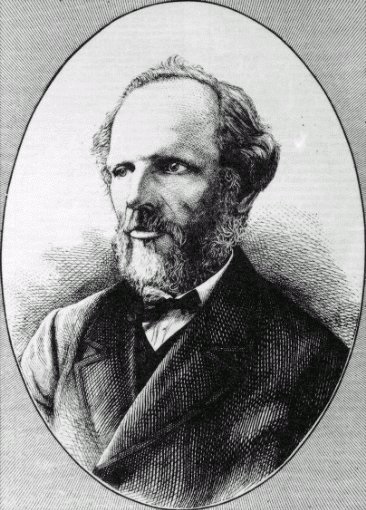
Ïîðòðåò Ãàâðèëà Ðîìàíîâè÷à Äåðæàâèíà
Gavriil Derzhavin
Russian
1743 – 1816


The river-time, in its fast currents,
Bears away all people’s deals,
And drowns kingdoms, kings, and countries,
In the forgetfulness’ abyss.

And if, due pipes’ or lyres’ greatness,
Shall anything remain of that,
It shall be gobbled by the endless,
And shall not dodge the common fate.


Translation by Yevgeny Bonver

To Him Who is Feared

We present this work in honor of Tisha B’Av.

07-18 Ben Kalir
Eleazar Ben Kalir
Turkish
c. 570 – c. 640


To Him who is feared a Crown will I bring.
Thrice Holy each day acclaim Him my King;
At altars, ye mighty, proclaim loud His praise,
And multitudes too may whisper His lays.
Ye angels, ye men, whose good deeds He records—
Sing, He is One, His is good, our yoke is the Lord’s!
Praise Him trembling to-day, His mercy is wide—
Ye who fear for His wrath—it doth not abide!
Ye seraphim, high above storm clouds may sing;
Men and angels make music, th’ All-seeing is king.
As ye open your lips, at His Name they shall cease—
Transgression and sin—in their place shall be peace;
And thrice shall the Shophar re-echo your song
On mountain and altar to whom both belong.


Translation by Lady Katie Magnus

The Burning of the Law

07-15 Meir
Meir of Rothenburg
German
c. 1215 – 1293


Ask, is it well, O thou consumed of fire,

With those that mourn for thee,
That yearn to tread thy courts, that sore desire
Thy sanctuary;

That, panting for thy land’s sweet dust, are grieved,

And sorrow in their souls,
And by the flames of wasting fire bereaved,
Mourn for thy scrolls;

That grope in shadow of unbroken night,

Waiting the day to see
Which o’er them yet shall cast a radiance bright,

And over thee?

Ask of the welfare of the man of woe,
With breaking heart, in vain

Lamenting ever for thine overthrow,
And for thy pain;

Of him that crieth as the jackals cry,
As owls their moaning make,

Proclaiming bitter wailing far and nigh;
Yea, for thy sake.

And thou revealed amid a heavenly fire,

By earthly fire consumed,
Say how the foe unscorched escaped the pyre

Thy flames illumed!

How long shalt thou that art at ease abide

In peace, unknown to woe,
While o’er my flowers, humbled from their pride,

Thy nettles grow?

Thou sittest high exalted, lofty foe!

To judge the sons of God;
And with thy judgments stern dost bring them low

Beneath thy rod.

Yea, more, to burn the Law thou durst decree
God’s word to banish hence:

Then blest be he who shall award to thee
Thy recompense!

Was it for this, thou Law, my Rock of old
Gave thee with flames begirt,

That in thine after-days should fire seize hold
Upon thy skirt?

O Sinai! was it then for this God chose
Thy mount of modest height,

Rejecting statelier, while on thee arose
His glorious light?

Wast thou an omen that from noble state

The Law should lowly be?
And lo! a parable will I relate

Befitting thee.

Tis of a king I tell, who sat before

The banquet of his son

And wept: for ‘mid the mirth he death foresaw;

So thou hast done.

Cast off thy robe; in sackcloth folds of night,

O Sinai! cover thee;
Don widow’s garb, discard thy raiment bright

Of royalty.

Lo, I will weep for thee until my tears

Swell as a stream and flow
Unto the graves where thy two princely seers

Sleep calm below:

Moses; and Aaron in the Mountain Hor;

I will of them inquire:
Is there another to replace this Law

Devoured of fire?

O thou third month most sacred! woe is me

For treason of the fourth,

Which dimmed the sacred light that shone from thee

And kindled wrath;

And brake the tablets, yea, and still did rage:

And lo! the Law is burnt!
Ye sinful! is not this the twofold wage

Which ye have earnt?

Dismay hath seized upon my soul; how, then,

Can food be sweet to me,
When, O thou Law, I have beheld base men

Destroying thee?

They cast thee out as one despised, and burn

The wealth of God Most High;
They whom from thine assembly thou wouldst spurn

From drawing nigh.

I cannot pass along the highway more,
Nor seek thy ways forlorn;

How do thy paths their loneliness deplore!
Lo! how they mourn!

The mingled cup shall taste as honey sweet
Where tears o’erbrim the wine;

Yea, and thy chains upon my shackled feet
Are joy divine.

Sweet would it be unto mine eyes alway

A rain of tears to pour,
To sob and drench thy sacred robes, till they

Could hold no more.

But lo! my tears are dried, when, fast out-poured.

They down my cheeks are shed;
Scorched by the fire within: because thy Lord
Hath turned and fled.

Taking His holy treasure, He hath made

His journey far away;
And with Him hath not thy protecting shade

Vanished for aye?

And I am desolate and sore bereft,

Lo! a forsaken one:
Like a sole beacon on a mountain left,

A tower alone.

I hear the voice of singers now no more,
Silence their song hath bound;

The strings are broken which on harps of yore
Breathed forth sweet sound.

In sackcloth I will clothe and sable band,

For well-beloved by me

Were they whose lives were many as the sand

The slain of thee.

I am astonied that the day’s fair light

Yet shineth brilliantly
On all things: it is ever dark as night

To me and thee.

Send with a bitter cry to God above
Thine anguish, nor withhold:

Ah! that He would remember yet His love,
His troth of old!

Gird on the sackcloth of thy misery

For that devouring fire,
Which burst forth ravenous on thine and thee

With wasting dire.

E’en as thy Rock hath sore afflicted thee,

He will assuage thy woe,
Will turn again the tribes’ captivity,

And raise the low.

Yet shalt thou wear thy scarlet raiment choice,
And sound the timbrels high,

And yet amid the dancers shalt rejoice
With gladdened cry.

My neart shall be uplifted on the day
Thy Rock shall be thy light,

When He shall make thy gloom to pass away,
Thy darkness bright.


Translation by Nina Davis

The Infinite

We present this work in honor of the 145th anniversary of the poet’s death.

07-14 Heavysege
Charles Heavysege
Canadian
1816 – 1876


The day was lingering in the pale north-west,
And night was hanging o’er my head—
Night, where a myriad stars were spread;
While down in the east, where the light was least,
Seemed the home of the quiet dead.
And, as I gazed on the field sublime,
To watch the bright, pulsating stars,
Adown the deep where the angels sleep
Came drawn the golden chime
Of those great spheres that sound the years
For the horologe of time.
Millenniums numberless they told,
Millenniums a millionfold
From the ancient hour of prime.

Someone

In honor of The Twelfth (Battle of the Boyne), we present this work by one of modern Ireland’s most widely-loved poets.

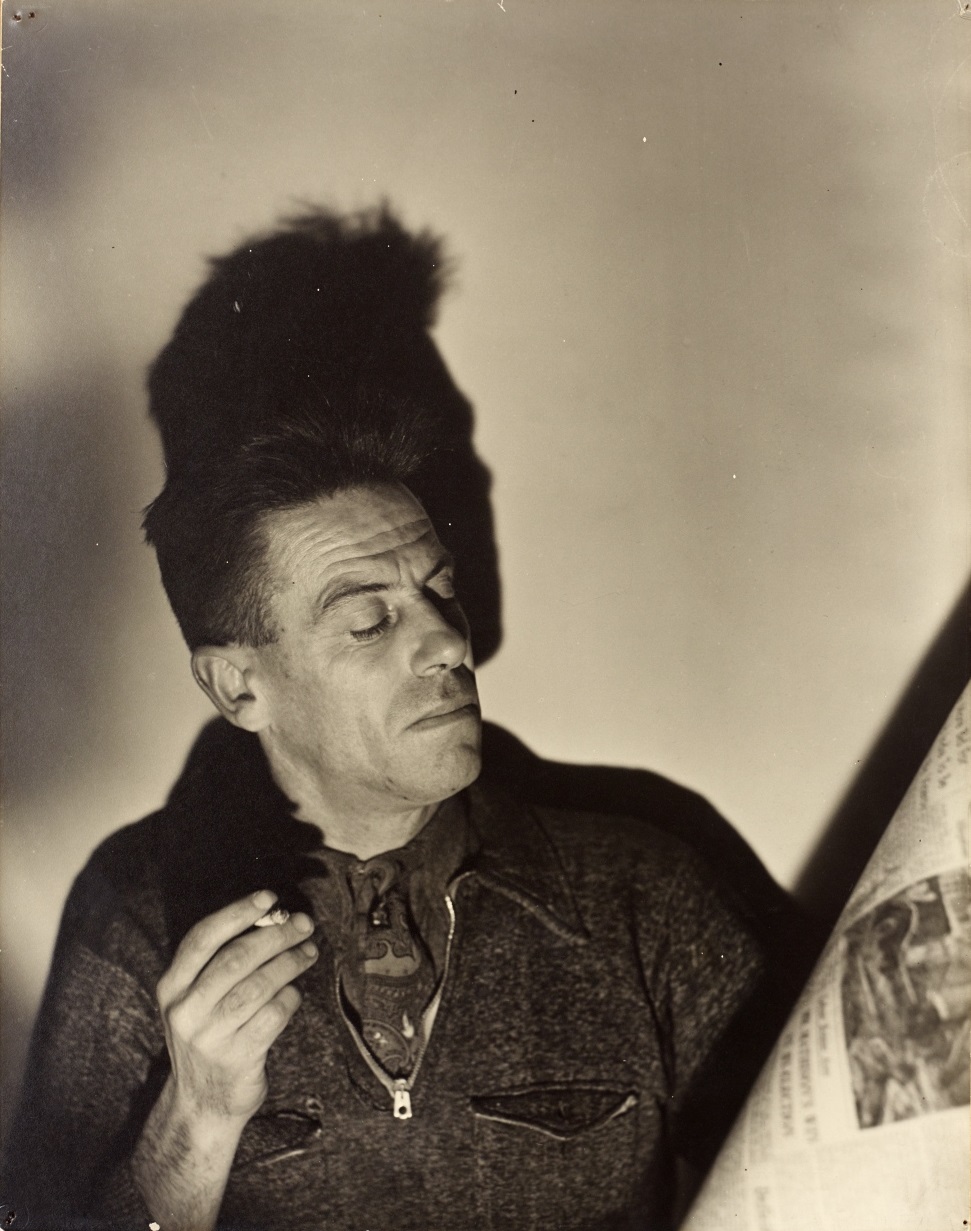
07-12 O'Driscoll
Dennis O’Driscoll
Irish
1954 – 2012


someone is dressing up for death today, a change of skirt or tie
eating a final feast of buttered sliced pan, tea
scarcely having noticed the erection that was his last
shaving his face to marble for the icy laying out
spraying with deodorant her coarse armpit grass
someone today is leaving home on business
saluting, terminally, the neighbours who will join in the cortege
someone is paring his nails for the last time, a precious moment
someone’s waist will not be marked with elastic in the future
someone is putting out milkbottles for a day that will not come
someone’s fresh breath is about to be taken clean away
someone is writing a cheque that will be rejected as ‘drawer deceased’
someone is circling posthumous dates on a calendar
someone is listening to an irrelevant weather forecast
someone is making rash promises to friends
someone’s coffin is being sanded, laminated, shined
who feels this morning quite as well as ever
someone if asked would find nothing remarkable in today’s date
perfume and goodbyes her final will and testament
someone today is seeing the world for the last time
as innocently as he had seen it first

This Rose Was a Witness

We present this work in honor of the 45th anniversary of the poet’s death.

07-11 Greiff
León de Greiff
Colombian
1895 – 1976


Of this, that if this was not love
No other love could be.
This rose was a witness
From when you gave yourself to me!
On that day, I don’t know when it was
(Well I do, but won’t say),
This rose was a witness.

Such lilting sweetness
Poured from your lips
This rose was a witness
Of your smiles of love!
For me it was nothing less
Than all I’d ever dreamt of,
This rose was a witness.

I drowned in your eyes
So deep like the night!
This rose was a witness;
My arms holding you tight,
Finding in your arm’s nest
Myself, then a warmer place…
This rose was a witness.

I kissed your fresh lips
Where happiness frolics!
This rose was a witness
Of your loving pain
As I joyfully made love
With you for the first time!

This rose was a witness.

This rose was a witness
Of this, that if this was not love
No other love could be.
This rose was a witness
From when you gave yourself to me!

On that day, I don’t know when it was
(Well I do, but won’t say),
This rose was a witness.


Translation by Paul Archer

Minimal Miniseries of Marksmanship

In honor of Argentine Independence Day, we present this work by one of Argentina’s finest contemporary poets.

07-09 Neuman
Andrés Neuman
Argentine
b. 1977


This insect is the hero
of some resistance movement.
He wheels around
my enemy hand
and dodges every attempt
to interrupt his slight digressions.

As I’m not capable, I admire him instead.
Does admiration
combat this impotence
or confirm it?
Is my compassion the fruit
of missing the mark?

The insect leaves me
his autograph on the air
with the faint buzz of epigrams.

The Country Justice

We present this work in honor of the poet’s 400th birthday.

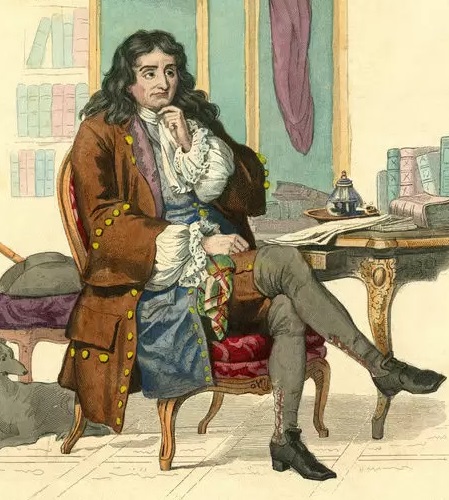
07-08 Fontaine
Jean de la Fontaine
French
1621 – 1695


Two lawyers to their cause so well adhered,
A country justice quite confused appeared,
By them the facts were rendered so obscure
With which the truth remained he was not sure.
At length, completely tired, two straws he sought
Of diff’rent lengths, and to the parties brought.
These in his hand he held:—the plaintiff drew
(So fate decreed) the shortest of the two.
On this the other homeward took his way,
To boast how nicely he had gained the day.

The bench complained: the magistrate replied
Don’t blame I pray—’tis nothing new I’ve tried;
Courts often judge at hazard in the law,
Without deciding by the longest straw.

Here’s to the Maiden of Bashful Fifteen

We present this work in honor of the 205th anniversary of the poet’s death.

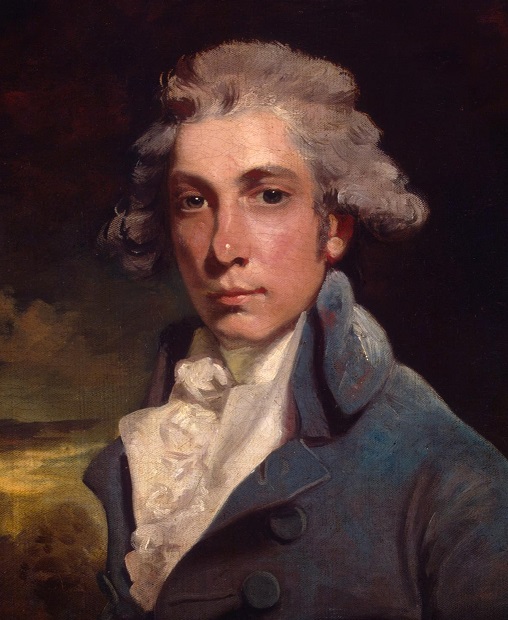
07-07 Sheridan
Richard Brinsley Sheridan
Irish
1751 – 1816


Here’s to the maiden of bashful fifteen;
Here’s to the widow of fifty;
Here’s to the flaunting extravagant quean,
And here’s to the housewife that’s thrifty.

Let the toast pass,—
Drink to the lass,
I’ll warrant she’ll prove an excuse for the glass.

Here’s to the charmer whose dimples we prize;
Now to the maid who has none, sir:
Here’s to the girl with a pair of blue eyes,
And here’s to the nymph with but one, sir.

Let the toast pass,—
Drink to the lass,
I’ll warrant she’ll prove an excuse for the glass.

Here’s to the maid with a bosom of snow;
Now to her that’s as brown as a berry:
Here’s to the wife with her face full of woe,
And now to the damsel that’s merry.

Let the toast pass,—
Drink to the lass,
I’ll warrant she’ll prove an excuse for the glass.

For let ‘em be clumsy, or let ‘em be slim,
Young or ancient, I care not a feather;
So fill a pint bumper quite up to the brim,
And let us e’en toast them together.

Let the toast pass,—
Drink to the lass,
I’ll warrant she’ll prove an excuse for the glass.