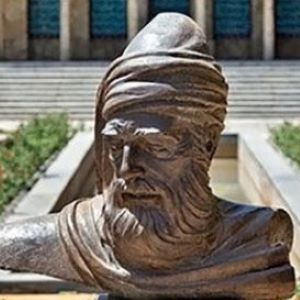
Persian
1592 – 1676
My Queen, how much longer must I stay
Outside your door when you hold full sway
O’er my heart. Mis’ry is all I feel
I suffer anguish when you’re away
And every night I toss and turn
Your heartless wiles will kill me one day
My Queen, how much longer must I stay
Outside your door when you hold full sway
O’er my heart. Mis’ry is all I feel
I suffer anguish when you’re away
And every night I toss and turn
Your heartless wiles will kill me one day
We present this work in honor of the 175th anniversary of the poet’s death.
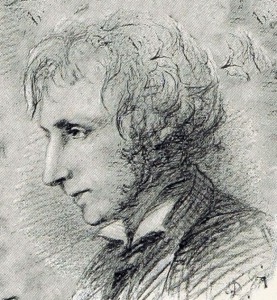
I see black dragons mount the sky,
I see earth yawn beneath my feet —
I feel within the asp, the worm
That will not sleep and cannot die,
Fair though may show the winding-sheet!
I hear all night as through a storm
Hoarse voices calling, calling
My name upon the wind—
All omens monstrous and appalling
Affright my guilty mind.
I exult alone in one wild hour —
That hour in which the red cup drowns
The memories it anon renews
In ghastlier guise, in fiercer power —
Then Fancy brings me golden crowns,
And visions of all brilliant hues
Lap my lost soul in gladness,
Until I awake again,
And the dark lava-fires of madness
Once more sweep through my brain.
We present this work in honor of National Dry Martini Day.
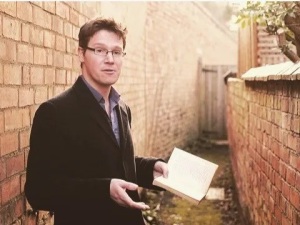
Long dream of summer in short skirt of glass.
The glass as prism: multiplying all
colours that meet it, sunshine, a right eyeful,
rendering all beyond it meaningless
at least for now, for this moment, more or less.
The eye is blind to what the mouth will feel:
the space where light meets water in the pool,
the driest water you will ever kiss.
Now turn to the vermouth. Just enough
to vault the drink into another region:
wave towards Italy, home of Petrarch. Give
a minute or so for things to settle down.
Stir (not shake) until distinction’s gone.
Try not to mistake this for a new religion.
We present this work in honor of the poet’s 110th birthday.

Blessèd be
The humble
Poets
Because
From them
Will rise
The kingdoms
Of the
Grass
We present this work in honor of Eid al-Adha.
The garden of green hillocks
dresses up for visitors
in the most beautiful colors
as if a young woman’s dowry
were spread out
glittering with gold necklaces
or as if someone had poured out
censers of mush powder
mixed with the purest aromatic oils.
Birds trill on the branches
like singing girls
bending over their lutes
and water falls continuously
like neckchains
of silver and pearls.
These are splendors of such perfection
they call to mind
the beauty of absolute certainty
the radiance of faith.
We present this work in honor of the 145th anniversary of the poet’s death.

I am finally in the den of death
where sorrows and pains do not fly,
where the stars and flowers do not shine,
where there is no memory that awakens.
If one day nature has fun
breaking the horrors from this prison,
and its burning, wandering breaths
pour on my loose dust,
I, for eternity already devoured,
Will I enjoy if that dust is a rose?
Will I moan if a serpent nests in it?
Not even nightmares will give me a care,
Nor will a hateful voice frighten my sleep,
Not even a whole God will bring me back to life.
We present this work in honor of Flag Day.

Up from the meadows rich with corn,
Clear in the cool September morn,
The clustered spires of Frederick stand
Green-walled by the hills of Maryland.
Round about them orchards sweep,
Apple and peach tree fruited deep,
Fair as the garden of the Lord
To the eyes of the famished rebel horde,
On that pleasant morn of early fall
When Lee marched over the mountain wall;
Over the mountains winding down,
Horse and foot, into Frederick town.
Forty flags with their silver stars
Forty flag with their crimson bars,
Flapped in the morning wind; the sun
Of noon looked down, and saw not one.
Up rose old Barbara Frietchie then,
Bowed with her fourscore years and ten;
Bravest of all in Frederick town,
She took up the flag the men hauled down;
In her attic window the staff she set,
To show that one heart was loyal yet.
Up the street came the rebel tread,
Stonewall Jackson riding ahead.
Under his slouched hat left and right
He glanced; the old flag met his sight.
“Halt!” – the dust-brown ranks stood fast.
“Fire!” – out blazed the rifle-blast.
It shivered the window, pane and sash;
It rent the banner with seam and gash.
Quick, as it fell, from the broken staff
Dame Barbara snatched the silken scarf.
She leaned far out on the window-sill,
And shook it forth with a royal will.
“Shoot, if you must, this old gray head,
But spare your country’s flag,” she said.
A shade of sadness, a blush of shame,
Over the face of the leader came;
The nobler nature within him stirred
To life at that woman’s deed and word;
“Who touches a hair of yon gray head
Dies like a dog! March on!” he said.
All day long through Frederick street
Sounded the tread of marching feet;
All day long that free flag tost
Over the heads of the rebel host.
Ever its torn folds rose and fell
On the loyal winds that loved it well;
And through the hill-gaps sunset light
Shone over it with a warm good-night.
Barbara Frietchie’s work is o’er,
And the Rebel rides on his raids no more.
Honor to her! and let a tear
Fall, for her sake, on Stonewall’s bier.
Over Barbara Frietchie’s grave,
Flag of Freedom and Union, wave!
Peace and order and beauty draw
Round thy symbol of light and law;
And ever the stars above look down
On thy stars below in Frederick town!

From a little scorpion the land emits great evil. As many poisons, as many types, as much ruin, as many species, as much pain, as many colors. Nicander writes about it and depicts it well.
Yet of all things, the movement of its tail (the so-called coda, which ex – tends from behind the body and strikes) inflicts the most pain. So this is the scorpion: its chain of knots, from a thin, poisonous vein, rising up in an arc of rage, and drawing at its height a barbed spear like the war-plan of a catapult.
For this reason the war machine with retracted spears is also called a scorpion. Its sting is also an open vein, and it volleys venom into the wound as it pierces. It’s well-known the dangerous season is summer. In the south and southwest winds, this ferocity is at work. In terms of remedies, natural things appear most effective; so too magic works; there’s a cure by knife and potion. Some, who hope to swiftly avoid pain, drink an immunization, but sex keeps it from working, and then immediately you’re at risk again.
We present this work in honor of the poet’s 150th birthday.
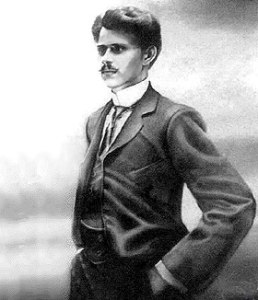
Tropic village night: the hours
slow and grave. The vesper bell,
and then, as the ladies return,
the musical closing of the gate…
Suddenly, the incongruous sound
of peasant clogs. And in the drowsiness
of things, what a smell of chocolate
and cheese, of yucca bread and honey-cake!
Far off in clandestine shadow,
in the rustic stable, a jackass
brays taps for his donkey love
with a friendly squeeze on his accordion…
Only the druggist, my neighbour,
keeps stolid watch behind his counter,
to sell —with a sibylline gesture—
two cents’ worth of castor oil…
While the moon, from its arcane depth,
outlines the church. In its blue vault
the tumid moon is like a pimple…
And the church an enormous nursing-bottle
We present this work in honor of the 95th anniversary of the poet’s death.

For a name unknown,
Whose fame unblown
Sleeps in the hills
For ever and aye;
For her who hears
The stir of the years
Go by on the wind
By night and day;
And heeds no thing
Of the needs of spring,
Of autumn’s wonder
Or winter’s chill;
For one who sees
The great sun freeze,
As he wanders a-cold
From hill to hill;
And all her heart
Is a woven part
Of the flurry and drift
Of whirling snow;
For the sake of two
Sad eyes and true,
And the old, old love
So long ago.
 Poets Corner