The Rhymes Our Hearts Can Read

We present this work in honor of Western Australia Day.

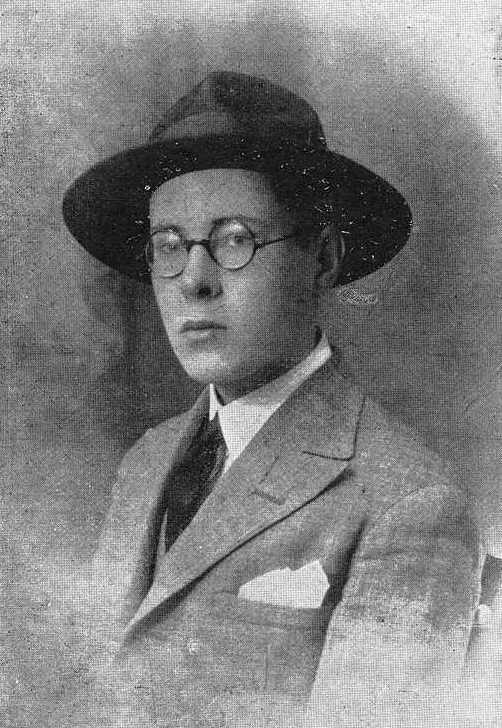
06-07 Murphy
Edwin Greenslade Murphy
Australian
1866 – 1939

We are sated of songs that drone the praise,
Of a world beyond our ken;
We are bored by the ballads of beaten ways
And milk-and-water men;
We are tired of the tales the lovers told
To the cooing amorous dove;
We have banned the minstrelsy of old,
And the lyrics of languid love;
We are done with the dirges cut and dried
In the London square and slum;
But we’re ripe for a rhyme whose metres stride
Through salt-bush scrub and gum.
Sing us a song unsung by men
Of the narrow and cautious creed;
Write with a strong and strenuous pen
The rhymes our hearts can read.

While we stand where the ways of men have end,
And the untrod tracks commence,
We weary of songs the poets penned
In pastoral indolence;
The sleepy sonnet that lovers make
Where weeping willows arch,
Can not the passionate soul awake,
Of men who outward march.
Our harps are hung in the towering trees
And the mulga low and grey;
Our ballads are sung by every breeze
That flogs the sea to spray.
We want no lay of a moonlit strand,
No idyll of daisied mead,
For the rhymes that our hearts can understand
Are the rhymes our hearts can read.

We need no monody planned and built,
In the shade of an abbey grey,
But the pulse and throb of a lusty lilt
That quickens the human clay.
Tell us of men whose axes bite
The hearts of the mountain gum;
Sing of the pioneers who fight
To waken the desert dumb.
We want to hark to the heart within,
Of the men who feel and know;
For only the men who’ve sampled sin
Can write of its joy and woe.
Give us a ballad that swings along
With the bound of a striving steed;
Give us — whether it’s right or wrong —
The rhymes our hearts can read.

We want to travel from page to page
Through dusty drive and stope,
To catch the hiss of the rushing cage,
The roll of the winding rope.
Give us the rip-saw’s grind and scream
As it sunders the giant log;
The groan and the creek of the bullock team
As it flounders across the bog;
The swish and the crack of the stockmen’s whips
In the roar of the night stampede.
Give us the music that bites and grips —
The rhymes our hearts can read!

Sing of the days of hasty camps,
When Bayley blazed the track.
Write of the shining starry lamps
That beacon the wild out-back.
Sing to the soul of the hardest case
That bears his swag of sin;
Of nights of wine and the bold embrace
When revelry roped him in;
Tell of the times we’ve fought for fun,
A wearisome hour to wile,
And whether we lost or drew or won
Swung out with a cheery smile.
Write of the men for whom God waits —
Men of a Christ-like creed;
Sing of the mates who die for mates,
In the rhymes our hearts can read!
Wild Orphan

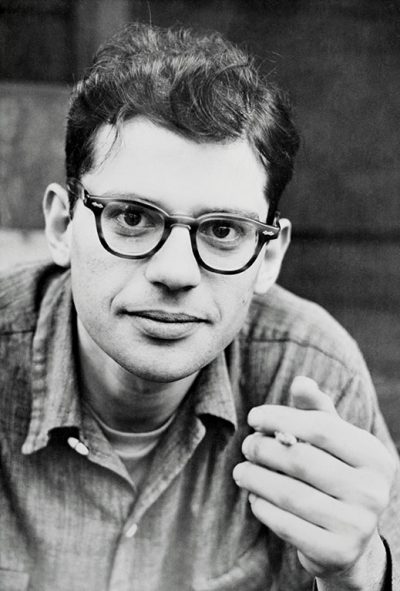
We present this work in honor of the poet’s 95th birthday.

06-03 Ginsberg
Allen Ginsberg
American
1926 – 1997


Blandly mother
takes him strolling
by railroad and by river
-he’s the son of the absconded
hot rod angel-
and he imagines cars
and rides them in his dreams,

so lonely growing up among
the imaginary automobiles
and dead souls of Tarrytown

to create
out of his own imagination
the beauty of his wild
forebears-a mythology
he cannot inherit.

Will he later hallucinate
his gods? Waking
among mysteries with
an insane gleam
of recollection?

The recognition-
something so rare
in his soul,
met only in dreams
-nostalgias
of another life.

A question of the soul.
And the injured
losing their injury
in their innocence
-a cock, a cross,
an excellence of love.

And the father grieves
in flophouse
complexities of memory
a thousand miles
away, unknowing
of the unexpected
youthful stranger
bumming toward his door.

Of Happiness to Mortal Man

Bacchylides
Greek
c. 518 BC – c. 451 BC


Of happiness to mortal man
One is the road, and one the goal
To keep unburthen’d, all he can,
From loads of care the tranquil soul.
But whoso toileth night and day,
Nor day nor night permits sweet rest.
To steal him from himself away,
Or still the fever of his breast,
Nought will it profit, though he bear
On gloomy brow the stamp of care.


Translation by John Herman Marivale

Music, in a Foreign Language

Andrew Crumey
Scots
b. 1961


In a cafe, once more I heard
Your voice – those sparse and frugal notes.
Do they not say that you spoke your native Greek
With an English accent?

Briefest of visions: eyes meet across the cafe;
A man of about my age – eyelids heavy,
Perhaps from recent pleasures.
I begin the most innocent of conversations.
Again I see that image;
Ancient delight of flesh
Against guiltless flesh.
Sweeter still, in its remembering.

Most innocent of conversations: once more, I am mistaken.
He leaves; the moment lost – and to forego
The squalor of this place, I read again your lines; those sparse and frugal notes.
In a taverna, you found beauty, long ago.
And when you draw, with your slim, swift pen
The image of that memory – time’s patient hostage;
Then how can I forget him, that boy whom you could not forget,
Or that music, in a foreign language?

A Very Precious Time

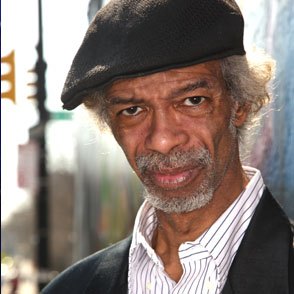
We present this work in honor of the 10th anniversary of the poet’s death.

05-27 Scott-Heron
Gil Scott-Heron
American
1949 – 2011


Was there a touch of spring?
Did she have a pink dress on?
And when she smiled, her shyest smile
Could you almost touch the warmth?
And was it your first love, a very precious time?

Was there the faintest breeze?
And did she have a ponytail?
And could she make you feel ten feet tall,
Walking down the grassy trail?
Was it your first love, a very precious time, time?

Now they got me trying to define, in later life
What her love means to me
And it keeps me struggling to remember, my first touch of spring.

Was there a touch of spring, in the air?
And did she have a pink dress on?
And when she smiled, her shyest smile
Could you almost touch the warmth?
Was it your first love,
A very precious, very precious, very precious time, time.

Sonnet

In honor of May Revolution Day, we present this work by one of Argentina’s most innovative poets.

05-25 Bernardez
Francisco Luis Bernárdez
Argentine
1900 – 1978


To regain what was lost
I had to first lose what I had
to accomplish a goal
I had to endure pain

If in order to be in love
it was necessary to have been hurt
I have then suffered enough
I have then shed my share of tears

Because after all, I have realized
that we don’t enjoy it as much
until after we have suffered first

Because after all, I have understood
that the tree has blossomed
from beneath its roots.

Nocturne III

We present this work in honor of the 125th anniversary of the poet’s death.

José Asunción Silva
Colombian
1865 – 1896


One night
one night all full of murmurings, of perfumes and music of wings;
one night
in which fantastic fireflies burnt in the humid nuptial shadows,
slowly by my side, pressed altogether close, silent and pale,
as if a presentiment of infinite bitternesses
agitated you unto the most hidden fibers of your being,
along the flowering path which crosses the plain
you walked;
and the full moon
in the infinite and profound blue heavens scattered its white light;
and your shadow,
fine and languid,
and my shadow
projected by the rays of the moon,
upon the sorrowful sands
of the path, joined together;
and they became one,
and they became only one long shadow,
and they became only one long shadow…

Tonight
alone; my soul
full of the infinite bitternesses and agonies of your death,
separated from you by time, by the tomb and by distance,
by the infinite blackness
where our voice cannot reach,
silent and alone
along the path I walked…
And the barking of dogs at the moon could be heard,
at the pale moon,
and the chirping
of the frogs…
I felt cold. It was the coldness that in your alcove
your cheeks and your temples and your adoréd hands possessed
within the snowy whiteness
of the mortuary sheets.
It was the coldness of the sepulcher, it was the ice of death,
it was the coldness of oblivion.
And my shadow,
projected by the rays of the moon,
walked alone,
walked alone,
walked alone along the solitary plain;
and your shadow, svelte and agile,
fine and languid,
as in that warm night of springtime death,
as in that night full of murmurings, of perfumes and music of wings,
approached and walked with mine,
approached and walked with mine… Oh, the shadows intertwined!
Oh, the corporeal shadows united with the shadows of the souls!
Oh, the seeking shadows in those nights of sorrows and of tears!

The Voice

We present this work in honor of the 85th anniversary of the poet’s death.

Henri de Regnier
French
1864 – 1936


I do not wish anyone to be near my sadness—
Not even your dear step and your loved face,
Nor your indolent hand which caresses with a finger
The lazy ribbon and the closed book.

Leave me. Let my door today remain closed;
Do not open my window to the fresh wind of morning;
My heart today is miserable and sullen
And everything seems to me somber and everything seems vain.

My sadness comes from something further than myself;
It is strange to me and is not of me;
And every man, whether he sings or he laughs or he loves,
In his time hears that which speaks low to him,

And something then stirs and awakens,
Is perturbed, spreads and laments in him,
Because of this dull voice which says in his ear
That the flower of life in its fruit is ashes.


Translation by Eli Siegel

Farewell to My Mother

Placido
Cuban
1809 – 1844


The appointed lot has come upon me, mother,
The mournful ending of my years of strife,
This changing world I leave, and to another
In blood and terror goes my spirit’s life.

But thou, grief-smitten, cease thy mortal weeping
And let thy soul her wonted peace regain;
I fall for right, and thoughts of thee are sweeping
Across my lyre to wake its dying strains.

A strain of joy and gladness, free, unfailing
All glorious and holy, pure, divine,
And innocent, unconscious as the wailing
I uttered on my birth; and I resign

Even now, my life, even now descending slowly,
Faith’s mantle folds me to my slumbers holy.
Mother, farewell! God keep thee — and forever!


Translation by William Cullen Bryant