We present this work in honor of the poet’s 180th birthday.
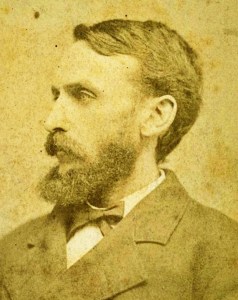
Edward Rowland Sill American 1841 – 1887
This I beheld, or dreamed it in a dream:— There spread a cloud of dust along a plain; And underneath the cloud, or in it, raged A furious battle, and men yelled, and swords Shocked upon swords and shields. A prince’s banner Wavered, then staggered backward, hemmed by foes. A craven hung along the battle’s edge, And thought, “Had I a sword of keener steal— That blue blade that the king’s son bears,— but this Blunt thing—!” He snapped and flung it from his hand, And lowering crept away and left the field. Then came the king’s son, wounded sore bestead, And weaponless, and saw the broken sword Hilt-buried in the dry and trodden sand, And ran and snatched it, and with battle-shout Lifted afresh he hewed his enemy down And saved a great cause that heroic day.
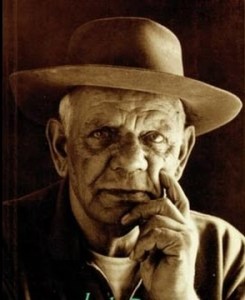
To the Others
You once smiled a friendly smile,
Said we were kin to one another,
Thus with guile for a short while
Became to me a brother.
Then you swamped my way of gladness,
Took my children from my side,
Snapped shut the law book, oh my sadness
At Yirrakalas’ plea denied.
So, I remember Lake George hills,
The thin stick bones of people.
Sudden death, and greed that kills,
That gave you church and steeple.
I cry again for Warrarra men,
Gone from kith and kind,
And I wondered when I would find a pen
To probe your freckled mind.
I mourned again for the Murray tribe,
Gone too without a trace.
I thought of the soldier’s diatribe,
The smile on the governor’s face.
You murdered me with rope, with gun
The massacre of my enclave,
You buried me deep on McLarty’s run
Flung into a common grave.
You propped me up with Christ, red tape,
Tobacco, grog and fears,
Then disease and lordly rape
Through the brutish years.
Now you primly say you’re justified,
And sing of a nation’s glory,
But I think of a people crucified –
The real Australian story.
We present this work in honor of the poet’s 100th birthday.
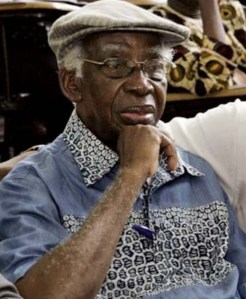
Gabriel Okara Nigerian 1921 – 2019
Once upon a time, son, they used to laugh with their hearts and laugh with their eyes: but now they only laugh with their teeth, while their ice-block-cold eyes search behind my shadow.
There was a time indeed they used to shake hands with their hearts: but that’s gone, son. Now they shake hands without hearts while their left hands search my empty pockets.
‘Feel at home!’ ‘Come again’: they say, and when I come again and feel at home, once, twice, there will be no thrice- for then I find doors shut on me.
So I have learned many things, son. I have learned to wear many faces like dresses – homeface, officeface, streetface, hostface, cocktailface, with all their conforming smiles like a fixed portrait smile.
And I have learned too to laugh with only my teeth and shake hands without my heart. I have also learned to say,’Goodbye’, when I mean ‘Good-riddance’: to say ‘Glad to meet you’, without being glad; and to say ‘It’s been nice talking to you’, after being bored.
But believe me, son. I want to be what I used to be when I was like you. I want to unlearn all these muting things. Most of all, I want to relearn how to laugh, for my laugh in the mirror shows only my teeth like a snake’s bare fangs!
So show me, son, how to laugh; show me how I used to laugh and smile once upon a time when I was like you.
We present this work in honor of the 405th anniversary of the poet’s death.
William Shakespeare English 1564 – 1616
All the world’s a stage, And all the men and women merely players; They have their exits and their entrances; And one man in his time plays many parts, His acts being seven ages. At first the infant, Mewling and puking in the nurse’s arms; And then the whining school-boy, with his satchel And shining morning face, creeping like snail Unwillingly to school. And then the lover, Sighing like furnace, with a woeful ballad Made to his mistress’ eyebrow. Then a soldier, Full of strange oaths, and bearded like the pard, Jealous in honour, sudden and quick in quarrel, Seeking the bubble reputation Even in the cannon’s mouth. And then the justice, In fair round belly with good capon lin’d, With eyes severe and beard of formal cut, Full of wise saws and modern instances; And so he plays his part. The sixth age shifts Into the lean and slipper’d pantaloon, With spectacles on nose and pouch on side; His youthful hose, well sav’d, a world too wide For his shrunk shank; and his big manly voice, Turning again toward childish treble, pipes And whistles in his sound. Last scene of all, That ends this strange eventful history, Is second childishness and mere oblivion; Sans teeth, sans eyes, sans taste, sans everything.
Hated are we, and driven from our homes, Tortured and persecuted, even to blood; And wherefore? ‘Tis because we love the poor, The masses of mankind, who starve for food.
We are shot down, and on the gallows hanged, Robbed of our lives and freedom without ruth, Because for the enslaved and for the poor We are demanding liberty and truth.
But we will not be frightened from our path By darksome prisons or by tyranny; We must awake humanity from sleep, Yea, we must make our brothers glad and free.
Secure us fast with fetters made of iron, Tear us like beasts of blood till life departs, ‘Tis but our bodies that you will destroy, Never the sacred spirit in our hearts.
You cannot kill it, tyrants of the earth! Our spirit is a plant immortal, fair; Its petals, sweet of scent and rich of hue, Are scattered wide, are blooming everywhere.
In thinking men and women now they bloom, In souls that love the light and righteousness. As they strive on toward duty’s sacred goal, Nature herself doth their endeavor bless—
To liberate the poor and the enslaved Who suffer now from cold and hunger’s blight, And to create for all humanity A world that shall be free, that shall be bright;
A world where tears no longer shall be shed, A world where guiltless blood no more shall flow, And men and women, like clear-shining stars, With courage and with love shall be aglow.
You may destroy us, tyrants! ‘Twill be vain. Time will bring on new fighters strong as we; For we shall battle ever, on and on, Nor cease to strive till all the world is free!
We present this work in honor of the poet’s 160th birthday.
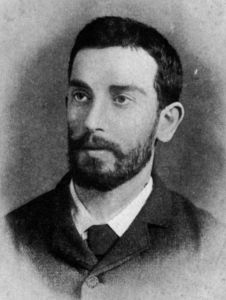
Bliss Carman Canadian 1861 – 1929
There is something in the autumn that is native to my blood— Touch of manner, hint of mood; And my heart is like a rhyme, With the yellow and the purple and the crimson keeping time.
The scarlet of the maples can shake me like a cry Of bugles going by. And my lonely spirit thrills To see the frosty asters like a smoke upon the hills.
There is something in October sets the gypsy blood astir; We must rise and follow her, When from every hill of flame She calls and calls each vagabond by name.
We present this work in honor of the poet’s 115th birthday.
Samuel Beckett Irish 1906 – 1989
1
why not merely the despaired of occasion of wordshed
is it not better abort than be barren
the hours after you are gone are so leaden they will always start dragging too soon the grapples clawing blindly the bed of want bringing up the bones the old loves sockets filled once with eyes like yours all always is it better too soon than never the black want splashing their faces saying again nine days never floated the loved nor nine months nor nine lives
2
saying again if you do not teach me I shall not learn saying again there is a last even of last times last times of begging last times of loving of knowing not knowing pretending a last even of last times of saying if you do not love me I shall not be loved if I do not love you I shall not love
the churn of stale words in the heart again love love love thud of the old plunger pestling the unalterable whey of words
terrified again of not loving of loving and not you of being loved and not by you of knowing not knowing pretending pretending
I and all the others that will love you if they love you




 Poets Corner