We present this work in honor of the 240th anniversary of the poet’s death.
Gotthold Ephraim Lessing German 1729 – 1781
I sought, while drinking, to unfold
Why Nature’s kingdoms are threefold.
Both man and beast, they drink and love,
As each is gifted from above;
The dolphin, eagle, dog and flea,
In that they love and drink, agree.
In all that drink and love then, we
The first of these three kingdoms see.
The plants the second kingdom are,
But lower in creation far;
They do not love, but yet they drink,
When dripping clouds upon them sink;
Thus drinks the clover, thus the pine,
The aloe tree and branching vine,
In all that drink, but love not, we
The second of these kingdoms see.
The stony kingdom is the last,
Here diamonds with sand are classed;
No stone feels thirst, or soft desires,
No love, no draught its bosom fires.
In all that drink not, love not, we
The last of these three kingdoms see.
For without love, or wine, now own!
What wouldst thou be, oh Man? – A stone.
Fire-lit
half silhouette and half myth
the wolf circles my past
treading the leaves into a bed
till he sleeps, black snout
on extended paws.
Black snout on sulphur body
he nudged his way
into my consciousness.
Prowler, wind-sniffer, throat-catcher,
his cries drew a ring
around my night;
a child’s night is a village
on the forest edge.
My mother said
his ears stand up
at the fall of dew
he can sense a shadow
move across a hedge
on a dark night;
he can sniff out
your approaching dreams;
there is nothing
that won’t be lit up
by the dark torch of his eyes.
The wolves have been slaughtered now.
A hedge of smoking gun-barrels
rings my daughter’s dreams.
Who are these people, impaled on sharp bamboo poles,
blood spurting from their bodies?
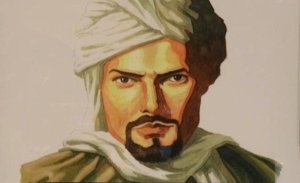
Marvels Ibn Battuta in the forests of Ma’bar.
So dark even by day,
or is the Sultan blind?
I catch a glimpse through his blind eyes
of a page of history,
flapping in the pale light of torches:
in this barbarous ritual,
who are these half-dead women and children,
their hands and feet ripped apart
one by one from their frail bodies?
Are they infidels or humans?
Who are these around me
that keep on drinking
despite the laws of sharia?
There is no one. There is nothing.
It’s all a bad dream.
None of this is happening today.
It was all a very long time ago—
the era of prehistoric beats of prey:
I am not a witness to it… Sultan,
allow me to leave;
it is time for my prayers.
The street is empty
as a monk’s memory,
and faces explode in the flames
like acorns—
and the dead crowd the horizon
and doorways.
No vein can bleed
more than it already has,
no scream will rise
higher than it’s already risen.
We will not leave!
Everyone outside is waiting
for the trucks and the cars
loaded with honey and hostages.
We will not leave!
The shields of light are breaking apart
before the rout and the siege;
outside, everyone wants us to leave.
But we will not leave!
Ivory white brides
behind their veils
slowly walk in captivity’s glare, waiting,
and everyone outside wants us to leave,
but we will not leave!
The big guns pound the jujube groves,
destroying the dreams of the violets,
extinguishing bread, killing the salt,
unleashing thirst
and parching lips and souls.
And everyone outside is saying:
“What are we waiting for?
Warmth we’re denied,
the air itself has been seized!
Why aren’t we leaving?”
Masks fill the pulpits and brothels,
the places of ablution.
Masks cross-eyed with utter amazement;
they do not believe what is now so clear,
and fall, astonished,
writhing like worms, or tongues.
We will not leave!
Are we in the inside only to leave?
Leaving is just for the masks,
for pulpits and conventions.
Leaving is just
for the siege-that-comes-from-within,
the siege that comes from the Bedouin’s loins,
the siege of the brethren
tarnished by the taste of the blade
and the stink of crows.
We will not leave!
Outside they’re blocking the exits
and offering their blessings to the impostor,
praying, petitioning
Almighty God for our deaths.
We present this work in honor of the 80th anniversary of the poet’s death.
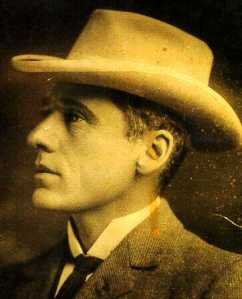
Banjo Paterson Australian 1864 – 1941
There was movement at the station, for the word had passed around
That the colt from old Regret had got away,
And had joined the wild bush horses – he was worth a thousand pound,
So all the cracks had gathered to the fray.
All the tried and noted riders from the stations near and far
Had mustered at the homestead overnight,
For the bushmen love hard riding where the wild bush horses are,
And the stock-horse snuffs the battle with delight.
There was Harrison, who made his pile when Pardon won the cup,
The old man with his hair as white as snow;
But few could ride beside him when his blood was fairly up-
He would go wherever horse and man could go.
And Clancy of the Overflow came down to lend a hand,
No better horseman ever held the reins;
For never horse could throw him while the saddle girths would stand,
He learnt to ride while droving on the plains.
And one was there, a stripling on a small and weedy beast,
He was something like a racehorse undersized,
With a touch of Timor pony – three parts thoroughbred at least –
And such as are by mountain horsemen prized.
He was hard and tough and wiry – just the sort that won’t say die –
There was courage in his quick impatient tread;
And he bore the badge of gameness in his bright and fiery eye,
And the proud and lofty carriage of his head.
But so slight and weedy, one would doubt his power to stay,
And the old man said, “That horse will never do
For a long and tiring gallop-lad, you’d better stop away,
Those hills are far too rough for such as you.”
So he waited sad and wistful – only Clancy stood his friend –
“I think we ought to let him come,” he said;
“I warrant he’ll be with us when he’s wanted at the end,
For both his horse and he are mountain bred.”
“He hails from Snowy River, up by Kosciusko’s side,
Where the hills are twice as steep and twice as rough,
Where a horse’s hoofs strike firelight from the flint stones every stride,
The man that holds his own is good enough.
And the Snowy River riders on the mountains make their home,
Where the river runs those giant hills between;
I have seen full many horsemen since I first commenced to roam,
But nowhere yet such horsemen have I seen.”
So he went – they found the horses by the big mimosa clump –
They raced away towards the mountain’s brow,
And the old man gave his orders, “Boys, go at them from the jump,
No use to try for fancy riding now.
And, Clancy, you must wheel them, try and wheel them to the right.
Ride boldly, lad, and never fear the spills,
For never yet was rider that could keep the mob in sight,
If once they gain the shelter of those hills.”
So Clancy rode to wheel them – he was racing on the wing
Where the best and boldest riders take their place,
And he raced his stockhorse past them, and he made the ranges ring
With stockwhip, as he met them face to face.
Then they halted for a moment, while he swung the dreaded lash,
But they saw their well-loved mountain full in view,
And they charged beneath the stockwhip with a sharp and sudden dash,
And off into the mountain scrub they flew.
Then fast the horsemen followed, where the gorges deep and black
Resounded to the thunder of their tread,
And the stockwhips woke the echoes, and they fiercely answered back
From cliffs and crags that beetled overhead.
And upward, ever upward, the wild horses held their sway,
Were mountain ash and kurrajong grew wide;
And the old man muttered fiercely, “We may bid the mob good day,
No man can hold them down the other side.”
When they reached the mountain’s summit, even Clancy took a pull,
It well might make the boldest hold their breath,
The wild hop scrub grew thickly, and the hidden ground was full
Of wombat holes, and any slip was death.
But the man from Snowy River let the pony have his head,
And he swung his stockwhip round and gave a cheer,
And he raced him down the mountain like a torrent down its bed,
While the others stood and watched in very fear.
He sent the flint stones flying, but the pony kept his feet,
He cleared the fallen timbers in his stride,
And the man from Snowy River never shifted in his seat –
It was grand to see that mountain horseman ride.
Through the stringybarks and saplings, on the rough and broken ground,
Down the hillside at a racing pace he went;
And he never drew the bridle till he landed safe and sound,
At the bottom of that terrible descent.
He was right among the horses as they climbed the further hill
And the watchers on the mountain standing mute,
Saw him ply the stockwhip fiercely, he was right among them still,
As he raced across the clearing in pursuit.
Then they lost him for a moment, where two mountain gullies met
In the ranges, but a final glimpse reveals
On a dim and distant hillside the wild horses racing yet,
With the man from Snowy River at their heels.
And he ran them single-handed till their sides were white with foam.
He followed like a bloodhound in their track,
Till they halted cowed and beaten, then he turned their heads for home,
And alone and unassisted brought them back.
But his hardy mountain pony he could scarcely raise a trot,
He was blood from hip to shoulder from the spur;
But his pluck was still undaunted, and his courage fiery hot,
For never yet was mountain horse a cur.
And down by Kosciusko, where the pine-clad ridges raise
Their torn and rugged battlements on high,
Where the air is clear as crystal, and the white stars fairly blaze
At midnight in the cold and frosty sky,
And where around The Overflow the reed beds sweep and sway
To the breezes, and the rolling plains are wide,
The man from Snowy River is a household word today,
And the stockmen tell the story of his ride.
Now is the time,
To climb up the mountain,
And reason against habit,
Now is the time.
Now is the time
To review the barren soil of nature,
Ruined by the winds of tyranny,
Now is the time.
Now is the time,
To commence the litany of hope,
Now is the time.
Now is the time,
To disentangle vilification,
That afflicts the planet of humanity apart,
Now is the time.
Now is the time,
To vomit the remains of fascism,
Back to the bucket of imperialism,
Now is the time.
Now is the time,
To give me roses,
Not to keep them,
For my grave to come,
Give them to me,
While my heart beats,
Give them today,
While my heart yearns for jubilee,
Now is the time.
Now is the time,
To treasure the thorns of slavery,
Spear them for my grave,
Keep them for the day to come,
Where my struggling body,
Will struggle no more,
Neither roses nor thorns,
Would affect it at rest,
Now is the time.
Now is the time,
To edify authentic action,
Against pre-conceived notions of prejudice,
Now is the time.
Now is the time,
To blot out pillars of Nazism,
Now is the time.
Now is the time,
To violate the eleventh commandment,
For today’s pain is tomorrow’s imminent comfort,
Now is the time,
Yes it is the time.
We present this work in honor of the 65th anniversary of the poet’s death.
A.A. Milne Scots 1882 – 1956
I met a Man as I went walking:
We got talking,
Man and I.
“Where are you going to, Man?” I said
(I said to the Man as he went by).
“Down to the village, to get some bread.
Will you come with me?” “No, not I.”
I met a horse as I went walking;
We got talking,
Horse and I.
“Where are you going to, Horse, today?”
(I said to the Horse as he went by).
“Down to the village to get some hay.
Will you come with me?” “No, not I.”
I met a Woman as I went walking;
We got talking,
Woman and I.
“Where are you going to, Woman, so early?”
(I said to the Woman as she went by).
“Down to the village to get some barley.
Will you come with me?” “No, not I.”
I met some Rabbits as I went walking;
We got talking,
Rabbits and I.
“Where are you going in your brown fur coats?”
(I said to the Rabbits as they went by).
“Down to the village to get some oats.
Will you come with us?” “No, not I.”
I met a Puppy as I went walking;
We got talking,
Puppy and I.
“Where are you going this nice fine day?”
(I said to the Puppy as he went by).
“Up to the hills to roll and play.”
“I’ll come with you, Puppy,” said I.
We present this work in honor of the 40th anniversary of the poet’s death.
John Glassco Canadian 1909 – 1981
I
So this is what it is,
The world of things, arrested.
The music in my brain has stopped.
The armies are simply sheep, the giants windmills,
Dulcinea a cow-girl,
Mambrinus’ helmet a barber basin –
And the priest is delighted,
Fussing over me as I lie here
After my marvellous interminable journeys,
Shorn of my armour, extenuated,
Now in my five wits, restored,
Ready to make a good death.
– Rosinante and Dapple are dead too
Where are their bones?
Are we all as dead as my Amadis
Who slew so many giants, indomitable?
I who modelled my endeavour, who tried…
Yes, this is what it is to be alive,
To die, to cease
To force a folly of the world.
II
The trees beyond the window are blowing green
The long road white in the distance, the sunshine,
There are flowers at my window
What do I know?
Well, that nothing partakes of reality,
And I too am simply Alonso Quixano the Good,
The wise gentleman, the resorted,
Lying in my bed, tended
By my loving people, ready
To make a good death…
I appear to have killed myself
By believing in some other God:
Or perhaps it was the drubbings did forme,
The horseplay, the jokes
Wore out my silly casing of flesh.
In any event, as I lie here,
The withdrawal of the vision,
The removal of the madness,
The supplanting of a world of beauty
By God’s sticks and stones and smells
Are afflictions, I find, of something more absurd
Than any book of chivalry.
III
O my God
I have lost everyting
In the calm of my sanity
Like a tree which regards itself
In still water
Seeing only another tree,
Not as when the crazy winds of heaven blew
Turning in to a perpetual fountain
Of shaken leaves,
The image of an endless waltz of being
So close to my heart I was always asking
Why should we not dance so far ever, be always
Trees tossed against the sky?
Why are we men at all if not to defy
This painted quietude of God’s world?
Well, everything must have en end.
I have had my day
I have come home
I see things as they are.
My ingenious creator has abandoned me
With the insouciance of a nobleman
The flickeness of an author
The phgelm of an alguazil-
Only Sancho is faithful unto death
But in his eyes I discern the terrible dismay
For he sees that mine are at last a mirror of his own.
We present this work in honor of the poet’s 240th birthday.
Achim von Arnim German 1781 – 1831
O nightingale, your noble sound, brings us great joy,
Your voice roams all mountains and valleys, in the beautiful summertime,
When you start to pull out, the birds are silent
Nobody shows up, nobody wants to sing anymore.



 Poets Corner