We present this work in honor of the Chinese holiday, National Day.
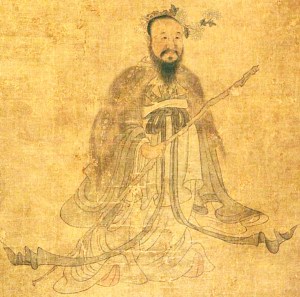
Chinese
340 B.C. – 278 B.C.
A prince am I of ancestry renowned,
Illustrious name my royal sire hath found.
When Sirius did in spring its light display,
A child was born, and Tiger marked the day.
When first upon my face my lord’s eye glanced,
For me auspicious names he straight advanced,
Denoting that in me Heaven’s marks divine
Should with the virtues of the earth combine.
With lavished innate qualities indued,
By art and skill my talents I renewed;
Angelic herbs and sweet selineas too,
And orchids late that by the water grew,
I wove for ornament; till creeping Time,
Like water flowing, stole away my prime.
Magnolias of the glade I plucked at dawn,
At eve beside the stream took winter-thorn.
Without delay the sun and moon sped fast,
In swift succession spring and autumn passed;
The fallen flowers lay scattered on the ground,
The dusk might fall before my dream was found.
Had I not loved my prime and spurned the vile,
Why should I not have changed my former style?
My chariot drawn by steeds of race divine
I urged; to guide the king my sole design.
Three ancient kings there were so pure and true
That round them every fragrant flower grew;
Cassia and pepper of the mountain-side
With melilotus white in clusters vied.
Two monarchs then, who high renown received,
Followed the kingly way, their goal achieved.
Two princes proud by lust their reign abused,
Sought easier path, and their own steps confused.
The faction for illict pleasure longed;
Dreadful their way where hidden perils thronged.
Danger against myself could not appal,
But feared I lest my sovereign’s sceptre fall.
Forward and back I hastened in my quest,
Followed the former kings, and took no rest.
The prince my true integrity defamed,
Gave ear to slander, high his anger flamed;
Integrity I knew could not avail,
Yet still endured; my lord I would not fail.
Celestial spheres my witness be on high,
I strove but for his sacred majesty.
Twas first to me he gave his plighted word,
But soon repenting other counsel heard.
For me departure could arouse no pain;
I grieved to see his royal purpose vain.
Nine fields of orchids at one time I grew,
For melilot a hundred acres too,
And fifty acres for the azalea bright,
The rumex fragrant and the lichen white.
I longed to see them yielding blossoms rare,
And thought in season due the spoil to share.
I did not grieve to see them die away,
But grieved because midst weeds they did decay.
Insatiable in lust and greediness
The faction strove, and tired not of excess;
Themselves condoning, others they’d decry,
And steep their hearts in envious jealousy.
Insatiably they seized what they desired,
It was not that to which my heart aspired.
As old age unrelenting hurried near,
Lest my fair name should fail was all my fear.
Dew from magnolia leaves I drank at dawn,
At eve for food were aster petals borne;
And loving thus the simple and the fair,
How should I for my sallow features care?
With gathered vines I strung valeria white,
And mixed with blue wistaria petals bright,
And melilotus matched with cassia sweet,
With ivy green and tendrils long to meet.
Life I adapted to the ancient way,
Leaving the manners of the present day;
Thus unconforming to the modern age,
The path I followed of a bygone sage.
Long did I sigh and wipe away my tears,
To see my people bowed by griefs and fears.
Though I my gifts enhanced and curbed my pride,
At morn they’d mock me, would at eve deride;
First cursed that I angelica should wear,
Then cursed me for my melilotus fair.
But since my heart did love such purity,
I’d not regret a thousand deaths to die.
I marvel at the folly of the king,
So heedless of his people’s suffering.
They envied me my mothlike eyebrows fine,
And so my name his damsels did malign.
Truly to craft alone their praise they paid,
The square in measuring they disobeyed;
The use of common rules they held debased;
With confidence their crooked lines they traced.
In sadness plunged and sunk in deepest gloom,
Alone I drove on to my dreary doom.
In exile rather would I meet my end,
Than to the baseness of their ways descend.
Remote the eagle spurns the common range,
Nor deigns since time began its way to change;
A circle fits not with a square design;
Their different ways could not be merged with mine.
Yet still my heart I checked and curbed my pride,
Their blame endured and their reproach beside.
To die for righteousness alone I sought,
For this was what the ancient sages taught.
I failed my former errors to discern;
I tarried long, but now I would return.
My steeds I wheeled back to their former way,
Lest all too long down the wrong path I stray.
On orchid-covered bank I loosed my steed,
And let him gallop by the flow’ry mead
At will. Rejected now and in disgrace,
I would retire to cultivate my grace.
With cress leaves green my simple gown I made,
With lilies white my rustic garb did braid.
Why should I grieve to go unrecognised,
Since in my heart fragrance was truly prized?
My headdress then high-pinnacled I raised,
Lengthened my pendents, where bright jewels blazed.
Others may smirch their fragrance and bright hues,
My innocence is proof against abuse.
Oft I looked back, gazed to the distance still,
Longed in the wilderness to roam at will.
Splendid my ornaments together vied,
With all the fragrance of the flowers beside;
All men had pleasures in their various ways,
My pleasure was to cultivate my grace.
I would not change, though they my body rend;
How could my heart be wrested from its end?
My handmaid fair, with countenance demure,
Entreated me allegiance to abjure:
‘A hero perished in the plain ill-starred,
Where pigmies stayed their plumage to discard.
Why lovest thou thy grace and purity,
Alone dost hold thy splendid virtue high?
Lentils and weeds the prince’s chamber fill:
Why holdest thou aloof with stubborn will?
Thou canst not one by one the crowd persuade,
And who the purpose of our heart hath weighed?
Faction and strife the world hath ever loved;
Heeding me not, why standest thou removed?’
I sought th’ancestral voice to ease my woe.
Alas, how one so proud could sink so low!
To barbarous south I went across the stream;
Before the ancient I began my theme:
‘With odes divine there came a monarch’s son,
Whose revels unrestrained were never done;
In antics wild, to coming perils blind,
He fought his brother, and his sway declined.
The royal archer, in his wanton chase
For foxes huge, his kingdom did disgrace.
Such wantonness predicts no happy end;
His queen was stolen by his loyal friend.
The traitor’s son, clad in prodigious might,
In incest sinned and cared not what was right.
He revelled all his days, forgetting all;
His head at last in treachery did fall.
And then the prince, who counsels disobeyed,
Did court disaster, and his kingdom fade.
A prince his sage in burning cauldrons tossed;
His glorious dynasty ere long was lost.
‘But stern and pious was their ancient sire,
And his successor too did faith inspire;
Exalted were the wise, the able used,
The rule was kept and never was abused.
The august heaven, with unbiassed grace,
All men discerns, and helps the virtuous race;
Sagacious princes through their virtuous deed
The earth inherit, and their reigns succeed.
The past I probed, the future so to scan,
And found these rules that guide the life of man:
A man unjust in deed who would engage?
Whom should men take as guide except the sage?
In mortal dangers death I have defied,
Yet could look back, and cast regret aside.
Who strove, their tool’s defects accounting nought,
Like ancient sages were to cauldrons brought.’
Thus I despaired, my face with sad tears marred,
Mourning with bitterness my years ill-starred;
And melilotus leaves I took to stem
The tears that streamed down to my garment’s hem.
Soiling my gown, to plead my case I kneeled;
Th’ancestral voice the path to me revealed.
Swift jade-green dragons, birds with plumage gold,
I harnessed to the whirlwind, and behold,
At daybreak from the land of plane-trees grey,
I came to paradise ere close of day.
I wished within the sacred brove to rest,
But now the sun was sinking in the west;
The driver of the sun I bade to stay,
Ere with the setting rays we haste away.
The way was long, and wrapped in gloom did seem,
As I urged on to seek my vanished dream.
The dragons quenched their thirst beside the lake
Where bathed the sun, whilst I upon the brake
Fastened my reins; a golden bough I sought
To brush the sun, and tarred there in sport.
The pale moon’s charioteer I then bade lead,
The master of the winds swiftly succeed;
Before, the royal blue bird cleared the way;
The lord of thunder urged me to delay.
I bade the phoenix scan the heaven wide;
But vainly day and night its course it tried;
The gathering whirlwinds drove it from my sight,
Rushing with lowering clouds to check my flight;
Sifting and merging in the firmament,
Above, below, in various hues they went.
The gate-keeper of heaven I bade give place,
But leaning on his door he scanned my face;
The day grew dark, and now was nearly spent;
Idly my orchids into wreaths I bent.
The virtuous and the vile in darkness merged;
They veiled my virtue, by their envy urged.
At dawn the waters white I left behind;
My steed stayed by the portals of the wind;
Yet, gazing back, a bitter grief I felt
That in the lofty crag no damsel dwelt.
I wandered eastward to the palace green,
And pendents sought where jasper boughs were seen,
And vowed that they, before their splendour fade,
As gift should go to grace the loveliest maid.
The lord of clouds I then bade mount the sky
To seek the steam where once the nymph did lie;
As pledge I gave my belt of splendid sheen,
My councillor appointed go-between.
Fleeting and wilful like capricious cloud,
Her obstinacy swift no change allowed.
At dusk retired she to the crag withdrawn,
Her hair beside the stream she washed at dawn.
Exulting in her beauty and her pride,
Pleasure she worshipped, and no whim denied;
So fair of form, so careless of all grace,
I turned to take another in her place.
To earth’s extremities I sought my bride,
And urged my train through all the heaven wide.
Upon a lofty crag of jasper green
The beauteous princess of the west was seen.
The falcon then I bade entreat the maid,
But he, demurring, would my course dissuade;
The turtle-dove cooed soft and off did fly,
But I mistrusted his frivolity.
Like whelp in doubt, like timid fox in fear,
I wished to go, but wandered ever near.
With nuptial gifts the phoenix swiftly went;
I feared the prince had won her ere I sent.
I longed to travel far, yet with no bourn,
I could but wander aimless and forlorn.
Before the young king was in marriage bound,
The royal sisters twain might still be found;
My suit was unauspicious at the best;
I knew I had small hope in my request.
The world is dark, and envious of my grace;
They veil my virture and the evil praise.
Thy chamber dark lies in recesses deep,
Sagacious prince, risest thou not from sleep?
My zeal unknown the prince would not descry;
How could I bear this harsh eternity?
With mistletoe and herbs of magic worth,
I urged the witch the future to show forth.
‘If two attain perfection they must meet,
But who is there that would thy virtue greet?
Far the nine continents their realm display;
Why here to seek thy bride doth thou delay?
Away!’ she cried, ‘set craven doubt aside,
If beauty’s sought, there’s none hath with thee vied.
What place is there where orchids flower not fair?
Why is thy native land thy single care?
‘Now darkly lies the world in twilight’s glow,
Who doth your defects and your virtue know?
Evil and good herein are reconciled;
The crowd alone hath nought but is defiled.
With stinking mugwort girt upon their waist,
They curse the others for their orchids chaste;
Ignorant thus in choice of fragrance rare,
Rich ornaments how could they fitly wear?
With mud and filth they fill their pendent bag;
Cursing the pepper sweet, they brawl and brag.’
Although the witches counsel I held good,
In foxlike indecision still I stood.
At night the wizard great made his descent,
And meeting him spiced rice I did present.
The angels came, shading with wings the sky;
From mountains wild the deities drew nigh.
With regal splendour shone the solemn sight,
And thus the wizard spake with omens bright:
‘Take office high or low as days afford,
If one there be that could with thee accord;
Like ancient kings austere who sought their mate,
Finding the one who should fulfill their fate.
Now if thy heart doth cherish grace within,
What need is there to choose a go-between?
A convict toiled on rocks to expiate
His crime; his sovereign gave him great estate.
A butcher with his knife made roundelay;
His king chanced there and happy proved the day.
A prince who heard a cowherd chanting late
Raised him to be a councillor of state.
Before old age o’ertake thee on thy way,
Life still is young; to profit turn thy day.
Spring is but brief, when cuckoos start to sing,
And flowers will fade that once did spread and spring.’
On high my jasper pendent proudly gleamed,
Hid by the crowd with leaves that thickly teemed;
Untiring they relentless means employed;
I feared it would through envy be destroyed.
This gaudy age so fickle proved its will,
That to what purpose did I linger still?
E’en orchids changed, their fragrance quickly lost,
And midst the weeds angelicas were tossed.
How could these herbs, so fair in former day,
Their hue have changed, and turned to mugworts grey?
The reason for their fall, not far to seek,
Was that to tend their grace their will proved weak.
I thought upon the orchids I might lean;
No flowers appeared, but long bare leaves were seen;
Their grace abandoned, vulgar taste to please,
Content with lesser flowers to dwell at ease.
To boasts and flattery the pepper turned;
To fill the pendent bag the dogwood yearned;
Thus only upon higher stations bent,
How could they long retain their former scent?
Since they pursued the fashion of the time,
Small wonder they decayed e’en in their prime.
Viewing the orchids’ and the peppers’ plight
Why blame the rumex and selinea white?
My jasper pendent rare I was beguiled
To leave, and to this depth then sank defiled.
It blossomed still and never ceased to grow;
Like water did its lovely fragrance flow:
Pleasure I took to wear this bough in sport,
As roaming wild the damsel fair I sought.
Thus in my prime, with ornaments bedecked,
I roved the earth and heaven to inspect.
With omens bright the seer revealed the way,
I then appointed an auspicious day.
As victuals rare some jasper twigs I bore,
And some prepared, provision rich to store;
Then winged horses to my chariot brought
My carriage bright with jade and ivory wrought.
How might tow hearts at variance accord?
I roamed till peace be to my mind restored.
The pillar of the earth I stayed beside;
The way was long, and winding far and wide.
In twilight glowed the clouds with wondrous sheen,
And chirping flew the birds of jasper green.
I went at dawn high heaven’s ford to leave;
To earth’s extremity I came at eve.
On phoenix wings the dragon pennons lay;
With plumage bright they flew to lead the way.
I crossed the quicksand with its treach’rous flood,
Beside the burning river, red as blood;
To bridge the stream my dragons huge I bade,
Invoked the emperor of the west to aid.
The way was long, precipitous in view;
I bade my train a different path pursue.
There where the heaven fell we turned a space,
And marked the western sea as meeting-place.
A thousand chariots gathred in my train,
With axles full abreast we drove amain;
Eight horses drew the carriages behind;
The pennons shook like serpents in the wind.
I lowered flags, and from my whip refrained;
My train of towering chariots I restrained.
I sang the odes. I trod a sacred dance,
In revels wild my last hour to enhance.
Ascending where celestial heaven blazed,
On native earth for the last time we gazed;
My slaves were sad, my steeds all neighed in grief,
And gazing back, the earth they would not leave.


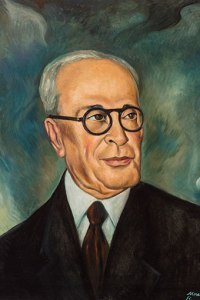

 Poets Corner