All the hills and vales along
Earth is bursting into song,
And the singers are the chaps
Who are going to die perhaps.
O sing, marching men,
Till the valleys ring again.
Give your gladness to earth’s keeping,
So be glad, when you are sleeping.
Cast away regret and rue,
Think what you are marching to.
Little live, great pass.
Jesus Christ and Barabbas
Were found the same day.
This died, that went his way.
So sing with joyful breath,
For why, you are going to death.
Teeming earth will surely store
All the gladness that you pour.
Earth that never doubts nor fears,
Earth that knows of death, not tears,
Earth that bore with joyful ease
Hemlock for Socrates,
Earth that blossomed and was glad
‘Neath the cross that Christ had,
Shall rejoice and blossom too
When the bullet reaches you.
Wherefore, men marching
On the road to death, sing!
Pour your gladness on earth’s head,
So be merry, so be dead.
From the hills and valleys earth
Shouts back the sound of mirth,
Tramp of feet and lilt of sing
Ringing all the road along.
All the music of their going,
Ringing swinging glad song-throwing,
Earth will echo still, when foot
Lies numb and voice mute.
On, marching men, on
To the gates of death with song.
Sow your gladness for earth’s reaping,
So you may be glad, though sleeping.
Strew your gladness on earth’s bed,
So be merry, so be dead.
We present this work in honor of the poet’s 150th birthday.
Amado Nervo Mexican 1870 – 1919
She kissed me often, as if she feared
an imminent departure… Her affections
were restless, nervous.
I didn’t understand
such feverish haste. My coarse intention
never saw very far…
She foresaw!
She foresaw that our time would be short,
that the sail battered by the wind’s lash
was already waiting… and in her anxiety
she tried to leave me her soul with every embrace,
to put all eternity into her kisses.
We present this work in honor of the 30th anniversary of the poet’s death.
Mehdi Akhavan-Sales Persian 1929 – 1990
The stone lay there like a mountain
and we sat here a weary bunch
women, men, young, old
all linked together
at the ankles, by a chain.
You could crawl to whomever your heart desired
as far as you could drag your chain.
We did not know, nor did we ask
was it a voice in our nightmare and weariness
or else, a herald from an unknown corner,
it spoke:
“The stone lying there holds a secret
inscribed on it by wise men of old.”
Thus spoke the voice over and again
and, as a wave recoiling on itself
retreated in the dark
and we said nothing
and for some time we said nothing.
Afterwards, only in our looks
many doubts and queries spoke out
then nothing but the ambush of weariness, oblivion
and silence, even in our looks
and the stone lying there.
One night, moonlight pouring damnation on us
and our swollen feet itching
one of us, whose chain was the heaviest
damned his ears and groaned: “I must go”
and we said, fatigued: “Damn our ears
damn our eyes, we must go.”
and we crawled up to where the stone lay one of us, whose chain was looser
climbed up and read:
“He shall know my secret
who turns me over!”
With a singular joy we repeated this dusty secret
under our breath as if it were a prayer
and the night was a glorious stream filled with moonlight.
One… two… three… heave-ho!
One… two… three… once more!
sweating sad, cursing, at times even crying
again…one…two…three…thus many times
hard was our task, sweet our victory
tired but happy, we felt a familiar joy
soaring with delight and ecstasy.
One of us, whose chain was lighter
saluted all, then climbed the stone
wiped the dirt-caked inscription and mouthed the words
(we were impatient)
wetted his lips (and we did the same)
and remained silent
cast a glance at us and remained silent
read again, his eyes fixed, his tongue dead
his gaze drifting over a far away unknown
we yelled to him”
“Read!” he was speechless
“Read it to us!” he stared at us in silence
after a time
he climbed down, his chain clanking
we held him up, lifeless as he was
we sat him down
he cursed our hands and his
“What did you read? huh?”
He swallowed and said faintly:
“The same was written:
“He shall know my secret
who turns me over!”
We sat
and
stared at the moon and the bright night
and the night was a sickly stream.
Whenever Richard Cory went down town,
We people on the pavement looked at him:
He was a gentleman from sole to crown,
Clean favored, and imperially slim.
And he was always quietly arrayed,
And he was always human when he talked;
But still he fluttered pulses when he said,
‘Good-morning,’ and he glittered when he walked.
And he was rich – yes, richer than a king –
And admirably schooled in every grace:
In fine, we thought that he was everything
To make us wish that we were in his place.
So on we worked, and waited for the light,
And went without the meat, and cursed the bread;
And Richard Cory, one calm summer night,
Went home and put a bullet through his head.
We present this work in honor of the Moroccan holiday, Revolution Day.
Mostafa Nissaboury Moroccan b. 1943
I nomad
I heal through sand writings
the wounds of becoming in waiting
I’ll track the image of death in you
your star paths and there where it will be present
with kaftans with kif bouquets
fostering mirages death
very beautiful like the sovereign reading of our hands
Because I See us
I’ll spit out my remembrances at dawn without you
my inaudible kinships in the troubled waters of uncertain early mornings
I’ll be the one
whose voice is native to cities thrown to their defeats
in debris of heavens that haunt them
who does not know my name my origin I’ll be
the blood-me
so as never again to dream.
Death is red all-over who discovers
its blazing owl
and the dullness of a moon asleep
in its sources
Memory damned
From then on I speak the language
inherited from a vast spread out night
I nomad
I would like as in an ancient rite and wearing a mask
I would like with moving grounds
I would like with cycles of bodies walled in the mud I’d like
from yesterday to tomorrow
with streets booby-trapped with men with eyes like extinct suns
with streets without cities with cities without names
I would like
to arrive like a fish according to the customs of water
that punctuate your name with an island in my gaze
I would like like an intense cloud over crops without soil
like a life possibility that is other like a cry
to come back
and inflict on your body the spectacle of my shadow peninsulas
cut through our difficulty of being
or die
I speak
that half of my language where the sun is a fissure while in the
other half everything between us remains a thousand times
to be resaid
the sun is in my language
the phosphorescent jewel summing up venomous nights
of porphyry inside you
protecting forever from my sight
the fogs of your shores and the solid earth of your warheaded tales
the sun in my Adam’s apple
bursts the dams of refusal on the sea that I drink all up
to hear you I want to read
on your breasts the pink alphabet
of pain’s solitudes and the predictions of all the mountains to come
Nomad
to ruin one religion a day without straying from myself
that is from the fracas and plutonium eruptions of my blood
standing watch on the ramparts of the jade palaces
of the mother-of-pearl mausoleums
I would like to ruin one religion a day and all the golden temples
in my memories — set traps for the phantoms
that venture
out of forgetting
I arrive
by the caravan
come out of the great gash
in space.
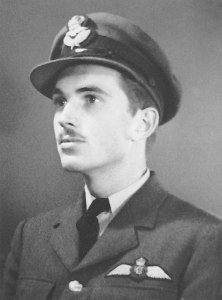
We present this work in honor of National Aviation Day.
John Gillespie Magee, Jr. American 1922 – 1941
Oh, I have slipped the surly bonds of earth,
And danced the skies on laughter-silvered wings;
Sunward I’ve climbed and joined the tumbling mirth of sun-split clouds –
and done a hundred things You have not dreamed of –
wheeled and soared and swung high in the sunlit silence.
Hovering there I’ve chased the shouting wind along
and flung my eager craft through footless halls of air.
Up, up the long delirious burning blue
I’ve topped the wind-swept heights with easy grace,
where never lark, or even eagle, flew;
and, while with silent, lifting mind I’ve trod
the high untrespassed sanctity of space,
put out my hand and touched the face of God.
 Poets Corner