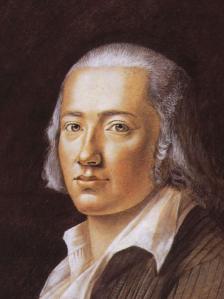
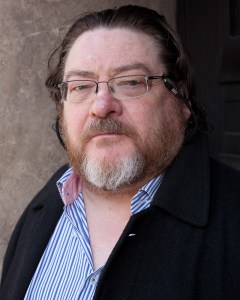
The Cathedral

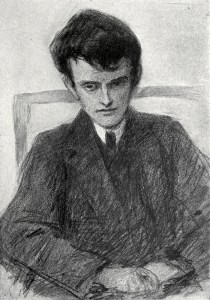
Edmond Rostand
French
1868 – 1918


All they did was make it a little more immortal
A work of art doesn’t cease to exist because it’s destroyed by a moron
Ask Phidias and ask Rodin
Whether seeing their work we don’t say “That’s it!”.

A fort dies when we dismantle it
But a ruined church is always beautiful
And, looking upwards, we recall how the roof looked
But prefer to see the sky rather than stones full of holes.

Let us give thanks – and admit that we previously didn’t have
Monuments like those the Greeks have on their gilded hill
A symbol of beauty sanctified by an act of abuse

Let us give thanks to those who aimed their stupid cannon
Since the result of their action is shame on them
But for us the building has become a Parthenon.
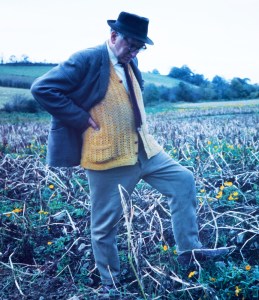
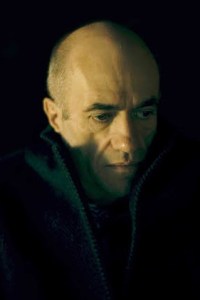
Memory of My Father

Patrick Kavanagh
Irish
1904 – 1967


Every old man I see
Reminds me of my father
When he had fallen in love with death
One time when sheaves were gathered.
That man I saw in Gardner Street
Stumbled on the kerb was one,
He stared at me half-eyed,
I might have been his son.
And I remember the musician
Faltering over his fiddle
In Bayswater, London,
He too set me the riddle.
Every old man I see
In October-coloured weather
Seems to say to me:
“I was once your father.”

Lost for Words

Colm Toibin
Irish
b. 1955


The sea is all washed up. The house rocks
On through the night; nothing will see reason.
Most things have left us, and some people too.
Strange the speed with which they disappeared.
And colours died that gave a shape to things,
Till what is lost comes vaguely in these dreams.

And the dead sad words float out in foolish space
And have the weight of atoms in a wind;
They do not want to come to earth again.
I saw their tears unflowing in the sky.

In an old house I heard some words for flowers:
‘Buttercup’, ‘lupin’, ‘truth’ and ‘fluredelee’.
And there were names for trees: ‘barkbrown’, ‘oak’
And ‘hard’, the loveliest of all, they said,
Easy to live with and soft on the eye.
On a saint’s day you climbed into its soul.

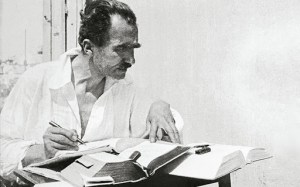
The Odyssey — a Modern Sequel, Extract 1

In honor of Greek Independence Day, we present this work by a giant of Greek literature.

Nikos Kazantzakis
Greek
1883 – 1957


Then flesh dissolved, glances congealed, the heart’s pulse stopped,
and the great mind leapt to the peak of its holy freedom,
fluttered with empty wings, then upright through the air
soared high and freed itself from its last cage, its freedom.
All things like frail mist scattered till but one brave cry
for a brief moment hung in the calm benighted waters:
“Forward, my lads, sail on, for Death’s breeze blows in a fair wind!”

An Old Song Re-Sung

Padraic Colum
Irish
1881 – 1972


As I went down through Dublin city
At the hour of twelve of the night,
Who did I see but a Spanish lady
Washing her feet by candle light.
First she washed them,
Then she dried them,
All by a fire of amber coals,
In all my life I never did see
A maid so neat about the soles.

I asked her would she come a-walking,
And we went on where the small bats flew,
A coach I called then to instate her,
And on we went till the grey cocks crew.
Combs of amber
In her hair were,
And her eyes had every spell,
In all my life I never did see
A maid whom I could love so well.

But when I came to where I found her,
And set her down from the halted coach,
Who was there waiting, his arms folded,
But that fatal swordsman, Tiger Roache?
Then blades were out,
And ‘twas thrust and cut,
And never wrist gave me more affright,
Till I lay low upon the floor
Where she stood holding the candle light.

But, O ye bucks of Dublin city,
If I should see at twelve of the night,
In any chamber, such lovely lady
Washing her feet by candle light,
And drying o’er
Soles neat as hers,
All by a fire of amber coal
Your blades be dimmed! I’d whisper her,
And take her for a midnight stroll!

Let the Life Be Victorious

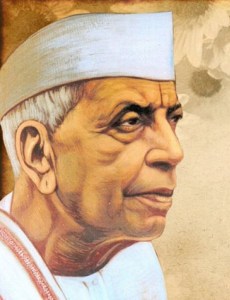
We present this work in honor of Bihar Divas.

Maithili Sharan Gupt
Indian
1886 – 1964


The fear of death is false
Victory is only for Life.

Setting up the root of Organisms
making new splendor eternally
This soul is everlasting
Victory is only for Life.

The world only gets a new life
the lifeless remains like the foolish
A seed creates a hundred plants
The creator is very kind
Victory is only for Life.

I die a hundred times over the life
Do I bury this money
If I do not use it properly
Then it is a great devastation
Victory is only for Life.

The Efficacy of Prayer

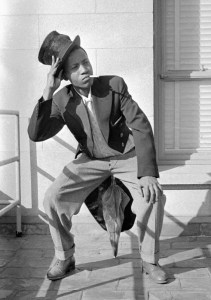
In honor of Human Rights Day, we present this work by one of 20th century South Africa’s cleverest poets.

Casey Motsisi
South African
1932 – 1977


They called him Dan the Drunk.
The old people refuse to say how old he was,
Nobody knows where he came from – but they all
Called him Dan the Drunk.
He was a drunk, but perhaps his name was not really Dan.
Who know, he might have been Sam.
But why bother, he’s dead, poor Dan.
Gave him a pauper’s funeral, they did.
Just dumped him into a hole to rest in eternal drunkenness.
Somehow the old people are glad that Dan the Drunk is dead.
Ghastly!
They say he was a bad influence on the children.
But the kids are sad that Dan the Drunk is no more.
No more will the kids frolic to the music that used to flow out of his battered concertina. Or listen to the tales he used to tell.
All followed him into that pauper’s hole.
How the kids used to worship Dan the Drunk!
He was just one of them grown older too soon.
‘I’m going to be just like Dan the Drunk,’ a little girl said to her parents of a night cold while they crowded around a sleepy brazier.
The parents looked at each other and their eyes prayed.
‘God Almighty, save our little Sally.’
God heard their prayer.
He saved their Sally.
Prayer. It can work miracles.
Sally grew up to become a nanny…

Bread and Wine

We present this work in honor of the poet’s 250th birthday.

Friedrich Hölderlin
German
1770 – 1843


Round about the city rests. The illuminated streets grow
Quiet, and coaches rush along, adorned with torches.
Men go home to rest, filled with the day’s pleasures;
Busy minds weigh up profit and loss contentedly
At home. The busy marketplace comes to rest,
Vacant now of flowers and grapes and crafts.
But the music of strings sounds in distant gardens:
Perhaps lovers play there, or a lonely man thinks
About distant friends, and about his own youth.
Rushing fountains flow by fragrant flower beds,
Bells ring softly in the twilight air, and a watchman
Calls out the hour, mindful of the time.
Now a breeze rises and touches the crest of the grove —
Look how the moon, like the shadow of our earth,
Also rises stealthily! Phantastical night comes,
Full of stars, unconcerned probably about us —
Astonishing night shines, a stranger among humans,
Sadly over the mountain tops, in splendor.

Afterlife

We present this work in honor of the poet’s 65th birthday.

John Burnside
Scots
b. 1955


When we are gone
our lives will continue without us

– or so we believe and,
at times, we have tried to imagine

the gaps we will leave being filled
with the brilliance of others:

someone else gathering plums
from this tree in the garden,

someone else thinking this thought
in a room filled with stars

and coming to no conclusion
other than this –

this bungled joy, this inarticulate
conviction that the future cannot come

without the grace
of setting things aside,

of giving up
the phantom of a soul

that only seemed to be
while it was passing.

Happy Grass

Brendan Kennelly
Irish
b. 1936


Here, in their final quiet, the singers lie.
True to the dead, to the living true.
The grass is growing as it always grew
Drinking every human cry
Like the rain of summer reaching the repose
Of singers long out of sight.
Will we ever know what the grass knows
Flourishing in green wisdom, green delight?

When delusions of communication cease
And we are victims once again
Of rumors the gossip wind is bringing
We’ll celebrate the singers in their peace
Because above the graves of men
The happy grass is singing.