We present this work in honor of the 225th anniversary of the poet’s death.
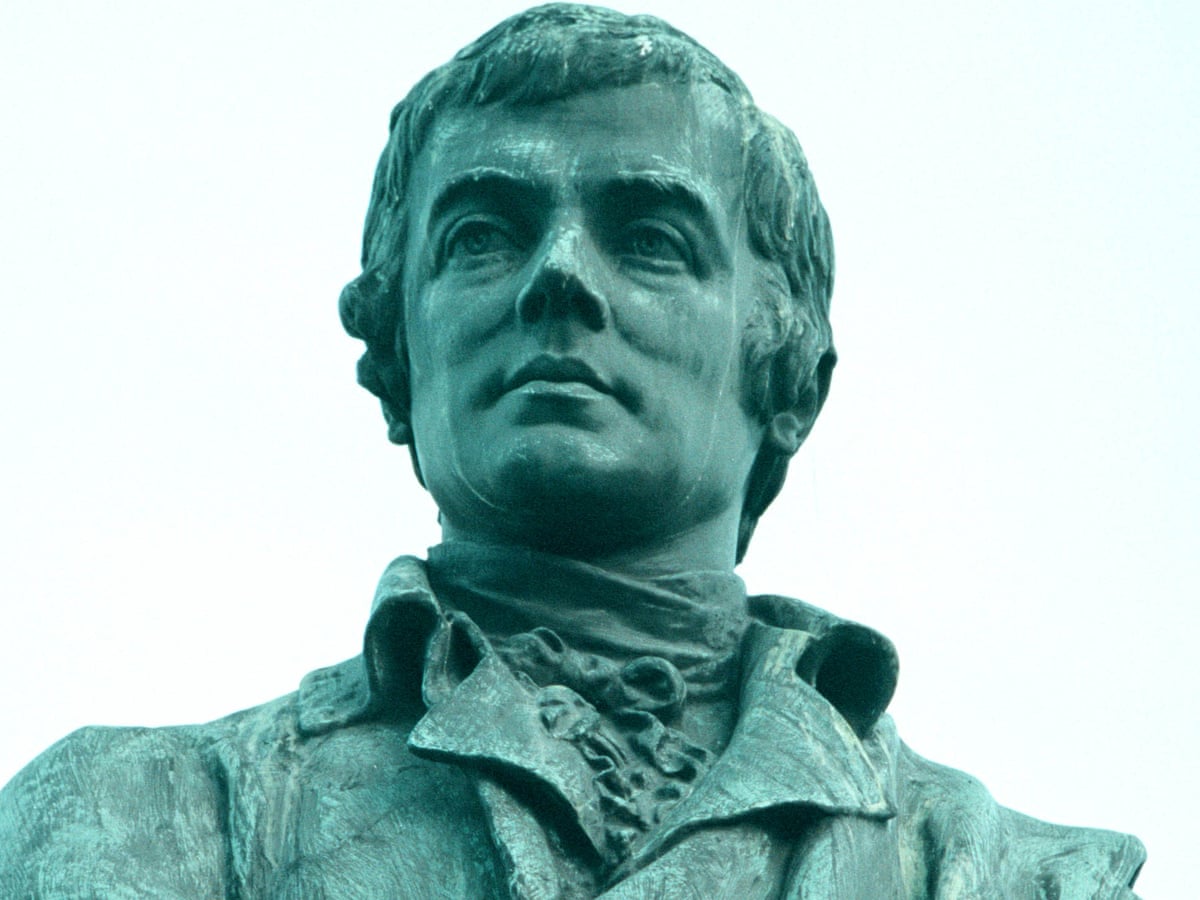
Robert Burns Scots 1759 – 1796
Ye banks and braes o’ bonie Doon, How can ye bloom sae fresh and fair? How can ye chant, ye little birds, And I sae weary fu’ o’ care! Thou’ll break my heart, thou warbling bird, That wantons thro’ the flowering thorn: Thou minds me o’ departed joys, Departed never to return.
Aft hae I rov’d by Bonie Doon, To see the rose and woodbine twine: And ilka bird sang o’ its Luve, And fondly sae did I o’ mine; Wi’ lightsome heart I pu’d a rose, Fu’ sweet upon its thorny tree! And may fause Luver staw my rose, But ah! he left the thorn wi’ me.
We present this work in honor of the poet’s 215th birthday.
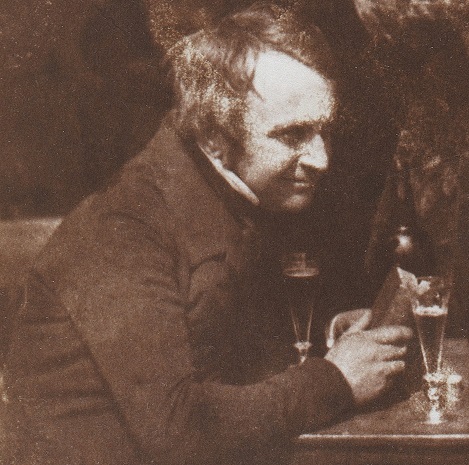
James Ballantine Scots 1806 – 1877
Confide ye aye in Providence, for Providence is kind, And bear ye a’ life’s changes, wi’ a calm and tranquil mind, Though pressed and hemmed on every side, ha’e faith and ye ‘ll win through, For ilka blade o’ grass keps its ain drap o’ dew.
Gin reft frae friends or crest in love, as whiles nae doubt ye’ve been, Grief lies deep hidden in your heart or tears flow frae your een, Believe it for the best, and trow there’s good in store for you, For ilka blade o’ grass keps its ain drap o’ dew. In lang, lang days o’ simmer, when the clear and cloudless sky Refuses ae wee drap o’ rain to nature parched and dry, The genial night, wi’ balmy breath, gars verdure spring anew, And ilka blade o’ grass keps its ain drap o’ dew.
Sae, lest ‘mid fortune’s sunshine we should feel owre proud and hie, And in our pride forget to wipe the tear frae poortith’s ee, Some wee dark clouds o’ sorrow come, we ken na whence or hoo, But ilka blade o’ grass keps its ain drap o’ dew.
In a cafe, once more I heard Your voice – those sparse and frugal notes. Do they not say that you spoke your native Greek With an English accent?
Briefest of visions: eyes meet across the cafe; A man of about my age – eyelids heavy, Perhaps from recent pleasures. I begin the most innocent of conversations. Again I see that image; Ancient delight of flesh Against guiltless flesh. Sweeter still, in its remembering.
Most innocent of conversations: once more, I am mistaken. He leaves; the moment lost – and to forego The squalor of this place, I read again your lines; those sparse and frugal notes. In a taverna, you found beauty, long ago. And when you draw, with your slim, swift pen The image of that memory – time’s patient hostage; Then how can I forget him, that boy whom you could not forget, Or that music, in a foreign language?
We present this work in honor of the poet’s 95th birthday.
Alastair Reid Scots 1926 – 2014
I am old enough now for a tree
once planted, knee high, to have grown to be
twenty times me,
and to have seen babies marry, and heroes grow deaf –
but that’s enough meaning-of-life.
It’s living through time we ought to be connoisseurs of.
From wearing a face all this time, I am made aware
of the maps faces are, of the inside wear and tear.
I take to faces that have come far.
In my father’s carved face, the bright eye
he sometimes would look out of, seeing a long way
through all the tree-rings of his history.
I am awed by how things weather: an oak mantel
in the house in Spain, fingered to a sheen,
the marks of hands leaned into the lintel,
the tokens in the drawer I sometimes touch –
a crystal lived-in on a trip, the watch
my father’s wrist wore to a thin gold sandwich.
It is an equilibrium
which breasts the cresting seasons but still stays calm
and keeps warm. It deserves a good name.
Weathering. Patina, gloss, and whorl.
The trunk of the almond tree, gnarled but still fruitful.
Weathering is what I would like to do well.
We present this work in honor of the 65th anniversary of the poet’s death.
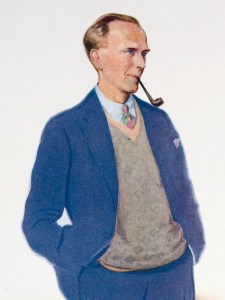
A.A. Milne Scots 1882 – 1956
I met a Man as I went walking:
We got talking,
Man and I.
“Where are you going to, Man?” I said
(I said to the Man as he went by).
“Down to the village, to get some bread.
Will you come with me?” “No, not I.”
I met a horse as I went walking;
We got talking,
Horse and I.
“Where are you going to, Horse, today?”
(I said to the Horse as he went by).
“Down to the village to get some hay.
Will you come with me?” “No, not I.”
I met a Woman as I went walking;
We got talking,
Woman and I.
“Where are you going to, Woman, so early?”
(I said to the Woman as she went by).
“Down to the village to get some barley.
Will you come with me?” “No, not I.”
I met some Rabbits as I went walking;
We got talking,
Rabbits and I.
“Where are you going in your brown fur coats?”
(I said to the Rabbits as they went by).
“Down to the village to get some oats.
Will you come with us?” “No, not I.”
I met a Puppy as I went walking;
We got talking,
Puppy and I.
“Where are you going this nice fine day?”
(I said to the Puppy as he went by).
“Up to the hills to roll and play.”
“I’ll come with you, Puppy,” said I.
We present this work in honor of the poet’s 250th birthday.
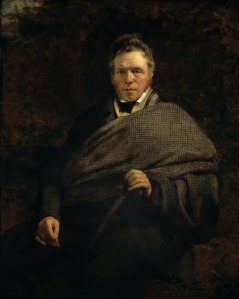
James Hogg Scots 1770 – 1835
Caledonia! thou land of the mountain and rock,
Of the ocean, the mist, and the wind-
Thou land of the torrent, the pine, and the oak,
Of the roebuck, the hart, and the hind;
Though bare are thy cliffs, and though barren thy glens,
Though bleak thy dun islands appear,
Yet kind are the hearts, and undaunted the clans,
That roam on these mountains so drear!
A foe from abroad, or a tyrant at home,
Could never thy ardour restrain;
The marshall’d array of imperial Rome
Essay’d thy proud spirit in vain!
Firm seat of religion, of valour, of truth,
Of genius unshackled and free,
The muses have left all the vales of the south,
My loved Caledonia, for thee!
Sweet land of the bay and wild-winding deeps
Where loveliness slumbers at even,
While far in the depth of the blue water sleeps
A calm little motionless heaven!
Thou land of the valley, the moor, and the hill,
Of the storm and the proud rolling wave-
Yes, thou art the land of fair liberty still,
And the land of my forefathers’ grave!
We present this work in honor of the 175th anniversary of the poet’s death.
Carolina Oliphant Scots 1766 – 1845
The laird o’ Cockpen, he’s proud an’ he’s great,
His mind is ta’en up wi’ things o’ the State;
He wanted a wife, his braw house to keep,
But favour wi’ wooin’ was fashious to seek.
Down by the dyke-side a lady did dwell,
At his table head he thought she’d look well,
McClish’s ae daughter o’ Claversha’ Lee,
A penniless lass wi’ a lang pedigree.
His wig was weel pouther’d and as gude as new,
His waistcoat was white, his coat it was blue;
He put on a ring, a sword, and cock’d hat,
And wha could refuse the laird wi’ a’ that?
He took the grey mare, and rade cannily,
An’ rapp’d at the yett o’ Claversha’ Lee;
‘Gae tell Mistress Jean to come speedily ben,
She’s wanted to speak to the Laird o’ Cockpen’.
Mistress Jean was makin’ the elderflower wine;
‘An’ what brings the laird at sic a like time?’
She put aff her apron, and on her silk gown,
Her mutch wi’ red ribbons, and gaed awa’ down.
An’ when she cam’ ben, he bowed fu’ low,
An’ what was his errand he soon let her know;
Amazed was the laird when the lady said ‘Na’,
And wi’ a laigh curtsie she turned awa’.
Dumfounder’d was he, nae sigh did he gie,
He mounted his mare – he rade cannily;
An’ aften he thought, as he gaed through the glen,
She’s daft to refuse the Laird o’ Cockpen.
And now that the laird his exit had made,
Mistress Jean she reflected on what she had said;
‘Oh, for ane I’ll get better, it’s waur I’ll get ten,
I was daft to refuse the Laird o’ Cockpen’.
Next time that the laird and the lady was seen,
They were gaun arm-in-arm to the kirk on the green;
Now she sits in the ha’ like a weel-tappit hen,
But as yet there’s nae chickens appear’d at Cockpen.
Have you any laws to mend,
Or have you any grievance?
I’m a hero to my trade,
And truly a most leal prince
Would you have war, would you have peace?
Would you be free from taxes?
Come chapping to my father’s door,
You need not doubt of access.
Religion, law, and liberty,
Ye ken are bonnie words, sirs;
They shall be all made sure to you
If ye’ll fight wi’your swords, sirs.
The nation’s debt we soon shall pay,
If you’ll support our right, boys;
No sooner we are brought in play,
Than all things shall be tight, boys.
Ye ken that by a Union law,
Your ancient knigdom’s undone;
That all your ladies, lords, and lairds,
Gang up and live in London.
Nae longer that we will allow,
For crack—it goes asunder,
What took sic time and pains to do,
And let the world wonder
And for your mair encouragement,
Ye shall be pardoned byganes:
Nor mair fight on the Continent,
And leave behind your dry banes.
Then come away, and dinna stay,—
What gars ye look sae loundert?
I’d have ye run, and not delay,
To join my father’s standard.



 Poets Corner