The Journey of the Magi

We present this work in honor of Three Kings Day.
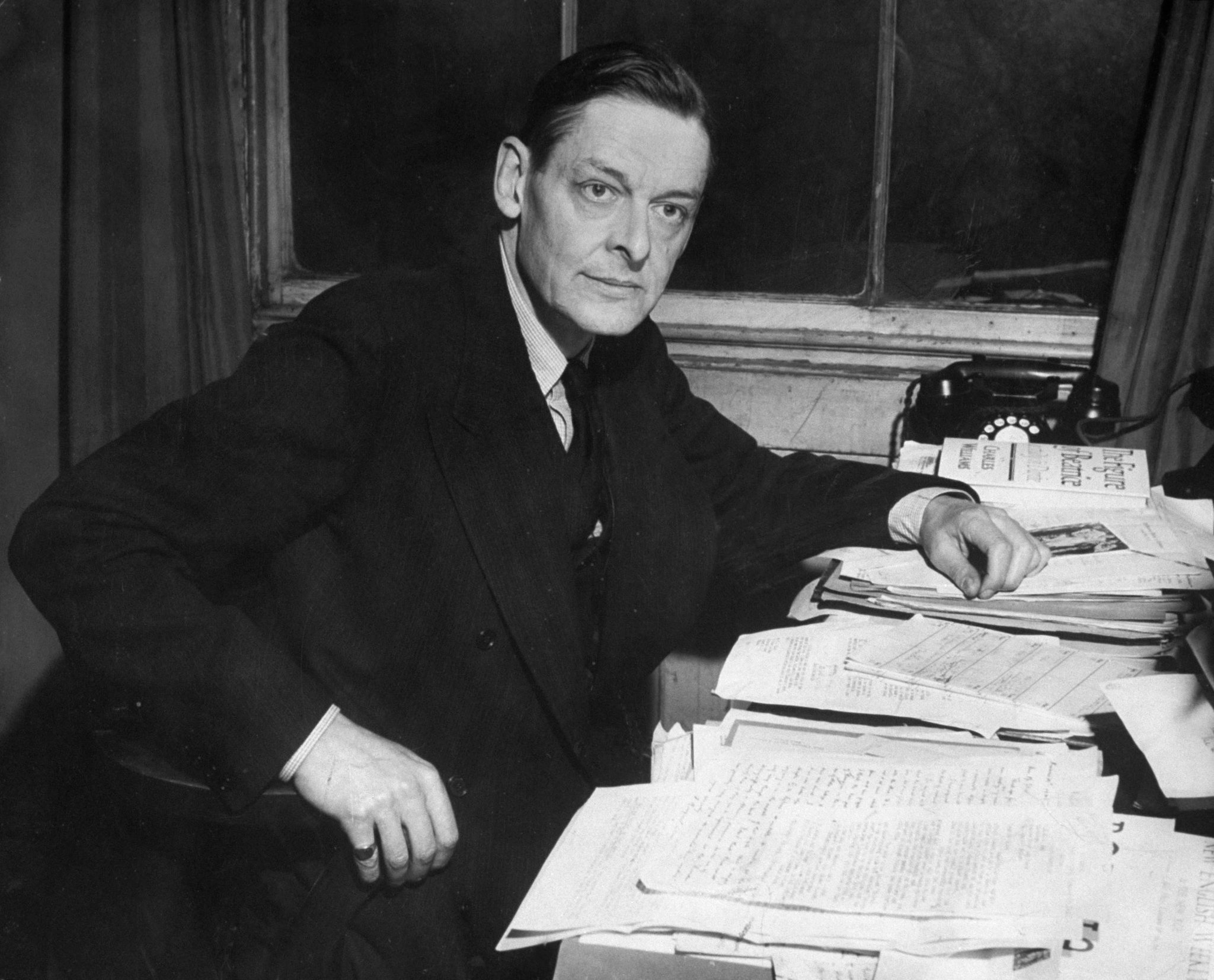
01-06 Eliot
T.S. Eliot
American
1888 – 1965

A cold coming we had of it,
Just the worst time of the year
For a journey, and such a long journey:
The ways deep and the weather sharp,
The very dead of winter.
And the camels galled, sorefooted, refractory,
Lying down in the melting snow.
There were times we regretted
The summer palaces on slopes, the terraces,
And the silken girls bringing sherbet.
Then the camel men cursing and grumbling
and running away, and wanting their liquor and women,
And the night-fires going out, and the lack of shelters,
And the cities hostile and the towns unfriendly
And the villages dirty and charging high prices:
A hard time we had of it.
At the end we preferred to travel all night,
Sleeping in snatches,
With the voices singing in our ears, saying
That this was all folly.

Then at dawn we came down to a temperate valley,
Wet, below the snow line, smelling of vegetation;
With a running stream and a water-mill beating the darkness,
And three trees on the low sky,
And an old white horse galloped away in the meadow.
Then we came to a tavern with vine-leaves over the lintel,
Six hands at an open door dicing for pieces of silver,
And feet kicking the empty wine-skins.
But there was no information, and so we continued
And arriving at evening, not a moment too soon
Finding the place; it was (you might say) satisfactory.

All this was a long time ago, I remember,
And I would do it again, but set down
This set down
This: were we led all that way for
Birth or Death? There was a Birth, certainly
We had evidence and no doubt. I had seen birth and death,
But had thought they were different; this Birth was
Hard and bitter agony for us, like Death, our death.
We returned to our places, these Kingdoms,
But no longer at ease here, in the old dispensation,
With an alien people clutching their gods.
I should be glad of another death.
I Cannot Deem Why Men Toil So for Fame

We present this work in honor of the 155th anniversary of the poet’s death.

01-05 Smith
Alexander Smith
Scots
1829 – 1867

I cannot deem why men toil so for Fame.
A porter is a porter though his load
Be the oceaned world, and although his road
Be down the ages. What is in a name?
Ah! ‘t is our spirit’s curse to strive and seek.
Although its heart is rich in pearls and ores,
The Sea complains upon a thousand shores;
Sea-like we moan for ever. We are weak.
We ever hunger for diviner stores.
I cannot say I have a thirsting deep
For human fame, nor is my spirit bowed
To be a mummy above ground to keep
For stare and handling of the vulgar crowd,
Defrauded of my natural rest and sleep.

The Dancer

01-04 Mhlophe
Gcina Mhlope
South African
b. 1958

Mama,
they tell me you were a dancer
they tell me you had long
beautiful legs to carry your graceful body
they tell me you were a dancer

Mama,
they tell me you sang beautiful solos
they tell me you closed your eyes
always when the feeling of the song
was right, and lifted your face up to the sky
they tell me you were an enchanting dancer

Mama,
they tell me you were always so gentle
they talk of a willow tree
swaying lovingly over clear running water
in early Spring when they talk of you
they tell me you were a slow dancer

Mama,
they tell me you were a wedding dancer
they tell me you smiled and closed your eyes
your arms curving outward just a little
and your feet shuffling in the sand;
tshi tshi tshitshitshitha, tshitshi tshishitshitha
O hee! How I wish I was there to see you
they tell me you were a pleasure to watch

Mama,
they tell me I am a dancer too
but I don’t know…
I don’t know for sure what a wedding dancer is
there are no more weddings
but many, many funerals
where we sing and dance
running fast with the coffin
of a would-be bride or a would-be groom
strange smiles have replaced our tears
our eyes are full of vengeance, Mama

Dear, dear Mama,
they tell me I am a funeral dancer

Old Botany Bay

01-03 Gilmore
Dame Mary Gilmore
Australian
1865 – 1962

I’m old
Botany Bay;
stiff in the joints,
little to say.

I am he
who paved the way,
that you might walk
at your ease to-day;

I was the conscript
sent to hell
to make in the desert
the living well;

I bore the heat,
I blazed the track-
furrowed and bloody
upon my back.

I split the rock;
I felled the tree:
The nation was-
Because of me!

Old Botany Bay
Taking the sun
from day to day…
shame on the mouth
that would deny
the knotted hands
that set us high!

Song of Durin

We present this work in honor of the poet’s 130th birthday.

01-02 Tolkien
J.R.R. Tolkien
English
1892 – 1973


The world was young, the mountains green,
No stain yet on the Moon was seen,
No words were laid on stream or stone
When Durin woke and walked alone.
He named the nameless hills and dells;
He drank from yet untasted wells;
He stooped and looked in Mirrormere,
And saw a crown of stars appear,
As gems upon a silver thread,
Above the shadow of his head.

The world was fair, the mountains tall,
In Elder Days before the fall
Of mighty kings in Nargothrond
And Gondolin, who now beyond
The Western Seas have passed away:
The world was fair in Durin’s Day.

A king he was on carven throne
In many-pillared halls of stone
With golden roof and silver floor,
And runes of power upon the door.
The light of sun and star and moon
In shining lamps of crystal hewn
Undimmed by cloud or shade of night
There shone for ever fair and bright.

There hammer on the anvil smote,
There chisel clove, and graver wrote;
There forged was blade, and bound was hilt;
The delver mined, the mason built.
There beryl, pearl, and opal pale,
And metal wrought like fishes’ mail,
Buckler and corslet, axe and sword,
And shining spears were laid in hoard.

Unwearied then were Durin’s folk;
Beneath the mountains music woke:
The harpers harped, the minstrels sang,
And at the fates the trumpets rang.

The world is grey, the mountains old,
The forge’s fire is ashen-cold;
No harp is wrung, no hammer falls:
The darkness dwells in Durin’s halls;
The shadow lies upon his tomb
In Moria, in Khazad-dûm.
But still the sunken stars appear
In dark and windless Mirrormere;
There lies his crown in water deep,
Till Durin wakes again from sleep.

The Old Year

We present this work in honor of New Year’s Eve.

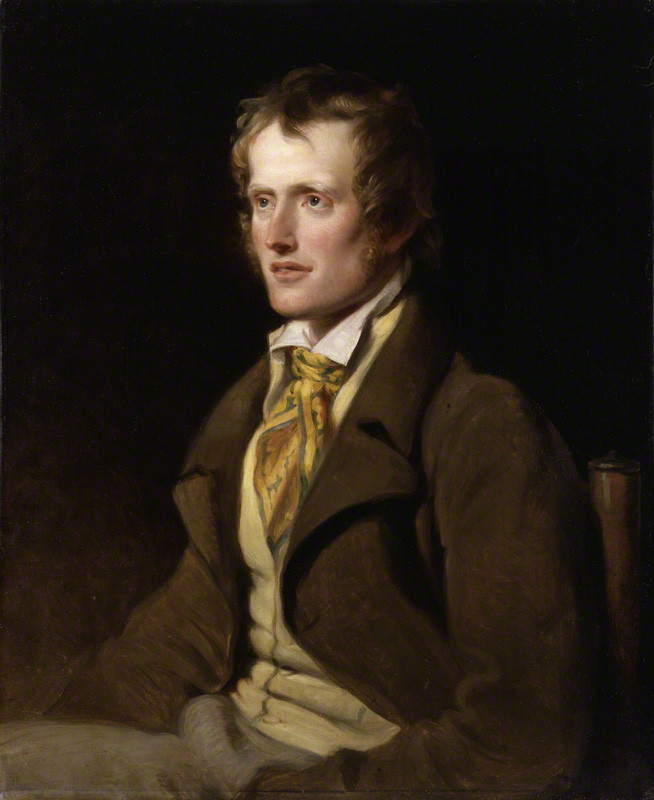
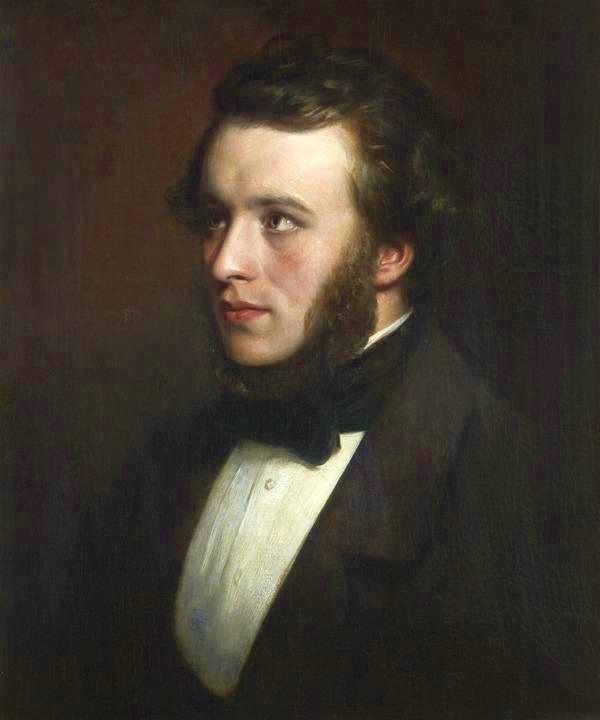
NPG 1469; John Clare by William Hilton
John Clare
English
1793 – 1864


The Old Year’s gone away
To nothingness and night:
We cannot find him all the day
Nor hear him in the night:
He left no footstep, mark or place
In either shade or sun:
The last year he’d a neighbour’s face,
In this he’s known by none.

All nothing everywhere:
Mists we on mornings see
Have more of substance when they’re here
And more of form than he.
He was a friend by every fire,
In every cot and hall—
A guest to every heart’s desire,
And now he’s nought at all.

Old papers thrown away,
Old garments cast aside,
The talk of yesterday,
Are things identified;
But time once torn away
No voices can recall:
The eve of New Year’s Day
Left the Old Year lost to all.

Donna me Prega

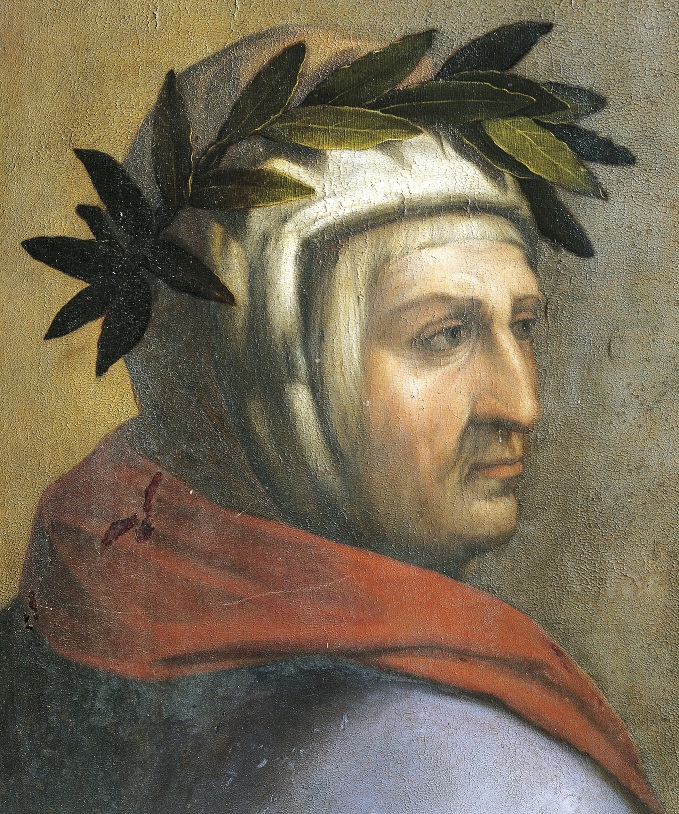
Portrait of Guido Cavalcanti (Florence, 1258 - Florence, 1300), Italian poet, oil on board by Cristofano dell'Altissimo (1525-1605), 69x44 cm
Guido Cavalcanti
Italian
1255 – 1300


A lady asks me – I speak for that reason
Of an effect – that so often – is daring
And so haughty – he’s called Amore:
He who denies him – now realise the truth!
I speak – to those present – with knowledge,
Owning no expectation – that the base-hearted
Can gain understanding through explanation:
Nor that – without practical demonstration
I have the talent – to prove at will
Where he lives, or who gave him creation,
Or what his power is, or what his virtue,
His essence too – and his every movement,
Nor the delight – so that we say: ‘to love’,
Nor whether a man can show him to gazing.

In the place – that memory inhabits
He has his station – and takes on form
Like a veil of light – born of that shadow
Which is of Mars – that arrives and remains;
He is created – has sensation – name,
From the soul, manner – from the heart, will.
And comes from visible form that takes on,
And embraces – in possible intellect,
As in the subject – location and dwelling.
And yet he has no weight in that state
Since he is not as a quality descending:
Shines out – of himself perpetual impression;
Takes no delight – except in awareness;
Nor can scatter his likenesses around.
He is not virtue – but out of that comes
Which is perfection – (so self-established),
And through feeling – not rationally, I say;
Beyond balance – yet proclaiming judgement,
That will itself – ’stead of reason – is valid:
Poor in discernment – so vice is his friend.
Oft from his power then death will follow,
He’s strong – and, virtue opposing him,
Thus runs counter to what brings succour:
Not that he is by nature in conflict;
But twisted awry from true perfection
By fate – no man possessor of life can say
That once established – he has no lordship.
Likewise he has power though men forget.

He comes into being – when will is such
That a further measure – of nature’s – at play;
Then he will never adorn himself – with rest.
Moving – changing colour, laughing through tears,
Contorting – the features – with signatures of fear;
Scarce pausing; – yet you will note of him
He’s most often found with people of worth.
His strange quality gives rise to sighing,
And makes a man gaze – into formless places
Arousing the passion that stirs a flame,
(No man can imagine him who’s not known him)
Unmoving – yet he draws all towards him,
Not turning about – to discover joy:
Nor minded to know whether great or small.
From his like he elicits – the complex glance
That makes – the pleasure – appear more certain:
Nor can stay hidden – when he is met with.
Not savage indeed – yet beauty his arrow,
So that desire – for fear is – made skilful:
Following all merit – in the piercing spirit.
Nor can be comprehended from the face:
Seen – as blankness fallen among objects;
Listening deep – yet seeing not form itself:
But led by what emanates from it.
Far from colour, of separate being,
Seated – in midst of darkness, skirting the light,
Yet far from all deceit – I say, worthy of trust,
So that compassion is born from him alone.

Canzone, confidently, now you may go
Wherever you please, I’ve adorned you so
Your reasoning – will be praised by everyone
Who makes the effort to comprehend you: though
You will reveal no art to other than them.


Translation by A.S. Kline

Poetics

We present this work in honor of the poet’s 75th birthday.

12-29 Roca
Juan Manuel Roca
Colombian
b. 1946


After writing on paper the word coyote
You must watch out that the meat-craving word
Does not take over the page,
Does not manage to hide
Behind the word jacaranda
To wait for the word hare to pass by
And then tear it apart.
In order to prevent it,
To sound the alarm
When the coyote stealthily
Prepares its ambush,
Some old masters
Who know the spells of language
Recommend tracing the word match
Rubbing it against the word stone
And lighting up the word fire
To scare it away.
There is no coyote or jackal, no hyena or jaguar,
No puma or wolf thar won’t flee
When fire converses with air.


Translation by Laura Chalar

The Sun’s Caught Cold

12-30 Inber
Vera Inber
Russian
1890 – 1972


The sun’s caught cold and hides its rays,
though dawn came hours before…
How pleasant, on an autumn day,
to set off for my native shore.

I even love the slanted rain
up here — since, after all,
I’ll reach my home exactly when
the leaves begin to fall.

I’ll breathe fresh air, so full of spice,
beneath the endless blue.
I’ll stroll and think, “Cool northerners —
oh, how I pity you…”


Translation by Boris Dralyuk