Written at an Early Period of the Revolutionary War

We present this work in honor of the poet’s 270th birthday.

Judith Sargent Murray
American
1751 – 1820


When will these rude tumultuous clamours cease,
When shall we hear the genial voice of peace;
My tir’d soul is sick of these alarms,
This vain parade, this constant din of arms.
I wish, devoutly wish, for some retreat,
Where but the shepherd’s pipe my ear may greet,
Where I may calmly hail the rising day,
On life’s eventful threshold while I stray.
I would in its variety enjoy,
The mental feast I would my hours employ,
To cull the flowers of wisdom as they grow,
To reap the fruits which love and truth bestow.

But ah! Alas! On a rough Ocean tost,
To all the bliss of social pleasures lost;
My little back by winds of passion driv’n,
Blown to, and fro, by each opinion giv’n;
Sees in perspective no auspicious shore

Which can its safety, or its hopes restore;
Terrifick visions in succession rise,
A host of fears the trembling soul surprise.

And can it be, will dark vindictive rage,
‘Gainst helpless towns revengeful battle wage,
When far removed from the hostile scene
When cities rise, when Oceans roll between

Must Glous’ter though obscure be doom’d to feel,
The British thunder, and the British steel,
Forbid it British valour, British grace,
And spare so little, so remote a place.

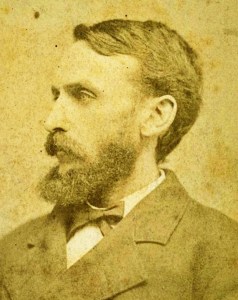
When First My Way to Fair I Took

We present this work in honor of the 85th anniversary of the poet’s death.

A.E. Housman
English
1859 – 1936


When first my way to fair I took
Few pence in purse had I,
And long I used to stand and look
At things I could not buy.

Now times are altered: if I care
To buy a thing, I can;
The pence are here and here’s the fair,
But where’s the lost young man?

—To think that two and two are four
And neither five nor three
The heart of man has long been sore
And long ’tis like to be.

Opportunity

We present this work in honor of the poet’s 180th birthday.

Edward Rowland Sill
American
1841 – 1887


This I beheld, or dreamed it in a dream:—
There spread a cloud of dust along a plain;
And underneath the cloud, or in it, raged
A furious battle, and men yelled, and swords
Shocked upon swords and shields. A prince’s banner
Wavered, then staggered backward, hemmed by foes.
A craven hung along the battle’s edge,
And thought, “Had I a sword of keener steal—
That blue blade that the king’s son bears,— but this
Blunt thing—!” He snapped and flung it from his hand,
And lowering crept away and left the field.
Then came the king’s son, wounded sore bestead,
And weaponless, and saw the broken sword
Hilt-buried in the dry and trodden sand,
And ran and snatched it, and with battle-shout
Lifted afresh he hewed his enemy down
And saved a great cause that heroic day.

May

Gioconda Belli
Nicaraguan
b. 1948


Kisses don’t wither
like the flowers of the malinche tree,
hard shells of seeds don’t grow over my arms;
I’m always flowering
with this internal rain,
like the green patios in May
and I laugh because I love the wind and the clouds
and the singing birds that pass overhead,
even though I’m entangled with memories,
covered with ivy like old walls,
I go on believing in the secret whisperings,
the strength of wild horses,
the winged message of gulls.

I believe in the countless roots of my song.


Translation by Steven F. White

I Swear to You Love By Your Arrows

Gaspara Stampa
Italian
1523 – 1554


I swear to you, Love, by your arrows,
And by your powerful holy flame,
I care not if by one I-m maimed,
My heart burned, wasted by the other:
However far through times past or coming,
There never was nor will be woman
Whomever of them you wish to name,
Could know such sharpness, such devouring:

For there-s a virtue born from suffering,
That dims and conquers the sense of pain,
So that it-s barely felt, seems scarcely hurting.
No! This, that torments soul and body again,
This is the real fear presaging my dying:
What if my fire be only straw and flame?


Translation by A.S. Kline

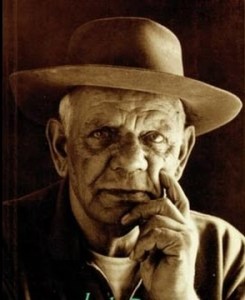
Aboriginal Australia

We present this work in honor of ANZAC Day.

Jack Davis
Australian
1917 – 2000

To the Others
You once smiled a friendly smile,
Said we were kin to one another,
Thus with guile for a short while
Became to me a brother.
Then you swamped my way of gladness,
Took my children from my side,
Snapped shut the law book, oh my sadness
At Yirrakalas’ plea denied.
So, I remember Lake George hills,
The thin stick bones of people.
Sudden death, and greed that kills,
That gave you church and steeple.
I cry again for Warrarra men,
Gone from kith and kind,
And I wondered when I would find a pen
To probe your freckled mind.
I mourned again for the Murray tribe,
Gone too without a trace.
I thought of the soldier’s diatribe,
The smile on the governor’s face.
You murdered me with rope, with gun
The massacre of my enclave,
You buried me deep on McLarty’s run
Flung into a common grave.
You propped me up with Christ, red tape,
Tobacco, grog and fears,
Then disease and lordly rape
Through the brutish years.
Now you primly say you’re justified,
And sing of a nation’s glory,
But I think of a people crucified –
The real Australian story.

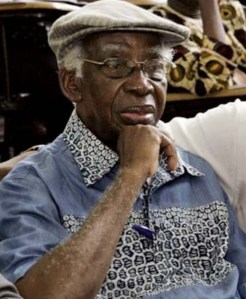
Once Upon a Time

We present this work in honor of the poet’s 100th birthday.

Gabriel Okara
Nigerian
1921 – 2019


Once upon a time, son,
they used to laugh with their hearts
and laugh with their eyes:
but now they only laugh with their teeth,
while their ice-block-cold eyes
search behind my shadow.

There was a time indeed
they used to shake hands with their hearts:
but that’s gone, son.
Now they shake hands without hearts
while their left hands search
my empty pockets.

‘Feel at home!’ ‘Come again’:
they say, and when I come
again and feel
at home, once, twice,
there will be no thrice-
for then I find doors shut on me.

So I have learned many things, son.
I have learned to wear many faces
like dresses – homeface,
officeface, streetface, hostface,
cocktailface, with all their conforming smiles
like a fixed portrait smile.

And I have learned too
to laugh with only my teeth
and shake hands without my heart.
I have also learned to say,’Goodbye’,
when I mean ‘Good-riddance’:
to say ‘Glad to meet you’,
without being glad; and to say ‘It’s been
nice talking to you’, after being bored.

But believe me, son.
I want to be what I used to be
when I was like you. I want
to unlearn all these muting things.
Most of all, I want to relearn
how to laugh, for my laugh in the mirror
shows only my teeth like a snake’s bare fangs!

So show me, son,
how to laugh; show me how
I used to laugh and smile
once upon a time when I was like you.

from As You Like It

We present this work in honor of the 405th anniversary of the poet’s death.

William Shakespeare
English
1564 – 1616


All the world’s a stage,
And all the men and women merely players;
They have their exits and their entrances;
And one man in his time plays many parts,
His acts being seven ages. At first the infant,
Mewling and puking in the nurse’s arms;
And then the whining school-boy, with his satchel
And shining morning face, creeping like snail
Unwillingly to school. And then the lover,
Sighing like furnace, with a woeful ballad
Made to his mistress’ eyebrow. Then a soldier,
Full of strange oaths, and bearded like the pard,
Jealous in honour, sudden and quick in quarrel,
Seeking the bubble reputation
Even in the cannon’s mouth. And then the justice,
In fair round belly with good capon lin’d,
With eyes severe and beard of formal cut,
Full of wise saws and modern instances;
And so he plays his part. The sixth age shifts
Into the lean and slipper’d pantaloon,
With spectacles on nose and pouch on side;
His youthful hose, well sav’d, a world too wide
For his shrunk shank; and his big manly voice,
Turning again toward childish treble, pipes
And whistles in his sound. Last scene of all,
That ends this strange eventful history,
Is second childishness and mere oblivion;
Sans teeth, sans eyes, sans taste, sans everything.