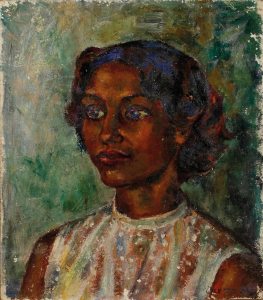
We present this work in honor of the poet’s 125th birthday.
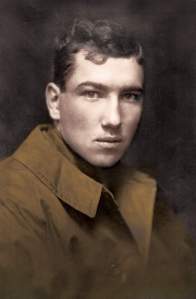
Nima Yooshij Persian 1895 – 1960
A night of deep darkness.
On a branch of the old fig tree
A frog croaks without cease,
Predicting a storm, a deluge,
and I am drowned in fear.
It is night,
And with night the world seems
like a corpse in the grave;
And in fear I say to myself:
‘What if torrential rain falls everywhere?’
‘What if the rain does not stop
until the earth sinks into the water
like a small boat?’
In this night of awful darkness
Who can say in what state we will be
when dawn breaks?
Will the morning light make
the frightening face of the storm
disappear?
Softly and humbly to the Gulf of Arabs
The convoys of dead sailors come;
At night they sway and wander in the waters far under,
But morning rolls them in the foam.
Between the sob and clubbing of the gunfire
Someone, it seems, has time for this,
To pluck them from the shallows and bury them in burrows
And tread the sand upon their nakedness;
And each cross, the driven stake of tidewood,
Bears the last signature of men,
Written with such perplexity, with such bewildered pity,
The words choke as they begin –
‘Unknown seaman’ – the ghostly pencil
Wavers and fades, the purple drips,
The breath of wet season has washed their inscriptions
As blue as drowned men’s lips,
Dead seamen, gone in search of the same landfall,
Whether as enemies they fought,
Or fought with us, or neither; the sand joins them together,
Enlisted on the other front.
Was that Layla’s flame that shone through the veils of night on Dhū-Salam? Or lightning’s flash throughout the vales round Zawra and Al-Alam? Have you but a sigh of dawn for me, O winds about Na’man? Have you but a sip to offer me, O waters of Wajra? O driver of laden camels rolling up the wayless sands like a scroll of mighty writ beside the Sagebrush of Idam Turn aside at the guarded safeground -God be your shepherd!- and seek the path To yonder Lotus thicket, to the myrtle and laurel bay. Then halt at Mount Sal, and ask at the curling vale of Raqmatayn: Have the tamarisks grown and touched at last in the livening weep of the rain? If you’ve crossed the waters of Aqīq in the mornlight, I implore you By God, be unabashed and offer them my heart-felt Hail! Tell everybody this: I have left behind a heart-felled man Alive as a deadman, adding plague to plague through your domains. From my heart like a burning bush there spreads a flame of more than fire. From my eyes the pouring tears are like a ceaseless season of rains. For such is lovers’ law: not one limb of the mortal body When bound in love with a gazelle can ever be free of pain. You ignoramus! You who defame and shame me for my love! Desist and learn. You would not blame me, had your love been the same. I swear by the sacred union, by the age-old love and by Our covenant’s communion and all the things of bygone ages: No consolation, no replacement turned me away from loving For it is not who I am to move with the whims of solace and change. Return the slumber to my eyes, and then perhaps I will see you Visit my bed in the recklessness of dream as a revenant shade. Alas for our days at Khayf! Had they but lasted each tenfold! Alas for me, alas, how the last day couldn’t last or stay. If only my grief could cure me, oh if only the “oh” of my woe And my remorse could ever recover aught that is passed away, Gazelles of the winding dell! Be kind and turn away from me For I, to look on no one but my love, have bound my gaze In deference to a Judge who has decreed a wondrous fatwa That my blood be shed in every month, both sacred and profane. Deaf, he did not hear my plea. Dumb, he could not reply. He is stricken blind to the plight of one whom love has struck insane.
We present this work in honor of the Moroccan holiday, Green March Day.
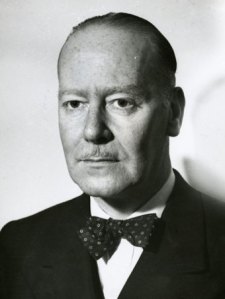
Allal El Hajjam Morrocan b. 1949
He woke up sad,
My little one, trembling
In the abyss of the new morning,
But with a spark of fire in his eyes.
The robins of dreams
Flew in his sky
Like a cry from a wound.
Then I asked him
About the secret of his tears:
About the one who frightens the flowers
And reviles the beautiful birdsongs
While taking the dawn hostage.
Do they set you aflame?
He answered: “War, oh father,
Is a night that devours the light.
It is a ghoul that ensnares children,
And birds,
And poets.
It is a fire that ignites raindrops.
So command them,
Father—command them
To go easy on the lute-strings,
So that their melodies rise
Up into the sky,
Green,
Magic,
With the hope that they will protect us
From the evil of the embers that
Glow on the horizon.”
I wiped the hot tears from his cheeks,
Whose fire was kindled by fear.
Then I kissed the vibration
Of the sound from his lips
And I said to him:
“I will command them— but
Will they listen?”
In honor of the Russian holiday, National Unity Day, we present this work by one of modern Russia’s finest poets.
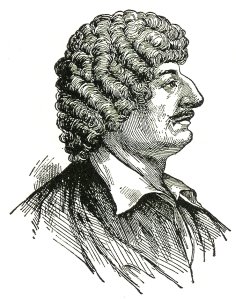
Anatoly Marienhof Russian 1897 – 1962
The night, like a tear, flowed out of an immense eye
and rolled down along the roofs upon the lashes.
Sorrow rose up like Lazarus
and raced in the streets to cry and blame everyone,
throwing herself around necks – and everyone flipped
and screamed: you’re insane!
and with whoops of fear beat the eardrums
ringing like diamond cards.
We present this work in honor of the poet’s 100th birthday.
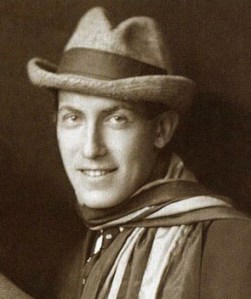
Oodgeroo Noonuccal Australian 1920 – 1993
My father was Noonuccal man and kept old tribal way,
His totem was the Carpet Snake, whom none must ever slay;
But mother was of Peewee clan, and loudly she expressed
The daring view that carpet snakes were nothing but a pest.
Now one lived inside with us in full immunity,
For no one dared to interfere with father’s stern decree:
A mighty fellow ten feet long, and as we lay in bed
We kids could watch him round a beam not far above our head.
Only the dog was scared of him, we’d hear its whines and growls,
But mother fiercely hated him because he took her fowls.
You should have heard her diatribes that flowed in angry torrents,
With words you’d never see in print, except in D.H. Lawrence.
“I kill that robber,” she would scream, fierce as a spotted cat;
“You see that bulge inside of him? My speckly hen make that!”
But father’s loud and strict command made even mother quake;
I think he’d sooner kill a man than kill a carpet snake.
That reptile was a greedy guts, and as each bulge digested
He’d come down on the hunt at night, as appetite suggested.
We heard his stealthy slithering sound across the earthen floor,
While the dog gave a startled yelp and bolted out the door.
Then over in the chicken-yard hysterical fowls gave tongue,
Loud frantic squawks accompanied by the barking of the mung,
Until at last the racket passed, and then to solve the riddle,
Next morning he was back up there with a new bulge in his middle.
When father died we wailed and cried, our grief was deep and sore,
And strange to say from that sad day the snake was seen no more.
The wise old men explained to us: “It was his tribal brother,
And that is why it done a guy” – but some looked hard at mother.
She seemed to have a secret smile, her eyes were smug and wary,
She looked about as innocent as the cat that ate the pet canary.
We never knew, but anyhow (to end this tragic rhyme)
I think we all had snake for tea one day about that time.