Because You Loved Me

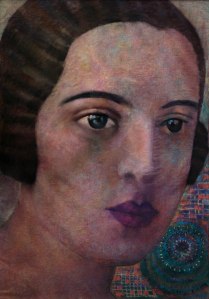
Maria Polydouri
Greek
1902 – 1930


I only sing because you loved me
in the past years.
And in sun, in summer’s prediction
and in rain and snow,
I only sing because you loved me.

Only because you held me in your arms
one night and you kissed my lips,
only for this I’m beautiful as wide open lily
and I still have a shiver in my soul,
only because you held me in your arms.

Only because your eyes looked at me
with the soul in the glance,
proudly I dressed the supreme
crown of my existence,
only because your eyes looked at me.

Only because as I was passing you noticed me
and from your glance I saw to pass
my lissome shadow as a dream
to play, to suffer,
only because as I was passing you noticed me

Because you called me shyly
and you reached after my hand
and you had in your eyes the blurring
– a complete love,
because you called me shyly.

Because, it liked only to you
that’s why my passing remained beautiful.
It was like you were following me where I was
as if you were passing somewhere close to me.
Because it liked only to you.

I was born only because you loved me,
my life was given for this.
In the graceless, unfulfilled life
my life was fulfilled.
I was born only because you loved me.

Only for your unique love
dawn gave to my hands roses.
So that I light your way for a moment
night filled my eyes with stars,
only for your unique love.

Only because you loved me so well
I lived in order to increase
your dreams, beautiful man that you set
and thus sweetly I die
only because you loved me so well.
How Agleam, How Garnished the Spring

We present this work in honor of the poet’s 150th birthday.

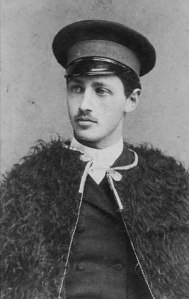
Ivan Bunin
Russian
1870 – 1953


How agleam, how garnished the spring!
Turn your eyes in the old way upon me:
Say, wherefore this sorrowing?
Why lavish this tenderness on me?

You are mute, as a blossom so frail,
Say naught! — No confession is needed:
The flight of your love I have heeded, —
Lone again is my trail!

To See Him Again

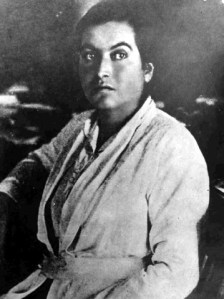
Gabriela Mistral
Chilean
1889 – 1957


Never, never again?
Not on nights filled with quivering stars,
or during dawn’s maiden brightness
or afternoons of sacrifice?

Or at the edge of a pale path
that encircles the farmlands,
or upon the rim of a trembling fountain,
whitened by a shimmering moon?

Or beneath the forest’s
luxuriant, raveled tresses
where, calling his name,
I was overtaken by the night?
Not in the grotto that returns
the echo of my cry?

Oh no. To see him again —
it would not matter where —
in heaven’s deadwater
or inside the boiling vortex,
under serene moons or in bloodless fright!

To be with him…
every springtime and winter,
united in one anguished knot
around his bloody neck!

Light of Light, O Sun of Heaven

Martin Opitz
German
1597 – 1639


Light of light, O Sun of heaven,
O Thou bright and morning Star,
To mankind in mercy given,
Send Thy radiance from afar,
Bringing light to all the earth,
Health and strength, and joy and mirth;
Darkness past, the dawn is breaking,
All creation is awaking.

Still my soul is thickly shrouded
In the chilling mist of sin,
And my conscience is beclouded
By the ignorance within.
Lead me by the hand, I pray,
Lest in error’s path I stray;
Make Thy light my sole attraction,
Guiding every thought and action.

Spirit of the heavenly morning,
Shine into my darkened heart,
That, the way of life discerning,
I may choose the better part.
Make my erring walk secure,
Every thought and action pure;
Whereso’er my feet be turning,
Keep Thy zeal within me burning.

Deign Thy feeble flock to strengthen
By the bonds of sacred love,
And Thy lines of empire lengthen
By Thy power from above.
Help us govern in Thy sight,
That our laws be just and right;
That we suffer no oppression,
Make our land Thine own possession.

Let our lamp of faith be burning
On that awful judgment day.
While in sin’s domain sojourning,
Guide us in the heavenward way:
Then their praise and thanks to Thee,
Lord, in all eternity
Shall Thy happy children render,
For Thy mercies, kind and tender.

Love Is Not All

We present this work in honor of the 70th anniversary of the poet’s death.

Edna St. Vincent Millay
American
1892 – 1950


Love is not all: it is not meat nor drink
Nor slumber nor a roof against the rain;
Nor yet a floating spar to men that sink
And rise and sink and rise and sink again;

Love can not fill the thickened lung with breath,
Nor clean the blood, nor set the fractured bone;
Yet many a man is making friends with death
Even as I speak, for lack of love alone.

It well may be that in a difficult hour,
Pinned down by pain and moaning for release,
Or nagged by want past resolution’s power,
I might be driven to sell your love for peace,

Or trade the memory of this night for food.
It well may be. I do not think I would.

Tell Your Story

Lebogang Mashile
South African
b. 1979


After they’ve fed off of your memories
Erased dreams from your eyes
Broken the seams of sanity
And glued what’s left together with lies,
After the choices and voices have left you alone
And silence grows solid
Adhering like flesh to your bones

They’ve always known your spirit’s home
Lay in your gentle sway
To light and substance
But jaded mirrors and false prophets have a way
Of removing you from yourself
You who lives with seven names
You who walks with seven faces
None can eliminate your pain

Tell your story
Let it nourish you,
Sustain you
And claim you
Tell your story
Let it feed you,
Heal you
And release you
Tell your story
Let it twist and remix your shattered heart
Tell your story
Until your past stops tearing your present apart

Limitations of Benevolence

We present this work in honor of the 110th anniversary of the poet’s death.

Julia Ward Howe
American
1819 – 1910


‘The beggar boy is none of mine,’
The reverend doctor strangely said;
‘I do not walk the streets to pour
Chance benedictions on his head.

‘And heaven I thank who made me so.
That toying with my own dear child,
I think not on his shivering limbs,
His manners vagabond and wild.’

Good friend, unsay that graceless word!
I am a mother crowned with joy,
And yet I feel a bosom pang
To pass the little starveling boy.

His aching flesh, his fevered eyes
His piteous stomach, craving meat;
His features, nipt of tenderness,
And most, his little frozen feet.

Oft, by my fireside’s ruddy glow,
I think, how in some noisome den,
Bred up with curses and with blows,
He lives unblest of gods or men.

I cannot snatch him from his fate,
The tribute of my doubting mind
Drops, torch-like, in the abyss of ill,
That skirts the ways of humankind.

But, as my heart’s desire would leap
To help him, recognized of none,
I thank the God who left him this,
For many a precious right foregone.

My mother, whom I scarcely knew,
Bequeathed this bond of love to me;
The heart parental thrills for all
The children of humanity.

Friends Are Knocking at the Door

Tahirih
Persian
1814 – 1852


Gatekeeper! Friends are knocking at the door.
Open the door! Why not open the door?

What is so wrong with letting them come in?
Why must they wait in the dark corridor?

How long do you think they can be patient?
How long should they stay there and pace the floor?

At least, why don’t you raise the window curtain?
Just peak out for once to show your face.

They want nothing from you, except yourself.
The only thing they beg for is your grace.

Outside they got drunk on love — then sober.
They didn’t care. They’re longing for your place.

They dropped their veils, forgot their desires,
gave up this search, and stripped to nudity.

Burn off the clouds now and show us the sun.
Pull off the veil. Let us see your beauty:

So then the wise would be struck dumb,
And the fools will find their wisdom:

The selfish know their true Self then,
the saints will all get drunk with them:

No servant and no Lord will be,
master and slave as one will be.

Proclamation

Alison Cockburn
Scots
1712 – 1794


Have you any laws to mend,
Or have you any grievance?
I’m a hero to my trade,
And truly a most leal prince
Would you have war, would you have peace?
Would you be free from taxes?
Come chapping to my father’s door,
You need not doubt of access.

Religion, law, and liberty,
Ye ken are bonnie words, sirs;
They shall be all made sure to you
If ye’ll fight wi’your swords, sirs.
The nation’s debt we soon shall pay,
If you’ll support our right, boys;
No sooner we are brought in play,
Than all things shall be tight, boys.

Ye ken that by a Union law,
Your ancient knigdom’s undone;
That all your ladies, lords, and lairds,
Gang up and live in London.
Nae longer that we will allow,
For crack—it goes asunder,
What took sic time and pains to do,
And let the world wonder

And for your mair encouragement,
Ye shall be pardoned byganes:
Nor mair fight on the Continent,
And leave behind your dry banes.
Then come away, and dinna stay,—
What gars ye look sae loundert?
I’d have ye run, and not delay,
To join my father’s standard.

The Embroidered Wrap

Abu Ishaq Ibrahim Ibn Ali ‘l-fath Ibn Khafaja
Arab Andalusian
1058 – 1138


Her glance, like a gazelle’s,
her throat, that of a white deer,
lips red as wine,
teeth white as sea foam.

Tipsiness made her languid.
The gold-embroidered figures
of her wrap swirled round her,
brilliant stars around the moon.

During the night love’s hands
wrapped us in a garment of embraces
ripped open
by the hands of dawn.