Dover Beach

Matthew Arnold
English
1822 – 1888


The sea is calm to-night.
The tide is full, the moon lies fair
Upon the straits; – on the French coast the light
Gleams and is gone; the cliffs of England stand,
Glimmering and vast, out in the tranquil bay.
Come to the window, sweet is the night-air!
Only, from the long line of spray
Where the sea meets the moon-blanch’d land,
Listen! you hear the grating roar
Of pebbles which the waves draw back, and fling,
At their return, up the high strand,
Begin, and cease, and then again begin,
With tremulous cadence slow, and bring
The eternal note of sadness in.

Sophocles long ago
Heard it on the Aegean, and it brought
Into his mind the turbid ebb and flow
Of human misery; we
Find also in the sound a thought,
Hearing it by this distant northern sea.

The Sea of Faith
Was once, too, at the full, and round earth’s shore
Lay like the folds of a bright girdle furl’d.
But now I only hear
Its melancholy, long, withdrawing roar,
Retreating, to the breath
Of the night-wind, down the vast edges drear
And naked shingles of the world.

Ah, love, let us be true
To one another! for the world, which seems
To lie before us like a land of dreams,
So various, so beautiful, so new,
Hath really neither joy, nor love, nor light,
Nor certitude, nor peace, nor help for pain;
And we are here as on a darkling plain
Swept with confused alarms of struggle and flight,
Where ignorant armies clash by night.
Early Evening

Ilse Blumenthal-Weiss
German
1899 – 1987


In the awake forests
of the day
Your laugh pushes through
The darkness.

Voices slip out of control
Luscious in their song,
Far and wide,
Sprayed with fog,

They swim like a fever
Glowing in the blood.
Longer still, lovely
Rhythm and flood;

Again, still again
A blooming weight:
Bend down lower
Intoxicated guest.
Light circling light
Going into silence.
Poet and poet
Into one another

Their hands curve,
Indulging / Feasting Awake.
Day is coming to an end;
It is almost night.

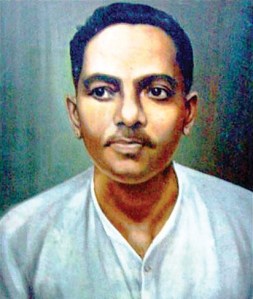
Beggar

We present this work in honor of the Day of Dr. Ambdekar Jayanti.

Suryakant Tripathi Nirala
Indian
1896 – 1961


He comes.
Making us repentant with remorseful remarks,
He comes on path.
His stomach and back seems one,
A stick in hand,
Asking for alms and grain,
To satisfy his hunger.
He spreads forward
His torn satchel,
Making us repentant with remorseful remarks,
He comes on path.
Two children with him always,
With one hand on their starved belly
Other hand raised
to attract some merciful sight,
Lips and mouth parched.
Receiving no mercy from the Maker,
Starving, can’t sob and shed tears
Busy eating decayed leftover by a roadside
Competing with stray dogs
To satiate their hunger.

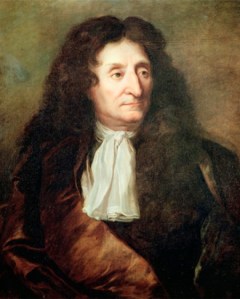
Alice Sick

We present this work in honor of the 325th anniversary of the poet’s death.

Jean De La Fontaine
French
1621 – 1695


Sick, Alice grown, and fearing dire event,
Some friend advised a servant should be sent
Her confessor to bring and ease her mind;—
Yes, she replied, to see him I’m inclined;
Let father Andrew instantly be sought:—
By him salvation usually I’m taught.

A messenger was told, without delay,
To take, with rapid steps, the convent way;
He rang the bell—a monk enquired his name,
And asked for what, or whom, the fellow came.
I father Andrew want, the wight replied,
Who’s oft to Alice confessor and guide:
With Andrew, cried the other, would you speak?
If that’s the case, he’s far enough to seek;
Poor man! he’s left us for the regions blessed,
And has in Paradise ten years confessed.

Amoretti LXVIII

We present this work in honor of Easter Sunday.

Edmund Spenser
English
1552 – 1599


Most glorious Lord of life, that on this day,
Didst make thy triumph over death and sin:
And having harrow’d hell, didst bring away
Captivity thence captive, us to win:

This joyous day, dear Lord, with joy begin,
And grant that we for whom thou diddest die,
Being with thy dear blood clean wash’d from sin,
May live for ever in felicity.

And that thy love we weighing worthily,
May likewise love thee for the same again:
And for thy sake, that all like dear didst buy,
With love may one another entertain.

So let us love, dear love, like as we ought,
Love is the lesson which the Lord us taught.

Silence

Marianne Moore
American
1887 – 1972


My father used to say,
“Superior people never make long visits,
have to be shown Longfellow’s grave
nor the glass flowers at Harvard.
Self reliant like the cat—
that takes its prey to privacy,
the mouse’s limp tail hanging like a shoelace from its mouth—
they sometimes enjoy solitude,
and can be robbed of speech
by speech which has delighted them.
The deepest feeling always shows itself in silence;
not in silence, but restraint.”
Nor was he insincere in saying, “`Make my house your inn’.”
Inns are not residences.

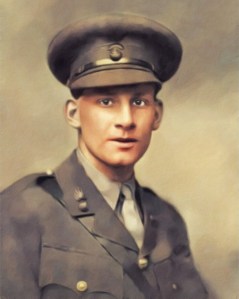
Stand To: Good Friday Morning

We present this work in honor of Good Friday.

Siegfried Sassoon
English
1886 – 1967


I’d been on duty from two till four.
I went and stared at the dug-out door.
Down in the frowst I heard them snore.
‘Stand to!’ Somebody grunted and swore.
Dawn was misty; the skies were still;
Larks were singing, discordant, shrill;
They seemed happy; but I felt ill.
Deep in water I splashed my way
Up the trench to our bogged front line.
Rain had fallen the whole damned night.
O Jesus, send me a wound to-day,
And I’ll believe in Your bread and wine,
And get my bloody old sins washed white!

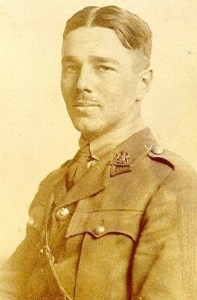
Maundy Thursday

We present this work in honor of Maundy Thursday.

Wilfred Owen
English
1893 – 1918


Between the brown hands of a server-lad
The silver cross was offered to be kissed.
The men came up, lugubrious, but not sad,
And knelt reluctantly, half-prejudiced.
(And kissing, kissed the emblem of a creed.)
Then mourning women knelt; meek mouths they had,
(And kissed the Body of the Christ indeed.)
Young children came, with eager lips and glad.
(These kissed a silver doll, immensely bright.)
Then I, too, knelt before that acolyte.
Above the crucifix I bent my head:
The Christ was thin, and cold, and very dead:
And yet I bowed, yea, kissed – my lips did cling.
(I kissed the warm live hand that held the thing.)

Ah Kite

In honor of Buddha Purmina, we present this work by one of modern India’s most revered poets.

Jibanananda Das
Indian
1899 – 1954


Ah kite, golden-winged kite, don’t cry any more this noon
of moist clouds, as you hover around the Dhanshniri river
Your whimper reminds of her eyes dim as pale cane-fruit!
A pretty princess she has drifted afar,
leaving the Earth bereft of beauty;
Why do you call her back?
Who wants to stir up pain by digging heart?
Ah kite, golden-winged kite, stop crying this noon
of tearful clouds, while flying around the Dhanshniri river.

Composed Upon Westminster Bridge, September 3, 1802

We present this work in honor of the poet’s 250th birthday.

William Wordsworth
English
1770 – 1850


Earth has not anything to show more fair:
Dull would he be of soul who could pass by
A sight so touching in its majesty:
This City now doth, like a garment, wear
The beauty of the morning; silent, bare,
Ships, towers, domes, theatres, and temples lie
Open unto the fields, and to the sky;
All bright and glittering in the smokeless air.
Never did sun more beautifully steep
In his first splendour, valley, rock, or hill;
Ne’er saw I, never felt, a calm so deep!
The river glideth at his own sweet will:
Dear God! the very houses seem asleep;
And all that mighty heart is lying still!