Lament for the Potato

We present this work in honor of St. Patrick’s Day.
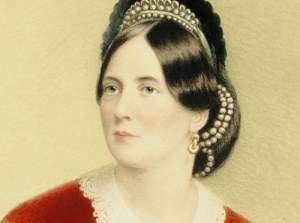
Lady Jane Wilde
Irish
1821 – 1896


There is woe, there is clamour, in our desolated land,
And wailing lamentation from a famine‐stricken band;
And weeping are the multitudes in sorrow and despair,
For the green fields of Munster lying desolate and bare.
Woe for Lorc’s ancient kingdom, sunk in slavery and grief;
Plundered, ruined, are our gentry, our people, and their Chief;

For the harvest lieth scattered, more worth to us than gold,
All the kindly food that nourished both the young and the old.
Well I mind me of the cosherings, where princes might dine,
And we drank until nightfall the best seven sorts of wine;
Yet was ever the Potato our old, familiar dish,
And the best of all sauces with the beeves and the fish.
But the harp now is silent, no one careth for the sound;
No flowers, no sweet honey, and no beauty can be found;
Not a bird its music thrilling through the leaves of the wood,
Nought but weeping and hands wringing in despair for our food.

And the Heavens, all in darkness, seem lamenting our doom,
No brightness in the sunlight, not a ray to pierce the gloom;
The cataract comes rushing with a fearful deepened roar,
And ocean bursts its boundaries, dashing wildly on the shore.
Yet, in misery and want, we have one protecting man,
Kindly Barry, of Fitzstephen’s old hospitable clan;
By mount and river working deeds of charity and grace:
Blessings ever on our champion, best hero of his race!
Save us, God! In Thy mercy bend to hear the people’s cry,
From the famine‐stricken fields, rising bitterly on high;
Let the mourning and the clamour cease in Lorc’s ancient land,
And shield us in the death‐hour by Thy strong, protecting hand!

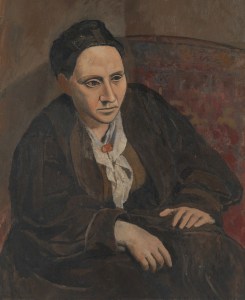
Communion at the Gate Theatre

Mary O’Malley
Irish
b. 1954


This is the time of life when a woman
goes to Dublin to the theatre to get away
the night every Leaving Cert student in Ireland
is up from the country to see the same RSC production.

Hamlet is small and elegant and very English. What did
she expect – that after all those years
he would have grown really Danish, the lies
would be less eloquent, gestures less fluid?

Tonight she finds the prince tedious and self-obsessed.
You are thirty years old for Christ’s sake,
she shouts, startling the audience.
The students are disapproving, then delighted.

Now that they have stopped texting one another,
the girls are shaping some of the words.
There is Royal Shakespearean body language
between Claudius and Gertrude.

The boys whistle, applaud uneasily.
The woman thinks Gertrude is entitled to her lover’s kiss.
What kind of twisted little shit are you?
she asks Hamlet, but silently. Hamlet is relentless.

The actor fifty if he’s a day, torturing his mother
who is the same age. No one cares.
It is as bad as MacLiammoir playing Romeo.
The kids are loving it. We are rearing

a generation of throwbacks, she thinks,
without Latin to sustain them, much less history.
She checks the exits, measures her chances. She rises
in a crouch just as a hush is spreading through the house.

Here and there along the rows the students begin
To mouth Hamlet’s soliloquy. The half-formed faces
half-lit are devout. At What is a man is his chief good be…
but to sleep…the ungodly voices join in as at Mass.

O.

Elena Garro
Mexican
1916 – 1998


All year is winter next to you,
King Midas of the snow.
The swallow hidden in the hair
fled.
The tongue did not produce any more rivers
passing through cathedrals nor eucalyptus
in the towers.
Through the crack the blue wave fled
at whose center swayed the dove.

The white sky descended to drown
the trees.
The bed is the glacier that devours
the dreams.
The ice dagger appeared
to meticulously sever
the small beauty that I defend.

The sun moves further away each day
from my orbit.
There is only winter next to you,
friend.

Streams

Frances Browne
Irish
1816 – 1879


Ye early minstrels of the earth, —

Whose mighty voices woke
The echoes of its infant woods,

Ere yet the tempest spoke!
How is it, that ye waken still

The young heart’s happy dreams,
And shed your light on darkened days,

bright and blessed streams!

Woe for the world! — she hath grown old

And grey, in toil and tears; —
But ye have kept the harmonies

Of her unfallen years :
For ever, in our weary path.

Your ceaseless music seems
The spirit of her perished youth, —

Ye glad and glorious streams!

Your murmurs bring the pleasant breath

Of many a sylvan scene,—
They tell of sweet and sunny vales,

And woodlands wildly green.
Ye cheer the lonely heart of age, —

Ye fill the exile’s dreams
With hope and home and memory, —

Ye unforgotten streams!

A Failure

Edith Wharton
American
1862 – 1937


I meant to be so strong and true!
The world may smile and question, When?
But what I might have been to you
I cannot be to other men.
Just one in twenty to the rest,
And all in all to you alone, –
This was my dream; perchance ’tis best
That this, like other dreams, is flown.

For you I should have been so kind,
So prompt my spirit to control,
To win fresh vigor for my mind,
And purer beauties for my soul;
Beneath your eye I might have grown
To that divine, ideal height,
Which, mating wholly with your own,
Our equal spirits should unite.

To a Rose

Emilia Bernal
Cuban
1884 – 1964


Oh rose, rose of mine! that once sprang sprightly up,
why do you bend double, flaccid, weak and sad,
your petals withered, your once-green calyx pale?
Do you tell the earth the sweetness of your past,
like the long secret story of dead hopes
a dying virgin whispers to her priest?

Thinking on what was, and to see how you decline,
I’d wish to raise the stalk on which you languish,
to give fresh strength to you; beauty, color;
to return, with a sigh, your perfumed breath
to bring you to my lips and in a long, long kiss
press upon you new, most softly, heat and fire.

In the Bush

We present this work in honor of Canberra Day.

Francis Kenna
Australian
1865 – 1932


A thousand miles and more to the westward,
Somewhere the city lies,
I strain mine eyes for the glare reflected
Up in the starlight skies.

I strain mine ears for the roll and roaring,
The laugh of the passers by,
But only the trees on the far horizon,
Only the open sky.

A plover’s call in the stillness rises,
A lamb in the marshes bleats—
But O! for the lights and the passing faces!
And O! for the city’s streets!

from Santos Vega

We present this work in honor of the 100th anniversary of the poet’s death.

Rafael Obligado
Argentine
1851 – 1920


Runs the tale that on an evening
When itself the pampa abysses
In its own far-reaching acres,
Without its crown of stars atwinkle,
O’er the loftiest of the hillocks
Where there is most smiling clover
Shines the torch without an owner.
Amid the vague mist’s formless curtains,
To the end the breeze may temper
The soft wings of wooing slumber.

Yet if the faintness be altered
To a tempest from its bosom,
Wildly bursts the concave thunder—
Which is speech of the dread lightning—
Strikes the lone ombu obliquely
Flaming tongue of ruddy serpent,
Which, calcinating its branches,
Serpentines, runs and mounts upward,
And from the tall tip discharges
Its scales in a brilliant shower.