In honor of the Turkish holiday, Victory Day, we present this work by one of modern Turkey’s most poignant authors.
Nilgun Marmara Turkish 1958 – 1987
My bird and I are fast asleep
reflected in a mirror, our cage our bed
our visages reflecting that of one another
we sleep beneath the eternally falling snow
my bird and I.
A crimson ribbon binds us – my mate and I
indelibly together.
Destitution would delight in its severance.
In our mirror there’s naught beyond this bond…
This crimson tie between us – my mate my bird and I…
“I’ve come to take you home –
home, remember the veld?
the lush green grass beneath the big oak trees
the air is cool there and the sun does not burn.
I have made your bed at the foot of the hill,
your blankets are covered in buchu and mint,
the proteas stand in yellow and white
and the water in the stream chuckle sing-songs
as it hobbles along over little stones.
I have come to wretch you away –
away from the poking eyes
of the man-made monster
who lives in the dark
with his clutches of imperialism
who dissects your body bit by bit
who likens your soul to that of Satan
and declares himself the ultimate god!
I have come to soothe your heavy heart
I offer my bosom to your weary soul
I will cover your face with the palms of my hands
I will run my lips over lines in your neck
I will feast my eyes on the beauty of you
and I will sing for you
for I have come to bring you peace.
I have come to take you home
where the ancient mountains shout your name.
I have made your bed at the foot of the hill,
your blankets are covered in buchu and mint,
the proteas stand in yellow and white –
I have come to take you home
where I will sing for you
for you have brought me peace.”
Troy is burning, black smoke rises up
to the opposing sky, and all the while,
with joy, Juno observes the fire and tears:
a woman’s vengeance, what harsh penalty!
The masses, even in their shrines exposed,
all flee, enveloped by a yellow fright;
congealed blood down the murky Xanthus runs,
and to earth fall high walls of masonry.
The fire from without fuels flames within,
lofty devices falling to the ground,
which now are seen in ruins, shattered, disarmed.
And the harsh cause of so much injury,
while conquered Paris dies engulfed in flames,
of the Greek victor sleeps within the arms.
The first decade – I learnt to wipe my nose
Wipe my feet before entering the house
After a walk in the rain or on snow
The second decade – I learned to put on lipstick
Look in the mirror before
Leaving the house
Look at a boy without letting him know
I was looking
Look like a lady without letting Mama know
I felt all womanish inside
The third decade – I learned to wipe other people’s noses
And love it
I learned to put another’s interest before mine
Love and duty were but two sides of the same coin
Complain?
Me?
What did I have to complain about?
I was fulfilled! Grown up, married, with children and all,
A roof over my head. A boiling pot on the stove
And a man who told me, at least twice a day,
He worshipped the ground I walked on!
Yes, sometimes, very late at night, he reminded me
How much he loved me –
Very, very, very late at night; when the children were
Fast asleep.
When all the dishes were sparkling clean
When the floor was swept free of all toys,
Dusted, and wiped free of meddlesome footprints
Yes, sometimes, late at night, he reminded me
For the third time that day, how much
He loved me.
The fourth decade – I watched my own children,
My daughters, make goo-goo eyes at boys
When they thought my eyes were closed
My ears deaf as stone
They whispered tingly secrets; made subtly suggestive
Gestures. Amused, I watched it all – thought, inside,
I sighed; amused to see the pattern repeat itself. Oh, my
God!
Embarrassed, I remembered my own naïve assumption of
My mother’s blindness
The fifth decade – there was no denying it – my children
Were grown. Yes, they were my children; but they,
Definitely, were no longer children!
Did this mean I was old?
How could it be – when had that happened?
I was just discovering my essence!
Discovering joyful living sans fear of pregnancy,
Sin or ridicule! It was in such ecstatic sensuousness
I entered
The sixth decade – let no one misguide you,
The fifties are for fleshly fulfillment, sinful
Delight, and sprightly goings on. Now, at last,
I knew all there was to know about life.
I’d even made it, from scratch, myself
Gave it flesh, blood, and bone
Knit and bled it into being,
Nurtured it to healthy maturity.
The seventh decade – I learned to live with loss
A huge hole came to live in my heart
But I learned to understand this:
The loss is as big as the love. I suffer
Greatly for I have greatly loved
I am grateful for the love that was mine.
I suffer, but I could not have asked for less.
The eighth decade – I learned to live with
Fewer and fewer friends
Fewer and fewer visits from my children
As their own lives grew fuller and fuller
I love the four walls I call home
I love the skin that houses the bones I call my body
I love the people who, a long time ago,
Were my children
I look at their clean noses and know
I have lived a good life. Look. Just look!
How they truly no longer need me!
The ninth decade – I will learn the meaning of hours
For time is short, each hour more precious, therefore!
The journey is definitely longer behind me
The road ahead lifts with joy as I see
Footsteps painted a bright and
Joyful gold!
Without a doubt, I know, those are the footsteps
Love has made.
Mine has been a long life – rich in experience.
But now, looking back, I see all those brilliant
Moments in my life are moments of loving,
Of giving to others. These are moments
When I transcended the self and its
Imperious demands. When I was for
Another – whatever it was they needed
To go one step forward: wife, friend;
Mother; neighbour; daughter; sister ; or
Stranger!
Yes, I can see: I have been a good citizen, a decent
Human being.
Now, I am eighty years old – I hope I still have
Time enough to catch up!
Pass me that damn bottle of wine, will you?
We present this work in honor of Women’s Equality Day.
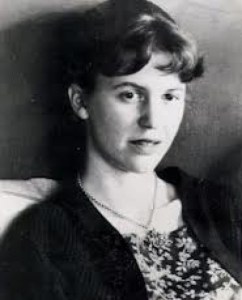
Sylvia Plath American 1932 – 1963
All day she plays at chess with the bones of the world:
Favored (while suddenly the rains begin
Beyond the window) she lies on cushions curled
And nibbles an occasional bonbon of sin.
Prim, pink-breasted, feminine, she nurses
Chocolate fancies in rose-papered rooms
Where polished highboys whisper creaking curses
And hothouse roses shed immortal blooms.
The garnets on her fingers twinkle quick
And blood reflects across the manuscript;
She muses on the odor, sweet and sick,
Of festering gardenias in a crypt,
And lost in subtle metaphor, retreats
From gray child faces crying in the streets.
When we come to the end of the furrow,
When our last day’s work is done,
We will drink of the long red shaft of light
That slants from the westering sun.
We will turn from the field of our labour,
From the warm earth glad and brown,
And wend our feet up that village street,
And with our folk lie down.
Yea, after the long toil, surcease,
Rest to the hearts that roam,
When we join in the mystic silence of eve
The glad procession home.
In honor of Janmashtami, we present this work by one of contemporary India’s great poets.
Ashitha Indian 1956 – 2019
Blue is not the colour, nor is snowy- white or sun-licked grey.
I paint the sky with water.
The tear.
The colour of solitude brewing in the eyes of a half-dead widow
The outcast.
The color of fear stuck in the eyes of fish lings abandoned by the oceans
The homeless.
The color of quivering silence screaming in the veins of trees uprooted
The wingless.
The color of screams rolling down from the eyes of new-borns denied air
The neglected.
The color of fear boiling under the nerves of those who venture out in the dark
The powerless.
I paint the earth too with water.
The color is tear.
Mind you
If love has a hue, it’s not rose-pink or blood-red
If hope has a hue, it’s not lemon-yellow or chilli-red
If happiness has a hue, it’s not leaf-green or sea-blue If grief has a hue, it’s not black as you
thought
Let me tell you, everything in the world is tinted with a tear-hue
The watery hue
For, rain is a painting perfect for a world soaked in sorrow.
For, sky is a canvas
Painted with grief.
I grow time, beans, the colour gray
And stitch the shadows of a dying day
They make a woman, rather a girl
Lost in the ocean like a grain of pearl
The swans of Coole fly over me
Will they rest for a while by me!
Maybe it’s my turn now.
Deep in the frost where my eyes shall never go
The leopard will print his paw
And with a sudden leap break free
All the chimes of poetry
Maybe it’s my turn now.
The rough beast was never born
Though we devised a cage for his morn
Maybe it’s my turn now.
I have a tale to tell I shall also ring the bell
When you start believing
When you start hearing
Maybe it’s my turn now.
2.
These days I don’t think of you
But after the soot covers me
I begin to wonder where those
Evenings have gone, those wanderings
In the spacious lawns of enchantment
That smacked of no design, though
We were bent on making a sense
The early birds get their worms
I lie in the tireless ticking of my old watch
Counting the bits of frozen blood,
Listening to the worms
That are in all of us
Then I begin to crawl towards the womb
That threw me off a long way back
And look for the dark, the black hole
To suck me up.
3.
I was nice to him
He was nice to me
Only
Our doors, our windows
Kept closed
Lest we smell each other.
Had we but World enough, and Time,
This coyness Lady were no crime.
We would sit down, and think which way
To walk, and pass our long Loves Day.
Thou by the Indian Ganges side.
Should’st Rubies find: I by the Tide
Of Humber would complain. I would
Love you ten years before the Flood:
And you should if you please refuse
Till the Conversion of the Jews.
My vegetable Love should grow
Vaster then Empires, and more slow.
An hundred years should go to praise
Thine Eyes, and on thy Forehead Gaze.
Two hundred to adore each Breast.
But thirty thousand to the rest.
An Age at least to every part,
And the last Age should show your Heart.
For Lady you deserve this State;
Nor would I love at lower rate.
But at my back I alwaies hear
Times winged Charriot hurrying near:
And yonder all before us lye
Desarts of vast Eternity.
Thy Beauty shall no more be found;
Nor, in thy marble Vault, shall sound
My ecchoing Song: then Worms shall try
That long preserv’d Virginity:
And your quaint Honour turn to durst;
And into ashes all my Lust.
The Grave’s a fine and private place,
But none I think do there embrace.
Now therefore, while the youthful hew
Sits on thy skin like morning glew,
And while thy willing Soul transpires
At every pore with instant Fires,
Now let us sport us while we may;
And now, like am’rous birds of prey,
Rather at once our Time devour,
Than languish in his slow-chapt pow’r.
Let us roll all our Strength, and all
Our sweetness, up into one Ball:
And tear our Pleasures with rough strife,
Thorough the Iron gates of Life.
Thus, though we cannot make our Sun
Stand still, yet we will make him run.
We present this work in honor of National Senior Citizens’ Day.
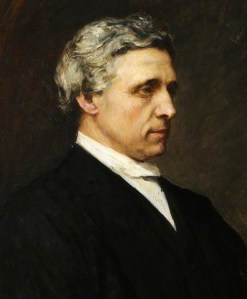
Lewis Carroll English 1832 – 1898
“You are old, Father William,” the young man said,
“And your hair has become very white;
And yet you incessantly stand on your head—
Do you think, at your age, it is right?”
“In my youth,” Father William replied to his son,
“I feared it might injure the brain;
But now that I’m perfectly sure I have none,
Why, I do it again and again.”
“You are old,” said the youth, “As I mentioned before,
And have grown most uncommonly fat;
Yet you turned a back-somersault in at the door—
Pray, what is the reason of that?”
“In my youth,” said the sage, as he shook his grey locks,
“I kept all my limbs very supple
By the use of this ointment—one shilling a box—
Allow me to sell you a couple?”
“You are old,” said the youth, “And your jaws are too weak
For anything tougher than suet;
Yet you finished the goose, with the bones and the beak—
Pray, how did you manage to do it?”
“In my youth,” said his father, “I took to the law,
And argued each case with my wife;
And the muscular strength which it gave to my jaw,
Has lasted the rest of my life.”
“You are old,” said the youth, “one would hardly suppose
That your eye was as steady as ever;
Yet you balanced an eel on the end of your nose—
What made you so awfully clever?”
“I have answered three questions, and that is enough,”
Said his father; “don’t give yourself airs!
Do you think I can listen all day to such stuff?
Be off, or I’ll kick you down stairs!”