My Own Sweet River Lee

We present this work in honor of St. Patrick’s Day.

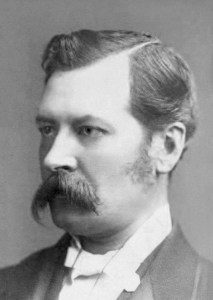
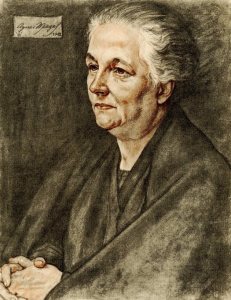
Ellen Mary Patrick Downing
Irish
1828 – 1869


My own dear native river, how fondly dost thou flow,
By many a fair and sunny scene where I can never go,
Thy waves are free to wander, and quickly on they wind,
Till thou hast left the crowded streets and city far behind;
Beyond I may not follow; thy haunts are not for me;
Yet I love to think on the pleasant track of my own sweet river Lee

The spring-tide now is breathing—when they waters glance along,
Full many a bird salutes thee with bright and cheering song;
Full many a sunbeam falleth upon thy bosom fair,
And every nook thou sleekest hath welcome smiling there.
Glide on, thou blessed river! nor pause to think of me,
Who only in my longing heart can tread that track with thee!

Yet when thy waters wander, where, haughty in decay,
Some grand old Irish castle looks frowning on thy way;
Oh! speak aloud, bold river! how I have wept with pride
To read of those past ages, ere all our glory died,
And wish for one short moment I had been there to see
Such relic of the by-gone day upon thy banks, fair Lee!

And if, in roving onward, thy gladsome waters bound
Where cottage homes are smiling, and children’s voices sound;
Oh! think how sweet and tranquil, beneath the loving sky,
Rejoicing in some country home, my life had glided by,
And grieve one little minute that I can never be
A happy, happy cottager upon thy banks, fair Lee!

Now, fare thee well, glad river! peace smile upon thy way,
And still may sunbeams brighten, where thy wild rimples play!
Oft in that weary city these blue waves leave behind
I’ll think upon the pleasant paths where thy smooth waters wind;
Oh! but for one long summer day, to wander on with thee,
And rove where’er thou rovest, my own sweet river Lee!

The Broken Vase

We present this work in honor of the poet’s 185th birthday.

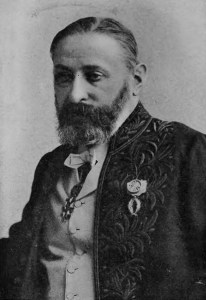
Sully Prudhomme
French
1839 – 1907


The vase where this verbena is dying
was cracked by a blow from a fan.
It must have barely brushed it,
for it made no sound.

But the slight wound,
biting into the crystal day by day,
surely, invisibly crept
slowly all around it.

The clear water leaked out drop by drop.
The flowers’ sap was exhausted.
Still no one suspected anything.
Don’t touch! It’s broken.

Thus often does the hand we love,
barely touching the heart, wound it.
Then the heart cracks by itself
and the flower of its love dies.

Still intact in the eyes of the world,
it feels its wound, narrow and deep,
grow and softly cry.
It’s broken. Don’t touch!

An Apology for My Son to His Master, for Not Bringing an Exercise on the Coronation Day

Mary Barber
Irish
c. 1685 – c. 1755


Why are we Scholars plagu’d to write,
On Days devoted to Delight?
In Honour of the King, I’d play
Upon his Coronation Day:
But as for Loyalty in Rhyme,
Defer that to another Time.

Now to excuse this to my Master–
(This Want of Rhyme’s a sad Disaster)
Sir, we confess you take great Pains,
And break your own, to mend our Brains.
You strive to make us learn’d, and wise;
But to what End? — We shall not rise:
In vain should at Preferment aim,
Whilst Strangers make their happier Claim.
Why should we labour to excel,
Doom’d in Obscurity to dwell?
Then, since our Welfare gives you Pain,
(And yet your Toil may prove in vain)
I wish, for your, and for our Ease,
That all were Coronation Days.

Ode

We present this work in honor of the poet’s 180th birthday.

Arthur O’Shaughnessy
Irish
1844 – 1881


We are the music makers,
And we are the dreamers of dreams,
Wandering by lone sea-breakers,
And sitting by desolate streams; —
World-losers and world-forsakers,
On whom the pale moon gleams:
Yet we are the movers and shakers
Of the world for ever, it seems.

With wonderful deathless ditties
We build up the world’s great cities,
And out of a fabulous story
We fashion an empire’s glory:
One man with a dream, at pleasure,
Shall go forth and conquer a crown;
And three with a new song’s measure
Can trample a kingdom down.

We, in the ages lying,
In the buried past of the earth,
Built Nineveh with our sighing,
And Babel itself in our mirth;
And o’erthrew them with prophesying
To the old of the new world’s worth;
For each age is a dream that is dying,
Or one that is coming to birth.

A breath of our inspiration
Is the life of each generation;
A wondrous thing of our dreaming
Unearthly, impossible seeming —
The soldier, the king, and the peasant
Are working together in one,
Till our dream shall become their present,
And their work in the world be done.

They had no vision amazing
Of the goodly house they are raising;
They had no divine foreshowing
Of the land to which they are going:
But on one man’s soul it hath broken,
A light that doth not depart;
And his look, or a word he hath spoken,
Wrought flame in another man’s heart.

And therefore to-day is thrilling
With a past day’s late fulfilling;
And the multitudes are enlisted
In the faith that their fathers resisted,
And, scorning the dream of to-morrow,
Are bringing to pass, as they may,
In the world, for its joy or its sorrow,
The dream that was scorned yesterday.

But we, with our dreaming and singing,
Ceaseless and sorrowless we!
The glory about us clinging
Of the glorious futures we see,
Our souls with high music ringing:
O men! it must ever be
That we dwell, in our dreaming and singing,
A little apart from ye.

For we are afar with the dawning
And the suns that are not yet high,
And out of the infinite morning
Intrepid you hear us cry —
How, spite of your human scorning,
Once more God’s future draws nigh,
And already goes forth the warning
That ye of the past must die.

Great hail! we cry to the comers
From the dazzling unknown shore;
Bring us hither your sun and your summers;
And renew our world as of yore;
You shall teach us your song’s new numbers,
And things that we dreamed not before:
Yea, in spite of a dreamer who slumbers,
And a singer who sings no more.

The Chariot of Venus

Blossius Aemilius Dracontius
Tunisian
c. 455 – c. 505

Suddenly Cypris and her dove-drawn chariot
descended from the quarter where the fiery night
wheels its constellations over southern shores.
Her purple doves wore bridles woven out of flowers,
a red rose linked the gently undulating traces,
the birds’ beautiful yoke was lilies mixed with roses.
She flicked a purple whip to keep the team on course.
She steered the wing beats; she controlled the feathered oars.

Translation by Aaron Poochigian

orange tree blooms

Isolda Hurtado
Nicaraguan
b. 1956


It’s time to prolong the rhythm where silence rests
create vertigo
maybe the horror
sharpen the irony
die laughing at myself
caress the edges of silence with pure words.
The sun hides its light every dawn
In time my space increases or decreases
and my love goes crazy
Palm trees wave high behind their green background
the ants in a row are arranged low
long tasks in short life
but my wait is neither high nor long.
When tilling the land, certain fruits have a bittersweet flavor.
Yes. Thus the pale hours of fear soften me
until I spread my desires on the avenues
where sadness lies.
There everything is mine and I have nothing
the orange tree blooms
when the dust sweeps the afternoon.

Yoruba Love

We present this work in honor of the Nigerian holiday, Mothering Sunday.

Molara Ogundipe
Nigerian
1940 – 2019


When they smile and they smile
and then begin to say
with pain o their brows
and songs in their voice:
‘the nose is a cruel organ
and the heart without bone
for were the nose not cruel,
it would smell my love for you
and the heart if not boneless,
would feel my pain for you
and the throat, O, has no roots
or it would root to flower my love’;
run for shelter, friend,
run for shelter.

Homesickness

We present this work in honor of the poet’s 145th birthday.

Agnes Miegel
German
1879 – 1964


I heard this morning
on the slope of the cliffs the starlings already
sang as if they were at home,
and yet they sang in a different timbre.

And the blue violets bloomed
on all the hills to the lake.
In the fields around my home
The snow still lies in the furrows.

In my city in the north
seven bridges stand, grey and old,
the ice, now dull and shaking,
clings to their rotten piles.

and over grey clouds
it rings with a fine, angelic tone,
and my children at home
understand the song the first lark sings.

Translation by Linda Marshall

Nights of jasmine & thunder

We present this work in honor of Maha Shivrati.

Shilabhattarika
Indian
9th century


Nights of jasmine & thunder,
torn petals
wind in the tangled kadamba trees.
Nothing has changed-
Spring has come again and we’ve simply grown older.

In the cane groves of the Narmada
he deflowered my
girlhood, long before we were
married.
And I grieve for those far-away nights
when we played at love
By the water.

Translation by Andrew Schelling