Solemn Ode on the Surrender of the City of Danzig

Vasily Trediakovsky
Russian
1703 – 1769

What sober intoxication
gives me voice for glorious cause?
Muses, pure adornment of Parnassus,
do I not see you now?
I hear the sound of your sweet strings
and the strength of lovely choirs.
All gives rise in me to exultant speech.
Nations! Receive my song joyously.
Stormy winds! Be silent.
I desire to sing of brave Anna’s glory.

In their songs, eternally in glory,
incomparable Pindar and Horace
rose up to the very stars in heaven
like swift, bold eagles.
But if the voice of my lyre
would equal my sincere zeal,
which burns eternally for Anna,
then Orpheus of Thrace himself,
together with Amphion of Thebes,
would surely marvel at its sweetness.

Sing, my lyre, a sweet song.
Sing of Anna, who is happy;
sing, to the greater downfall of all our foes,
to their eternal misfortune.
O her bravery and might!
O the joyous delight of all her subjects!
Conquering everything, her bravery inspires dread.
Happiness leads us to a strange ecstasy;
it removes our sorrowful thoughts,
swelling our hearts with pride.

Was it Neptune himself built these walls
that stand so proudly near the sea?
Do they not resemble those of Troy,
which sought long to be in quarrel
with arms most powerful in combat
and with a battle-hardened warrior?
Do not all call the Vistula River now
by the name of Skamander?
Does Mount Stalzenberg not
now bear the name of Ida?

That is not Troy, of fables’ subject;
not one Achilles alone wages battle.
Every warrior storms more valiantly
than the son of Thetis.
What leader shines with wondrous helmet?
Is it not Minerva hurling her spear?
‘Tis evident that Heaven sent her,
for in all respects she is a goddess;
fearful is she even without her shield or aegis.
‘Tis the Russian Empress Anna.

And ‘tis Russian warriors have
surrounded Danzig, hostile city.
Each who fought there deserved to be called Mars,
for in might each was more wondrous than Mars:
ready to shed his blood freely,
or carry off a complete victory in Anna’s name.
All embolden themselves with Anna’s good fortune;
only Anna is their strong hope,
and because Anna is gracious to them
they take greater anger at her enemies.

Beautiful and favorable sun
of the European and Asian sky!
O Russian monarch!
Many times blessed,
because you are so dear to your subjects,
because you rule them so benignly!
Your name is already fearful to the world
and the universe will not contain your glory.
Wishing to be obedient to you,
all of it marvels at the flower of beauty.

But what do I behold? Do my eyes not deceive me?
A youth opposed to Hercules,
raising high his proud brow,
desires to be the marvel of the entire world!
With unwise counsel, Danzig,
as if made drunk with heady beverage,
opposes – and now openly so –
the mighty empress of all Russia.
Judging rashly, it does not see the abyss,
as on a moonless night.

Into its very heart
it accepts as a friend Stanislaus,
who comes a second time in search of a crown.
It hopes for defense through fields
o’er which Neptune has flowed,
but fearing the Russian Perun
it seeks assistance of the nation
that dwells along the banks of the Seine.
But to its own loss does this nation beat drums
for the advantage of Weichselmünde.

Proud of its fire and iron
no less than of its warriors everywhere,
Danzig already places its machines
on embankments against the Russians.
That it is rich in many stores, it shouts,
“Long live Stanislaus!”
It encourages anger in its soldiers
who do not have stout hearts
and look only to
preserving their lives by flight.

O Danzig! Oh, what are you daring?
Collect your senses! Counsel with them.
You are approaching destruction.
Why have you stopped? Why do you hesitate? Surrender!
Wherefrom have you such audacity
that you do not pale before Anna?
Of their own will entire nations
submit themselves without a battle.
In order not to pay her tribute
the Chinese rulers twice revere her.

Whosoever beseeches kindness of her
learns that in kindness Anna has no equal.
There is no one upon the world more generous
to him who inflicts no war upon her.
Her sword, wound with the olive branch,
is fierce in battle, not in peace.
O Danzig, abandon this wicked thought.
You see the Alcidae are ready.
You behold the terrible woes of your inhabitants;
you hear wrathful Anna herself.

You are closely surrounded
on all sides by thousands of courageous athletes.
You have no hope of withstanding
the bolts of lightning raining down on you,
smashing everything before them.
And that thunder is real, not false.
On the ramparts there is no longer any defense.
The earth opens up abysses;
buildings fly up in the air;
many fortifications are seized.

Even though all the powers
came ardently to your defense now, Danzig;
if the elements themselves defended you;
even if brave soldiers came to you
from all over he world
and freely spilled their life’s blood for you –
verily these can in no way save you,
and though they made bold effort,
they cannot puck
you from the hands of Anna.

See, hostile nations,
how brave are the Russian people!
Fire does not harm them, nor water;
their chests are bared to everything.
See how they rush to the assault!
How they batter themselves without giving way!
The thunder of cannon scares them not;
they go as to dance at a wedding celebration,
and through the smoky clouds
it is clear to whom all bravery is familiar.

Within the walls of poor Danzig town,
fears are on the rise;
buildings crumble into dust;
the siege is everywhere triumphant.
When from the last remaining wall
the city magistrate beholds
that all their hope in aid from distant lands
and in the good will of Stanislaus was just in vain,
he shouts, standing dumbstruck like an ignoramus:
“Oh! Our glory has fallen!”

What I prophesied desires to come true:
Danzig already begins to tremble;
each person thinks now just of surrender as he thought earlier of fighting.
He thinks this way of saving himself
from the bombs flying in the air
and from the spirit bearing death in plague.
Everyone shouts: it is time to begin –
To all it was an unbearable burden.
Ah! It is time to open all the city’s gates
to Anna’s triumphant army.

And so it passed. Surrender’s sign is made;
at Anna’s feet Danzig has fallen.
The warrior has begun rejoicing at his success;
the fire has been extinguished; to all, the roads are free.
Soaring, Glory flies everywhere
and proclaims with her trumpet:
“Anna is supreme in fortune!
Anna, O our Anna! Braver than all is she!
Anna more august than Augustus!
The beauty and honor of all nations!”

Desist, lyre! ‘Tis time to end your song.
Who is it can properly bear praise
to the greatness of our Anna
and sing of a courage higher than hers?
In this there is much praise to Anna,
that she is loved by God Himself.
I desire her to conquer by this,
and she is always able to conquer
whomsoever dares oppose her.
With that, “Long live Anna!” I exclaim.

Translation by Harold Segel

Moko Jumbie Romance

Opal Palmer Adisa
Jamaican
b. 1954


glancing down protectively
from standing tall on stilted legs

they monitored the arch of cupid’s arrow
followed its trajectory amused in their knowing

love does not live in the pleats of a dress
or in the pocket of a tailored pants

they who have crossed over and now carry
the dreams that the foolish dream when

life overwhelms watched and waited
strutted through the fields watered

with kindness and tiled with expectation
here was a bed ready for love’s fruit

here was a moment immortalized by
history here was to be found the beginning

and all that was yet possible by a people
for whom love was every breath they breathed

every whip they endured every child they seeded
and brought to life in a time when meaning was

inverted and they had to go back to remember
oshun’s sweet whooshing river voice that rippled

you are the constant love floating with the clouds
you are the perennial love rising with the sun

you are the brilliant orange-colored love blossoming
in the flamboyant you are each and every new day

the jumbies know that love is memory and it’s
our memory that keeps them alive living among

our midst out of reach but not unmindful of our needs
they are the archers of cupid’s arrows they are the wind

that guides their velocity straight penetrating our hearts
so we can look and recognize the love in each other’s eyes

you looking and see what’s good and wholesome in me
me looking and appreciating what’s divine and pure in you

just love love as raw and bewitching
as the ocean after a storm

just as new and clean as any dawn
love you glancing at me and me seeing myself in you

love
a simple indefinable truth

Weaving

We present this work in honor of the poet’s 200th birthday.

Lucy Larcom
American
1824 – 1893


All day she stands before her loom;
The flying shuttles come and go:
By grassy fields, and trees in bloom,
She sees the winding river flow:
And fancy’s shuttle flieth wide,
And faster than the waters glide.

Is she entangled in her dreams,
Like that fair-weaver of Shalott,
Who left her mystic mirror’s gleams,
To gaze on light Sir Lancelot?
Her heart, a mirror sadly true,
Brings gloomier visions into view.

“I weave, and weave, the livelong day:
The woof is strong, the warp is good:
I weave, to be my mother’s stay;
I weave, to win my daily food:
But ever as I weave,” saith she,
“The world of women haunteth me.

“The river glides along, one thread
In nature’s mesh, so beautiful!
The stars are woven in; the red
Of sunrise; and the rain-cloud dull.
Each seems a separate wonder wrought;
Each blends with some more wondrous thought.

“So, at the loom of life, we weave
Our separate shreds, that varying fall,
Some strained, some fair: and, passing, leave
To God the gathering up of all,
In that full pattern wherein man
Works blindly out the eternal plan.

“In his vast work, for good or ill,
The undone and the done he blends:
With whatsoever woof we fill,
To our weak hands His might He lends,
And gives the threads beneath His eye
The texture of eternity.

“Wind on, by willow and by pine,
Thou blue, untroubled Merrimack!
Afar, by sunnier streams than thine,
My sisters toil, with foreheads black;
And water with their blood this root,
Whereof we gather bounteous fruit.

“There be sad women, sick and poor:
And those who walk in garments soiled:
Their shame, their sorrow, I endure;
By their defect my hope is foiled:
The blot they bear is on my name;
Who sins, and I am not to blame?

“And how much of your wrong is mine,
Dark women slaving at the South?
Of your stolen grapes I quaff the wine;
The bread you starve for fills my mouth:
The beam unwinds, but every thread
With blood of strangled souls is red.

“If this be so, we win and wear
A Nessus-robe of poisoned cloth;
Or weave them shrouds they may not wear,—
Fathers and brothers falling both
On ghastly, death-sown fields, that lie
Beneath the tearless Southern sky.

“Alas! the weft has lost its white.
It grows a hideous tapestry,
That pictures war’s abhorrent sight:—
Unroll not, web of destiny!
Be the dark volume left unread,—
The tale untold,—the curse unsaid!”

So up and down before her loom
She paces on, and to and fro,
Till sunset fills the dusty room,
And makes the water redly glow,
As if the Merrimack’s calm flood
Were changed into a stream of blood.

Too soon fulfilled, and all too true
The words she murmured as she wrought:
But, weary weaver, not to you
Alone was war’s stern message brought:
“Woman!” it knelled from heart to heart,
“Thy sister’s keeper know thou art!”

Naught do I see but Thee

Ameena Begum
Indian
1892 – 1949


Alone, alone at the early dawn
In Springtime with its blossoms wan
Thy glory do I gaze upon,
And naught do I see but Thee.

Alone, alone ‘neath the shady trees
Midst Summers warmth I feel thy breeze,
Alas’ I fall upon my knees,
And naught I see but Thee.

Alone, alone, thro’ the fallen leaves
That Autumn scatters and interweaves
I trod the path, sweet memory grieves,
And naught I see but Thee.

Alone, alone in the pure white snow
As the wintry winds around me blow
Firmly I stand, yet seeking to know,
And naught I see but Thee.

Dark Night of the Heart

We present this work in honor of the 565th anniversary of the poet’s death.

Ausiàs March
Spanish
1400 – 1459


Day’s terrified to lose her last bright features,
Seeing the night spread darkness overhead.
Small creatures dare not close their eyes for slumber.
The sick and weak ail even more in bed.
Then evil men can freely do their worst
Who’d have the cover of darkness last all year.
Not I who am tormented as no other
Yet do no harm. I long for daylight clear.

I do no harm, and yet do worse than murder
A thousand guiltless men for ruthless fun:
I summon all my powers for self-betrayal
And do not count on clemency from dawn.
No, every night I blast my brain concocting
Treasonous plots planned out for all day long.
No fear of death or dungeon life deter me
From visiting against myself such wrong.

Beauty of Prudence: I know it’s my doing
That love’s tight noose has twisted around me.
Straight is the path I take without delay
To end, unless your mercy set me free.

Translation by A.Z. Foreman

Climbing a Mountain

Xie Daoyun
Chinese
c. 340 – c. 399


High rises the Eastern Peak
Soaring up to the blue sky.
Among the rocks—an empty hollow,
Secret, still, mysterious!
Uncarved and unhewn,
Screened by nature with a roof of clouds.
Times and Seasons, what things are you
Bringing to my life ceaseless change?
I will lodge for ever in this hollow
Where Springs and Autumns unheeded pass.

Translation by Arthur Waley

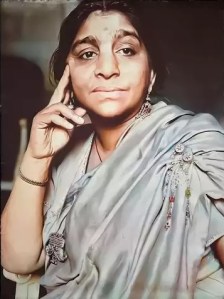
In the Bazaars of Hyderabad

We present this work in honor of the 75th anniversary of the poet’s death.

Sarojini Naidu
Indian
1879 – 1949


What do you sell O ye merchants?
Richly your wares are displayed.
Turbans of crimson and silver,
Tunics of purple brocade,
Mirrors with panels of amber,
Daggers with handles of jade.

What do you weigh, O ye vendors?
Saffron and lentil and rice.
What do you grind, O ye maidens?
Sandalwood, henna, and spice.
What do you call, O ye pedlars?
Chessmen and ivory dice.

What do you make, O ye goldsmiths?
Wristlet and anklet and ring,
Bells for the feet of blue pigeons
Frail as a dragon-fly’s wing,
Girdles of gold for dancers,
Scabbards of gold for the king.

What do you cry, O ye fruitmen?
Citron, pomegranate, and plum.
What do you play ,O musicians?
Cithar, sarangi and drum.
what do you chant, O magicians?
Spells for aeons to come.
What do you weave, O ye flower-girls?

With tassels of azure and red?
Crowns for the brow of a bridegroom,
Chaplets to garland his bed.
Sheets of white blossoms new-garnered
To perfume the sleep of the dead.

Fifteen Boys

Bella Akhmadulina
Russian
1937 – 2010


Fifteen boys and maybe more,
or fewer than fifteen, maybe,
said to me
in frightened voices:
“Let’s go to a movie or the Museum of Fine Arts.”
“I haven’t time.”
Fifteen boys presented me with snowdrops.
Fifteen boys in broken voices
said to me:
“I’ll never stop loving you.”
I answered them more or less like this:
“Well see.”

Fifteen boys are now living a quiet life.
They have done their heavy chores
of snowdrops, despair and writing letters.
Girls love them —
some more beautiful than me,
others less beautiful.
Fifteen boys with a shoe of freedom, and at times spite
salute when we meet,
their liberation, normal sleep and regular meals.

In vain you come to me, last boy.
I shall place your snowdrops in a glass of water,
and silver bubbles will cover
their stocky stems…
But, you see, you too will cease to love me,
and, mastering yourself, you’ll talk in a superior way,
as though you’d mastered me,
and I’ll walk off down the street, down the street…

Translation by George Reavey

Final Barrenness

Rana al-Tonsi
Egyptian
b. 1981


Sometimes
The sky doesn’t draw its drapes
As the first long, desolate night descends
We are third-class patients
Or, the less vulnerable
We are the victims of wisdom
The moment the window opens
And the air pushes its way through
Without appropriate exhalation
We know now
What the years have done to us
The bed that has been vacant for years
Of all the dead bodies and martyrs
Must finally be left barren
So it may stand tall
And watch its soul infinitely fall
Over strange arms.
All I smell
Is the stench of an iron
Abandoned on run down clothes
Until they caught fire
And a wet circle
And white teeth
Undoubtedly unsmiling
And dreams that die
When there are no longer balconies to leave from
And I have been writing poems for a while
I don’t exactly know
If this is my pain, or theirs.

Translation by Sara Elkamel