Old Trees

We present this work in honor of the 105th anniversary of the poet’s death.

Olavo Bilac
Brazilian
1865 – 1918


Look at these old trees, more lovely these
Than younger trees, more friendly too by far:
More beautiful the older that they are,
Victorious over age and stormy seas …

The beasts, the insects, man, under the tree
Have lived, and been from toil and hunger free;
And in its higher branches safe and sound
Incessant songs of birds and love are found.

Our youth now lost, my friend, let’s not bemoan!
Let’s laugh as we grow old! Let us grow old
As do the trees, so nobly, strong and bold

Enjoy the glorious kindness we have sown,
And succor in our branches those who seek,
The shade and comfort offered to the weak!

Translation by Frederic G. William

My Age

We present this work in honor of the 85th anniversary of the poet’s death.

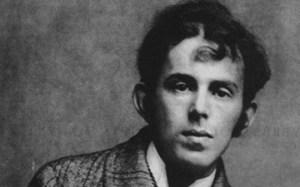
Osip Mandelstam
Russian
1891 – 1938


My age, my beast, who will ever
Look into your eyes
And with his own blood glue together
The backbones of two centuries?
Blood the builder gushes
From the throat of earthly things,
Only the parasite trembles
On the threshold of new days.

As long as it holds life, a creature
Must carry to the end a spine,
And a wave plays
With the unseen backbone.
Like a child’s tender cartilage
Is the age of earth’s infancy—
Once more, like a sacrificial lamb,
The crown of life’s skull is offered up.

To wrest the age from captivity,
To begin a new world,
The knees of gnarled and knotted days
Must fit together like a flute.
It is the age that rocks the wave
With human yearning,
And in the grass an adder breathes
The golden measure of the age.

And again the buds will swell,
Shoots of greenery will spring up,
But your backbone is broken,
My beautiful, pathetic age.
And with a senseless smile
You look back, both cruel and weak,
Like a beast that once was lithe,
Upon the prints of your own paws.

Blood the builder gushes
From the throat of earthly things,
And the seas’ warm cartilage
splashes ashore like a burning fish.
And from the high bird netting,
From humid billows of azure
Cool indifference pours, pours down
On your mortal injury.

Translation by James McGavran

These Are the Sweet Girls

We present this work in honor of the poet’s 75th birthday.

Anabel Torres
Colombian
b. 1948


These are
the sweet girls
who go to the matinee.
These are
the sweet girls
prepared to be the echo,
prepared to be the small round pebble in the center
stirring the concentric
circles
while the waves move further and further away.

These are
the girls with smooth
skin
and a soul
even smoother and,
without curves.

Translation by Celeste Kastopulos-Cooperman

Dawning is That Happy Morning

Ann Griffiths
Welsh
1776 – 1805


Dawning is that happy morning
When, beyond the bonds of pain,
The redeemed shall rise rejoicing
And with Christ together reign.
Faith shall vanish into vision
Verified, and hope shall be
Satisfied in the fruition
Of unfailing charity.

Forward! Homeward! way-worn pilgrim!
That predicted morn is near,
When The once afflicted Saviour
Crowned with glory shall appear.
Round Him, as a golden girdle
Shining, is His Faithfulness
Offering the vilest sinner
Pardon, Peace and Holiness.

Translation by George Richard Gould Pughe

Nenia

Carlos Guido y Spano
Argentine
1827 – 1918


In the Guarani language
a young Paraguayan girl
a sweet lament rehearses,
singing, on her harp, like this,
in the Guarani language:

“Cry, cry, urutaú,
on the branches of the yatay;
Paraguay is no more,
where I was born, the same as you!
Cry, cry, urutaú!

In the sweet city of Lambaré,
happy, I lived in my cabin;
then comes war, and all its rage
leaves nothing standing
in the sweet city of Lambaré.

Father, mother, siblings, Ay!
All in the world, I have lost;
in my broken heart
only a savage sorrow;
mother, father, siblings, Ay!

Beside a green ubirapitá tree,
my love, who fought
heroically in the Timbó,
is now buried there,
beside a green ubirapitá tree.

Ripping my white tipoy skirt
I wear as sign of grief,
upon that holy ground
upon it, forever on my knees,
ripping my white tipoy skirt!

They killed him, the cambá people,
powerless to make him kneel;
he was the last to leave
from Curuzú and Humaitá;
they killed him, the cambá people.

Oh heavens, why did I not die
when, triumphant, my love embraced me,
returned from Curupaití?
Oh heavens, why, did I not die?

Cry, cry, urutaú,
on the branches of the yatay;
Paraguay is no more,
where I was born, the same as you!
Cry, cry, urutaú!”

Mother Jackson Murders the Moon

We present this work in honor of the poet’s 100th birthday.

Gloria Escoffery
Jamaican
1923 – 2002


Mother Jackson
sees the moon coming at her
and slams the door of her shack
so hard
the tin louvres shudder with eagerness
to let the moon in.
If she should cry for help
the dog would skin its teeth at her,
the cat would hoist its tail
and pin the whole moonlit sky
to the gutter.
The neighbours would maybe
douse her in chicken blood
and hang her skin out to dry
on the packy tree.
Mother Jackson
swallows her bile and sprinkles oil
from the kitchen bitch
on her ragged mattress.
Then she lights a firestick
and waits for the moon to take her.

Sonnet XXVI

Giacomo da Lentini
Italian
1212 – 1260


I’ve seen it rain on sunny days
And seen the darkness flash with light
And even lightning turn to haze,
Yes, frozen snow turn warm and bright

And sweet things taste of bitterness
And what is bitter taste most sweet
And enemies their love confess
And good, close friends no longer meet.

Yet stranger things I’ve seen of love
Who healed my wounds by wounding me.
The fire in me he quenched before;

The life he gave was the end thereof,
The fire that slew eluded me.
Once saved from love, love now burns more.

Translation by Leo Zoutewelle

Winter Sun

Carmen Sobalvarro
Nicaraguan
1908 – 194?


Blessed is the soft and gloomy winter sun,
boyfriend of the mountain, which is united in the tender
rumor of the fresh river.
Ancient songbook owner of the plain,
who loves the green fronds, as Gioconda’s lips
love sweetness .

Mischievous winter sun,
rival of the wheat fields for your blonde beauty,
say: Do you make yourself a rainbow to kiss yourself
when singing about the rain?

What Winter Floods, What Showers of Spring

We present this work in honor of the 175th anniversary of the poet’s death.

Emily Brontë
English
1818 – 1848


What winter floods, what showers of spring
Have drenched the grass by night and day;
And yet, beneath, that spectre ring,
Unmoved and undiscovered lay

A mute remembrancer of crime,
Long lost, concealed, forgot for years,
It comes at last to cancel time,
And waken unavailing tears.