The Erl-King’s Daughter

We present this work in honor of the 220th anniversary of the poet’s death.
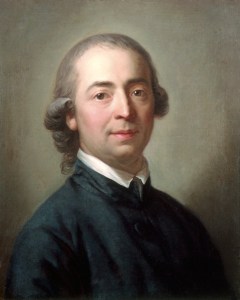
Johann Gottfried Herder
German
1744 – 1903


Sir Olf rode fast towards Thurlston’s walls,
To meet his bride in his father’s halls.

He saw blue lights flit over the graves;
The elves came forth from their forest-caves.

They danced anear on the glossy strand,
And the Erl-King’s Daughter held out her hand.

“O, welcome, Sir Olf, to our jubilee!
Step into the circle and dance with me.”

“I dare not dance, I dare not stay;
To-morrow will be my nuptial-day.”

“Two golden spurs will I give unto thee,
And I pray thee, Sir Olf, to tarry with me.”

“I dare not tarry, I dare not delay,
To-morrow is fixed for my nuptial-day.”

“Will give thee a shirt so white and fine,
Was bleached yestreen in the new moonshine.”

“I dare not hearken to Elf or Fay;
To-morrow is fixed for my nuptial-day.”

“A measure of gold will I give unto thee,
And I pray thee, Sir Olf, to dance with me.”

“The measure of gold I will carry away,
But I dare not dance, and I dare not stay.”

“Then, since thou wilt go, even go with a blight!
A true-lover’s token I leave thee, Sir Knight.”

She lightly struck with her wand on his heart, 25
And he swooned and swooned from the deadly smart.

She lifted him up on his coal-black steed;
“Now hie thee away with a fatal speed!”

Then shone the moon, and howled the wolf,
And the sheen and the howl awoke Sir Olf.

He rode over mead, he rode over moor,
He rode till he rode to his own house-door.

Within sate, white as the marble, his bride,
But his gray-haired mother stood watching outside.

“My son, my son, thou art haggard and wan;
Thy brow is the brow of a dying man.”

“And haggard and wan I well may be,
For the Erl-King’s Daughter hath wounded me.”

“I pray thee, my son, dismount and bide:
There is mist on the eyes of thy pining bride.”

“O mother, I should but drop dead from my steed;
I will wander abroad for the strength I need.”

“And what shall I tell thy bride, my son,
When the morning dawns and the tiring is done?”

“O, tell my bride that I rode to the wood,
With my hound in leash and my hawk in hood.”

When morning dawned with crimson and gray,
The bride came forth in her wedding array.

They poured out mead, they poured out wine:
“Now, where is thy son, O goldmother mine?”

“My son, golddaughter, rode into the wood,
With his hounds in leash and his hawk in hood.”

Then the bride grew sick with an ominous dread,—
“O, woe is me, Sir Olf is dead.”

She drooped like a lily that feels the blast,
She drooped, and drooped, till she died at last.

They rest in the charnel side by side,
The stricken Sir Olf and his faithful bride.

But the Erl-King’s Daughter dances still,
When the moonlight sleeps on the frosted hill.

Translation by James Clarence Mangan

Chrysanthemums

We present this work in honor of the 25th anniversary of the poet’s death.

Vivian Virtue
Jamaican
1911 – 1998


Like uncombed urchin suns they blaze along
The public border of this autumn garden;
Their sallow, bronze and golden faces harden
Against the coming frost, as keen gusts throng
The dusk, scattering the frail evensong
Of some late robin. Sidling the dew comes
Upon them—grave-gay last chrysanthemums—
As, at a parting, tears betray the strong.

Why does he linger so intently gazing
Upon them, this last straggler in the park—
Has he not heard the keeper’s closing bell?
I wish I had not seen his sere hand raising
In an intolerable gesture of farewell,

As our paths cross in the autumnal dark.

Life

We present this work in honor of the 65th anniversary of the poet’s death.

Abdel Rahman Shokry
Egyptian
1886 – 1958


Life is but a continual dying,
goodness and pleasure are but borrowed.
Would that I were like the flower whose life is but a summer;
then I would fade before the afflictions of winter.
To life with its pleasures, from me, one greeting;
but ah, a thousand to peace-giving death !
Who will convey my greeting unto the dead?
Peace be upon them… nay , upon me:
For in their graves they have no need of mercy
as I do in my life.

Man’s Short Life and Foolish Ambition

We present this work in honor of the 350th anniversary of the poet’s death.

Margaret Cavendish
English
1623 – 1673


In gardens sweet each flower mark did I,
How they did spring, bud, blow, wither and die.

With that, contemplating of man’s short stay,
Saw man like to those flowers pass away.

Yet built he houses, thick and strong and high,
As if he’d live to all Eternity.

Hoards up a mass of wealth, yet cannot fill
His empty mind, but covet will he still.

To gain or keep, such falsehood will he use!
Wrong, right or truth—no base ways will refuse.

I would not blame him could he death out keep,
Or ease his pains or be secure of sleep:

Or buy Heaven’s mansions—like the gods become,
And with his gold rule stars and moon and sun:

Command the winds to blow, seas to obey,
Level their waves and make their breezes stay.

But he no power hath unless to die,
And care in life is only misery.

This care is but a word, an empty sound,
Wherein there is no soul nor substance found;

Yet as his heir he makes it to inherit,
And all he has he leaves unto this spirit.

To get this Child of Fame and this bare word,
He fears no dangers, neither fire nor sword:

All horrid pains and death he will endure,
Or any thing can he but fame procure.

O man, O man, what high ambition grows
Within his brain, and yet how low he goes!

To be contented only with a sound,
Wherein is neither peace nor life nor body found.

Oh Do Not Come in Sadness

We present this work in honor of the 130th anniversary of the poet’s death.

Karolina Pavlova
Russian
1807 – 1893


Oh, do not come in sadness
To where beloved’s lying,
Where all of life’s storm’s dying,
For all the force it had.

Your futile weeping’s madness –
No blooms or your reproaches;
Why roses’, tears’ approaches
To my ethereal shade?

Translation by Rupert Moreton

After the War

We present this work in honor of the 50th anniversary of the poet’s death.

Mary Wedderburn Cannan
Scots
1893 – 1973


After the war perhaps I’ll sit again
Out on the terrace where I sat with you,
And see the changeless sky and hills beat blue
And live an afternoon of summer through.

I shall remember then, and sad at heart
For the lost day of happiness we knew,
Wish only that some other man were you
And spoke my name as once you used to do.

Let’s go! To Paris not to live, but to die

We present this work in honor of the 75th anniversary of the poet’s death.

Na Hye-sok
Korean
1896 – 1948


Let’s go! To Paris not to live, but to die
Paris killed me
Paris made me a real woman
Damn it, let me die in Paris!
Nothing to find, meet, or gain. No reason to return.
Forever I will go
Past and present, I am zero
I will be in the future

My four children!
Blame me not, but society, morals, laws, and customs
Your mother as a pioneer was a martyr of destiny
Someday you may come as ambassadors to Paris
Find my grave, leave one flower for me

Translation by Tanya Ko Hong

On His Being Arrived to the Age of Twenty-Three

We present this work in honor of the poet’s 415th birthday.

John Milton
English
1608 – 1674


How soon hath Time, the subtle thief of youth,
Stol’n on his wing my three-and-twentieth year!
My hasting days fly on with full career,
But my late spring no bud or blossom shew’th.

Perhaps my semblance might deceive the truth
That I to manhood am arriv’d so near;
And inward ripeness doth much less appear,
That some more timely-happy spirits endu’th.

Yet be it less or more, or soon or slow,
It shall be still in strictest measure ev’n
To that same lot, however mean or high,

Toward which Time leads me, and the will of Heav’n:
All is, if I have grace to use it so
As ever in my great Task-Master’s eye.