We present this work in honor of the 125th anniversary of the poet’s death.
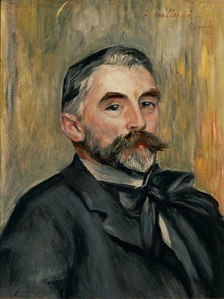
Stephane Mallarme French 1842 – 1898
Princess! to envy the fate of a Hebe Who appears on this porcelain cup at a kiss from your lips, I enjoy my passion but have no rank other than priest And I shall scarcely be shown naked on pottery. As I am not your furry lapdog, Neither rouge, nor clever games And I feel your close glance falling on me,
Blonde whose divine coiffeurs are goldsmiths! Name us… you whose raspberry laughter Is joined in a flock of tamed lambs Grazing on vows and bleating to their heart’s content, Name us… so that Love with fanlike wings Combs me, fingering his flute, as I slumber in the sheepfold, Princess, name us shepherd of your smiles.
We present this work in honor of the 240th anniversary of the poet’s death.
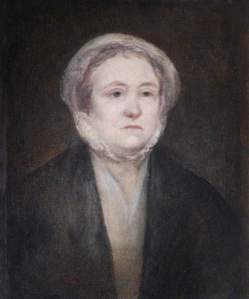
Anna Williams Welsh 1706 – 1783
Turn on the prudent Ant, thy heedful eyes, Observe her labours, Sluggard, and be wise. No stern command, no monitory voice Prescribes her duties, or directs her choice, Yet timely provident, she hastes away To snatch the blessings of the plenteous day; When fruitful summer loads the teeming plain, She gleans the harvest, and she stores the grain.
How long shall sloth usurp thy useless hours, Dissolve thy vigour, and enchain thy powers? While artful shades thy downy couch enclose, And soft solicitation courts repose, Amidst the drousy charms of dull delight, Year chases year, with unremitted flight, Till want, now following fraudulent and slow, Shall spring to seize thee like an ambush’d foe.
We present this work in honor of the poet’s 165th birthday.
Victor Daley Australian 1858 – 1905
I have been dreaming all a summer day Of rare and dainty poems I would write; Love-lyrics delicate as lilac-scent, Soft idylls woven of wind, and flower, and stream, And songs and sonnets carven in fine gold.
The day is fading and the dusk is cold; Out of the skies has gone the opal gleam, Out of my heart has passed the high intent Into the shadow of the falling night Must all my dreams in darkness pass away?
I have been dreaming all a summer day: Shall I go dreaming so until Life’s light Fades in Death’s dusk, and all my days are spent? Ah, what am I the dreamer but a dream! The day is fading and the dusk is cold.
My songs and sonnets carven in fine gold Have faded from me with the last day-beam That purple lustre to the sea-line lent, And flushed the clouds with rose and chrysolite; So days and dreams in darkness pass away.
I have been dreaming all a summer day Of songs and sonnets carven in fine gold; But all my dreams in darkness pass away; The day is fading, and the dusk is cold.
We present this work in honor of the poet’s 175th birthday.
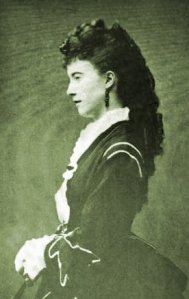
Fanny Parnell Irish 1848 – 1882
Shall mine eyes behold thy glory, oh, my country? Shall mine eyes behold thy glory? Or shall the darkness close around them ere the sun-blaze Break at last upon thy story?
When the nations ope for thee their queenly circle, As sweet new sister hail thee, Shall these lips be sealed in callous death and silence, That have known but to bewail thee?
Shall the ear be deaf that only loved thy praises, When all men their tribute bring thee? Shall the mouth be clay that sang thee in thy squalor, When all poets’ mouths shall sing thee?
Ah! the harpings and the salvos and the shoutings Of thy exiled sons returning, I should hear, tho’ dead and mouldered, and the grave-damps Should not chill my bosom’s burning.
Ah! the tramp of feet victorious! I should hear them ’Mid the shamrocks and the mosses, And my heart should toss within the shroud and quiver As a captive dreamer tosses.
I should turn and rend the cere-cloths round me— Giant sinews I should borrow— Crying, “Oh, my brothers, I have also loved her In her loneliness and sorrow!
“Let me join with you the jubilant procession, Let me chant with you her story; Then, contented, I shall go back to the shamrocks, Now mine eyes have seen her glory!”
We present this work in honor of the 140th anniversary of the poet’s death.
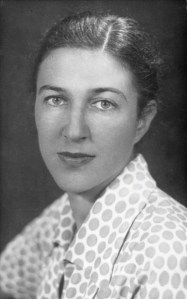
Ivan Turgenev Russian 1818 – 1883
There lived a fool.
For a long time he lived in peace and contentment; but by degrees rumours began to reach him that he was regarded on all sides as a vulgar idiot.
The fool was abashed and began to ponder gloomily how he might put an end to these unpleasant rumours.
A sudden idea, at last, illuminated his dull little brain… And, without the slightest delay, he put it into practice.
A friend met him in the street, and fell to praising a well-known painter…
‘Upon my word!’ cried the fool,’ that painter was out of date long ago… you didn’t know it? I should never have expected it of you… you are quite behind the times.’
The friend was alarmed, and promptly agreed with the fool.
‘Such a splendid book I read yesterday!’ said another friend to him.
‘Upon my word!’ cried the fool, ‘I wonder you’re not ashamed. That book’s good for nothing; every one’s seen through it long ago. Didn’t you know it? You’re quite behind the times.’
This friend too was alarmed, and he agreed with the fool.
‘What a wonderful fellow my friend N. N. is!’ said a third friend to the fool. ‘Now there’s a really generous creature!’
‘Upon my word!’ cried the fool. ‘N. N., the notorious scoundrel! He swindled all his relations. Every one knows that. You’re quite behind the times.’
The third friend too was alarmed, and he agreed with the fool and deserted his friend. And whoever and whatever was praised in the fool’s presence, he had the same retort for everything.
Sometimes he would add reproachfully: ‘And do you still believe in authorities?’
‘Spiteful! malignant!’ his friends began to say of the fool. ‘But what a brain!’
‘And what a tongue!’ others would add, ‘Oh, yes, he has talent!’
It ended in the editor of a journal proposing to the fool that he should undertake their reviewing column.
And the fool fell to criticising everything and every one, without in the least changing his manner, or his exclamations.
Now he, who once declaimed against authorities, is himself an authority, and the young men venerate him, and fear him.
And what else can they do, poor young men? Though one ought not, as a general rule, to venerate any one … but in this case, if one didn’t venerate him, one would find oneself quite behind the times!




 Poets Corner