We present this work in honor of the poet’s 30th birthday.
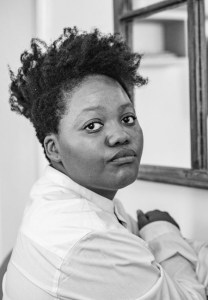
South African
b. 1993
The mirror spits your grandmotherback at you.
Her determinedeyes.
Her machetemouth.
Her howling courage.
You are third-generation
Messiah.
We present this work in honor of the poet’s 30th birthday.
The mirror spits your grandmotherback at you.
Her determinedeyes.
Her machetemouth.
Her howling courage.
You are third-generation
Messiah.
We present this work in honor of Human Rights Day.

To be a jacket
To be a slave
To be a stepladder
To be forsaken
For you to understand
You must have a disability
To be a breast of money
For those who are abled
And be the belt
For civil servants
And be a grass mat for feet
The feet of the rich
The feet of the wealthy
For you to understand
You must have a disability
And ask for help day and night
No one will listen
The government and community
They all emphasise
They emphasise your worthlessness
And you also feel worthless
But for you to understand
You must have a disability
Discrimination has become obvious
To be undermined
People see a disability
And do not see a person
But for you to understand
You must have a disability
We present this work in honor of the Vernal Equinox.

In the loneliness of my heart
I feel as if I should perish
Like the pale dew-drop
Upon the grass of my garden
In the gathering shades of twilight.
We present this work in honor of the 130th anniversary of the poet’s death.
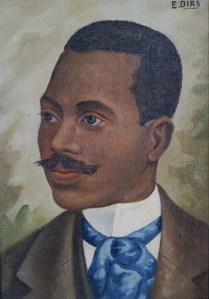
Chortle, laugh, in a laughter of storm
like a clown who, lanky and nervous,
laughs, in an absurd laughter, inflated
with violent irony and pain.
With that atrocious and bloody guffaw—:
rattle the jester’s bells, convulsing.
Jump, puppet: jump, clown, pierced
by the stertor of this slow agony—
You’re asked for an encore, and that’s not to be sneered at.
Come on! Tighten the muscles up, tighten up
in these macabre steel pirouettes…
And though you fall on the ground, quivering,
drowned in your hot and seething blood,
laugh! Heart, saddest of clowns.
We present this work in honor of the 10th anniversary of the poet’s death.
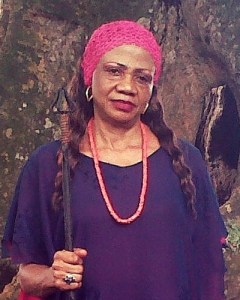
I can still recall their laughter
As they spoke of ‘lost virtue’.
I, Obiajunu
I have learned to live in scarcity.
So, cautiously,
i choose my steps
labouring up the steep hill
bearing on my head
in a clay pot
the spring’s very last drop
but from the bushes
a sweet melody
streams forth
and fills my ears
disarming
tantalising
and the body
is tempted to sway
leading the feet
off the straight path
and the eyes
are tempted to stray
to find the source
the giver of temporal joy
but i must hold fast
my pot of spring water
Though the seller of clay pot
never makes the ‘customer’
though the carrier of clay pot
be the mother of an only son
and though this tune
vibrating in my ears
tempts me to dance
to sway my hips
in unison
with it
beguiling
yet i cannot lose it
this stem
this prop
i have laboured up this hill
through toil and sweat
and i cannot spill it
this water so pure
so clear and sweet
the dying spring’s last drop
i obianuju
i shall provide my children
with plenty
i shall multiply this drop
they will never taste
of the wasted fluid
of the sea
We present this work in honor of St. Patrick’s Day.
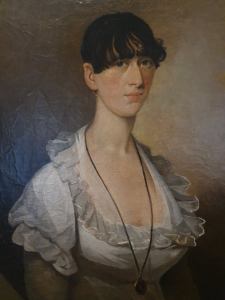
Ah! where is now my peaceful cot?
And where my happy home?
Far distant from that cherished spot,
In banishment, I roam.
From thee, my country! I am driven;
A wanderer forced from thee;
But yet my constant prayer to Heaven
Shall be to make thee free.
How blissful once my lot appeared!
How brightly Fortune smiled!
My daily toil by hope was cheered,
By happiness beguiled.
My blooming children played around;
Their mother blessed each hour;
Till tyrants on our prospects frowned,
And crushed us with their power.
They burned our humble dwelling then
Our little all destroyed;
And left us, the hard-hearted men!
Of every hope devoid.
And thus, my country! I was driven,
A wanderer far from thee;
But yet my ceaseless prayer to Heaven
Has been to make thee free
My helpless children sobbed aloud
Upon the parting day;
My Mary’s head with grief was bowed;
Oh how I wished to stay!
With anguish o’er the spot we mourned,
Where long our cottage stood;
And, as we went, we often turned
To view the neighbouring wood.
And when our vessel put to sea,
As dimmer grew the shore,
My bosom panted heavily,
To think that, never more,
My eyes upon that land should gaze,
Where all my youth was spent;
And where I thought to end my days,
In virtue and content.
Can virtue make content secure,
While tyrants may destroy
The simple blessings of the poor,
And blast their rising joy?
My loved, lost Country! ruined, driven,
An exile far from thee,
My last and fondest prayer to Heaven
Shall be to make thee free.
We present this work in honor of the 50th anniversary of the poet’s death.
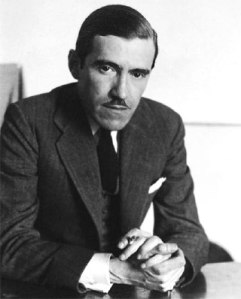
Filled with myself, walled up in my skin
by an inapprehensible god that is stifling me,
deceived perhaps
by his radiant atmosphere of light
that hides my drained
conscience,
my wings broken into splinters of air,
my listless groping through the mire;
filled with myself—gorged—I discover my essence
in the astonished image of water,
that is only an unwithering cascade,
a tumbling of angels fallen
of their own accord in pure delight,
that has nothing
but a whitened face
half sunken, already, like an agonized laugh
in the thin sheets of the cloud
and the mournful canticles of the sea—
more aftertaste of salt or cumulus whiteness
than lonely haste of foam pursued.
Nevertheless—oh paradox—constrained
by the rigor of the glass that clarifies it,
the water takes shape.
In the glass it sits, sinks deep and builds,
attains a bitter age of silences
and the graceful repose of a child smiling
in death, that deflowers
a beyond of disbanded
birds.
In the crystal snare that strangles it,
there, as in the water of a mirror,
it recognizes itself;
bound there, drop with drop,
the trope of foam withered in its throat.
What intense nakedness of water,
what water so strongly water,
is dreaming in its iridescent sphere,
already singing a thirst for rigid ice!
But what a provident glass—also—
that swells
like a star ripe with grain,
that flames in heroic promise
like a heart inhabited by happiness,
and that punctually yields up
to the water
a round transparent flower,
a missile eye that attains heights
and a window to luminous cries
over that smoldering liberty
oppressed by white fetters!

Boundless
For when we were
Young and playful,
Our joyous laughter
Rang out echoes through
Every street,
Enlivened by our boundless
Youthfulness.
For when we were
Young and playful,
We would jump buses
Standing or moving,
Ticketless to nowhere
And everywhere,
Knowing no limits,
Knowing no particular
Place to get off.
For when we were
Young and playful,
I met a stranger then,
Caring little about
His looks,
Just being young
Curious and fearless
On a moving empty
London bus,
But for us restless
Young and playful ones,
Filling up, No,
Taking over an
Empty London bus
To make life anew,
Posing, loving us
And strangers in
Boundless youthfulness,
Knowing not,
Caring little
What we were,
What we are
Going to become.
We present this work in honor of the poet’s 65th birthday.

Do not say “absence tastes like madness”
Close your eyes
Wherever you are
You will find me…
Immovable as the sea
Wandering about
In the ebb and flow
Never absent.
We present this work in honor of Canberra Day.
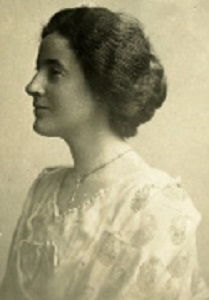
Let others prate of Greece and Rome,
And towns where they may never be,
The muse should wander nearer home.
My country is enough for me;
Her wooded hills that watch the sea,
Her inland miles of springing corn,
At Macedon or Barrakee—
I love the land where I was born.
On Juliet smile the autumn stars
And windswept plains by Winchelsea,
In summer on their sandy bars
Her rivers loiter languidly.
Where singing waters fall and flee
The gullied ranges dip to Lorne
With musk and gum and myrtle tree—
I love the land where I was born.
The wild things in her tangles move
As blithe as fauns in Sicily,
Where Melbourne rises roof by roof
The tall ships serve her at the quay,
And hers the yoke of liberty
On stalwart shoulders lightly worn,
Where thought and speech and prayer are free—
I love the land where I was born.
Princes and lords of high degree,
Smile, and we fling you scorn for scorn,
In hope and faith and memory
I love the land where I was born.
 Poets Corner