The Winter Lakes

We present this work in honor of the 105th anniversary of the poet’s death.
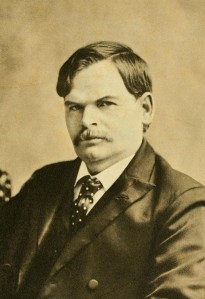
William Wilfrid Campbell
Canadian
1858 – 1918


Out in a world of death far to the northward lying,
Under the sun and the moon, under the dusk and the day;
Under the glimmer of stars and the purple of sunsets dying,
Wan and waste and white, stretch the great lakes away.

Never a bud of spring, never a laugh of summer,
Never a dream of love, never a song of bird;
But only the silence and white, the shores that grow chiller and dumber,
Wherever the ice winds sob, and the griefs of winter are heard.

Crags that are black and wet out of the grey lake looming,
Under the sunset’s flush and the pallid, faint glimmer of dawn;
Shadowy, ghost-like shores, where midnight surfs are booming
Thunders of wintry woe over the spaces wan.

Lands that loom like spectres, whited regions of winter,
Wastes of desolate woods, deserts of water and shore;
A world of winter and death, within these regions who enter,
Lost to summer and life, go to return no more.

Moons that glimmer above, waters that lie white under,
Miles and miles of lake far out under the night;
Foaming crests of waves, surfs that shoreward thunder,
Shadowy shapes that flee, haunting the spaces white.

Lonely hidden bays, moon-lit, ice-rimmed, winding,
Fringed by forests and crags, haunted by shadowy shores;
Hushed from the outward strife, where the mighty surf is grinding
Death and hate on the rocks, as sandward and landward it roars.

Morning Necktie

We present this work in honor of the poet’s 60th birthday.

Machi Tawara
Japanese
b. 1962


Set off to see for myself
my father’s name
carved in a Tohoku museum

Once the “world’s strongest,”
my father’s magnet
crouches on a shelf

Monday morning
the head of the Magnetic Research Institute
picks out his necktie

My father, perfectly at home
with rare earth elements,
loves Modigliani women

“Writing more love poems?”
half humorously
half anxiously

His present—
Sanuki noodles—
comes stuffed in a company envelope

Something warm in the way
he calls his wife “Mother”
without the least hesitation

He wipes his face with a hot towel
and sighs contentedly—
looking at him now I see an ordinary man

Moving away from the telephone
he sips his tea as if to say
“I’m not listening”

Forgiven
their inability to express tenderness—
men of my father’s generation

Translation by Juliet Winters Carpenter

A Folk Song

Jessie Mackay
Kiwi
1864 – 1938


I came to your town, my love,
And you were away, away!
I said “She is with the Queen’s maidens:
They tarry long at their play.
They are stringing her words like pearls
To throw to the dukes and earls.”
But O, the pity!
I had but a morn of windy red
To come to the town where you were bred,
And you were away, away!

I came to your town, my love,
And you were away, away!
I said, “She is with the mountain elves
And misty and fair as they.
They are spinning a diamond net
To cover her curls of jet.”
But O, the pity!
I had but a noon of searing heat
To come to your town, my love, my sweet,
And you were away, away!

I came to your town, my love,
And you were away, away!
I said, “She is with the pale white saints,
And they tarry long to pray.
They give her a white lily-crown,
And I fear she will never come down.”
But O, the pity!
I had but an even grey and wan
To come to your town and plead as man,
And you were away, away!

pete the parrot and shakespeare

We present this work in honor of the 85th anniversary of the poet’s death.

Don Marquis
American
1878 – 1937


i got acquainted with
a parrot named pete recently
who is an interesting bird
pete says he used
to belong to the fellow
that ran the mermaid tavern
in london then i said
you must have known
shakespeare know him said pete
poor mutt i knew him well
he called me pete and i called him
bill but why do you say poor mutt
well said pete bill was a
disappointed man and was always
boring his friends about what
he might have been and done
if he only had a fair break
two or three pints of sack
and sherris and the tears
would trickle down into his
beard and his beard would get
soppy and wilt his collar
i remember one night when
bill and ben johnson and
frankie beaumont
were sopping it up

here i am ben says bill
nothing but a lousy playwright
and with anything like luck
in the breaks i might have been
a fairly decent sonnet writer
i might have been a poet
if i had kept away from the theatre
yes says ben i ve often
thought of that bill
but one consolation is
you are making pretty good money
out of the theatre

money money says bill what the hell
is money what i want is to be
a poet not a business man
these damned cheap shows
i turn out to keep the
theatre running break my heart
slap stick comedies and
blood and thunder tragedies
and melodramas say i wonder
if that boy heard you order
another bottle frankie
the only compensation is that i get
a chance now and then
to stick in a little poetry
when nobody is looking
but hells bells that isn t
what i want to do
i want to write sonnets and
songs and spenserian stanzas
and i might have done it too
if i hadn t got
into this frightful show game
business business business
grind grind grind
what a life for a man
that might have been a poet

well says frankie beaumont
why don t you cut it bill
i can t says bill
i need the money i ve got
a family to support down in
the country well says frankie
anyhow you write pretty good
plays bill any mutt can write
plays for this london public
says bill if he puts enough
murder in them what they want
is kings talking like kings
never had sense enough to talk
and stabbings and stranglings
and fat men making love
and clown basting each
other with clubs and cheap puns
and off color allusions to all
the smut of the day oh i know
what the low brows want
and i give it to them

well says ben johnson
don t blubber into the drink
brace up like a man
and quit the rotten business
i can t i can t says bill
i ve been at it too long i ve got to
the place now where i can t
write anything else
but this cheap stuff
i m ashamed to look an honest
young sonneteer in the face
i live a hell of a life i do
the manager hands me some mouldy old
manuscript and says
bill here s a plot for you
this is the third of the month
by the tenth i want a good
script out this that we
can start rehearsals on
not too big a cast
and not too much of your
damned poetry either
you know your old
familiar line of hokum
they eat up that falstaff stuff
of yours ring him in again
and give them a good ghost
or two and remember we gotta
have something dick burbage can get
his teeth into and be sure
and stick in a speech
somewhere the queen will take
for a personal compliment and if
you get in a line or two somewhere
about the honest english yeoman
it s always good stuff
and it s a pretty good stunt
bill to have the heavy villain
a moor or a dago or a jew
or something like that and say
i want another
comic welshman in this
but i don t need to tell
you bill you know this game
just some of your ordinary
hokum and maybe you could
kill a little kid or two a prince
or something they like
a little pathos along with
the dirt now you better see burbage
tonight and see what he wants
in that part oh says bill
to think i am
debasing my talents with junk
like that oh god what i wanted
was to be a poet
and write sonnet serials
like a gentleman should

well says i pete
bill s plays are highly
esteemed to this day
is that so says pete
poor mutt little he would
care what poor bill wanted
was to be a poet

archy

A Village Girl

We present this work in honor of the 45th anniversary of the poet’s death.

Sumitranandan Pant
Indian
1900 – 1977

Exuberant with youth,
beautiful as an early monsoon cloud,
dark-skinned,
on languorous feet
the village girl comes walking,
proud, stately, graceful,
along the snaking path.

She trails her scarf behind
and pushes back her hair;
quick to be embarrassed,
she glances down at the twin pitchers of her breasts.
A woman, restless:
her laughter ripples
like a brook spilling over its banks—
her lips—from teeth as bright as foam.

Along the road she stops,
bending a little
to smooth her skirt; turns her face
when she hears her lover’s footsteps—
a village lad draws near,
her ardent suitor;
while steadily he stares at her,
surprised,
rejoicing,
she shuts her eyes.

Beside the well
enchanted man and woman!
When she draws up the heavy jug
filled to the brim,
her breasts, like overflowing pitchers,
are tensed so that they strain
against her tightening blouse.
She spills the water
in a shower of beauty,
then throws her scarf across her breast,
sets the jug upon her head
and starts the zigzag path for home.

Hibiscus at her ears,
she weaves a garland—
shephalika, white lily, oleander,
and trumpet-flower,
braiding blooming stars all through her hair,
and roams the woodland with her cattle,
calling out with lark and cuckoo.
In the deserted forest
she adorns herself through every season
with jasmine, cassia and fragrant herbs,
forest-flame and mango blossom.

No, I Wasn’t Meant to Love and Be Loved

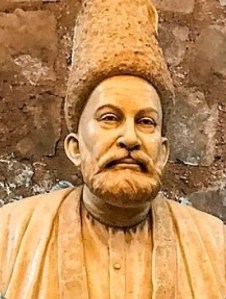
We present this work in honor of the poet’s 225th birthday.

Ghalib
Indian
1797 – 1869


No, I wasn’t meant to love and be loved.
If I’d lived longer, I would have waited longer.

Knowing you are faithless keeps me alive and hungry.
Knowing you faithful would kill me with joy.

Delicate are you, and your vows are delicate, too,
so easily do they break.

You are a laconic marksman. You leave me
not dead but perpetually dying.

I want my friends to heal me, succor me.
Instead, I get analysis.

Conflagrations that would make stones drip blood
are campfires compared to my anguish.

Two-headed, inescapable anguish!—
Love’s anguish or the anguish of time.

Another dark, severing, incommunicable night.
Death would be fine, if I only died once.

I would have liked a solitary death,
not this lavish funeral, this grave anyone can visit.

You are mystical, Ghalib, and, also, you speak beautifully.
Are you a saint, or just drunk as usual?

Translation by Vijay Sashadri

In the Mid-Midwinter

We present this work in honor of the poet’s 75th birthday.

Liz Lochhead
Scots
b. 1947


after John Donne’s ‘A Nocturnal on St Lucy’s Day’

At midday on the year’s midnight
into my mind came
I saw the new moon late yestreen
wi the auld moon in her airms
though, no,
there is no moon of course –
there’s nothing very much of anything to speak of
in the sky except a gey dreich greyness
rain-laden over Glasgow and today
there is the very least of even this for us to get
but
the light comes back
the light always comes back
and this begins tomorrow with
however many minutes more of sun and serotonin.

Meanwhile
there will be the winter moon for us to love the longest,
fat in the frosty sky among the sharpest stars,
and lines of old songs we can’t remember
why we know
or when first we heard them
will aye come back
once in a blue moon to us
unbidden

and bless us with their long-travelled light.

Christmas Bells

We present this work in honor of Christmas Day.

Henry Wadsworth Longfellow
American
1807 – 1882


I heard the bells on Christmas Day
Their old, familiar carols play,
and mild and sweet
The words repeat
Of peace on earth, good-will to men!

And thought how, as the day had come,
The belfries of all Christendom
Had rolled along
The unbroken song
Of peace on earth, good-will to men!

Till ringing, singing on its way,
The world revolved from night to day,
A voice, a chime,
A chant sublime
Of peace on earth, good-will to men!

Then from each black, accursed mouth
The cannon thundered in the South,
And with the sound
The carols drowned
Of peace on earth, good-will to men!

It was as if an earthquake rent
The hearth-stones of a continent,
And made forlorn
The households born
Of peace on earth, good-will to men!

And in despair I bowed my head;
“There is no peace on earth,” I said;
“For hate is strong,
And mocks the song
Of peace on earth, good-will to men!”

Then pealed the bells more loud and deep:
“God is not dead, nor doth He sleep;
The Wrong shall fail,
The Right prevail,
With peace on earth, good-will to men.”

The Haste of Love

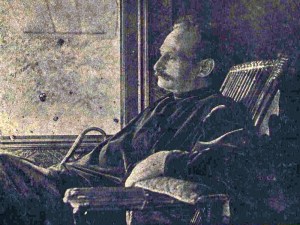
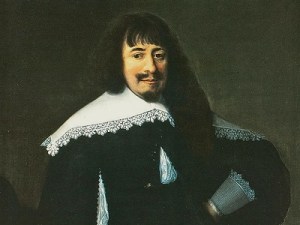
We present this work in honor of the poet’s 425th birthday.

Martin Opitz
German
1597 – 1639


Ah, sweetheart, let us hurry
We still have time.
Delaying thus, we bury
Our mutual prime.

Beauty’s bright gift shall perish
As leaves grow sere;
All that we have and cherish
Shall disappear.

The cheek of roses fadeth
Gray grows the head;
And fire the eyes evadeth
And passion’s dead.

The mouth, love’s honeyed winner
Is formless, cold;
The hand, like snow, gets thinner
And thou art old!

So let us taste the pleasure
That youth endears,
Ere we are called to measure
The flying years.

Give, as thou lov’st and livest
Thy love to me,
Even though, in what thou givest
My loss should be!

Translation by Bayard Taylor