Elsa at the Mirror

We present this work in honor of the poet’s 125th birthday.

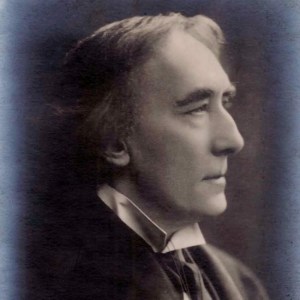
Louis Aragon
French
1897 – 1982


It was in the middle of our tragedy
And all the long day sitting at her glass
She combed her bright gold hair. To me it was
As though her calm hands quieted a blaze.
It was in the middle of our tragic days.

And all day long sitting before her glass
She combed her bright gold hair as one who plays
In the very middle of our tragedy
A golden harp without belief, to pass
The long hours, sitting all day at her glass.

She combed her bright gold hair and seemed to be
Martyrizing at will her memory
All the long day while sitting at her glass,
Reviving still the spent flowers of the blaze,
Not speaking as would another in her place.

She martyrized at will her memory
It was in the middle of our tragic days
Her dark glass was the world’s facsimile
Her comb, parting the fires of that silken mass,
Lit up the corners of my memory.

In the very middle of our tragic days
As Thursday is in the middle of the week
And sitting there before her memory
She saw within the glass (but did not speak)

One by one the actors of our tragedy
Dying, whom most in this dark world we praise

I need not call their names You know what memory
Burns on the hearth of these declining days

And in her golden hair when she sits there
And combs in silence the reflected blaze.

Translation by George Dillon

Engraving of a Bison on Stone

We present this work in honor of Gandhi Jayanti.

Arvind Krishna Mehrotra
Indian
b. 1947


The land resists
Because it cannot be
Tempted, or broken
In a chamber. It records,
By carefully shuffling the leaves,
The passage of each storm, rain
And drought. The land yields
In places, deliberately,
Having learnt warfare from the armies
It fed. The land is of one
Piece and hasn’t forgotten
Old miracles: the engraving of a bison
On stone, for instance. The land
Turns up like an unexpected
Visitor and gives refuge, it cannot be
Locked, or put away. The land
Cannot sign its name
It cannot die
Because it cannot be buried
It understands the language
It speaks in dialect.

A String of Bright Beacon Fires

We present this work in honor of China’s National Day.

Yang Jiong
Chinese
650 – c. 695


A String of bright beacon fires lights up the Capital;
My blood’s boiling, my heart’s crying out for battle!
Leaving Changan with royal warrant hastily,
Armoured cavalries aim to besiege the enemy city.

Painted banners are dimmed by the heavy snows pelting,
Thundering war drums are heard amidst the gusts howling.
O, To be a fighting centurion I’d be most willing,
Rather than a verse-reciting scholarly weakling!

The Believer’s Heart

We present this work in honor of the poet’s 815th birthday.

Rumi
Persian
1207 – 1273


The Prophet said that God has declared,
“I am not contained in aught above or below,
I am not contained in earth or sky, or even
In highest heaven. Know this for a surety, O beloved!
Yet am I contained in the believer’s heart!
If ye seek Me, search in such hearts!”

The Tay Bridge Disaster

We present this work in honor of the 120th anniversary of the poet’s death.

William Topaz McGonagall
Scots
1825 – 1902


Beautiful Railway Bridge of the Silv’ry Tay!
Alas! I am very sorry to say
That ninety lives have been taken away
On the last Sabbath day of 1879,
Which will be remember’d for a very long time.

‘Twas about seven o’clock at night,
And the wind it blew with all its might,
And the rain came pouring down,
And the dark clouds seemed to frown,
And the Demon of the air seem’d to say—
“I’ll blow down the Bridge of Tay.”

When the train left Edinburgh
The passengers’ hearts were light and felt no sorrow,
But Boreas blew a terrific gale,
Which made their hearts for to quail,
And many of the passengers with fear did say—
“I hope God will send us safe across the Bridge of Tay.”

But when the train came near to Wormit Bay,
Boreas he did loud and angry bray,
And shook the central girders of the Bridge of Tay
On the last Sabbath day of 1879,
Which will be remember’d for a very long time.

So the train sped on with all its might,
And Bonnie Dundee soon hove in sight,
And the passengers’ hearts felt light,
Thinking they would enjoy themselves on the New Year,
With their friends at home they lov’d most dear,
And wish them all a happy New Year.

So the train mov’d slowly along the Bridge of Tay,
Until it was about midway,
Then the central girders with a crash gave way,
And down went the train and passengers into the Tay!
The Storm Fiend did loudly bray,
Because ninety lives had been taken away,
On the last Sabbath day of 1879,
Which will be remember’d for a very long time.

As soon as the catastrophe came to be known
The alarm from mouth to mouth was blown,
And the cry rang out all o’er the town,
Good heavens! the Tay Bridge is blown down,
And a passenger train from Edinburgh,
Which fill’d all the people’s hearts with sorrow,
And made them all for to turn pale,
Because none of the passengers were sav’d to tell the tale
How the disaster happen’d on the last Sabbath day of 1879,
Which will be remember’d for a very long time.

It must have been an awful sight,
To witness in the dusky moonlight,
While the Storm Fiend did laugh, and angry did bray,
Along the Railway Bridge of the Silv’ry Tay.
Oh! ill-fated Bridge of the Silv’ry Tay,
I must now conclude my lay
By telling the world fearlessly without least dismay,
That your central girders would not have given way,
At least many sensible men do say,
Had they been supported on each side with buttresses,
At least many sensible men confesses,
For the stronger we our houses do build,
The less chance we have of being killed.

Yesterday, As You Were Reading

We present this work in honor of the poet’s 140th birthday.

Vicenta Castro Cambón
Argentine
1882 – 1928

“Are you feeling cold?” you asked me.
I couldn’t deny that I was:
you’d detected it in my countenance
and possibly even my voice.

You were also feeling cold.
I could tell, though not by your face;
it’s as if your soul were kept on display
to mine in a crystal vase.
“Close the door!” you commanded.
I thought: what we ought to close
instead is that book of yours…
That book was the source of the cold.

Translation by Brittany Hause

Why Do the Wrong People Travel

We present this work in honor of World Tourism Day.

Noël Coward
English
1899 – 1973


Travel they say improves the mind,
An irritating platitude, which frankly, entre nous,
Is very far from true.

Personally I’ve yet to find that longitude and latitude
can educate those scores of monumental bores
Who travel in groups and herds and troupes
Of varying breeds and sexes
Till the whole world reels…

to shouts and squeals…
And the clicking of Rolleiflexes.

Why do the wrong people travel, travel, travel
When the right people stay back home?
What compulsion compels them
and who the hell tells them
To drag their cans to Zanzibar,
instead of staying quietly in Omaha.
The Taj Mahal and the Grand Canal
And the sunny French Rivera
Would be less oppressed if the Middle West
Would settle for somewhere rather nearer.
Please do not think that I criticize or cavel
at a genuine urge to roam.
But why, oh why, do the wrong people travel

when the right people stay back home
And mind their business
when the right people stay back home
And eat hot doughnuts
when the right people stay back home
I sometimes wonder
why the right people stay back home.

Just when you think romance is ripe it rather sharply dawns on you
That each sweet serenade is for the tourist trade
Any attractive native type who resolutely fawns on you
Will give as his address American Express
There isn’t a rock between Bangkok and the beaches of Hispianola
That does not recoil from suntan oil and the gurgle of Coca-Cola

Why do the wrong people travel, travel, travel
When the right people stay back home?
What explains this mass mania to leave Pennsylvania
And clack around like flocks of geese.
Demanding dry martinis on the isles of Greece
In the smallest street, where the gourmets meet,
They invariably fetch up
And it’s hard to make them accept a steak
that isn’t served rare and smeared with ketchup.

Millions of tourists are churning up the gravel
While they gaze at St. Peter’s Dome,

But why, oh why do the wrong people travel when the right people stay back home
with Cinerama
when the right people stay back home
with all that Kleenex
when the right people stay back home
I merely asking
why the right people stay back home

What peculiar obsessions inspire those processions
Of families from Houston Tex
with all those cameras around their necks?
They will take a train
Or an aeroplane
For an hour on the Costa Brava,
And they’ll see Pompeii
On the only day
When it’s up to its ass in molten lava!
It would take years to unravel, ravel, ravel
Every impulse that makes them wanna roam.
But why oh WHY do the wrong people travel
When the right people stay at home.”
and Yogie Bear-O
when the right people stay back home
won’t someone tell me
why the right people stay back home.

Head of the Year

We present this work in honor of Rosh Hashanah.

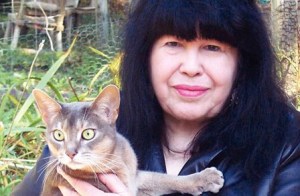
Marge Piercy
American
b. 1936


The moon is dark tonight, a new
moon for a new year. It is
hollow and hungers to be full.
It is the black zero of beginning.

Now you must void yourself
of injuries, insults, incursions.
Go with empty hands to those
you have hurt and make amends.

It is not too late. It is early
and about to grow. Now
is the time to do what you
know you must and have feared
to begin. Your face is dark
too as you turn inward to face
yourself, the hidden twin of
all you must grow to be.

Forgive the dead year. Forgive
yourself. What will be wants
to push through your fingers.
The light you seek hides
in your belly. The light you
crave longs to stream from
your eyes. You are the moon
that will wax in new goodness.

Ashes

We present this work in honor of the 50th anniversary of the poet’s death.

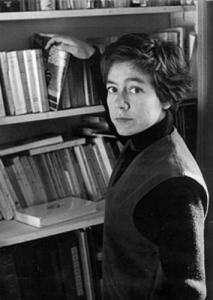
Alejandra Pizarnik
Argentine
1936 – 1972


The night splintered into stars
watching me dazzled
the air hurls hate
its face embellished with music.

We will go soon

Secret dream
ancestor of my smile
the world is emaciated
and there is a lock but no keys
and there is terror but not tears.

What will I do with myself?

Because to You I owe what I am

But I have no tomorrow

Because to You I…

The night suffers.

Translation by Frank Graziano and Maria Rosa Fort

Immigrant

We present this work in honor of the South African holiday, Heritage Day.

Elisabeth Eybers
South African
1915 – 2007

I’ve nothing for hands and feet here,
the rest was lost in transit:
the dazed heart, the nervous tension –
then again, what would be made of them?

To compare what’s been lost
to what’s around, to grasp at light and sound
though I don’t look or listen,
I still have the senses on my face.

And in my breast and belly space
I apprehend something else was in that place.
Who’d have known that emptiness would be
so heavy, that being unimpeded would result in such a bind?

Translation by Jacquelyn Pope