We present this work in honor of the 85th anniversary of the poet’s death.
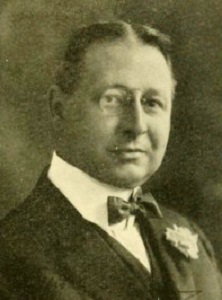
Ellis Parker Butler American 1869 – 1937
There was a young patrolman who Had large but tender feet; They always hurt him badly when He walked upon his beat. (He always took them with him when He walked upon his beat.)
His name was Patrick Casey and A sweetheart fair had he; Her face was full of freckles but Her name was Kate McGee. (It was in spite of freckles that Her name was Kate McGee.)
‘Oh, Pat!’ she said, ‘I’ll wed you when Promotion comes to you!’ ‘I’m much-obliged,’ he answered, and ‘I’ll see what I can do.’ (I may remark he said it thus? ‘Oi’ll say phwat Oi kin do.’)
So then he bought some new shoes which Allowed his feet more ease? They may have been large twelves. Perhaps Eighteens, or twenty-threes. (That’s rather large for shoes, I think? Eighteens or twenty-threes!)
What last they were I don’t know, but Somehow it seems to me I’ve heard somewhere they either were A, B, C, D, or E. (More likely they were five lasts wide? A, B plus C, D, E.)
They were the stoutest cowhide that Could be peeled off a cow.
But he was not promoted
So Kate wed him anyhow.
(This world is crowded full of Kates That wed them anyhow.)
We present this work in honor of the poet’s 115th birthday.
Louis Macneice Irish 1907 – 1963
Time was away and somewhere else, There were two glasses and two chairs And two people with the one pulse (Somebody stopped the moving stairs): Time was away and somewhere else.
And they were neither up nor down; The stream’s music did not stop Flowing through heather, limpid brown, Although they sat in a coffee shop And they were neither up nor down.
The bell was silent in the air Holding its inverted poise— Between the clang and clang a flower, A brazen calyx of no noise: The bell was silent in the air.
The camels crossed the miles of sand That stretched around the cups and plates; The desert was their own, they planned To portion out the stars and dates: The camels crossed the miles of sand.
Time was away and somewhere else. The waiter did not come, the clock Forgot them and the radio waltz Came out like water from a rock: Time was away and somewhere else.
Her fingers flicked away the ash That bloomed again in tropic trees: Not caring if the markets crash When they had forests such as these, Her fingers flicked away the ash.
God or whatever means the Good Be praised that time can stop like this, That what the heart has understood Can verify in the body’s peace God or whatever means the Good.
Time was away and she was here And life no longer what it was, The bell was silent in the air And all the room one glow because Time was away and she was here.
We present this work in honor of the poet’s 260th birthday.
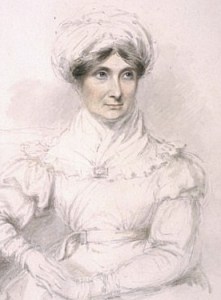
Joanna Baillie Scots 1762 – 1851
In these our days of sentiment When youthful poets all lament Some dear lost joy, some cruel maid; Old friendship changed and faith betrayed; The world’s cold frown and every ill That tender hearts with anguish fill; Loathing this world and all its folly, In lays most musical and melancholy,– Touching a low and homely string, May poet of a Parrot sing With dignity uninjured? say!– No; but a simple rhymester may. Well then, I see thee calm and sage, Perched on the summit of thy cage, With broad, hooked beak and plumage green, Changing to azure in the light, Gay pinions tipped with scarlet bright, And, strong for mischief, use or play, Thick talons, crisped with silver grey,– A gallant bird, I ween! What courtly dame, for ball-room drest– What gartered lord in silken vest– On wedding morn what country bride With groom bedizened by her side– What youngsters in their fair-day geer, Did ever half so fine appear? Alas! at ball, or, church, or fair, Were ne’er assembled visions rare Of moving creatures all so gay As in thy native woods, where day In blazing torrid brightness played Through checkered boughs and gently made A ceaseless morris-dance of sheen and shade! In those blest woods, removed from man, Thy early being first began, ‘Mid gay compeers, who, blest as thou, Hopped busily from bough to bough, Robbing each loaded branch at pleasure Of berries, buds and kerneled treasure; Then rose aloft with outspread wing, Then stooped on flexile twig to swing, Then coursed and circled through the air, Mate chasing mate, full many a pair. It would have set one’s heart a dancing To ‘ve seen their varied feathers glancing, And thought how many happy things Creative Goodness into being brings. But now how changed! it is thy doom Within a walled and windowed room To hold thy home, and (all forgot The traces of thy former lot), Clutching the wires with progress slow, Still round and round thy cage to go. Or cross the carpet:–altered case! This now is all thy daily travel’s space. Yet here thou art a cherished droll, Known by the name of Pretty Poll; Oft fed by lady’s gentle hand With sops and sugar at command, And sometimes too a nut or cherry, Which in thy claws to beak and eye Thou seemest to raise right daintily, Turning it oft, as if thou still Wert scanning it with cautious skill, Provoking urchins near to laughter loud and merry. See, gathered round, a rosy band, With eager upcast eyes they stand, Marking thy motions and withal Delighting on thy name to call; And hear, like human speech, reply Come from thy beak most curiously. They shout, they mowe, they grin, they giggle, Clap hands, hoist arms, and shoulders wriggle; O here, well may we say or sing, That learning is a charming thing! For thou, beneath thy wire-wove dome, A learned creature hast become; And hast, by dint of oft repeating, Got words by rote, the vulgar cheating Which, once in ten times well applied, Are to the skies with praises cried. So lettered dunces oft impose On simple fools their studied prose. Aye; o’er thy round though unwigged head, Full many a circling year has sped, Since thou kept terms within thy college, From many tutors, short and tall, In braid or bonnet, cap or caul, Imbibing wonderous stores of seeming knowledge. And rarely Bachelor of Arts Or Master (dare we say it?) imparts To others such undoubted pleasure From all his stores of classic treasure: And ladies sage, whose learned saws To cognoscenti friends give laws, Rarely, I trow, can so excite A listening circle with delight. And rarely their acquirements shine Through such a lengthened course as thine. The grannums of this group so gay, Who round thee now their homage pay, Belike have in such youthful glee, With admiration gazed on thee; And yet no wrinkled line betrays The long course of thy lengthened days, Thy bark of life has kept afloat As on a shoreless sea, where not Or change or progress may be traced; Time hath with thee been leaden-paced. But ah! proud beauty, on whose head Some three-score years no blight hath shed, Untoward days will come at length, When thou, of spirit reft and strength, Wilt mope and pine, year after year, Which all one moulting-time appear, And this bright plumage, dull and rusty, Will seem neglected shrunk and dusty, And scarce a feather’s rugged stump Be left to grace thy fretted rump. Mewed in a corner of thy home, Having but little heart to roam, Thou’lt wink and peer–a wayward elf, And croon and clutter to thyself, Screaming at visitors with spite, And opening wide thy beak to bite. Yet in old age still wilt thou find Some constant friend thy wants to mind, Whose voice thou’lt know, whose hand thou’lt seek, Turning to it thy feathered cheek; Grateful to her though cross and froward To all beside, and it will go hard But she will love thee, even when life’s last goal Thou’st reached, and call thee still her Pretty Poll. Now from these lines, young friends, I know A lesson might be drawn to shew How, like our bird, on life’s vain stage, Pass human childhood, prime and age: But conned comparisons, I doubt, Might put your patience to the rout, And all my pains small thanks receive, So this to wiser folks leave.
Gracefully she approached, in a dress of bright blue silk; With an olive branch in her hand, and many tales of sorrows in her eyes. Running to her, I greeted her, and took her hand in mine: Pulses could still be felt in her veins; warm was still her body with life.
“But you are dead, mother”, I said; “Oh, many years ago you died!” Neither of embalmment she smelled, Nor in a shroud was she wrapped.
I gave a glance at the olive branch; she held it out to me, And said with a smile, “It is the sign of peace; take it.”
I took it from her and said, “Yes, it is the sign of…”, when My voice and peace were broken by the violent arrival of a horseman. He carried a dagger under his tunic with which he shaped the olive branch Into a rod and looking at it he said to himself: “Not too bad a cane for punishing the sinners!” A real image of a hellish pain! Then, to hide the rod, He opened his saddlebag. in there, O God! I saw a dead dove, with a string tied round its broken neck.
My mother walked away with anger and sorrow; my eyes followed her; Like the mourners she wore a dress of black silk.
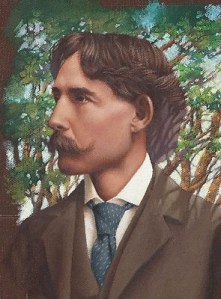
From plains that reel to southward, dim, The road runs by me white and bare; Up the steep hill it seems to swim Beyond, and melt into the glare. Upward half-way, or it may be Nearer the summit, slowly steals A hay-cart, moving dustily With idly clacking wheels. By his cart’s side the wagoner Is slouching slowly at his ease, Half-hidden in the windless blur Of white dust puffiing to his knees. This wagon on the height above, From sky to sky on either hand, Is the sole thing that seems to move In all the heat-held land.
Beyond me in the fields the sun Soaks in the grass and hath his will; I count the marguerites one by one; Even the buttercups are still. On the brook yonder not a breath Disturbs the spider or the midge. The water-bugs draw close beneath The cool gloom of the bridge.
Where the far elm-tree shadows flood Dark patches in the burning grass, The cows, each with her peaceful cud, Lie waiting for the heat to pass. From somewhere on the slope near by Into the pale depth of the noon A wandering thrush slides leisurely His thin revolving tune.
In intervals of dreams I hear The cricket from the droughty ground; The grasshoppers spin into mine ear A small innumerable sound. I lift mine eyes sometimes to gaze: The burning sky-line blinds my sight: The woods far off are blue with haze: The hills are drenched in light.
And yet to me not this or that Is always sharp or always sweet; In the sloped shadow of my hat I lean at rest, and drain the heat; Nay more, I think some blessèd power Hath brought me wandering idly here: In the full furnace of this hour My thoughts grow keen and clear.
We present this work in honor of the poet’s 135th birthday.
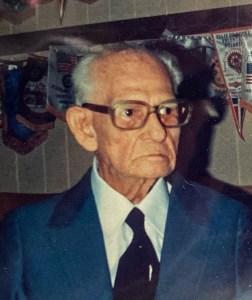
Salomón Ibarra Mayorga Nicaraguan 1887 – 1985
Hail to thee, Nicaragua! On thy land roareth the voice of the cannon no more, nor doeth the blood of brothers now stain thy glorious bicolor banner.
Let peace shine beautifully in thy sky, and nothing dimmeth thine immortal glory, for labor is thy well-earned laurel and honor is thy triumphal emblem, is thy triumphal emblem!
I hear your call! I hear it far away; I hear it break the circle of these crouching hills.
I want to view your face again and feel your cold embrace; or at your brim to set myself and inhale your breath; or like the trees, to watch my mirrored self unfold and span my days with song from the lips of dawn. I hear your lapping call! I hear it coming through; invoking the ghost of a child listening, where river birds hail your silver-surfaced flow.
My river’s calling too! Its ceaseless flow impels my found’ring canoe down its inevitable course. And each dying year brings near the sea-bird call, the final call that stills the crested waves and breaks in two the curtain of silence of my upturned canoe. O incomprehensible God! Shall my pilot be my inborn stars to that final call to Thee. O my river’s complex course?
I did not want to feel at home of what importance was the town my family were driven from how could I still have thought it mine I have four children why should I expend my love on stones and trees of what significance were these to have such power over me
As stones and trees absorb the weather so these had stored my childhood days and from a million surfaces gave back my father and my mother my presence there was dialogue how could I have refused to answer when my own crippled childhood broke from streets and hillsides like a dancer
Not of ladies, love, pageantry of enamored knights do I sing; nor the display, gifts and tenderness of loving affections and cares; but the valor, the deeds, the prowess of those valiant Spaniards who upond the untamed neck of the Araucanian with their sword placed their cruel yoke.





 Poets Corner