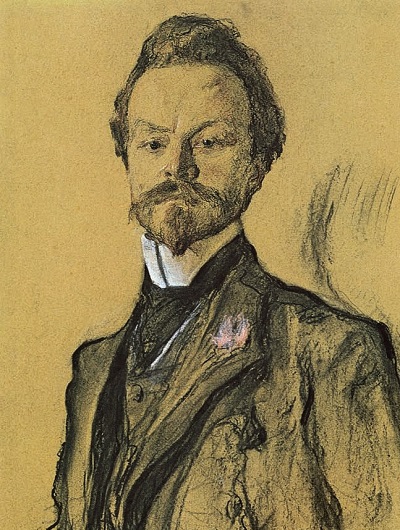
We present this work in honor of the poet’s 155th birthday.
Konstantin Balmont Russian 1867 – 1942
The light will burn and darken, then burn with stronger blaze, But unreturning darkens the sheen of youthful days. Glow then, and be enkindled, the while thou still art young, Let ever more undwindled the heart’s loud chords be strung, That something be remembered in waning years of woe, That chill old-age be lighted by that decayless glow, Born of exalted fancies, and headstrong youth’s ado, Heedless, but full of splendour, heedless and hallowed, too.
Ay, tear her tattered ensign down!
Long has it waved on high,
And many an eye has danced to see
That banner in the sky;
Beneath it rung the battle shout,
And burst the cannon’s roar; —
The meteor of the ocean air
Shall sweep the clouds no more.
Her deck, once red with heroes’ blood,
Where knelt the vanquished foe,
When winds were hurrying o’er the flood,
And waves were white below,
No more shall feel the victor’s tread,
Or know the conquered knee; —
The harpies of the shore shall pluck
The eagle of the sea!
Oh, better that her shattered hulk
Should sink beneath the wave;
Her thunders shook the mighty deep,
And there should be her grave;
Nail to the mast her holy flag,
Set every threadbare sail,
And give her to the god of storms,
The lightning and the gale!
First in my song shalt thou be, O Phœbus, the song that I sing Of the heroes of old, who sped, at the hest of Pelias the king, When down through the gorge of the Pontus-sea, through the Crags Dark-blue, On the Quest of the Fleece of Gold the strong-ribbed Argo flew. For an oracle came unto Pelias, how that in days to be A terrible doom should be dealt him of him whom his eyes should see From the field coming in, with the one foot only sandal-shod. Nor long thereafter did Jason fulfil the word of the God: For in wading the rush of Amaurus swollen with winter-tide rain One sandal plucked he forth of the mire, but the one was he fain To leave in the depths, for the swirl of the waters to sweep to the main. Straightway to the presence of Pelias he came, and his hap was to light On a banquet, the which unto Father Poseidon the king had dight, And the rest of the Gods, but Pelasgian Hêrê he heeded not. And the king beheld him, and straightway laid for his life the plot, And devised for him toil of a troublous voyage, that lost in the sea, Or lost amid alien men his home-return might be. Of the ship and her fashioning, bards of the olden time have told How Argus wrought, how Athênê made him cunning-souled. But now be it mine the lineage and names of her heroes to say, And to tell of the long sea-paths whereover they needs must stray, And the deeds that they wrought:—may the Muses vouchsafe to inspire the lay.
We present this work in honor of the poet’s 350th birthday.
Ben Jonson
English
1572 – 1637
In all faith, we did our part: generated punctually, prepared adequately, ejected promptly, and swam in the approved manner in the appropriate direction; did all instinctive things well, even eagerly- an exemplary start. But then the barrier: unexpectedness unexpectedly. (They did not tell us this). To go back impossible, unnatural: so round; many times; we tired ourselves. Where were the promised homes, embedded in the soft wall? Or the anticipated achievement so momentous, fulfilling? So we died: what else was there to do? But in all faith, we did our part!
The banner of your body floats in the Brandenburg wind. An old woman wants to come in, I can see her through the door, her red felt hand pressing in vain on the latch, scraps of her cries come at me like the barbaric song of a violin mending the night; I’m going to slip a rose under the door a black-blooded rose, maybe she’ll go away? And I could wallow in the bramble hammock but her voice hiccups: Ophelia My name is Ophelia, open the door, O-phe-lia… —What do I care about her grotesque distortions What lie will she bring me? Why doesn’t she extend it to me through the sheets of sand the way she extends her name… Ophelia Ophelia, her shadow ricochets in the aura of my dusk. Ophelia, her voice grates like a leper’s rattle, philia, figlia…
We present this work in honor of the poet’s 205th birthday.
Julio Arboleda Pombo
Colombian
1817 – 1862
I saw the red sun’s serene light troubled and at one point its brilliant face disappeared and the sky darkened, with a darkness full of horror.
The stormy South winds sound angry, their anger grows, and the storm grows, and the shoulders of Atlas shudder high Olympus, with a dreadful thunderclap.
But then I saw the black veil of rain part, and by the previous light the brilliant and clear day was restored.
And again I looked upon the sky’s ornate splendor, and I said “Who knows if I should expect an equal change in my fortune?”
A world there is for those in love with mines of precious stones, But bards select a different world as setting for their thrones. The bird who eats love’s magic grain lives on another plane — His nest beyond both worlds, ignoring riches, scorning fame.
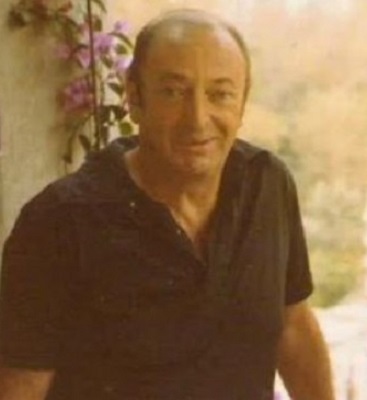
We present this work in honor of the 35th anniversary of the poet’s death.
Humberto Costantini
Argentine
1924 – 1987
It simply happens I have become immortal. The city buses respect me, they bow before me, like lap dogs they lick my shoes.
It simply happens I am no longer dying. There’s no angina worth anything, no typhus, cornice, war, or cannon, cancer, knife, or flood, no Junín fever, no vigilantes. I’m on the other side, Simply, I’m on the other side, from this side, fully immortal.
I move among Olympus, gods, ambrosias, I laugh, or sneeze, or tell a joke And time expands, expands like a crazy foam. How marvelous existing like this, immortal celebrating birth every five minutes, being a million birds, an atrocious leavening. What a scandal, caramba! this swarm of life, this plague called by my name, excessive, increasing, fully immortal.
I used to suffer, sure, from flus, fears, budgets, Idiot bosses, indigestion, homesickness, solitude, bad luck… But that was a century ago, twenty centuries, when I was mortal. When I was so mortal, so stupid and so mortal, that I didn’t even love you, you have to understand.
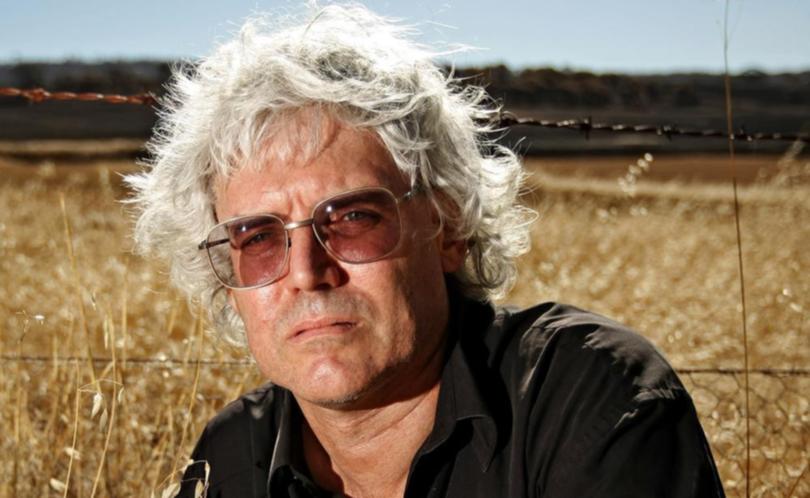
We present this work in honor of Western Australia Day.
John Kinsella
Australian
b. 1963
They’d been warned on every farm that playing in the silos would lead to death. You sink in wheat. Slowly. And the more you struggle the worse it gets. ‘You’ll see a rat sail past your face, nimble on its turf, and then you’ll disappear.’ In there, hard work has no reward. So it became a kind of test to see how far they could sink without needing a rope to help them out. But in the midst of play rituals miss a beat—like both leaping in to resolve an argument as to who’d go first and forgetting to attach the rope. Up to the waist and afraid to move. That even a call for help would see the wheat trickle down. The painful consolidation of time. The grains in the hourglass grotesquely swollen. And that acrid chemical smell of treated wheat coaxing them into a near-dead sleep.





 Poets Corner