O Health! thou dear invaluable guest! Thy rosy subjects, how supremely blest! Hear the blith milk-maid and the plough-boy sing, Nor envy they the station of a king; While Kings thy sweets to gain would gladly bow, Resign their crowns and guide the rustic’s plough: Thou pearl surpassing riches, power or birth! Of blessings thou the greatest known on earth! Thy value’s found like that of bards of yore, We know to prize thee when thou art no more! Ah! Why from me; art thou for ever flown? Why deaf to ev’ry agonizing groan? Not one short month for ten revolving years, But pain within my frame its sceptre rears! In each successive month full twelve long days And tedious nights my sun withdraws his rays! Leaves me in silent anguish on my bed, Afflicting all the members in the head; Through ev’ry particle the torture flies, But centers in the temples, brain and eyes; The efforts of the hands and feet are vain, While bows the head with agonizing pain; While heaves the breast th’ unutterable sigh, And the big tear drops from the languid eye. For ah! my children want a mother’s care, A husband too, should due assistance share; Myself for action form’d would fain thro’ life Be found th’ assiduous–valuable wife; But now, behold, I live unfit for aught; Inactive half my days except in thought, And this so vague while torture clogs my hours, I sigh, Oh, ‘twill derange my mental powers! Or by its dire excess dissolve my sight, And thus entomb me in perptual night! Ye sage Physicians, where’s your wonted skill? In vain the blisters, bolusses and pill; Great Neptune’s swelling waves in vain I try’d, My malady its utmost power defy’d; In vain the British and Cephalic Snuff, All Patent Medicines are empty stuff; The launcet, leech, and cupping swell the train Of useless efforts, which but gave me pain; Each art and application rain has prov’d, For ah! my sad complaint is not remo’v’d. Live’s one on earth possess’d of sympathy, Who knows what is presum’d a remedy? O send it hither! I again would try, Tho’ in the attempt of conqu’ring I die. For thus to languish on is worse than death, And I have hope if Heav’n recall my breath.
We present this work in honor of the poet’s 400th birthday.
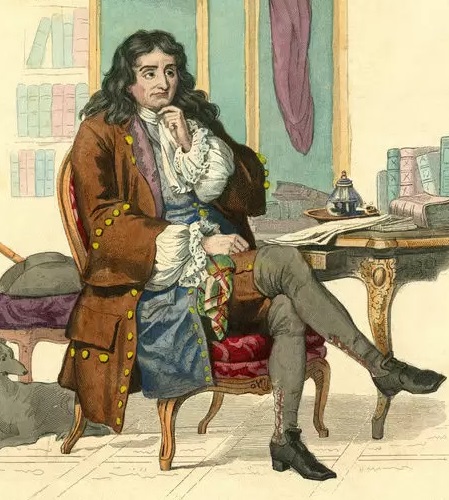
Jean de la Fontaine French 1621 – 1695
Two lawyers to their cause so well adhered, A country justice quite confused appeared, By them the facts were rendered so obscure With which the truth remained he was not sure. At length, completely tired, two straws he sought Of diff’rent lengths, and to the parties brought. These in his hand he held:—the plaintiff drew (So fate decreed) the shortest of the two. On this the other homeward took his way, To boast how nicely he had gained the day.
The bench complained: the magistrate replied Don’t blame I pray—’tis nothing new I’ve tried; Courts often judge at hazard in the law, Without deciding by the longest straw.
We present this work in honor of the 205th anniversary of the poet’s death.
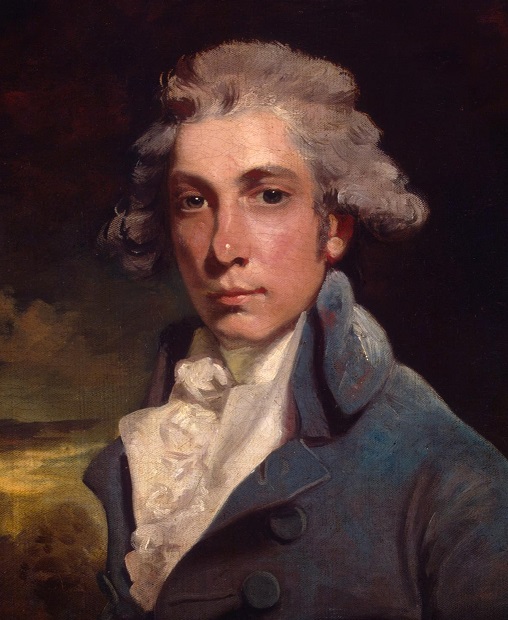
Richard Brinsley Sheridan Irish 1751 – 1816
Here’s to the maiden of bashful fifteen; Here’s to the widow of fifty; Here’s to the flaunting extravagant quean, And here’s to the housewife that’s thrifty.
Let the toast pass,— Drink to the lass, I’ll warrant she’ll prove an excuse for the glass.
Here’s to the charmer whose dimples we prize; Now to the maid who has none, sir: Here’s to the girl with a pair of blue eyes, And here’s to the nymph with but one, sir.
Let the toast pass,— Drink to the lass, I’ll warrant she’ll prove an excuse for the glass.
Here’s to the maid with a bosom of snow; Now to her that’s as brown as a berry: Here’s to the wife with her face full of woe, And now to the damsel that’s merry.
Let the toast pass,— Drink to the lass, I’ll warrant she’ll prove an excuse for the glass.
For let ‘em be clumsy, or let ‘em be slim, Young or ancient, I care not a feather; So fill a pint bumper quite up to the brim, And let us e’en toast them together.
Let the toast pass,— Drink to the lass, I’ll warrant she’ll prove an excuse for the glass.
Did a tender bush grow On the banks of a gentle river, And its dark branches Very proud he spread; But in the bitter winter The river rose like a torrent, And in its tumid stream The tender bush led.
Reflecting snow and scarlet, She was born garrida and pompous In the desert a rose, Gala del prado and love; But he launched with insane fury His breath inflamed the wind, And it took away in a moment Its vain pomp and freshness.
So everything lasts well… So sweet loves, Like the lush flowers, They fade in their dawn; And in the uncertain sway From fickle fortune, Born and dies in an instant The hope of love.
We present this work in honor of the poet’s 100th birthday.
Nanos Valaoritis Greek 1921 – 2019
The situation in Vietnam is worse than the situation in Indonesia which is worse than the situation in Guatemala which is worse than the situation in Haiti which is worse than the situation in South Africa which is worse than the situation in Portugal which is worse than the situation in Spain which is worse than the situation in the Argentine which is worse than the situation in Pakistan which is worse than the situation in Persia (which is not good in any case) and which is worse than the situation in Bolivia which is worse than the situation in Brazil which is worse than the situation in Rhodesia (which is not jolly either) and which is worse than the situation in Costa Rica which is worse than the situation in Honduras which is worse than the situation in Santo Domingo which is worse than the situation in Korea which is worse than the situation in Ecuador which is worse than the situation in Uruguay which is worse than the situation in Peru which is worse than the situation in the Congo which is worse than the situation in Panama which is worse than the situation in Angola which is worse than the situation in Greece which is worse than all these other situations because it happens to me.
We present this work in honor of Independence Day.
Delmore Schwartz American 1913 – 1966
Jeremiah Dickson was a true-blue American, For he was a little boy who understood America, for he felt that he must Think about everything; because that’s all there is to think about, Knowing immediately the intimacy of truth and comedy, Knowing intuitively how a sense of humor was a necessity For one and for all who live in America. Thus, natively, and Naturally when on an April Sunday in an ice cream parlor Jeremiah Was requested to choose between a chocolate sundae and a banana split He answered unhesitatingly, having no need to think of it Being a true-blue American, determined to continue as he began: Rejecting the either-or of Kierkegaard, and many another European; Refusing to accept alternatives, refusing to believe the choice of between; Rejecting selection; denying dilemma; electing absolute affirmation: knowing in his breast The infinite and the gold Of the endless frontier, the deathless West.
“Both: I will have them both!” declared this true-blue American In Cambridge, Massachusetts, on an April Sunday, instructed By the great department stores, by the Five-and-Ten, Taught by Christmas, by the circus, by the vulgarity and grandeur of Niagara Falls and the Grand Canyon, Tutored by the grandeur, vulgarity, and infinite appetite gratified and Shining in the darkness, of the light On Saturdays at the double bills of the moon pictures, The consummation of the advertisements of the imagination of the light Which is as it was—the infinite belief in infinite hope—of Columbus, Barnum, Edison, and Jeremiah Dickson.
Country girl, don’t stay away from the market, you with the blond hair —cauliflower in mustard— and those eyes, those eyes where wickedness makes its nest!…
Who wouldn’t run to watch you crossing the square! Even the village priest, that frank and simple soul, when you appear shakes off his lazy languor!…
You are an eclogue! ..and you sing, without singing, the seeds, the furrows, the mills, the bubbling streams where leaves float their yellow sadness…
What do you care if that crass, that potbellied banker, and that spinster there —old and very ugly— do not buy from you (slaves to their useless wealth!)
your pinks and lilies lovely flower of your village… To the devil with them! To the garlic and tomato with them! Let them eat rice and turtle-meat!
For you, country girl with your hat and skirt, you, debonaire and sweet, riding by on your donkey, give the wings and trills of a goldfinch to a crow!
The wings and trills!… And you take away the rose of your face!… And you take away your malicious glance, and your sweet smile which has said to me the thing that to a glutton suggests the half-open pomegranate!…
They tell of the level sea And the wind rebukes their word. I sing of the long and level plain Which never a storm hath stirred. I sing of the patient plain; That drank of the sun and rain A thousand years, by the burning spheres, To nourish this wisp of grain.
I sing of the honest plain Where nothing doth lie concealed: Where never a branch doth raise her arm; Or never a leaf her shield. Where never a lordly pine Breaks in on the endless line; Or the silver flakes of a poplar takes The strength from the sun’s white wine.
The child of the dancing leaf, Whose laughter sweetens the earth, Doth never lure, on the barren moor, The soul, with her winsome mirth. And the wistful sound I hear Sweep over the spaces drear Is the human dole of a childless soul That mourns in a yearning year.
Let the guilty man depart: For no cover here shall hide His conscious brow from the lights that plough Through the midnight’s mystic tide. For the plain no mantle hath To lessen the strong sun’s wrath; And the tranquil eye of the searching sky Is ever upon your path.
I’ll walk with the winds to-night; And under the burnished moon Shall the white night wake a silver lake Where the rolling grasses croon. Shall waken a silken crest That swings to the night-bird’s breast As the blue waves swing to the sea-gull’s wing When the gallant wind blows west.
Ah! easy to hide from truth In the city’s haunted hole. But you cannot hide, on the prairies wide, Where the winds uncloak the soul. Where the dawn hath pure delight; And the stars are clean and white; And sweet and clean is the floor of green That washes the feet of Night.
Who dwells with me on the Plain Shall never see spire or bell. But he too shall miss the traitor’s kiss And the force that drags to Hell. And what if the coyotes howl When the black night draws her cowl! They have gentler glands than the human bands That under the arc lamps prowl.
And ours is a creedless land, Far-flung from a script’s commands. But we sometimes think at the cold night’s brink Of the wounded Master’s hands. Yea, often at eventide, Our souls through the gloom have cried For a Guiding Light through the awful night That sleeps at the hermit’s side.
I opened my cabin door; And the starry hosts were gone. And I knew that God hath gathered their sparks To kindle the flame of dawn: To kindle a new, white sun That over the sward should run, And drink new hope, on the greening slope, From the dewcups one by one.
Ah! here is the soul’s true sphere: And here is the mind’s true girth. If I could bring, on the swallow’s wing, The sorrowful hosts of earth, To sit in this vacant room, And spin on the wind’s fair loom, What golden bands would their spectral hands Weave over the wraith of Doom.
For there is a wraith of Doom That wanders the crowded street. A heart of care is his pleasant lair, And a soul his judgment seat. He comes in a robe of gray, And stands in the sunbeam’s way. And a blaze of rings, from an hundred kings, He wears on his hands to-day.
I loosed me a steed last night, And plunged in the doleful dusk. And under the sky I heard no cry Save that of the widowed husk; Or a wolf-wail, long and low, That came with a blare of snow; And I rode all night, with a mad delight, ‘Till I met the dawn, aglow.
“Strange fool!” cry the men of gold, “For what could thy wild ride win? Why woo the woe of the winds that blow When the fire burns bright within?” And I said to the men of gold: “My heart could a tale unfold Of the truths we learn when the wild winds yearn, And the kiss of night grows cold.”
So, press on the spurs with me And drink of a freeman’s joys, In the endless land, where the gophers stand With a military poise. And no more will life seem sweet On the yellow, flaming street— A painted shrew, with a changeless hue, And a heart that loves deceit.
And this is the Prairie Song As it came from out my heart. And the winds that moan are its undertone; And the sullen sky its art. And only the craven man, With his rhyming finger span, Shall sulk and whine at my stinging line Or rail at its planless plan.
But there is a king whose soul Hath grown to the Prairie’s girth; Whose heart delights in the Northern Lights, On the borderlands of earth. And when sunset pours her wine, At the weary day’s decline, I shall see him stand in the “Unknown Land” And his lips shall wear my line.






 Poets Corner