In honor of the Argentine holiday, National Flag Day, we present this work by one of the country’s most representative poets.
Juana Bignozzi Argentine 1937 – 2015
lost the first sense of solidarity lost horizontal solidarity neighbor friend corner grocer in private no one recounts his life story these days where now are those Renaissance kitchens the houses of the Carpathians there will be no museum for our interiors like a fundamentalist veil some women have salvaged a universe conquered by my grandmothers children flora men in permanent distraction or literary fantasies while grand women water patio plants
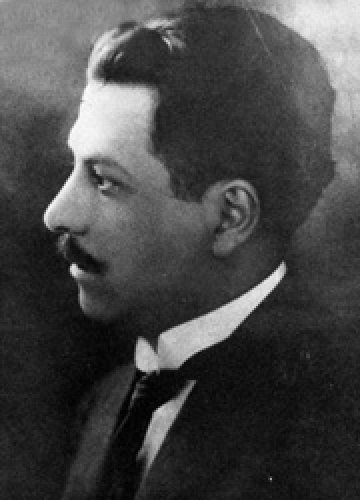
We present this work in honor of the 100th anniversary of the poet’s death.
Ramón López Velarde Mexican 1888 – 1921
It’s how she spreads, without a sound, her scent of orange blossom on the dark of me, it is the way she shrouds in mourning black her mother-of-pearl and ivory, the way she wears the lace ruff at her throat, and how she turns her face, quite voiceless, self-possessed, because she takes the language straight to heart, is thrifty with the words she speaks. It’s how she is so reticent yet welcoming when she comes out to face my panegyrics, the way she says my name mocking and mimicking, makes gentle fun, yet she’s aware that my unspoken drama is really of the heart, though a little silly; it’s how, when night is deep and at its darkest, we linger after dinner, vaguely talking and her laughing smile grows fainter and then falls gently on the tablecloth; it’s the teasing way she won’t give me her arm and then allows deep feeling to come with us when we walk out, promenading on the hot colonial boulevard. . .
Because of this, your sighing, modest style of love, I worship you, my faithful star who like to cloud yourself about in mourning, generous, hidden blossom; kindly mellowness who have presided over my thirty years with the self-denying singleness a vase has, whose half-blown roses wreathe with scent the headboard of a convalescent man; cautious nurse, shy serving maid, dear friend who trembles with the trembling of a child when you revise the reading that we share; apprehensive, always timid guest at the feast I give; my ally, humble dove that coos when it is morning in a minor key, a key that’s wholly yours.
May you be blessed, modest, magnificent; you have possessed the highest summit of my heart, you who are at once the artist of lowly and most lofty things, who bear in your hands my life as if it was your work of art!
O star and orange blossom, may you dwindle gently rocked in an unwedded peace, and may you fade out like a morning star which the lightening greenness of a meadow darkens or like a flower that finds transfiguration on the blue west, as it might on a simple bed.
Like flitting Philomel, who flies so proudly free having escaped the prison of her hated cage, who goes among the wooded groves and greens returning to her former happy life in liberty,
so had I escaped from love’s handcuffs, scorning all suffering and the special bitter pain of the sorrow beyond belief, reserved for the one who has lost her soul through excess, loving love.
As the Cyprian knows well (oh, merciless star!) I had gathered up my spoils from her temple and for their proud price I had gone elsewhere;
when to me, Love said: I will alter (to renew my pangs) your perverse will.
I woke up at midnight the whole house set sail. In the early morning, there was rain with rain. The house was in silence, the mountains restrained, that night, one could hear but the falling rain. I saw me that night searching vents in vain; at home, and the world, no brothers, mum, friends. The space was dark, cold, and cold the ship stayed with me. Who moved all lonely candle flames? No one told me, go, No one told me, stay, inside, within me, Home, I left away. She saw who I was, she seemed far someday. I couldn’t lean back on the pillow’s surface. That midnight I searched while the house sailed straight. Above the world hearing but the fall of rain.
…From white horses with madcap bound into the deep wave you leapt: “I catch you,” I shouted, “my friend!” And you, when you were Tortoise, ran leaping through the yard of the great court.
Thus I lament, unhappy Baucis, and make deep moan for you. These traces of you, dear maid, lie still glowing in my heart: all that we once enjoyed, is embers now.
We clung to our dolls in our chambers when we were girls, playing Young Wives, without a care. And towards dawn your Mother, who allotted wool to her attendant workwomen, came and called you to help with the salted meat. Oh, what a trembling the Bogy brought us then, when we were little ones! – On its head were huge ears, and it walked on all fours, and changed from one face to another!
But when you went to a man’s bed, you forgot all that you heard from your Mother, dear Baucis, in babyhood: Aphrodite set oblivion in your heart. So I lament you, yet neglect your obsequies — my feet are not so profane as to leave the house, my eyes may not behold a body dead, nor may I moan with hair unbound, yet a blush of shame distracts me…
We present this work in honor of the 85th anniversary of the poet’s death.
G.K. Chesterton English 1874 – 1936
They haven’t got no noses, The fallen sons of Eve; Even the smell of roses Is not what they supposes; But more than mind discloses And more than men believe.
They haven’t got no noses, They cannot even tell When door and darkness closes The park a Jew encloses, Where even the law of Moses Will let you steal a smell.
The brilliant smell of water, The brave smell of a stone, The smell of dew and thunder, The old bones buried under, Are things in which they blunder And err, if left alone.
The wind from winter forests, The scent of scentless flowers, The breath of brides’ adorning, The smell of snare and warning, The smell of Sunday morning, God gave to us for ours
And Quoodle here discloses All things that Quoodle can, They haven’t got no noses, And goodness only knowses The Noselessness of Man.
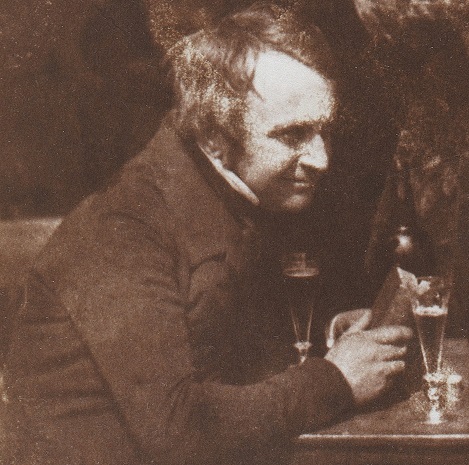
We present this work in honor of the poet’s 215th birthday.
James Ballantine Scots 1806 – 1877
Confide ye aye in Providence, for Providence is kind, And bear ye a’ life’s changes, wi’ a calm and tranquil mind, Though pressed and hemmed on every side, ha’e faith and ye ‘ll win through, For ilka blade o’ grass keps its ain drap o’ dew.
Gin reft frae friends or crest in love, as whiles nae doubt ye’ve been, Grief lies deep hidden in your heart or tears flow frae your een, Believe it for the best, and trow there’s good in store for you, For ilka blade o’ grass keps its ain drap o’ dew. In lang, lang days o’ simmer, when the clear and cloudless sky Refuses ae wee drap o’ rain to nature parched and dry, The genial night, wi’ balmy breath, gars verdure spring anew, And ilka blade o’ grass keps its ain drap o’ dew.
Sae, lest ‘mid fortune’s sunshine we should feel owre proud and hie, And in our pride forget to wipe the tear frae poortith’s ee, Some wee dark clouds o’ sorrow come, we ken na whence or hoo, But ilka blade o’ grass keps its ain drap o’ dew.








 Poets Corner