The Ant

We present this work in honor of the 240th anniversary of the poet’s death.
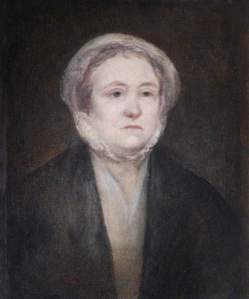
Anna Williams
Welsh
1706 – 1783


Turn on the prudent Ant, thy heedful eyes,
Observe her labours, Sluggard, and be wise.
No stern command, no monitory voice
Prescribes her duties, or directs her choice,
Yet timely provident, she hastes away
To snatch the blessings of the plenteous day;
When fruitful summer loads the teeming plain,
She gleans the harvest, and she stores the grain.

How long shall sloth usurp thy useless hours,
Dissolve thy vigour, and enchain thy powers?
While artful shades thy downy couch enclose,
And soft solicitation courts repose,
Amidst the drousy charms of dull delight,
Year chases year, with unremitted flight,
Till want, now following fraudulent and slow,
Shall spring to seize thee like an ambush’d foe.

In the Train

We present this work in honor of the 275th anniversary of the poet’s death.

James Thomson
Scots
1700 – 1748


As we rush, as we rush in the Train,
The trees and the houses go wheeling back,
But the starry heavens above the plain
Come flying on our track.

All the beautiful stars of the sky,
The silver doves of the forest of Night,
Over the dull earth swarm and fly,
Companions of our flight.

We will rush ever on without fear;
Let the goal be far, the flight be fleet!
For we carry the Heavens with us, dear,
While the Earth slips from our feet!

Nightingale in Dream

We present this work in honor of the poet’s 280th birthday.

Gavriil Derzhavin
Russian
1743 – 1816


I was sleeping on a high hill,
nightingale, I heard you calling,
my soul itself could hear it,
in the very depths of sleep:
now sounding, now re-sounding,
now sorrowing, now laughing,
floating, from the distance, to my ear:
while I lay there with Callisto,
songs, sighs, cries, and trilling,
thrilled me in the very depths of sleep.

If, after death, I lie there
in a sleep that’s dull, unending,
and, ah, these songs no longer
travel to my ear:
if I cannot hear the sound then
of that happiness or laughter,
of dancing, or of glory, or of joy —
then it’s life on earth I’ll cling to,
kiss my darling one, and kiss her,
as I listen to the distant nightingale.

Translation by A.S. Kline

Anger at War When it Lasted Too Long

Anna Louisa Karsch
German
1722 – 1791


I loathe with all my heart the first of men who slew
A human fellow-being when the earth was new.
My spirit shrinks from him who for primeval raids
Made sharp the world’s first arrow, honed the first of blades.
For sure that soul rose up from Hades black as sin
That first conceived the thought by murdering to win.
He was by Furies nurtured who with savage lust
First ground gunpowder, first a bullet cast.
He waged his war against all human kind and won,
Oh, he has maimed all Nature with his baneful gun.

He who was first to hone with evil toil the steel
To hold against his brother’s throat with barbarous zeal.
Thou scourge, War, for the world! which the Almighty shook
When in his willful blindness Man the Good forsook;
Masked lunacy, thy foot is rough and weighs like lead,
And where it treads, a sea of blood is shed!

Translation by Walter Arndt

Hymn to the Guillotine

We present this work in honor of the poet’s 285th birthday.

Peter Pindar
English
1738 – 1819


Daughter of Liberty! whose knife
So busy chops the threads of life,
And frees from cumbrous clay the spirit;
Ah! why alone shall Gallia feel
The beauties of thy pond’rous steel?
Why must not Britain mark thy merit?

Hark! ‘tis the dungeon’s groan I hear;
And lo, a squalid band appear,
With sallow cheek, and hollow eye!
Unwilling, lo, the neck they bend;
Yet, through thy pow’r, their terrors end,
And with their heads the sorrows fly.

O let us view thy lofty grace;
To Britons shew thy blushing face,
And bless Rebellion’s life—tir’d train!
Joy to my soul! she’s on her way,
Led by her dearest friends, Dismay,
Death, and the Devil, and Tom Paine!

Sonnet IV

Cláudio Manuel da Costa
Brazilian
1729 – 1789


I am a cowherd; I don’t deny it, my goods
Are those you see over there, I live happily
By guiding among the fresh flowering grasses
The sweetest company of my herd of cattle;

And there’s where they hear me, the love-¬struck trunks of trees,
Into which the ancients have been transformed;
Each and ev’ry one of them feels their own ruin;
In the way that I too feel all of my worries.

You, oh trunks of great trees, (I say to them) at one time
Considered yourselves to be so firm and secure
Within the arms of a beautiful companion;

Console yourselves in me, oh solid, sturdy trunks;
Because I, at one time, also once witnessed joy;
And today I do weep at the falsehoods of Love.

from Faustus: his Life, Death, and Doom

Friedrich Maximilian Klinger
German
1752 – 1831

O the delightful moment! Precious reward of my toils!
Hell rejoices at thy curses, and expects a yet more frightful one from thee.
Fool! wast thou not born free?
Didst thou not bear in thy breast, like all who live in flesh,
the instinct of good as well as of evil?
Why didst thou transgress, with so much temerity,
the bounds which had been prescribed to thee?
Why didst thou endeavour to try thy strength with and against
Him who is not to be reached?
Did not God create you in such a manner,
that you were as much elevated above the devils
as above the beasts of the earth?
Did he not grant you the perceptive faculty of good and evil?
Were not your will and choice free?
We wretches are without choice, without will;
we are the slaves of evil and of imperious necessity;
constrained and condemned to all eternity to wish nothing but evil,
we are the instruments of revenge and punishment upon you.
Ye are kings of the creation, free beings,
masters of your destiny, which ye fix yourselves;
masters of the future, which only depends upon your actions.
It is on account of these prerogatives that we detest you,
and rejoice when, by your follies, your impatience, and your crimes,
you cease to be masters of yourselves.
It is only in resignation, Faustus, that present or future happiness consists.
Hadst thou remained what thou wast,
and had not doubt, pride, vanity, and voluptuousness
torn thee out of the happy and limited sphere for which thou wast born,
thou mightst have followed an honourable employment,
and have supported thy wife and children; and thy family,
which is now sunk into the refuse of humanity,
would have been blooming and prosperous;
lamented by them, thou wouldst have died calmly on thy bed,
and thy example would have guided thy posterity along the thorny path of life.

Translation by George Borrow

Cups of Crimson Wine

We present this work in honor of the poet’s 255th birthday.

Mah Laqa Bai
Indian
1768 – 1824


Cups of crimson wine are circling in rounds of dance
If the beloved is glimpsed, this party abounds in dance
God made this beloved peerless in my view
Everything before my eyes resounds with dance
You captivate beasts and birds along with people low and high
Each in its way obeys your command in bounds of dance
Leave the party of my rivals and come over to mine
I’ll show you a star whose very name sounds like dance
Why shouldn’t Chanda be proud, O Ali, in both worlds?
At home with you she eternally astounds with dance

Translation by Scott Kugle