Song of the Old Hussar

We present this work in honor of Defense of the Fatherland Day.
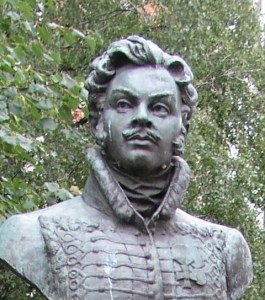
Denis Davydov
Russian
1784 – 1839


Where are you, old friends of mine,
True hussars by avocation,
Comrades both in arms and wine,
Champions of conversation?
Grayheads, I remember you,
Dippers full, in blissful poses.
Drinking while the fire burned through,
Glowing like your own red noses!

Sprawled on hayricks for settees,
Jaunty shakoes backward tilted,
Hussar jackets to your knees,
Sabres resting, carven-hilted.

Black-stained pipes between your teeth,
Puffing, there you lay in clover,
While the smoke, wreath after wreath,
Floated lock and whisker over.

Tire re you drowsed and hugged your swords;
Not a sound, while smoke curled densely,
Not a murmur – drunk as lords,
Drunk till you were almost senseless.

But as soon as dawn arrived
Off to battle you rode daily
With your shakoes to one side,
In tire wind your jackets flailing.

Under riders horses fly,
Sabres whistle, foemen slaying…
Battle over, nightfall nigh —
Dippers once again start playing.

Mat do I see now, though? God!
War has given way to dancing;
Like officials clad and shod.
Through a waltz hussars go prancing.

They’ve grown wise, you’ll say to me…
Listen to those home-bred Frenchmen:
Jomini1 — just Jomini.
But of vodka — ne’er a mention!

Where are you, old friends of mine,
True hussars by avocation,
Comrades both in arms and wine,
Champions of conversation?
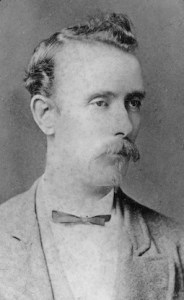
Translation by Dorian Rottenberg

The Burial of Sir John Moore at Corunna

We present this work in honor of the 200th anniversary of the poet’s death.

Charles Wolfe
Irish
1791 – 1823


Not a drum was heard, nor a funeral note,
As his corse to the rampart we hurried;
Not a soldier discharged his farewell shot
O’er the grave where our hero we buried.

We buried him darkly at dead of night,
The sods with our bayonets turning;
By the struggling moonbeam’s misty light
And the lantern dimly burning.

No useless coffin enclosed his breast,
Nor in sheet nor in shroud we wound him;
But he lay like a warrior taking his rest
With his martial cloak around him.

Few and short were the prayers we said,
And we spoke not a word of sorrow;
But we steadfastly gazed on the face that was dead,
And we bitterly thought of the morrow.

We thought, as we hollowed his narrow bed
And smoothed down his lonely pillow,
That the foe and the stranger would tread o’er his head,
And we far away on the billow!

Lightly they’ll talk of the spirit that’s gone
And o’er his cold ashes upbraid him,–
But little he’ll reck, if they let him sleep on
In the grave where a Briton has laid him.

But half of our heavy task was done
When the clock struck the hour for retiring:
And we heard the distant and random gun
That the foe was sullenly firing.

Slowly and sadly we laid him down,
From the field of his fame fresh and gory;
We carved not a line, and we raised not a stone,
But left him alone with his glory.

The Digger’s Daughter

We present this work in honor of the poet’s 175th birthday.

Louisa Lawson
Australian
1848 – 1920


The waratah has stained her cheek,
Her lips are even brighter,
Like virgin quartz without a streak
Her teeth are, but far whiter.
Her eyes are large arid soft and dark,
And clear as running water;
And straight as any stringy bark
Is Lil, the digger’s daughter.

She’ll wash a prospect quick and well,
And deftly rise the ladle;
The weight of gold at sight she’ll tell,
And work with tub and cradle.
She was her father’s only mate,
And wound up wash and water,
She worked all day and studied late,
For all she knows he taught her.

She stood to wait the word below.
A test for woman, rather;
When I sprang to the windlass bow,
And helped her land her father,
She turned her pretty face on me
To thank me, and I thought her
The grandest girl of all her race
Sweet Lil, the digger’s daughter.

And when my luck began to change
I grew a trifle bolder,
And told my love, but it was strange
She knew before I told her.
She said that she would be my wife,
Then home I proudly brought her,
To be my loving mate for life,
But still the digger’s daughter.

Pax Vobiscum

We present this work in honor of the 125th anniversary of the poet’s death.

Thomas Bracken
Kiwi
1843 – 1898


In a forest, far away,
One small creeklet, day by day,
Murmurs only this sad lay:
‘Peace be with thee, Lilian.’

One old box-tree bends his head,
One broad wattle shades her bed,
One lone magpie mourns the dead:
‘Peace be with thee, Lilian.’

Echoes come on every breeze,
Sighing through the ancient trees,
Whisp’ring in their melodies:
‘Peace be with thee, Lilian.’

Mellow sunbeams, morn and eve,
Quick to come and slow to leave,
Kiss the quilt where daisies weave
Rich designs o’er Lilian.

When the dying blossoms cling
To the skirts of parting Spring,
Wattle-boughs and branches fling
Showers of gold o’er Lilian.

When the Summer moon mounts high,
Queen of all the speckless sky,
Shafts of silver softly lie
O’er the grave of Lilian.

Mystic midnight voices melt
Through each leafy bower and belt,
Round the spot where friends have knelt—
‘Peace be with thee, Lilian.’

Far away from town and tower,
Sleeping in a leafy bower,
Withered lies the forest flower—
‘Peace be with thee, Lilian.’

There, where passions ne’er intrude,
There, where Nature has imbued
With her sweets the solitude,
Rests the form of Lilian.

Dear old forest o’er the sea,
Home of Nature’s euphony,
Pour thy requiem psalmody
O’er the grave of Lilian.

Guard that daisy-quilted sod:
Thou hast there no common clod;
Keep her ashes safe; for God
Makes but few like Lilian.

Sceptics ask me: ‘Is that clay
In the forest far away
Part of her?’—I only say:
‘Flow’rets breathe out Lilian;

‘From her grave their sweets mount high—
Love and beauty never die—
Sun and stars, earth, sea and sky
All partake of Lilian.

The Orange Trees

We present this work in honor of the 130th anniversary of the poet’s death.

Ignacio Manuel Altamirano
Mexican
1834 – 1893


Come, embrace me, never remove
your arms from round my neck,
never hide your lovely face
from me,
don’t run away shyly.
Let our lips meet
In an endless, burning kiss.
Let the hours, slow and sweet,
Flow by just like this.
Doves fall silent
in green tamarind trees;
spikenards have exhausted
their supply of scents.
You’re growing languid;
your eyes close with fatigue,
and your bosom, sweet friend,
is trembling.
On the river bank
Everything droops and swoons;
The rosebays on the beach
Grow drowsy with the heat.
I’ll offer you repose
on this carpet of clover,
in the perfumed shade
of orange trees in bloom.

Translation by Enriqueta Carrington

Candor

We present this work in honor of the 100th anniversary of the poet’s death.

Julio Flórez
Colombian
1867 – 1923


Blue… blue… blue was the sky.
You aroused the gentle breeze of summer.
The velvet of the prairie had started
to brown where the river formed a pool.

At a distance, the smoke of a chimney,
like the untouched veil of a bride,
rose until it lost itself in the void
in an ondulant and silent flight.

Suddenly you said: “My love is
pure and gentle, somewhat like that river
that rolls yonder, over that far terrain”

and you looked at me, quiet, serene,
with your soul peeking out of your pupil.
And your soul was as blue as the sky.

Translation by José Wan Díaz

The Song by the Way

We present this work in honor of the poet’s 160th birthday.

Francisco A. de Icaza
Mexican
1863 – 1925


A solitary pilgrim I,
Through foreign lands I stray;
Yet am I not alone—my song
Goes with me all the way.

And if the night around be black.
I make it bright as day;
I sing, and then the song lights up.
The darkness of the way.

I do not sigh for weariness,
However far I stray;
The heavenly staff of song makes short
The long, out-stretching way.

Ah, sad indeed that pilgrim’s fate
Who goes alone all day
Nor has for comrade of his march
A song along the way!

Translation by Alice Stone Blackwell

The Owl and the Pussy-Cat

We present this work in honor of the 135th anniversary of the poet’s death.

Edward Lear
English
1812 – 1888


The Owl and the Pussy-Cat went to sea
In a beautiful pea-green boat:
They took some honey, and plenty of money
Wrapped up in a five-pound note.
The Owl looked up to the stars above,
And sang to a small guitar,
“O lovely Pussy, O Pussy, my love,
What a beautiful Pussy you are,
You are,
You are!
What a beautiful Pussy you are!

Pussy said to the Owl, “You elegant fowl,
How charmingly sweet you sing!
Oh! let us be married; too long we have tarried:
But what shall we do for a ring?”
They sailed away, for a year and a day,
To the land where the bong-tree grows;
And there in a wood a Piggy-wig stood,
With a ring at the end of his nose,
His nose,
His nose,
With a ring at the end of his nose.

“Dear Pig, are you willing to sell for one shilling
Your ring?” Said the Piggy, “I will.”
So they took it away, and were married next day
By the Turkey who lives on the hill.
They dined on mince and slices of quince,
Which they ate with a runcible spoon;
And hand in hand, on the edge of the sand,
They danced by the light of the moon,
The moon,
The moon,
They danced by the light of the moon.