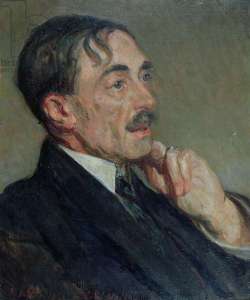
We present this work in honor of the poet’s 170th birthday.
Juan de Dios Peza Mexican 1852 – 1910
Watching Garrik – an actor from England – the people would say applauding: “You are the funniest one on earth and the happiest one…” And the comedian would laugh.
Victims of melancholy, the highest lords, during their darkest and heaviest nights would go see the king of actors and change their melancholy into roars of laughter.
Once, before a famous doctor, came a man with eyes so somber: “I suffer – he said -, an illness so horrible as this paleness of my face”
“Nothing holds any enchantment or attractiveness; I don’t care about my name or my fate I die living an eternal melancholy and my only hope is that of death”.
– Travel and distract yourself – I’ve traveled so much! – Search for readings – I’ve read so much! – Have a woman love you – But I am loved – Get a title – I was born a noble
– Might you be poor? – I have richnesses – Do you like compliments? – I hear so many! – What do you have as a family? – My sadness – Do you go to the cemeteries? – Often, very often.
– Of your current life, do you have witnesses? – Yes, but I don’t let them impose their burdens; I call the dead my friends; I call the living my executioners.
– It leaves me – added the doctor – perplexed your illness and I must not scare you; Take today this advise as a prescription only watching Garrik you can be cured.
-Garrik? -Yes, Garrik… The most indolent and austere society anxiously seeks him; everyone who sees him, dies of laughter; he has an amazing artistic grace.
– And me? Will he make me laugh? -Ah, yes, I swear it; he and no one but him; but… what disturbs you? -So – said the patient – I won’t be cured; I am Garrik! Change my prescription.
How many are there who, tired of life, ill with pain, dead with tedium, make others laugh as the suicidal actor, without finding a remedy for their illness!
Ay! How often we laugh when we cry! Nobody trust the merriment of laughter, because in those beings devoured by pain, the soul groans when the face laughs!
If faith dies, if calm flees, if our feet only step on thistles, the tempest of the soul hurls to the face, a sad lighting: a smile.
The carnival of the world is such a trickster, that life is but a short masquerade; here we learn to laugh with tears and also to cry with laughter.
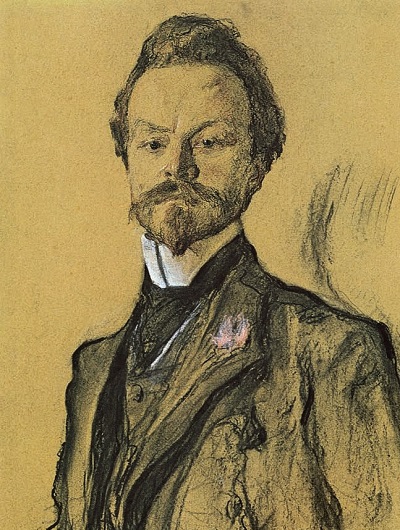
We present this work in honor of the poet’s 155th birthday.
Konstantin Balmont Russian 1867 – 1942
The light will burn and darken, then burn with stronger blaze, But unreturning darkens the sheen of youthful days. Glow then, and be enkindled, the while thou still art young, Let ever more undwindled the heart’s loud chords be strung, That something be remembered in waning years of woe, That chill old-age be lighted by that decayless glow, Born of exalted fancies, and headstrong youth’s ado, Heedless, but full of splendour, heedless and hallowed, too.
Ay, tear her tattered ensign down!
Long has it waved on high,
And many an eye has danced to see
That banner in the sky;
Beneath it rung the battle shout,
And burst the cannon’s roar; —
The meteor of the ocean air
Shall sweep the clouds no more.
Her deck, once red with heroes’ blood,
Where knelt the vanquished foe,
When winds were hurrying o’er the flood,
And waves were white below,
No more shall feel the victor’s tread,
Or know the conquered knee; —
The harpies of the shore shall pluck
The eagle of the sea!
Oh, better that her shattered hulk
Should sink beneath the wave;
Her thunders shook the mighty deep,
And there should be her grave;
Nail to the mast her holy flag,
Set every threadbare sail,
And give her to the god of storms,
The lightning and the gale!
We present this work in honor of the poet’s 205th birthday.
Julio Arboleda Pombo
Colombian
1817 – 1862
I saw the red sun’s serene light troubled and at one point its brilliant face disappeared and the sky darkened, with a darkness full of horror.
The stormy South winds sound angry, their anger grows, and the storm grows, and the shoulders of Atlas shudder high Olympus, with a dreadful thunderclap.
But then I saw the black veil of rain part, and by the previous light the brilliant and clear day was restored.
And again I looked upon the sky’s ornate splendor, and I said “Who knows if I should expect an equal change in my fortune?”
We present this work in honor of the 180th anniversary of the poet’s death.
José de Espronceda
Spanish
1808 – 1842
The world is mine; I am free as air; Let others work that I may eat; All shall melt at my piteous prayer:— “An alms, for God’s sake, I entreat.”
The cabin, the palace, Are my resort; If the threat of the thunder Shall break from the mountain, Or the torrent’s quick fountain Shall drive me under, Within their shelter The shepherds make place, Lovingly asking me Food to grace; Or by the rich hearthstone I take my ease Fanned by the odors Of burning trees; With the luscious banquet And cushioned store, Upon the couch Of some proud señor.
And I say to myself:— “Let the breezes blow And the tempest rage In the world without: Let the branches crack Where the high winds go, As I slumber with nothing to trouble about. The world is mine; I am free as air!”
All are my patrons, And for all I ask My God as I daily pray; From peasant and noble I get my pay, And I take their favors Both great and small. I never ask them Who they be, Nor stop to task them With thanks for fee. If they desire To give me alms, ‘Tis but their duty To tip my palms. Their wealth is sinful They must see; And a holy state Is my poverty, And he is a miser Who would deny An alms, and a beggar Blest am I.
For I am poor and they grieve to note How I groan beneath my pain; They never see that their wealth is a mine Where I my treasures gain. The world is mine; I am free as air!
A rebel and a discontent Amid my rags am I; To satirise their ease I’m sent And with a sour-set eye I boldly stare at the potentate Who dares to pass me in his state.
The lovely maid Of a thousand scents In her joy arrayed With her love-locks blent— ‘Tis she I follow Till she turns around, And my evil smells Her sense astound. At the feasts and spreads My voice is heard And they bow their heads At my merest word. Their joy and revel I come to stay, At the sight of my rags And my voice’s brags Their music dies away. Showing how near Dwell pain and joy; No joy without tear No pain sans glad alloy. The world is mine; I am free as air!
For me no morrow Nor yesterday; I forget the sorrow And the welladay. There’s nought to trouble Or weary me here,— It’s a palace tomorrow Or a hospital’s cheer. I live a stranger To thoughts of care; Let others seek glory Or riches rare! My one concern Is to pass today; Let the laws prevail Where the monarchs sway! For I am a beggar And a poor man proud; ‘Tis through fear of me There are alms allowed.
A soft asylum Where’er it be, And a hospital bed Will be ready for me; And a cosy ditch Where my bones shall lie Will cover me over When I die.
The world is mine; I am free as air; Let others work that I may eat! All hearts must melt at my piteous prayer:— An alms, for God’s sake, I entreat!”
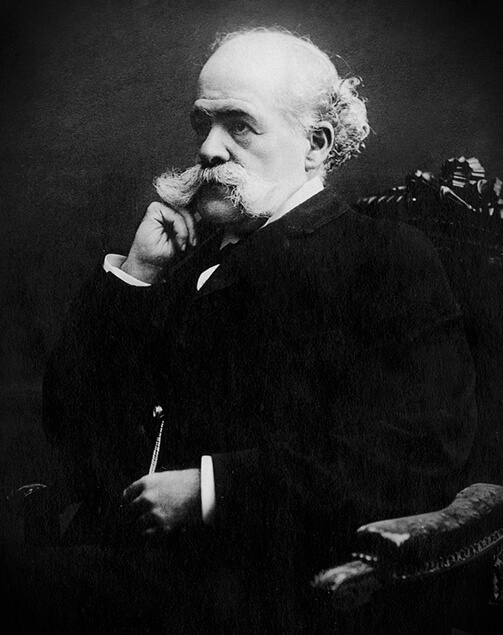
We present this work in honor of Galician Literature Day.
Manuel Curros Enríquez Spanish 1851 – 1908
Once upon a night in the wheat fields By the reflected white light of the bright moon A young girl mourned without pause The disdain of an ungrateful beau.
And between plaints the poor girl said, “I have no one left in the world… I’m going to die and my eyes do not see The dear eyes of my sweet boon.”
Her echoes of melancholy Strolled on the wings of the wind And she kept repeating the lament, “I’m going to die and my boon doesn’t come!”
Far away from her, standing at the stern Of a rogue steamboat slaver, The unfortunate, forlorn lover Emigrates en route to America.
And upon watching the gentle swallows Cross toward the land he leaves behind, “Who could turn back,” he pondered, “Who could fly away with you…!”
But the birds and the vessel sped onward Without hearing his bitter laments, Only the winds kept repeating, “Who could fly away with you…!”
Clear nights of fragrances and moonlight: How much sadness you own since then For those who saw a young girl weeping, For those who saw a ship leave port…
Away from a heavenly, genuine love That is not shown by teardrops alone: A grave on a lookout And a corpse on the ocean floor!




 Poets Corner