The Walrus and the Carpenter

We present this work in honor of the poet’s 190th birthday.
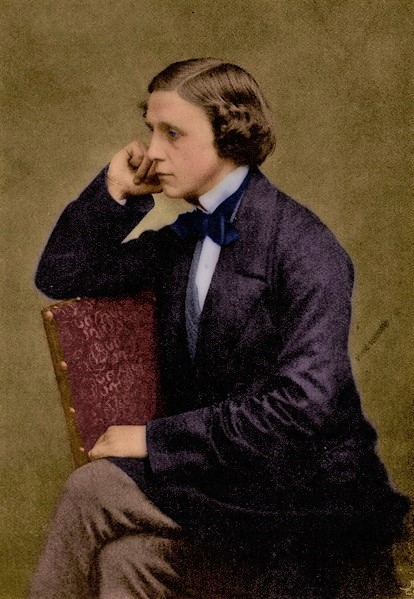
01-27 Carroll
Lewis Carroll
English
1832 – 1898

The sun was shining on the sea,
Shining with all his might:
He did his very best to make
The billows smooth and bright —
And this was odd, because it was
The middle of the night.

The moon was shining sulkily,
Because she thought the sun
Had got no business to be there
After the day was done —
“It’s very rude of him,” she said,
“To come and spoil the fun.”

The sea was wet as wet could be,
The sands were dry as dry.
You could not see a cloud, because
No cloud was in the sky:
No birds were flying overhead —
There were no birds to fly.

The Walrus and the Carpenter
Were walking close at hand;
They wept like anything to see
Such quantities of sand:
“If this were only cleared away,”
They said, “it would be grand!”

“If seven maids with seven mops
Swept it for half a year,
Do you suppose,” the Walrus said,
That they could get it clear?”
“I doubt it,” said the Carpenter,
And shed a bitter tear.

“O Oysters, come and walk with us!”
The Walrus did beseech.
“A pleasant walk, a pleasant talk,
Along the briny beach:
We cannot do with more than four,
To give a hand to each.”

The eldest Oyster looked at him,
But never a word he said:
The eldest Oyster winked his eye,
And shook his heavy head —
Meaning to say he did not choose
To leave the oyster-bed.

But four young Oysters hurried up,
All eager for the treat:
Their coats were brushed, their faces washed,
Their shoes were clean and neat —
And this was odd, because, you know,
They hadn’t any feet.

Four other Oysters followed them,
And yet another four;
And thick and fast they came at last,
And more, and more, and more —
All hopping through the frothy waves,
And scrambling to the shore.

The Walrus and the Carpenter
Walked on a mile or so,
And then they rested on a rock
Conveniently low:
And all the little Oysters stood
And waited in a row.

“The time has come,” the Walrus said,
“To talk of many things:
Of shoes — and ships — and sealing-wax —
Of cabbages — and kings —
And why the sea is boiling hot —
And whether pigs have wings.”

“But wait a bit,” the Oysters cried,
“Before we have our chat;
For some of us are out of breath,
And all of us are fat!”
“No hurry!” said the Carpenter.
They thanked him much for that.

“A loaf of bread,” the Walrus said,
“Is what we chiefly need:
Pepper and vinegar besides
Are very good indeed —
Now if you’re ready, Oysters dear,
We can begin to feed.”

“But not on us!” the Oysters cried,
Turning a little blue.
“After such kindness, that would be
A dismal thing to do!”
“The night is fine,” the Walrus said.
“Do you admire the view?”

“It was so kind of you to come!
And you are very nice!”
The Carpenter said nothing but
“Cut us another slice:
I wish you were not quite so deaf —
I’ve had to ask you twice!”

“It seems a shame,” the Walrus said,
To play them such a trick,
After we’ve brought them out so far,
And made them trot so quick!”
The Carpenter said nothing but
“The butter’s spread too thick!”

“I weep for you,” the Walrus said:
I deeply sympathize.”
With sobs and tears he sorted out
Those of the largest size,
Holding his pocket-handkerchief
Before his streaming eyes.

“O Oysters,” said the Carpenter,
“You’ve had a pleasant run!
Shall we be trotting home again?”
But answer came there none —
And this was scarcely odd, because
They’d eaten every one.

Where the Pelican Builds

We present this work in honor of Australia Day.

01-26 Foott
Mary Hannay Foott
Australian
1846 – 1918

The horses were ready, the rails were down,
But the riders lingered still
One had a parting word to say,
And one had his pipe to fill.

Then they mounted, one with a granted prayer,
And one with a grief unguessed.
“We are going,” they said, as they rode away
“Where the Pelican builds her nest!”

They had told us of pastures wide and green,
To be sought past the sunset’s glow;
Of rifts in the ranges by opal lit;
And gold “neath the river’s flow.

And thirst and hunger were banished words
When they spoke of that unknown West;
No drought they dreaded, no flood they feared,
Where the pelican builds her nest!

The creek at the ford was but fetlock deep
When we watched them crossing there;
The rains have replenished it thrice since then,
And thrice has the rock lain bare.

But the waters of Hope have flowed and fled,
And never from blue hill’s breast
Come back – by the sun and the sands devoured
Where the pelican builds her nest!

Far Away

We present this work in honor of the poet’s 155th birthday.

01-18 Dario
Rubén Darío
Nicaraguan
1867 – 1916


Ox that I saw in my childhood, as you steamed
in the burning gold on the Nicaraguan sun,
there on the rich plantation filled with tropical
harmonies; woodland dove, of the woods that sang
with the sound of the wind, of axes, of birds and wild bulls:
I salute you both, because you are both my life.

You, heavy ox, evoke the gentle dawn
that signaled it was time to milk the cow,
when my existence was all white and rose;
and you, sweet mountain dove, cooing and calling,
you signify all that my own springtime, now
so far away, possessed of the Divine Springtime.


Translation by Lysander Kemp

I Cannot Deem Why Men Toil So for Fame

We present this work in honor of the 155th anniversary of the poet’s death.

01-05 Smith
Alexander Smith
Scots
1829 – 1867

I cannot deem why men toil so for Fame.
A porter is a porter though his load
Be the oceaned world, and although his road
Be down the ages. What is in a name?
Ah! ‘t is our spirit’s curse to strive and seek.
Although its heart is rich in pearls and ores,
The Sea complains upon a thousand shores;
Sea-like we moan for ever. We are weak.
We ever hunger for diviner stores.
I cannot say I have a thirsting deep
For human fame, nor is my spirit bowed
To be a mummy above ground to keep
For stare and handling of the vulgar crowd,
Defrauded of my natural rest and sleep.

The Old Year

We present this work in honor of New Year’s Eve.

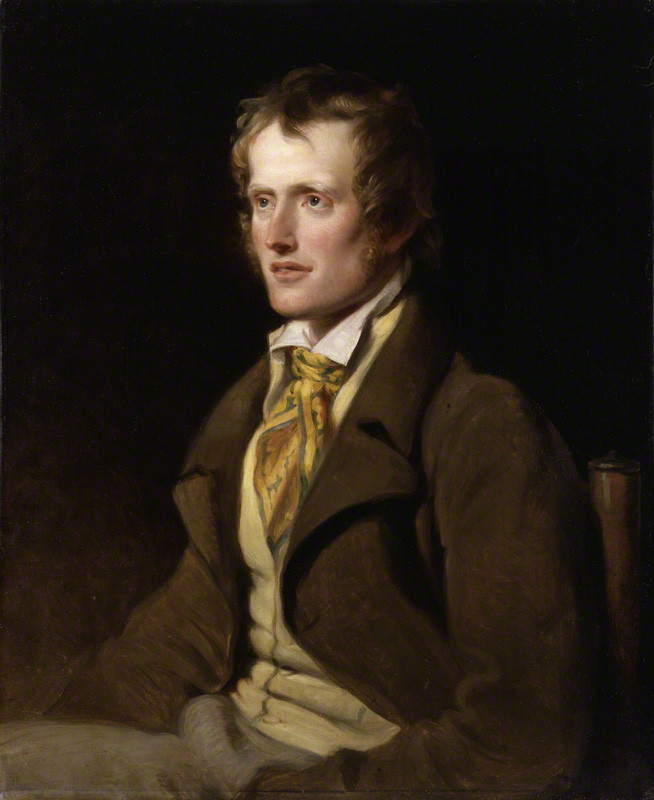
NPG 1469; John Clare by William Hilton
John Clare
English
1793 – 1864


The Old Year’s gone away
To nothingness and night:
We cannot find him all the day
Nor hear him in the night:
He left no footstep, mark or place
In either shade or sun:
The last year he’d a neighbour’s face,
In this he’s known by none.

All nothing everywhere:
Mists we on mornings see
Have more of substance when they’re here
And more of form than he.
He was a friend by every fire,
In every cot and hall—
A guest to every heart’s desire,
And now he’s nought at all.

Old papers thrown away,
Old garments cast aside,
The talk of yesterday,
Are things identified;
But time once torn away
No voices can recall:
The eve of New Year’s Day
Left the Old Year lost to all.

The Canoe

We present this work in honor of the poet’s 175th birthday.

12-25 Crawford
Isabella Valancy Crawford
Canadian
1846 – 1887


My masters twain made me a bed
Of pine-boughs resinous, and cedar;
Of moss, a soft and gentle breeder
Of dreams of rest; and me they spread
With furry skins, and laughing said,
‘Now she shall lay her polish’d sides,
As queens do rest, or dainty brides,
Our slender lady of the tides!’

My masters twain their camp-soul lit,
Streamed incense from the hissing cones,
Large, crimson flashes grew and whirl’d
Thin, golden nerves of sly light curl’d
Round the dun camp, and rose faint zones,
Half way about each grim bole knit,
Like a shy child that would bedeck
With its soft clasp a Brave’s red neck;
Yet sees the rough shield on his breast,
The awful plumes shake on his crest,
And fearful drops his timid face,
Nor dares complete the sweet embrace.

Into the hollow hearts of brakes,
Yet warm from sides of does and stags,
Pass’d to the crisp dark river flags;
Sinuous, red as copper snakes,
Sharp-headed serpents, made of light,
Glided and hid themselves in night.

My masters twain, the slaughtered deer
Hung on fork’d boughs—with thongs of leather.
Bound were his stiff, slim feet together—
His eyes like dead stars cold and drear;
The wand’ring firelight drew near
And laid its wide palm, red and anxious,
On the sharp splendor of his branches;
On the white foam grown hard and sere
On flank and shoulder.
Death—hard as breast of granite boulder,
And under his lashes
Peer’d thro’ his eyes at his life’s grey ashes.

My masters twain sang songs that wove
(As they burnish’d hunting blade and rifle)
A golden thread with a cobweb trifle—
Loud of the chase, and low of love.

‘O Love, art thou a silver fish?
Shy of the line and shy of gaffing,
Which we do follow, fierce, yet laughing,
Casting at thee the light-wing’d wish,
And at the last shall we bring thee up
From the crystal darkness under the cup
Of lily folden,
On broad leaves golden?

‘O Love! art thou a silver deer,
Swift thy starr’d feet as wing of swallow,
While we with rushing arrows follow;
And at the last shall we draw near,
And over thy velvet neck cast thongs—
Woven of roses, of stars, of songs?
New chains all moulden
Of rare gems olden!’

They hung the slaughter’d fish like swords
On saplings slender—like scimitars
Bright, and ruddied from new-dead wars,
Blaz’d in the light—the scaly hordes.

They piled up boughs beneath the trees,
Of cedar-web and green fir tassel;
Low did the pointed pine tops rustle,
The camp fire blush’d to the tender breeze.

The hounds laid dew-laps on the ground,
With needles of pine sweet, soft and rusty—
Dream’d of the dead stag stout and lusty;
A bat by the red flames wove its round.

The darkness built its wigwam walls
Close round the camp, and at its curtain
Press’d shapes, thin woven and uncertain,
As white locks of tall waterfalls.

Oh Say Not That My Heart is Cold

We present this work in honor of the poet’s 230th birthday.

12-14 Wolfe
Charles Wolfe
Irish
1791 – 1823

Oh say not that my heart is cold
To aught that once could warm it —
That Nature’s Form so dear of old
No more has power to charm it;
Or that th’ ungenerous world can chill
One glow of fond emotion
For those who made it dearer still,
And shared my wild devotion.

Still oft those solemn scenes I view
In rapt and dreamy sadness;
Oft look on those who loved them too
With Fancy’s idle gladness;
Again I longed to view the light
In Nature’s features glowing;
Again to tread the mountain’s height,
And taste the soul’s o’erflowing.

Stern Duty rose, and frowning flung
His leaden chain around me;
With iron look and sullen tongue
He muttered as he bound me —
‘The mountain breeze, the boundless heaven,
Unfit for toil the creature;
These for the free alone were given, —
But what have slaves with Nature?’

Blonde

We present this work in honor of the poet’s 240th birthday.

11-29 Bello
Andres Bello
Chilean
1781 – 1865


Do you know, blonde, what favor I solicit
When I cover the altars with offerings?
Not rich furnishings, not superb lands,
Neither a table that flatters the appetite.

At the edge of Aragua I want a parcel
To supply me with simple pleasures,
And close to my rustic home
A brook that runs among the rocks.

To feel good around the summery warmth,
I also want my plot to have a grove,
Where the proud coconut and the willow can grow.

I’ll be happy if in this refuge I die;
And, upon exhaling my fugitive breath,
I stamp on your lips my last goodbye!


Translation by José Wan Díaz

“God is Departed from Me, and Answereth Me No More”

11-27 Hamilton
Janet Hamilton
Scots
1795 – 1873


A King has sought at midnight hour
The sorceress in her cell,
And bids invoke the Prophet’s shade,
His coming doom to tell.
He bows before the spectral form,
He speaks in anguish sore—
“God is departed from me,
And answereth me no more.”

Dark words—how pregnant with despair!
How fraught with hopeless woe!
Stern spake the spirit-seer—”What hope
When God He is thy foe?
And wherefore seek to know thy doom,
For this thou knew’st before?
“ ‘God is departed from thee,
And answereth thee no more!’

“The word which God hath spoke by me
He hath confirmed and done—
He rends the kingdom from thy hand;
His own anointed one,
Even David, he shall fill thy throne;
Thy reign, thy life is o’er—
‘God is departed from thee,
And answereth thee no more!’

“Since thou obey’dst not God, nor didst
His high behest fulfil,
He gives thy host, thy sons, thy life,
Up to the enemies’ will.
Thy soul, ere midnight glooms again,
Shall wing th’ eternal shore.
‘God is departed from thee,
And answereth thee no more.’“

He faints, he falls, on earth he lies,
That stately, peerless form,
Which oft had tower’d in Israel’s van
And ruled in battles’ storm.
Oh kingly oak! the thunder fires
Have scathed thine inmost core.
“God is departed from thee,
And answereth thee no more.”

Who runs may read this awful truth,
In lines of lightning traced,
The spoken, written Word of God,
Though trampled, scorn’d, defaced
By men of sin and pride, the earth
Shall burn, the heavens decay,
Ere Word of God, to man reveal’d,
Shall fail or pass away.

A Thanksgiving Poem

We present this work in honor of Thanksgiving.

11-25 Dunbar
Paul Laurence Dunbar
American
1872 – 1906


The sun hath shed its kindly light,
Our harvesting is gladly o’er
Our fields have felt no killing blight,
Our bins are filled with goodly store.

From pestilence, fire, flood, and sword
We have been spared by thy decree,
And now with humble hearts, O Lord,
We come to pay our thanks to thee.

We feel that had our merits been
The measure of thy gifts to us,
We erring children, born of sin,
Might not now be rejoicing thus.

No deed of our hath brought us grace;
When thou were nigh our sight was dull,
We hid in trembling from thy face,
But thou, O God, wert merciful.

Thy mighty hand o’er all the land
Hath still been open to bestow
Those blessings which our wants demand
From heaven, whence all blessings flow.

Thou hast, with ever watchful eye,
Looked down on us with holy care,
And from thy storehouse in the sky
Hast scattered plenty everywhere.

Then lift we up our songs of praise
To thee, O Father, good and kind;
To thee we consecrate our days;
Be thine the temple of each mind.

With incense sweet our thanks ascend;
Before thy works our powers pall;
Though we should strive years without end,
We could not thank thee for them all.