Thousands of Desires

We present this work in honor of the 150th anniversary of the poet’s death.
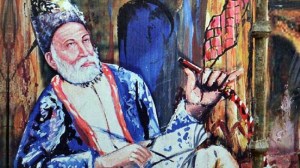
Ghalib
Indian
1797 – 1869


Thousands of desires, each worth dying for…
Many of them I have realized…yet I yearn for more…

Why should my killer (lover) be afraid? No one will hold her responsible
For the blood which will continuously flow through my eyes all my life

We have heard about the dismissal of Adam from Paradise,
With a more humiliation, I am leaving the street on which you live…

Oh tyrant, your true personality will be known to all
If the curls of my hair slip through my turban!

But if someone wants to write her a letter, they can ask me,
Every morning I leave my house with my pen on my ear.

In that age, I turned to drinking (alcohol)
And then the time came when my entire world was occupied by alcohol

From whom I expected justice/praise for my weakness
Turned out to be more injured with the same cruel sword

When in love, there is little difference between life and death
We live by looking at the infidel who we are willing to die for

Put some pressure on your heart to remove that cruel arrow,
For if the arrow comes out, so will your heart…and your life.

For god’s sake, don’t lift the cover off any secrets you tyrant
The infidel might turn out to be my lover!

The preacher and the bar’s entrance are way apart
Yet I saw him entering the bar as I was leaving!

Thousands of desires, each worth dying for…
Many of them I have realized…yet I yearn for more
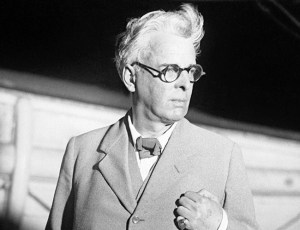
The Lamentation of the Old Pensioner

We present this work in honor of the 80th anniversary of the poet’s death.

William Butler Yeats
Irish
1865 – 1939

Although I shelter from the rain
Under a broken tree
My chair was nearest to the fire
In every company
That talked of love or politics,
Ere Time transfigured me.

Though lads are making pikes again
For some conspiracy,
And crazy rascals rage their fill
At human tyranny,
My contemplations are of Time
That has transfigured me.

There’s not a woman turns her face
Upon a broken tree,
And yet the beauties that I loved
Are in my memory;
I spit into the face of Time
That has transfigured me.

Breaking the News

In honor of Australia Day, we present this work by a poet who was known as the Father of the Australian Novel.

Joseph Furphy
Australian
1843 – 1912

Johnny’s drowned — here’s his clo’es
Where he’s got to, we dunno;
Sure enough, he never rose;
So we thought we’d let you know.
Gosh! the fright has knocked us flat —
Here’s his shirt, an’ here’s his hat.

Never seen him since he plopp’d,
Jist a’side the big red-gum;
So, thinks we, poor Johnny’s copp’d —
All so suddent! — ain’t it rum?
Must be snagg’d among the roots —
Here’s his pants, an’ socks, an’ boots.

Simplest thing you ever seen —
Only just a common swim —
Cripes! it might as ready been
Me or Bill in place o’ him!
Try to snake him out, I s’pose?
Anyway, we fetch’d his clo’es.

Lachin Y Gair

George Gordon, Lord Byron
Scots
1788 – 1824

Away, ye gay landscapes, ye garden of roses!
In you let the minions of luxury rove;
Restore me to the rocks, where the snowflake reposes,
Though still they are sacred to freedom and love:
Yet, Caledonia, beloved are thy mountains,
Round their white summits though elements war;
Though cataracts foam ‘stead of smooth-flowing fountains,
I sigh for the valley of dark Loch na Garr.
Ah! there my young footsteps in infancy wandered;
My cap was teh bonnet, my cloak was the plaid;
On chieftains long perished my memory pondered,
As daily I strode through the pine-covered glade;
I sought not my home till the day’s dying glory
Gave place to the rays of the bright polar star;
For fancy was cheered by traditional story,
Disclosed by the natives of dark Loch na Garr.

“Shades of the dead! have I not heard your voices
Rise on the night-rolling breath of the gale?”
Surely the soul of the hero rejoices,
And rides on the wind, o’er his own Highland vale.
Rouch Loch na Garr while the stormy mist gathers,
Winter presides in his cold icy car:
Clouds there encircle the forms of my fathers;
They dwell in the tempests of dark Loch na Garr.

“Ill-starred, though brave, did no visions foreboding
Tell you that fate had forsaken your cause?”
Ah! were you destined to die at Culloden,
Victory crowned not your fall with applause:
Still were you happy in death’s earthy slumber,
You rest with your clan in the caves of Braemar;
The pibroch resounds, to the piper’s loud number,
Your deeds on the echoes of dark Loch na Garr.

Years have rolled on, Loch na Garr, since I left you,
Years must elapse ere I tread you again:
Nature of verdure and flowers has bereft you,
Yet still are you dearer than Albion’s plain.
England! thy beauties are tame and domestic
To one who has roved o’er the mountains afar:
Oh for the crags that are wild and majestic!
The steep frowning glories of the dark Loch na Garr.

The Beautiful Night

In honor of the German holiday, Three Kings Day, we present this work from one of the nation’s most legendary poets.

Johann Wolfgang von Goethe
German
1749 – 1832


Now I leave the little cottage
Of my dearest; through the dark,
Secret, in a dreary silence,
Wander through the wooded park.
Luna peers through bush and oak tree
Birches bow, they strew a fragrance
On the winds of midnight blown.

What a pleasure in the coolness
Of so rich a summer’s night!
What a hush! The feeling spirit
Revels in untold delight.
Rapture I can hardly cope with,
Nights of secrecy astir,
Yet, I’d trade them, by the thousand,
For a single night with her.

Zimeo

Charles Tompson
Australian
1807 – 1883

In a slave-cultured isle, on the verge of the main,
Sable Zimeo’s form was reclined;
He wept his dark destiny, gazed on his chain,
And mingled his sighs with the wind.

“O ye Gods!” he exclaimed, “whose beneficent care
Shields the innocent suff’rer from woe;
Permit me no longer these shackles to bear,
Some gleam of soft pity bestow!

“In the dawn of my youth, dear companions! with you,
When I rambled in Afric’s green shade.
When my hours, ‘mid your smiles, so delightfully flew,
I dreamed not they ever would fade.

“On the lip of my Ninda, when panting with love,
With what exstacy heaved my fond heart!
When we vowed by those pow’rs in the mansions above,
That we never—no, never, would part.

‘The bright sun of prosperity glistened awhile,
Diffusing ephemeral rays;
I basked ‘neath the phantom’s encouraging smile,
And bliss was the badge of my days!

“ ‘Till a little black cloud, wing’d by demons of air,
And urged by the fates from below,
Interposed ‘tween my sight and that sun’s cheering glare,
And hurled me from bliss into woe.

“Inured to the arts of seduction and wile,
White merchants arrived in our bay,
Allured us on board, unsuspicious of guile,
And bore us in triumph away.

“On that accurst day all my happiness fled,
My Ninda—my country—my home;
Here slavery’s ignoble fetters are spread,
Here liberty never will come!

“O, never!—what horrors compose that dread word,
But this weary pilgrimage o’er,
I go where the sound of sweet mercy is heard,
Where mis’ry’s remember’d no more.

“See, bright from elysium, a seraph appears,
And smiling she calls me away;
“ ‘My Zimeo, quit this dull region of tears!
Lo, thy Ninda!’ “—”Loved shade, I obey.”

Oblivion shed her dark veil o’er his woes;
Young Hope soothed the horrors of death;
From the cliff where he pondered, undaunted he rose,
And plunged in the billows beneath.