We present this work in honor of International Museum Day.
M.K. Joseph
Kiwi
1914 – 1981
Two clergymen, one long, one short, Stand before Greco’s Trinity: The tall one twirls a single thought Round some point in divinity; The short one mops his heated brows With a red handkerchief, dimly aspires To levitate among the clouds Upborn by incorporeal fires.
The desiccated blond inspects The pages of her Baedeker, Hoping that somehow culture and sex At last will coalesce for her. She who through Europe has pursued Delight still missed en troisi me noce, Beneath some vast exuberant nude Of Rubens, knows the pain of loss.
Fading with cup and mandolin, Goya’s country feast turns dark, But soon the firing-squads begin By lanternlight their bloody work. Before that last anger and despair At human folly, someone stands. It is oneself that cannot bear Those anguished eyes and famished hands.
Velazquez turns with easy stance To the princess and the maids of honour, Caught in a movement like a dance, And calms the dwarf’s indignant humour. Royalty in the looking glass Fears its heavy image less: The gift of water in a glass Forgives the human ugliness.
Equal and intellectual, Transcending flesh, transcending flame, This passionless light that hallows all Shall build us an eternal home.
Old gods and goddesses who have lived so long Through time and never found eternity, Fettered by wasting wood and hollowing hill, You should have fled our ever-dying song, The mound, the well, and the green trysting tree. They have forgotten, yet you linger still, Goddess of caverned breast and channeled brow, And cheeks slow hollowed by millennial tears, Forests of autumns fading in your eyes, Eternity marvels at your counted years And kingdoms lost in time, and wonders how There could be thoughts so bountiful and wise As yours beneath the ever-breaking bough, And vast compassion curving like the skies.
We present this work in honor of the 30th anniversary of the poet’s death.
Nikos Gatsos Greek 1911 – 1992
When you reach that other world, don’t become a cloud, don’t become a cloud, and the bitter star of dawn, so that your mother knows you, waiting at her door. Take a wand of willow, a root of rosemary, a root of rosemary, and be a moonlit coolness falling in the midnight in your thirsting courtyard. I gave you rosewater to drink, you gave me poison, eaglet of the frost, hawk of the desert.
We present this work in honor of the 20th anniversary of the poet’s death.
Nika Turbina
Russian
1974 – 2002
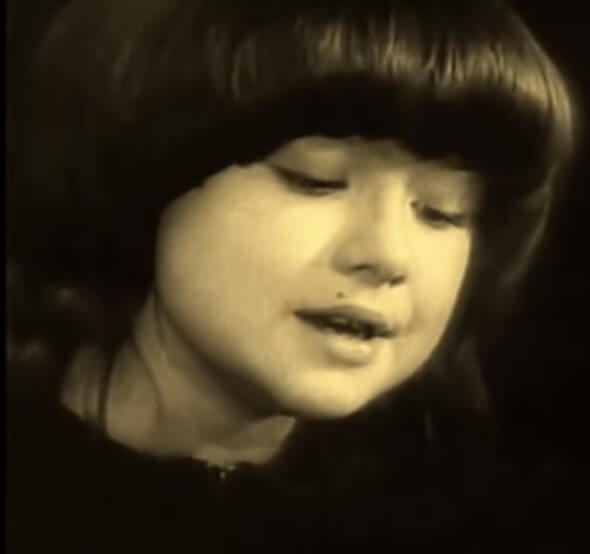
Heavy are my verses— Stones uphill. I will carry them up to the crag, The resting place. I will fall face down in the weeds, Tears will not do. I will rend my strophe— The verse will burst out crying. Pain cuts into my palm— Nettles! The day’s bitter taste turns All to words.
Your love was like moonlight turning harsh things to beauty, so that little wry souls reflecting each other obliquely as in cracked mirrors… beheld in your luminous spirit their own reflection, transfigured as in a shining stream, and loved you for what they are not.
You are less an image in my mind than a luster I see you in gleams pale as star-light on a gray wall… evanescent as the reflection of a white swan shimmering in broken water.
To be a Jew in the twentieth century Is to be offered a gift. If you refuse, Wishing to be invisible, you choose Death of the spirit, the stone insanity
Accepting, take full life. Full agonies: Your evening deep in labyrinthine blood Of those who resist, fail, and resist; and God Reduced to a hostage among hostages.
The gift is torment. Not alone the still Torture, isolation; or torture of the flesh. That may come also. But the accepting wish, The whole and fertile spirit as guarantee For every human freedom, suffering to be free, Daring to live for the impossible.
I have a need for your voice, a longing for your company, and an ache of melancholy for the absence of signs of arrival. Patience requires my torment, the urgent need for you, heron of love, your solar mercy for my frozen day, your help, for my wound, I count on. Ah, need, ache and longing! Your kisses of substance, my food, fail me, and I’m dying with the May. I want you to come, the flower of your absence, to calm the brow of thought that ruins me with its eternal lightning.
We present this work in honor of the poet’s 75th birthday.
Yusef Komunyakaa
American
b. 1947
On Fridays he’d open a can of Jax After coming home from the mill, & ask me to write a letter to my mother Who sent postcards of desert flowers Taller than men. He would beg, Promising to never beat her Again. Somehow I was happy She had gone, & sometimes wanted To slip in a reminder, how Mary Lou Williams’ ‘Polka Dots & Moonbeams’ Never made the swelling go down. His carpenter’s apron always bulged With old nails, a claw hammer Looped at his side & extension cords Coiled around his feet. Words rolled from under the pressure Of my ballpoint: Love, Baby, Honey, Please. We sat in the quiet brutality Of voltage meters & pipe threaders, Lost between sentences… The gleam of a five-pound wedge On the concrete floor Pulled a sunset Through the doorway of his toolshed. I wondered if she laughed & held them over a gas burner. My father could only sign His name, but he’d look at blueprints & say how many bricks Formed each wall. This man, Who stole roses & hyacinth For his yard, would stand there With eyes closed & fists balled, Laboring over a simple word, almost Redeemed by what he tried to say.



 Poets Corner