The Song of the Prairie Land

We present this work in honor of Canada Day.

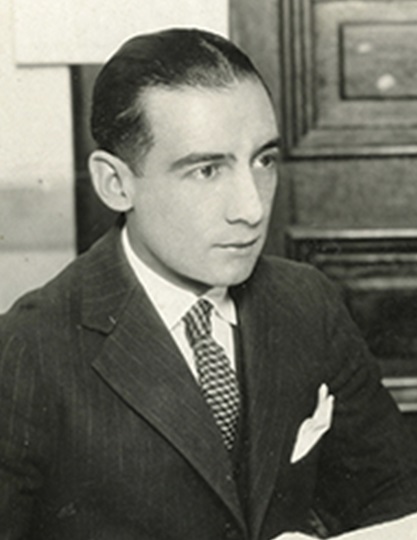
Wilson Pugsley MacDonald
Canadian
1880 – 1967


They tell of the level sea
And the wind rebukes their word.
I sing of the long and level plain
Which never a storm hath stirred.
I sing of the patient plain;
That drank of the sun and rain
A thousand years, by the burning spheres,
To nourish this wisp of grain.

I sing of the honest plain
Where nothing doth lie concealed:
Where never a branch doth raise her arm;
Or never a leaf her shield.
Where never a lordly pine
Breaks in on the endless line;
Or the silver flakes of a poplar takes
The strength from the sun’s white wine.

The child of the dancing leaf,
Whose laughter sweetens the earth,
Doth never lure, on the barren moor,
The soul, with her winsome mirth.
And the wistful sound I hear
Sweep over the spaces drear
Is the human dole of a childless soul
That mourns in a yearning year.

Let the guilty man depart:
For no cover here shall hide
His conscious brow from the lights that plough
Through the midnight’s mystic tide.
For the plain no mantle hath
To lessen the strong sun’s wrath;
And the tranquil eye of the searching sky
Is ever upon your path.

I’ll walk with the winds to-night;
And under the burnished moon
Shall the white night wake a silver lake
Where the rolling grasses croon.
Shall waken a silken crest
That swings to the night-bird’s breast
As the blue waves swing to the sea-gull’s wing
When the gallant wind blows west.

Ah! easy to hide from truth
In the city’s haunted hole.
But you cannot hide, on the prairies wide,
Where the winds uncloak the soul.
Where the dawn hath pure delight;
And the stars are clean and white;
And sweet and clean is the floor of green
That washes the feet of Night.

Who dwells with me on the Plain
Shall never see spire or bell.
But he too shall miss the traitor’s kiss
And the force that drags to Hell.
And what if the coyotes howl
When the black night draws her cowl!
They have gentler glands than the human bands
That under the arc lamps prowl.

And ours is a creedless land,
Far-flung from a script’s commands.
But we sometimes think at the cold night’s brink
Of the wounded Master’s hands.
Yea, often at eventide,
Our souls through the gloom have cried
For a Guiding Light through the awful night
That sleeps at the hermit’s side.

I opened my cabin door;
And the starry hosts were gone.
And I knew that God hath gathered their sparks
To kindle the flame of dawn:
To kindle a new, white sun
That over the sward should run,
And drink new hope, on the greening slope,
From the dewcups one by one.

Ah! here is the soul’s true sphere:
And here is the mind’s true girth.
If I could bring, on the swallow’s wing,
The sorrowful hosts of earth,
To sit in this vacant room,
And spin on the wind’s fair loom,
What golden bands would their spectral hands
Weave over the wraith of Doom.

For there is a wraith of Doom
That wanders the crowded street.
A heart of care is his pleasant lair,
And a soul his judgment seat.
He comes in a robe of gray,
And stands in the sunbeam’s way.
And a blaze of rings, from an hundred kings,
He wears on his hands to-day.

I loosed me a steed last night,
And plunged in the doleful dusk.
And under the sky I heard no cry
Save that of the widowed husk;
Or a wolf-wail, long and low,
That came with a blare of snow;
And I rode all night, with a mad delight,
‘Till I met the dawn, aglow.

“Strange fool!” cry the men of gold,
“For what could thy wild ride win?
Why woo the woe of the winds that blow
When the fire burns bright within?”
And I said to the men of gold:
“My heart could a tale unfold
Of the truths we learn when the wild winds yearn,
And the kiss of night grows cold.”

So, press on the spurs with me
And drink of a freeman’s joys,
In the endless land, where the gophers stand
With a military poise.
And no more will life seem sweet
On the yellow, flaming street—
A painted shrew, with a changeless hue,
And a heart that loves deceit.

And this is the Prairie Song
As it came from out my heart.
And the winds that moan are its undertone;
And the sullen sky its art.
And only the craven man,
With his rhyming finger span,
Shall sulk and whine at my stinging line
Or rail at its planless plan.

But there is a king whose soul
Hath grown to the Prairie’s girth;
Whose heart delights in the Northern Lights,
On the borderlands of earth.
And when sunset pours her wine,
At the weary day’s decline,
I shall see him stand in the “Unknown Land”
And his lips shall wear my line.

Living Out Their Lives in the Jungle

We present this work in honor of the poet’s 110th birthday.

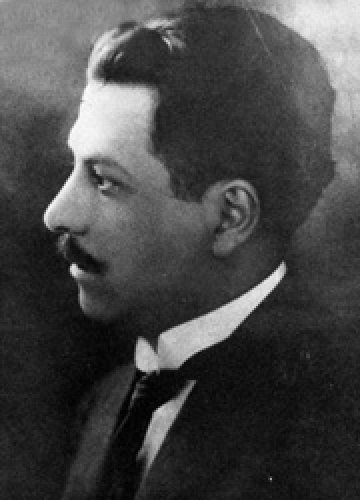
Nagarjun
Indian
1911 – 1998


Bhado, glistening
The night of the new moon

What is this sapphire gleam
Scattering its blessings in the jungle
How wondrous is this gift
That, too, in the auspicious rainy season
It seems that they, alone, will triumph
In the arena where power flaunts itself
There are thousands, hundreds of thousands
Who can count them, innumerable are they
Together they glow and shine
Who can say – they burn and perish
Living out their lives in the jungle

These fireflies are lit from within
One moment shining, the next extinguished
How wondrous is this gift
That, too, in the auspicious rainy season
Their triumph is certain
In the arena of the final pilgrimage
Do not call them ‘wretched’
Listen, these are creatures of light
Living out their lives in the jungle

Bhado, glistening
The light of the new moon

In a Hotel Room

06-29 Monvel
Maria Monvel
Argentine
1899 – 1936


In a small hotel room, pretty, unknown:
–blue horizons, green lights–,
we entered it together, entranced and flustered
by the impossible fire that we’d conquered.

He kissed me on the mouth, and I surrendered
my fragile body, sweet, desirous & swooning…
Oh inexplicable repose after what had happened!
Oh ineffable delight after what had been suffered!

I didn’t feel shame for my naked body.
Happiness drowned me with a rough hand
and the crystal of my eyes was clouded from tears,

while he on his knees, with furtive kisses,
embraced the ivory of my sensitive feet
with the most ardent fire of his saintly mouth.


Translation by Liz Henry

I’ve Seen Fuji

We present this work in honor of the 70th anniversary of the poet’s death.

06-28 Hayashi
Fumiko Hayashi
Japanese
1903 – 1951


I’ve seen Fuji
I’ve seen Mount Fuji
there was no red snow
so I need not praise Fuji as a fine mountain.

I’m not going to lose out to such a mountain
many times I’ve thought that,
seeing its reflection in the train window,
the heart of this peaked mountain
threatens my broken life
and looks down coldly on my eyes.

I’ve seen Fuji,
I’ve seen Mount Fuji
Birds!
Fly across that mountain from dome to peak
with your crimson mouths, give a scornful laugh
Wind!
Fuji is a great sorrowful palace of snow,
blow and rage
Mount Fuji is the symbol of Japan
it’s a sphinx
a thick, dream-like nostalgia
a great, sorrowful palace of snow where demons live.

Look at Fuji,
Look at Mount Fuji
in your form painted by Hokusai
I have seen your youthful spark.

But now you’re an old broken-down grave mound
always you turn your glaring eyes to the sky
why do you flee from the murky snow?

Birds, wind
rap on Mount Fuji’s shoulder
so bright and still
it’s not a silver citadel
it’s a great, sorrowful palace of snow that hides misfortune.

Mount Fuji!
Here stands a lone woman who does not lower her head to you
here is a woman laughing scornfully at you.

Mount Fuji, Fuji
your passion like rustling fire
howls and roars
until you knock her stubborn head down
I shall wait, happily whistling.


Translation by Janice Brown

Paroxysm

We present this work in honor of the 40th anniversary of the poet’s death.

06-26 Arce
Manuel Maples Arce
Mexican
1900 – 1981

Road of other dreams we leave with the afternoon;
A strange adventure
He defiled us in the bliss of the flesh,
And the heart fluctuates
Between her and the desolation of the journey.

In the agglomeration of the platforms
The sobs broke suddenly;
After, all night
Below my dreams,
I hear their moans
And his entreaties.

The train is a blast of iron
Which sweeps the landscape and moves everything.

I apologize for your memory
All the way
Of ecstasy,
And beat in the chest
The distant colors of his eyes.

Today we will spend the fall
And the prairies shall be yellow.

I shudder for her!
Absence uninhabited horizons!

Tomorrow will be everything
Cloudy from your tears
And the life that comes
It is weak as a breath.

Interiors

In honor of the Argentine holiday, National Flag Day, we present this work by one of the country’s most representative poets.

06-20 Bignozzi
Juana Bignozzi
Argentine
1937 – 2015


lost the first sense of solidarity
lost horizontal solidarity
neighbor friend corner grocer
in private no one recounts his life story these days
where now are those Renaissance kitchens
the houses of the Carpathians
there will be no museum for our interiors
like a fundamentalist veil some women have salvaged
a universe conquered by my grandmothers
children flora men in permanent distraction or
literary fantasies
while grand women
water patio plants


Translation by Lisa Rose Bradford

Because of This Modest Style

We present this work in honor of the 100th anniversary of the poet’s death.

06-19-Velarde
Ramón López Velarde
Mexican
1888 – 1921


It’s how she spreads, without a sound, her scent
of orange blossom on the dark of me,
it is the way she shrouds in mourning black
her mother-of-pearl and ivory, the way
she wears the lace ruff at her throat, and how
she turns her face, quite voiceless, self-possessed,
because she takes the language straight to heart,
is thrifty with the words she speaks.
                                                              It’s how
she is so reticent yet welcoming
when she comes out to face my panegyrics,
the way she says my name
mocking and mimicking, makes gentle fun,
yet she’s aware that my unspoken drama
is really of the heart, though a little silly;
it’s how, when night is deep and at its darkest,
we linger after dinner, vaguely talking
and her laughing smile grows fainter and then falls
gently on the tablecloth; it’s the teasing way
she won’t give me her arm and then allows
deep feeling to come with us when we walk out,
promenading on the hot colonial boulevard. . .

Because of this, your sighing, modest style
of love, I worship you, my faithful star
who like to cloud yourself about in mourning,
generous, hidden blossom; kindly
mellowness who have presided over
my thirty years with the self-denying singleness
a vase has, whose half-blown roses wreathe with scent
the headboard of a convalescent man;
cautious nurse, shy
serving maid, dear friend who trembles
with the trembling of a child when you revise
the reading that we share; apprehensive, always timid
guest at the feast I give; my ally,
humble dove that coos when it is morning
in a minor key, a key that’s wholly yours.

May you be blessed, modest, magnificent;
you have possessed the highest summit of my heart,
you who are at once the artist
of lowly and most lofty things, who bear in your hands
my life as if it was your work of art!

O star and orange blossom, may you dwindle
gently rocked in an unwedded peace,
and may you fade out like a morning star
which the lightening greenness of a meadow darkens
or like a flower that finds transfiguration
on the blue west, as it might on a simple bed.


Translation by Michael Schmidt

The Water

06-17 Arteche
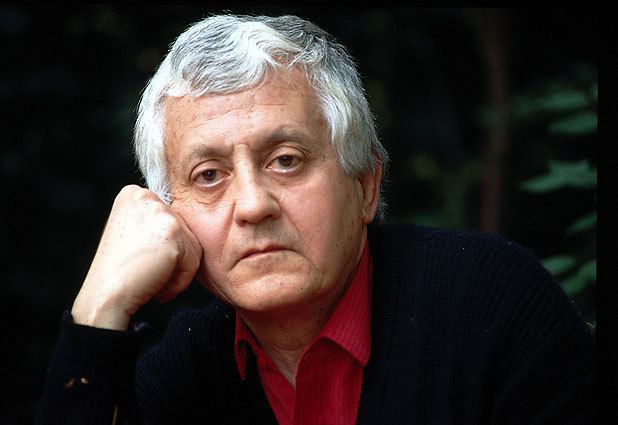
Miguel Arteche
Chilean
1926 – 2012


I woke up at midnight
the whole house set sail.
In the early morning,
there was rain with rain.
The house was in silence,
the mountains restrained,
that night, one could hear
but the falling rain.
I saw me that night
searching vents in vain;
at home, and the world,
no brothers, mum, friends.
The space was dark, cold,
and cold the ship stayed
with me. Who moved all
lonely candle flames?
No one told me, go,
No one told me, stay,
inside, within me,
Home, I left away.
She saw who I was,
she seemed far someday.
I couldn’t lean back
on the pillow’s surface.
That midnight I searched
while the house sailed straight.
Above the world hearing
but the fall of rain.


Translation by Walter Hilliger