We present this work in honor of the poet’s 155th birthday.
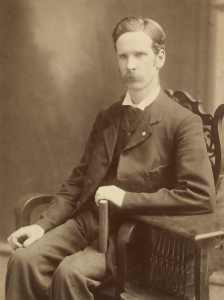
Bernard O’Dowd Australian 1866 – 1953
I know not why I love your baffling face, Or, lonely, to your cold caresses steal, Or what the charm persuades my wearied eyes Follow the clues that gleam and, wavering, go, Or spell the syllables of poems new I fancy floating through your gloom or grace! Sphinx of green riddles Time shall not unseal! Mystical knot no stratagem, unties! I do not comprehend you, but I know I am not happy long away from you!
Ardent we come, but that averted gaze Discrowns emotion, and your lips austere, Native to one in whom the gods confide, For us breathe only murmurs dim and lone As are the lullabies of crooning dew Or dwindling dirges of benighted fays For queen marooned in a forgotten mere; Yet though ’tis not for man your witch-words ride Forsaken winds that know not why they moan, I am not happy long away from you!
Do you ignore our presence, or disdain Our pert intrusion on your fettered trees? Is all our knowledge darkness to the light That through their woody crevices you pour, Garnered for them from suns we never knew? Or can it be your brooding peace is pain? Do sighs innumerable build the breeze That mournful walks the soughing waste to-night? But tell me why, if woe be all your store, I am not happy long away from you!
You sprawl your reticence of green and gray Over the no more mute basaltic deep, Below the sister deafness of the sky; Nor myriad boughs’ hypnotic undertones, Shadows in orgy, nor haphazard hue Of flower, nor green delirium will say One shining word to beacon us who creep Amid their bedlamry and forms awry: Yet, Miser, though for bread you give me stones, I am not happy long away from you!
Although we gather only in your glades The tasteless berries of monotony, Withering leaf, frustrated blossom, white Skeleton eucalypt’s unmeaning woe, Or wrack of huddled tea-trees, knouted all askew To serve an old wind’s whim, yet from wan shades Entities ambushed seem to bear to me, On a rhythm craftsman never tameth quite, The Song all poets soaring seek, and so I am not happy long away from you!
Are you the long-forgotten hermitage Wherein immortal cities crept to sleep? And do their rooted folk unresting try, With perfumes wild of some Atlantis old, To link our dormant hearts akin anew? Or young auspicious years do they presage To something watching in me cradled deep, That knows unknown to me the reason why, m an orb’s dim throes, by iron stars controlled, I am not happy long away from you!
Though fierce assault not pilgrim prayer avail, Nor shall we glimpse, however far we seek, The long importuned palace of your pride, Yet you-if darkly-to my faith disclose That duly will Hy-Brasil globe in view! Ay, can it be that glinting is the Grail? Do fairies gather ferns along that creek? Is very God the Merlin that you hide? Ah, can I wonder, necromantic Rose, I am not happy long away from you!
We listen long for words the world awaits, Nor quite lose hope that we shall overhear Strange Huntsmen faint hallooing, or surprise The filmy spears the dark earth-legions throw Across the void against the retinue Auroral of the solar potentates; Yet, though your tongues betray the expectant ear And dappled melancholy foils our eyes, Your trees of whispering knowledge call me so, I am not happy long away from you!
We present this work in honor of the 10th anniversary of the poet’s death.
Eriko Kishida Japanese 1929 – 2011
There was a clever boy. When he’d leave off whistling, he would examine the far distance with a pair of binoculars. When he grew tired of the binoculars, he would play with a tape-recorder. Or at times he would examine a girl with his binoculars and record the sounds she made on the tape-recorder, as he whistled the tune “I Love Your Eyes.” Her mind was more tender than he’d expected, and seemed to ripple. Her lips were unopened buds, so nothing ask! And her ears—ah, there was no sound. The clever boy took notes.
One day there was a strange girl there. Let me explain in what way she was strange. Her footsteps were the road’s footsteps, the sound of her running was the sound of the wind running. So when the girl ate an apricot, there was the sound of the apricot eating her. When the girl swam, the sea came for a swim. The boy wondered, then, which was real? Which sound he should tape-record? What if the girl should like me? The boy was suddenly afraid. The boy by then already liked the girl. I think you know what comes next. The boy stopped taking notes. He put his ear to the girl’s ear. And—ah, there was a sound. This ear—ah, it’s my sound! the boy said.
Mary sat musing on the lamp-flame at the table Waiting for Warren. When she heard his step, She ran on tip-toe down the darkened passage To meet him in the doorway with the news And put him on his guard. “Silas is back.” She pushed him outward with her through the door And shut it after her. “Be kind,” she said. She took the market things from Warren’s arms And set them on the porch, then drew him down To sit beside her on the wooden steps.
“When was I ever anything but kind to him? But I’ll not have the fellow back,” he said. “I told him so last haying, didn’t I? ‘If he left then,’ I said, ‘that ended it.’ What good is he? Who else will harbour him At his age for the little he can do? What help he is there’s no depending on. Off he goes always when I need him most. ‘He thinks he ought to earn a little pay, Enough at least to buy tobacco with, So he won’t have to beg and be beholden.’ ‘All right,’ I say, ‘I can’t afford to pay Any fixed wages, though I wish I could.’ ‘Someone else can.’ ‘Then someone else will have to.’ I shouldn’t mind his bettering himself If that was what it was. You can be certain, When he begins like that, there’s someone at him Trying to coax him off with pocket-money,— In haying time, when any help is scarce. In winter he comes back to us. I’m done.”
“Sh! not so loud: he’ll hear you,” Mary said.
“I want him to: he’ll have to soon or late.”
“He’s worn out. He’s asleep beside the stove. When I came up from Rowe’s I found him here, Huddled against the barn-door fast asleep, A miserable sight, and frightening, too— You needn’t smile—I didn’t recognise him— I wasn’t looking for him—and he’s changed. Wait till you see.”
“Where did you say he’d been?”
“He didn’t say. I dragged him to the house, And gave him tea and tried to make him smoke. I tried to make him talk about his travels. Nothing would do: he just kept nodding off.”
“What did he say? Did he say anything?”
“But little.”
“Anything? Mary, confess He said he’d come to ditch the meadow for me.”
“Warren!”
“But did he? I just want to know.”
“Of course he did. What would you have him say? Surely you wouldn’t grudge the poor old man Some humble way to save his self-respect. He added, if you really care to know, He meant to clear the upper pasture, too. That sounds like something you have heard before? Warren, I wish you could have heard the way He jumbled everything. I stopped to look Two or three times—he made me feel so queer— To see if he was talking in his sleep. He ran on Harold Wilson—you remember— The boy you had in haying four years since. He’s finished school, and teaching in his college. Silas declares you’ll have to get him back. He says they two will make a team for work: Between them they will lay this farm as smooth! The way he mixed that in with other things. He thinks young Wilson a likely lad, though daft On education—you know how they fought All through July under the blazing sun, Silas up on the cart to build the load, Harold along beside to pitch it on.”
“Yes, I took care to keep well out of earshot.”
“Well, those days trouble Silas like a dream. You wouldn’t think they would. How some things linger! Harold’s young college boy’s assurance piqued him. After so many years he still keeps finding Good arguments he sees he might have used. I sympathise. I know just how it feels To think of the right thing to say too late. Harold’s associated in his mind with Latin. He asked me what I thought of Harold’s saying He studied Latin like the violin Because he liked it—that an argument! He said he couldn’t make the boy believe He could find water with a hazel prong— Which showed how much good school had ever done him. He wanted to go over that. But most of all He thinks if he could have another chance To teach him how to build a load of hay——”
“I know, that’s Silas’ one accomplishment. He bundles every forkful in its place, And tags and numbers it for future reference, So he can find and easily dislodge it In the unloading. Silas does that well. He takes it out in bunches like big birds’ nests. You never see him standing on the hay He’s trying to lift, straining to lift himself.”
“He thinks if he could teach him that, he’d be Some good perhaps to someone in the world. He hates to see a boy the fool of books. Poor Silas, so concerned for other folk, And nothing to look backward to with pride, And nothing to look forward to with hope, So now and never any different.”
Part of a moon was falling down the west, Dragging the whole sky with it to the hills. Its light poured softly in her lap. She saw And spread her apron to it. She put out her hand Among the harp-like morning-glory strings, Taut with the dew from garden bed to eaves, As if she played unheard some tenderness That wrought on him beside her in the night. “Warren,” she said, “he has come home to die: You needn’t be afraid he’ll leave you this time.”
“Home,” he mocked gently.
“Yes, what else but home? It all depends on what you mean by home. Of course he’s nothing to us, any more Than was the hound that came a stranger to us Out of the woods, worn out upon the trail.”
“Home is the place where, when you have to go there, They have to take you in.”
“I should have called it Something you somehow haven’t to deserve.”
Warren leaned out and took a step or two, Picked up a little stick, and brought it back And broke it in his hand and tossed it by. “Silas has better claim on us you think Than on his brother? Thirteen little miles As the road winds would bring him to his door. Silas has walked that far no doubt to-day. Why didn’t he go there? His brother’s rich, A somebody—director in the bank.”
“He never told us that.”
“We know it though.”
“I think his brother ought to help, of course. I’ll see to that if there is need. He ought of right To take him in, and might be willing to— He may be better than appearances. But have some pity on Silas. Do you think If he’d had any pride in claiming kin Or anything he looked for from his brother, He’d keep so still about him all this time?”
“I wonder what’s between them.”
“I can tell you. Silas is what he is—we wouldn’t mind him— But just the kind that kinsfolk can’t abide. He never did a thing so very bad. He don’t know why he isn’t quite as good As anybody. Worthless though he is, He won’t be made ashamed to please his brother.”
“I can’t think Si ever hurt anyone.”
“No, but he hurt my heart the way he lay And rolled his old head on that sharp-edged chair-back. He wouldn’t let me put him on the lounge. You must go in and see what you can do. I made the bed up for him there to-night. You’ll be surprised at him—how much he’s broken. His working days are done; I’m sure of it.”
“I’d not be in a hurry to say that.”
“I haven’t been. Go, look, see for yourself. But, Warren, please remember how it is: He’s come to help you ditch the meadow. He has a plan. You mustn’t laugh at him. He may not speak of it, and then he may. I’ll sit and see if that small sailing cloud Will hit or miss the moon.”
It hit the moon. Then there were three there, making a dim row, The moon, the little silver cloud, and she.
Warren returned—too soon, it seemed to her, Slipped to her side, caught up her hand and waited.
We present this work in honor of the 5th anniversary of the poet’s death.
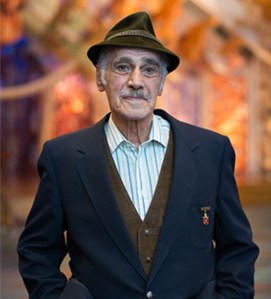
Rowley Habib Kiwi 1933 – 2016
This is where they came from, the Raw Men. …And from the raw men they came. The dark men, the squat men, the slope-shouldered, solid-built men, neat in khaki.
This is where they came from, the brown men, the dark-lipped, thick black-haired raw men, born for the uniform.
Praised in the deserts of Tobruk, hailed in the heats of Mersa Matruh, gloried in Greece. We salute you, sons of New Zealand, Maori Battalion. ‘Kia ora koutou. Kia ora nga tamariki o Aotearoa’.
Yes, this is where they came from, the Raw Men, the fearless marauders of the Middle East, the ‘hard-doers’ with hearts of lions. collecting medals like stones on Hill 209 Tebaga Gap, Tunisia.
From the pubs they came, drunk on a Saturday afternoon, and the neighbour’s house afterwards, staggering, stumbling, stone-tripping homewards through the half-light of dawn.
Yes, this is where they came from, the Raw Men. From the crude-hewn, back-block, saw-screaming, sweat-sapping timber mills, they came trudging to work in the early mornings, their breaths rising in mists with the cold.
From the bush covered hill-slopes, they came, plodding homewards down the snigging track with axe slung on shoulder. Only the step is quicker now. Not the ‘Government Walk’ of the morning, going to work. And then the voice in the evening, loud & clear, carried on the throbbing air, now that the mill is silent and the darkness is falling. ‘Come round to my hut after e hoa Tai. There’s still a couple of bottles left from last night. We’ll clean them up’.
Yes, this is where they came from, the men in khaki, Tigers of Tunisia, cursing in the rains of Cairo, singing in the heats of Helwan … With a rifle in one hand and a guitar in the other. That’s us! …And a song ever ready on the tongue. That’s us! …Play hard and fight hard. That’s us! …‘Real ‘hard-doers’ those boys’, they say, ‘But I’m glad I’m on their side. Good fighters’. That’s us! The guitars and the song. The work in the mornings plagued by the dry horrors. That’s us! ‘Poor old Rangi’s got the shakes. Ha! Ha! Where you been last night e hoa?’ That’s us! The ‘No thanks, I don’t drink. Just pour it all over me, I like the smell of it’, Ha! Ha! That’s us!
Yes, this is where they came from, those men. From the street fights, the bar fights, the party fights. From sleeping with another man’s wife. From the hotel maid’s room in the morning, climbing out the window and whistling down the street, happy and full contented, home-bound, to fall into a deep, dreamless sleep. But always there is the laughter, the white teeth flashing against the thick dark lips, The grating spit-bubbling, carefree laughter. The conversation, coarse and harsh.
Yes, this is where they came from, the Maori Battalion. From the timber mill villages. deep-bushed. From the back-block settlements fringing isolated roads that make passers-by ask, ‘Don’t you get lonely here?’ And chilblain-footed children with bare feet walking to school on icy roads on frosty winter mornings.
From the shearing sheds they came. The Freezing Works. The Wool Stores. The Power Board. The bush felling. The scrub cutting. The post splitting. Truck driving. Bully driving. Cow spanking. Cattle mustering. The City Council, bare-torsoed with pick and shovel and jack-hammer, breaking up the tar-sealed pavement. ‘Gee! there was some beaut sheilas went past today’.
From the Hydro Works they came. The Construction Sites. The coal mines. Naked muscles straining, pride in pitting physical strength against work. Sweat and dirt intermingled. The Public WorksDepartment, with the children standing on the roadside, laughing and teasing, repeating what they heard their parents say ‘P.W.D…. Poor Working Devils!’ as the truck passed them along the road.
Yes, this is where they came from, those men. Knights of the Middle East. From the prisons and the borstals they came. From country school teaching and offices in a Government Department. In a city office. The WelfareDept. Maori Affairs. From lonely coastal farms, with the sound of the surf ever lapping. From sulking, slouching, lost and lonely, sullen in the alien city. Open-neck shirted wharfies. Wild in a dance, noisy in the films. Cigarette drooping-mouthed, fish and chips eating from newspaper wrappings. Billiard room haunting. Hanging about. Drunk on the street, annoying the passers-by. But always there are the exceptions. The quiet ones. The earnest ones. The deep-thinking, serious ones. As it is with everything there are the exceptions.
Yes, this is where they came from, the Raw Men. From singing in a bar led by a rich baritone voice, ‘ …Tomo mai e tama ma, ki roto, ki roto …‘ All around they are singing. Everywhere there are mouths opening and closing. Feet placed firmly apart, heads thrown back, eyes opening and shutting, enraptured in the singing. Always there is the singing. At the parties back home there was the singing. In the deserts of Egypt there was the singing. On the battlefields of Libya there was the singing. In the streets of Rome there was the singing. Going to the war and returning, there was the singing. Always there is the song and the guitars. Above it, beneath it, right through it all, there is the singing and the dancing and the laughing.
In honor of Malvinas Day, we present this work by one of Argentina’s great modern poets.
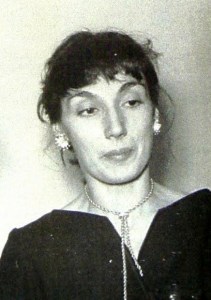
Elizabeth Azcona Cranwell Argentine 1933 – 2004
A request from the sun. Its understanding of this difference the label that speaks among things lamp or star keeping watch over the area that separates us and lets us illuminate ourselves with the color of distance.
Again I take from the air the slight awareness that hides the balance of a flower. Nevertheless we have watched the same bird we have seized its import, its situation at night and the place our hearts dominate is the same.
If I must go down through other times I will have this embrace tied to my memory like a stone from the sea or a rupture of algae. They are the night’s circuits where we have held each other or the uncertain manners of a morning in flight.
Then distance has already stopped digging into the soul the astrolabe is intent on encountered water although the smoke of the forest announces nostalgia that can devour the heart of a blackbird.
The trees carve on wood the name of the earth like twin flames we have purchased the air for growing to save with our laughter another corner of the world.
It may be everything that happens is the food of a distant life silently teaching the language of water giving love its place among the confusion of birds.
We present this work in honor of the 55th anniversary of the poet’s death.
Arnold Wall Kiwi 1869 – 1966
A time will come, A time will come, When the people sit with a peaceful heart, Watching the beautiful, beautiful game, That is battle, and service, and sport, and art.
In honor of the First Day of Passover, we present this work by one of India’s greatest Jewish poets.
Nissim Ezekiel Indian 1924 – 2004
I remember the night my mother
was stung by a scorpion. Ten hours of steady rain had driven him to crawl beneath a sack of rice.
Parting with his poison – flash of diabolic tail in the dark room – he risked the rain again.
The peasants came like swarms of flies and buzzed the name of God a hundred times to paralyse the Evil One.
With candles and with lanterns throwing giant scorpion shadows on the mud-baked walls they searched for him: he was not found. They clicked their tongues. With every movement that the scorpion made his poison moved in Mother’s blood, they said.
May he sit still, they said May the sins of your previous birth be burned away tonight, they said. May your suffering decrease the misfortunes of your next birth, they said. May the sum of all evil balanced in this unreal world
against the sum of good become diminished by your pain. May the poison purify your flesh
of desire, and your spirit of ambition, they said, and they sat around on the floor with my mother in the centre, the peace of understanding on each face. More candles, more lanterns, more neighbours, more insects, and the endless rain. My mother twisted through and through, groaning on a mat. My father, sceptic, rationalist, trying every curse and blessing, powder, mixture, herb and hybrid. He even poured a little paraffin upon the bitten toe and put a match to it. I watched the flame feeding on my mother. I watched the holy man perform his rites to tame the poison with an incantation. After twenty hours it lost its sting.
My mother only said Thank God the scorpion picked on me And spared my children.
We present this work in honor of the poet’s 95th birthday.
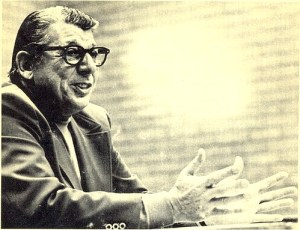
Frank O’Hara American 1926 – 1966
I am not a painter, I am a poet.
Why? I think I would rather be
a painter, but I am not. Well,
for instance, Mike Goldberg
is starting a painting. I drop in.
“Sit down and have a drink” he
says. I drink; we drink. I look
up. “You have SARDINES in it.”
“Yes, it needed something there.”
“Oh.” I go and the days go by
and I drop in again. The painting
is going on, and I go, and the days
go by. I drop in. The painting is
finished. “Where’s SARDINES?”
All that’s left is just
letters, “It was too much,” Mike says.
But me? One day I am thinking of
a color: orange. I write a line
about orange. Pretty soon it is a
whole page of words, not lines.
Then another page. There should be
so much more, not of orange, of
words, of how terrible orange is
and life. Days go by. It is even in
prose, I am a real poet. My poem
is finished and I haven’t mentioned
orange yet. It’s twelve poems, I call
it ORANGES. And one day in a gallery
I see Mike’s painting, called SARDINES.
We present this work in honor of the poet’s 95th birthday.
Jaime Sabines Mexican 1926 – 1999
Occupy yourselves here with hope.
The joy of the day that’s coming
buds in your eyes like a new light.
But that day that’s coming isn’t going to come: this is it.



 Poets Corner