Nuptial Song

We present this work in honor of the Argentine holiday, Dia de la Memoria.
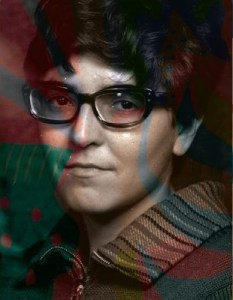
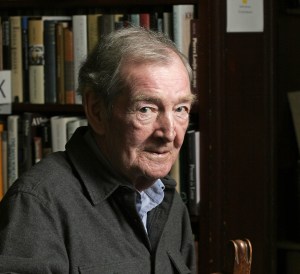
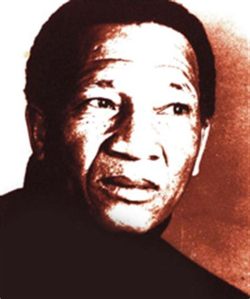
Susana Thénon
Argentine
1935 – 1991

i got married
i got married to myself
i said yes
a yes that took years to arrive
years of unspeakable suffering
crying with the rain
locking myself up in my room
because i—the great love of my existence—
was not calling myself up
was not writing to myself
was not visiting myself
and sometimes
when i dared call myself
to say: hello, am i OK?
I would deny myself

i even managed to write my name in a list of bores
i did not really want to join
because they babbled too much
because they’d not leave me alone
because they’d fence me in
because i could not stand them

at the end I did not even pretend
when I needed myself

i intimated to myself
nicely
that i was fed up

and once i stopped calling myself
and stopped calling myself

and so much time went by that I missed myself
so i said
how long has it been since my last call?
ages
must have been ages
and i called myself up and i answered and could not believe it
because even if it seems incredible
i had not healed
i had only shed blood

then i told myself: hello, is it me?
it’s me, i told myself, and added:
such a long time no see
me from myself myself from me

do i want to come home?

yes, i said

and we got together again
peacefully

i felt good together with myself
just like me
i felt good together with myself
and so
from one day to the next
i got married and i got married
and am together
and not even death can separate me
Translation by Renata Treitel

Weathering

We present this work in honor of the poet’s 95th birthday.

Alastair Reid
Scots
1926 – 2014


I am old enough now for a tree
once planted, knee high, to have grown to be
twenty times me,
and to have seen babies marry, and heroes grow deaf –
but that’s enough meaning-of-life.
It’s living through time we ought to be connoisseurs of.
From wearing a face all this time, I am made aware
of the maps faces are, of the inside wear and tear.
I take to faces that have come far.
In my father’s carved face, the bright eye
he sometimes would look out of, seeing a long way
through all the tree-rings of his history.
I am awed by how things weather: an oak mantel
in the house in Spain, fingered to a sheen,
the marks of hands leaned into the lintel,
the tokens in the drawer I sometimes touch –
a crystal lived-in on a trip, the watch
my father’s wrist wore to a thin gold sandwich.
It is an equilibrium
which breasts the cresting seasons but still stays calm
and keeps warm. It deserves a good name.
Weathering. Patina, gloss, and whorl.
The trunk of the almond tree, gnarled but still fruitful.
Weathering is what I would like to do well.

And Yet…

We present this work in honor of the South African holiday, Human Rights Day.

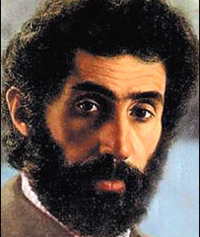
Don Mattera
South African
b. 1935


I have known silences
long and deep as death
when the mind questioned the logic
of my frailty
in the imminence of my destruction
by men ruled and ravaged by powerlust

I have known deep silences
when thoughts like angry waves
beat against the shores of my mind
revealing the scars of brutal memories
and the murder of my manhood

and yet
I cannot hate
try as I want to
I cannot hate… why?

Water

Sohrab Sepehri
Persian
1928 – 1980

Let’s not soil the water:
Perhaps a pigeon is drinking down there
Or a thrush dipping its wing by a far thicket
Or a pitcher being filled in a village.

Let’s not soil the water.
This stream is perhaps running to a white aspen
To sooth a lonely heart.
A dervish may have dipped his dry bread there.

A lovely lady has come to the stream.
Let’s not soil the water.
Beauty is doubled.

Sweet water!
Clear stream!
People are so affable there!
May their streams bubble!
And their cows produce abundant milk!
Never have I visited their village.
Their hedges must bear God’s footprints.
There, moonshine illuminates the expanse of speech.
No doubt, the fences are low in yonder village.
And its inhabitants know what peonies are.
No doubt, blue is blue there.

A bud blossoms! People know it.
What a glorious village it must be!
May its alleyways overflow with music!
The people living by the stream understand water.
They did not soil it
Nor should we.

Translation by Ismail Salami

Marina of the Rocks

We present this work in honor of the 25th anniversary of the poet’s death.

Oddyseas Elytis
Greek
1911 – 1996

You have a taste of tempest on your lips—But where did you wander
All day long in the hard reverie of stone and sea?
An eagle-bearing wind stripped the hills
Stripped your longing to the bone
And the pupils of your eyes received the message of chimera
Spotting memory with foam!
Where is the familiar slope of short September
On the red earth where you played, looking down
At the broad rows of the other girls
The corners where your friends left armfuls of rosemary.

But where did you wander
All night long in the hard reverie of stone and sea?
I told you to count in the naked water its luminous days
On your back to rejoice in the dawn of things
Or again to wander on yellow plains
With a clover of light on you breast, iambic heroine.

You have a taste of tempest on your lips
And a dress red as blood
Deep in the gold of summer
And the perfume of hyacinths—But where did you wander
Descending toward the shores, the pebbled bays?

There was cold salty seaweed there
But deeper a human feeling that bled
And you opened your arms in astonishment naming it
Climbing lightly to the clearness of the depths
Where your own starfish shone.

Listen. Speech is the prudence of the aged
And time is a passionate sculptor of men
And the sun stands over it, a beast of hope
And you, closer to it, embrace a love
With a bitter taste of tempest on your lips.

It is not for you, blue to the bone, to think of another summer,
For the rivers to change their bed
And take you back to their mother
For you to kiss other cherry trees
Or ride on the northwest wind.

Propped on the rocks, without yesterday or tomorrow,
Facing the dangers of the rocks with a hurricane hairstyle
You will say farewell to the riddle that is yours.

Translation by Edmund Keeley and Philip Sherrard

Bogland

We present this work in honor of St. Patrick’s Day.

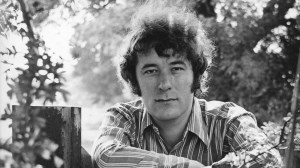
Seamus Heaney
Irish
1939 – 2013


We have no prairies
To slice a big sun at evening—
Everywhere the eye concedes to
Encrouching horizon,

Is wooed into the cyclops’ eye
Of a tarn. Our unfenced country
Is bog that keeps crusting
Between the sights of the sun.

They’ve taken the skeleton
Of the Great Irish Elk
Out of the peat, set it up
An astounding crate full of air.

Butter sunk under
More than a hundred years
Was recovered salty and white.
The ground itself is kind, black butter

Melting and opening underfoot,
Missing its last definition
By millions of years.
They’ll never dig coal here,

Only the waterlogged trunks
Of great firs, soft as pulp.
Our pioneers keep striking
Inwards and downwards,

Every layer they strip
Seems camped on before.
The bogholes might be Atlantic seepage.

The wet centre is bottomless.

Of the Word

Carilda Oliver Labra
Cuban
1922 – 2018


I won’t tell you about truth,
because the word’s going to die
and others
will need it.

You came bearing the word
and I was sensitive to it.
I said:
give me a little of it…
I was weak
and I took the word from your shoulder.
You see:
it’s so heavy
that I, too, double over.

I want to say the word
over your grave,
but a flower already blooms there.
Between the final truth
and immortality
stands the poet
whose word was murdered by gunfire.

They killed your word
and covered you with earth,
but it doesn’t matter,
you’ll sing in the seeds.

Why Have I Become Detached

Pita Amor
Mexican
1918 – 2000


Why have I become detached from the
mysterious and eternal current that I was
cast into, to forever be enslaved
by this tenacious and independent frame?

Why did I become a living being
that carries blood made of lava
and a dark anguish excavated from
knowing that my audacity is powerless?

Thinking of my matter
considering myself absurd and numb,
masqueraded by solitude and by misery,

ludicrous creature of disregard,
a worthless mask from a pointless carnival
and an echo that doesn’t proceed sound!

Zoia

We present this work in honor of the 20th anniversary of the poet’s death.

Rafaela Chacón Nardi
Cuban
1926 – 2001

Immobile, transparent,
with neither blood nor pulsing vein
the grey gaze spent
Zoia is laid out
with the gentle gesture of a wounded dove.

Her tormented skull,
the pupil of her eye asleep in screams.
(When all this has passed
she will return to life
in fruits and grasses.)

Naked, immobile, dead,
budding light and shadows,
with her broad smile
surprising life
in triumph over root and hate and death.

Immobile, transparent,
with the gentle gesture of a wounded woman…
forever with us,
in you, Zoia, burning
on eternal snow:
Life salutes us!

Translation by Margaret Randall

To the Tune of the Coventry Carol

We present this work in honor of the 50th anniversary of the poet’s death.

Stevie Smith
English
1902 – 1971


The nearly right
And yet not quite
In love is wholly evil
And every heart
That loves in part
Is mortgaged to the devil

I loved or thought
I loved in sort
Was this to love akin?
To take the best
And leave the rest
And let the devil in?

O lovers true
And others too
Whose best is only better
Take my advice
Shun compromise
Forget him and forget her