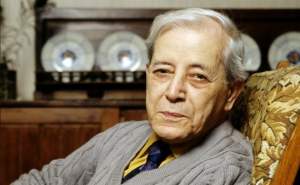
We present this work in honor of the 50th anniversary of the poet’s death.
Jean Sénac Algerian 1926 – 1973
I love you that’s true I love you that’s false crows on my tongue wage war with swallows we’ve got blackness inside our backs But if one day the beloved or the beauty comes along we find our spinning tops again sunlight scars the water All around the air thins we throw a shovel of earth on the thighs the ivy comes into focus Migratory pleasures you bequeath to the heart decaying nymphs and we go on living gropingly under the waves like crayfish I love you for you I write poems to stop thinking drunk on images I invent margins to prolong you If I had at least your name to speak o my unknown my madwoman of the streets honored in my veins like a king by his empire My needle of gold missing in the hay!
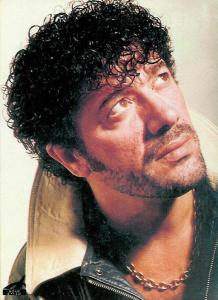
We present this work in honor of the 25th anniversary of the poet’s death.
Lounès Matoub Algerian 1956 – 1998
The sky is heavy and has fissured Rain has washed the tomb Turbulent waters are pouring out Creating new water paths From the tomb, a striking call came To warn the people
Oh Kenza my daughter Do not weep We have been sacrificed For a new Algeria Kenza, Oh my daughter Do not weep
Even if the body wilts The idea lives Even if the times are hard We will overcome weariness Even if they shoot many stars, The sky will never be stripped of all of its stars
Oh Kenza my daughter Endure life’s burden We have been sacrificed For a new Algeria Kenza, Oh my daughter Do not weep
They have decided on our fate Well before today The hunters of intelligence Who have turned the country into a death zone They have killed Rashid Tigziri And did not miss Smail They have killed Liabes and Flici Boucebsi and many others
Oh Kenza my daughter Endure life’s burden We have been sacrificed For a new Algeria Kenza, Oh my daughter Do not weep
At least one of us will survive He will be our memory tomorrow The wounds will heal Our country will be peaceful again Our children will grow Even amidst the violence and pain
Oh Kenza my daughter Do not weep We have been sacrificed For a new Algeria Kenza, Oh my daughter Do not weep
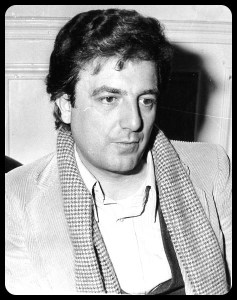
We present this work in honor of the 45th anniversary of the poet’s death.
Malek Haddad Algerian 1927 – 1978
I am the final point of a novel that begins Let us not forget everything above level zero I sustain my romance intact between my eyes Then, denying nothing, I set out once again I am the final point of a novel that begins No need to distinguish the horizon from the dance And within my burnous my house survives I am the final point of a novel that begins Of my two Saharas I compose my song I sustain my romance intact between my eyes I am in the truth the pupil and the lesson
Often I recall having been a shepherd… Then in my eyes there’s that long-suffering look Of a fellah who watches in his unbreakable hands The history of a country where the orange tree will be born Often I recall having been a shepherd I have sliced the galette I have parted the figs My daughter I have married well It has no equal To the gun To the task Than my eldest son My wife was the finest in the valley. Among us the word fatherland has a taste of anger My hand has caressed the heart of palm trees The handle of my ax opens an epic And I have seen my grandfather Mokrani Finger his beads watching eagles pass Among us the word fatherland possesses a taste of legend
Daddy ! Why have you deprived me Of fleshly music see: Your son Learning to speak in another tangue Words that I have known Since I was a shepherd lad
Ah my God The night so much night in my eyes Mummy calls herself Ya Ma while I say Mother I have mislaid my burnous my gun my pen And I bear a first name falser than my deeds Ah the night my God but what’s the good of whistling Fear You’re afraid Fear You’re afraid Fear You’re afraid Since a man stalks you like some frightful mirror Your school friends and the streets the jokes But since I tell you I’m a Frenchman just look at my clothes my accent my house I who turn a race into a profession Saying Tunisian when I mean “tradesman” I who think of a Jew as some wretched homegrown soldier? Come on then, my sister wears no veil And in the Lycee didn’t take all the prizes for french?
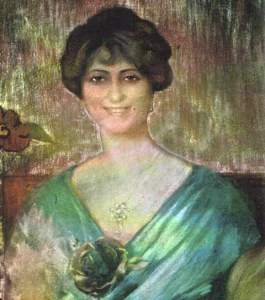
We present this work in honor of the poet’s 135th birthday.
Berthe Bénichou-Aboulker Algerian 1888 – 1942
Everything grows intensely in your soil, Algeria! Trees, flowers, and golden wheat, protected by Ceres, Juicy fruits, carnal fruits: Fatma, Rachel, Inès, Zohra the mulatto or the white Marie.
Why don’t I have, like a cantor, a flowery tongue Aloe to celebrate the olive grove Where sometimes the shadow of Cervantes prowls Pirate’s prisoner in ancient Barbary.
Exhaling scents of mint and henna, Cities of fiery growth and unbridled luxury: Algiers, Oran, Cirta, overflowing with sap
Open their white or golden arms like a fan To receive the day. In iridescent prisms The rocks or the beach are transformed.
Many great men dwelt in that city their faces shone with pure faith they worked together to promote religion and belief in Allah in overt and covert ways. Many were renowned for their virtue and generosity, and jealously preserved their respectability.
And when darkness fell, you would see them deep in prayer like chaste monks in the garden of Eden, that honorable place among the beautiful houris and boys.
Thanks to its tribunes, Kairouan was ranked among the world’s greatest. She outranked Egypt—that was fair enough— and left Baghdad well behind. When the city greatly prospered and attracted ambitious pioneers, as she became a place for all virtues, as well as safety and faith, time looked at her with envious eyes and kept many sorrows in store —till destiny had decided to unleash the unavoidable: troubles caused by various clans that belonged to the Banu Hilal. They massacred the Prophet’s nation and defied Allah’s punishment during Ramadan. They violated former treaties and those under Allah’s protection without keeping their word. They preferred to deceive their neighbors and take their women as prisoners of war. They tortured them in the cruelest manner and let rancor show through their hearts. The Muslims were divided and humiliated at the hands of these unfaithful: some were tortured or could do nothing, others were killed or put in prison. They called for help but no help came, and when they couldn’t yell or cry anymore, they gathered all their belongings and valuables, whether gold, silver, pearls, rare ornaments, or crockery. They went out on bare feet, begging Allah to protect them and overcome their fear. They fled with their infants, their children, their widows, and their spouses. They kept their virgins safe like gazelles lest their beauty drive the enemy mad— chaste beauties covered with shawls like moons shining on willow trees.
Sorrow will never disappear after such calamity just as the eternal cycle of night and day will never end. If Mount Thahlan had suffered the tenth of it, its highest peaks would have crumbled! All the cities of Iraq mourned her, as did the villages of Syria, Egypt, and Khorasan. Affliction and sorrow even reached the farthest countries of the Sind and Hind, and the land turned into a desert from al=Andalus to Halwan. I saw the stars rise but they did not shine, nor did sun or moon. I saw mountains deeply afflicted, as were all humans and jinns. Even Earth, because of this heavy burden, has now a definite lean. Will the nights, after they had separated us, bring us together again? Will they restore the land of Kairouan and bring the city back to life again after time had stolen its beauty and caused bloodshed among rival clans? It stands now as if it had never known riches nor ever been a sacred land. Time has duped its people and cut off the ties that used to bind them. Now they are scattered, like Saba’s peoples, and err about the lands.


 Poets Corner