Some have God’s words; others have songs of comfort for the bereaved. If I can pluck courage here, I would like to speak directly to the dead—the September dead. Those children of ancestors born in every continent on the planet: Asia, Europe, Africa, the Americas…; born of ancestors who wore kilts, obis, saris, geles, wide straw hats, yarmulkes, goatskin, wooden shoes, feathers and cloths to cover their hair. But I would not say a word until I could set aside all I know or believe about nations, wars, leaders, the governed and ungovernable; all I suspect about armor and entrails. First I would freshen my tongue, abandon sentences crafted to know evil—wanton or studied; explosive or quietly sinister; whether born of a sated appetite or hunger; of vengeance or the simple compulsion to stand up before falling down. I would purge my language of hyperbole; of its eagerness to analyze the levels of wickedness; ranking them; calculating their higher or lower status among others of its kind. Speaking to the broken and the dead is too difficult for a mouth full of blood. Too holy an act for impure thoughts. Because the dead are free, absolute; they cannot be seduced by blitz. To speak to you, the dead of September 11, I must not claim false intimacy or summon an overheated heart glazed just in time for a camera. I must be steady and I must be clear, knowing all the time that I have nothing to say—no words stronger than the steel that pressed you into itself; no scripture older or more elegant than the ancient atoms you have become. And I have nothing to give either—except this gesture, this thread thrown between your humanity and mine: I want to hold you in my arms and as your soul got shot of its box of flesh to understand, as you have done, the wit of eternity: its gift of unhinged release tearing through the darkness of its knell.
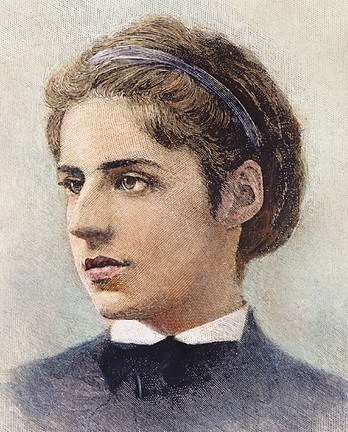
Not while the snow-shroud round dead earth is rolled, And naked branches point to frozen skies.— When orchards burn their lamps of fiery gold, The grape glows like a jewel, and the corn A sea of beauty and abundance lies, Then the new year is born. Look where the mother of the months uplifts In the green clearness of the unsunned West, Her ivory horn of plenty, dropping gifts, Cool, harvest-feeding dews, fine-winnowed light; Tired labor with fruition, joy and rest Profusely to requite. Blow, Israel, the sacred cornet! Call Back to thy courts whatever faint heart throb With thine ancestral blood, thy need craves all. The red, dark year is dead, the year just born Leads on from anguish wrought by priest and mob, what undreamed-of morn? For never yet, since on the holy height, The Temple’s marble walls of white and green Carved like the sea-waves, fell, and the world’s light Went out in darkness,—never was the year Greater with portent and with promise seen, Than this eve now and here. Even as the Prophet promised, so your tent Hath been enlarged unto earth’s farthest rim. To snow-capped Sierras from vast steppes ye went, Through fire and blood and tempest-tossing wave, For freedom to proclaim and worship Him, Mighty to slay and save. High above flood and fire ye held the scroll, Out of the depths ye published still the Word. No bodily pang had power to swerve your soul: Ye, in a cynic age of crumbling faiths, Lived to bear witness to the living Lord, Or died a thousand deaths. In two divided streams the exiles part, One rolling homeward to its ancient source, One rushing sunward with fresh will, new heart. By each the truth is spread, the law unfurled, Each separate soul contains the nation’s force, And both embrace the world. Kindle the silver candle’s seven rays, Offer the first fruits of the clustered bowers, The garnered spoil of bees. With prayer and praise Rejoice that once more tried, once more we prove How strength of supreme suffering still is ours For Truth and Law and Love.
We stand in the rain in a long line waiting at Ford Highland Park. For work. You know what work is—if you’re old enough to read this you know what work is, although you may not do it. Forget you. This is about waiting, shifting from one foot to another. Feeling the light rain falling like mist into your hair, blurring your vision until you think you see your own brother ahead of you, maybe ten places. You rub your glasses with your fingers, and of course it’s someone else’s brother, narrower across the shoulders than yours but with the same sad slouch, the grin that does not hide the stubbornness, the sad refusal to give in to rain, to the hours of wasted waiting, to the knowledge that somewhere ahead a man is waiting who will say, “No, we’re not hiring today,” for any reason he wants. You love your brother, now suddenly you can hardly stand the love flooding you for your brother, who’s not beside you or behind or ahead because he’s home trying to sleep off a miserable night shift at Cadillac so he can get up before noon to study his German. Works eight hours a night so he can sing Wagner, the opera you hate most, the worst music ever invented. How long has it been since you told him you loved him, held his wide shoulders, opened your eyes wide and said those words, and maybe kissed his cheek? You’ve never done something so simple, so obvious, not because you’re too young or too dumb, not because you’re jealous or even mean or incapable of crying in the presence of another man, no, just because you don’t know what work is.
We present this work in honor of the poet’s 185th birthday.
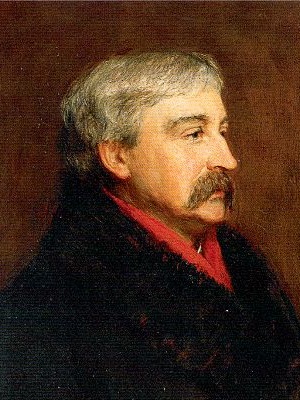
Bret Harte American 1836 – 1902
(a chemical narrative)
Certain facts which serve to explain The physical charms of Miss Addie De Laine, Who, as the common reports obtain, Surpassed in complexion the lily and rose; With a very sweet mouth and a retrousse nose; A figure like Hebe’s, or that which revolves In a milliner’s window, and partially solves That question which mentor and moralist pains, If grace may exist minus feeling or brains.
Of course the young lady had beaux by the score, All that she wanted,—what girl could ask more? Lovers that sighed and lovers that swore, Lovers that danced and lovers that played, Men of profession, of leisure, and trade; But one, who was destined to take the high part Of holding that mythical treasure, her heart,— This lover, the wonder and envy of town, Was a practicing chemist, a fellow called Brown.
I might here remark that ‘twas doubted by many, In regard to the heart, if Miss Addie had any; But no one could look in that eloquent face, With its exquisite outline and features of grace, And mark, through the transparent skin, how the tide Ebbed and flowed at the impulse of passion or pride,— None could look, who believed in the blood’s circulation As argued by Harvey, but saw confirmation That here, at least, Nature had triumphed o’er art, And as far as complexion went she had a heart.
But this par parenthesis. Brown was the man Preferred of all others to carry her fan, Hook her glove, drape her shawl, and do all that a belle May demand of the lover she wants to treat well. Folks wondered and stared that a fellow called Brown— Abstracted and solemn, in manner a clown, Ill dressed, with a lingering smell of the shop— Should appear as her escort at party or hop. Some swore he had cooked up some villainous charm, Or love philter, not in the regular Pharm- Acopoeia, and thus, from pure malice prepense, Had bewitched and bamboozled the young lady’s sense; Others thought, with more reason, the secret to lie In a magical wash or indelible dye; While Society, with its censorious eye And judgment impartial, stood ready to damn What wasn’t improper as being a sham.
For a fortnight the townfolk had all been agog With a party, the finest the season had seen, To be given in honor of Miss Pollywog, Who was just coming out as a belle of sixteen. The guests were invited; but one night before A carriage drew up at the modest back door Of Brown’s lab’ratory, and, full in the glare Of a big purple bottle, some closely veiled fair Alighted and entered: to make matters plain, Spite of veils and disguises, ‘twas Addie De Laine.
As a bower for true love, ‘twas hardly the one That a lady would choose to be wooed in or won: No odor of rose or sweet jessamine’s sigh Breathed a fragrance to hallow their pledge of troth by, Nor the balm that exhales from the odorous thyme; But the gaseous effusions of chloride of lime, And salts, which your chemist delights to explain As the base of the smell of the rose and the drain. Think of this, O ye lovers of sweetness! and know What you smell when you snuff up Lubin or Pinaud.
I pass by the greetings, the transports and bliss, Which of course duly followed a meeting like this, And come down to business,—for such the intent Of the lady who now o’er the crucible leant, In the glow of a furnace of carbon and lime, Like a fairy called up in the new pantomime,— And give but her words, as she coyly looked down In reply to the questioning glances of Brown: ‘I am taking the drops, and am using the paste, And the little white powders that had a sweet taste, Which you told me would brighten the glance of my eye, And the depilatory, and also the dye, And I’m charmed with the trial; and now, my dear Brown, I have one other favor,—now, ducky, don’t frown,— Only one, for a chemist and genius like you But a trifle, and one you can easily do. Now listen: to-morrow, you know, is the night Of the birthday soiree of that Pollywog fright; And I’m to be there, and the dress I shall wear Is too lovely; but’— ‘But what then, ma chere?’ Said Brown, as the lady came to a full stop, And glanced round the shelves of the little back shop. ‘Well, I want—I want something to fill out the skirt To the proper dimensions, without being girt In a stiff crinoline, or caged in a hoop That shows through one’s skirt like the bars of a coop; Something light, that a lady may waltz in, or polk, With a freedom that none but you masculine folk Ever know. For, however poor woman aspires, She’s always bound down to the earth by these wires. Are you listening? Nonsense! don’t stare like a spoon, Idiotic; some light thing, and spacious, and soon— Something like—well, in fact—something like a balloon!’
Here she paused; and here Brown, overcome by surprise, Gave a doubting assent with still wondering eyes, And the lady departed. But just at the door Something happened,—’tis true, it had happened before In this sanctum of science,—a sibilant sound, Like some element just from its trammels unbound, Or two substances that their affinities found.
The night of the anxiously looked for soiree Had come, with its fair ones in gorgeous array; With the rattle of wheels and the tinkle of bells, And the ‘How do ye do’s’ and the ‘Hope you are well’s;’ And the crush in the passage, and last lingering look You give as you hang your best hat on the hook; The rush of hot air as the door opens wide; And your entry,—that blending of self-possessed pride And humility shown in your perfect-bred stare At the folk, as if wondering how they got there; With other tricks worthy of Vanity Fair. Meanwhile, the safe topic, the beat of the room, Already was losing its freshness and bloom; Young people were yawning, and wondering when The dance would come off; and why didn’t it then: When a vague expectation was thrilling the crowd, Lo! the door swung its hinges with utterance proud! And Pompey announced, with a trumpet-like strain, The entrance of Brown and Miss Addie De Laine.
She entered; but oh! how imperfect the verb To express to the senses her movement superb! To say that she ‘sailed in’ more clearly might tell Her grace in its buoyant and billowy swell. Her robe was a vague circumambient space, With shadowy boundaries made of point-lace; The rest was but guesswork, and well might defy The power of critical feminine eye To define or describe: ‘twere as futile to try The gossamer web of the cirrus to trace, Floating far in the blue of a warm summer sky.
‘Midst the humming of praises and glances of beaux That greet our fair maiden wherever she goes, Brown slipped like a shadow, grim, silent, and black, With a look of anxiety, close in her track. Once he whispered aside in her delicate ear A sentence of warning,—it might be of fear: ‘Don’t stand in a draught, if you value your life.’ (Nothing more,—such advice might be given your wife Or your sweetheart, in times of bronchitis and cough, Without mystery, romance, or frivolous scoff.) But hark to the music; the dance has begun. The closely draped windows wide open are flung; The notes of the piccolo, joyous and light, Like bubbles burst forth on the warm summer night. Round about go the dancers; in circles they fly; Trip, trip, go their feet as their skirts eddy by; And swifter and lighter, but somewhat too plain, Whisks the fair circumvolving Miss Addie De Laine. Taglioni and Cerito well might have pined For the vigor and ease that her movements combined; E’en Rigelboche never flung higher her robe In the naughtiest city that’s known on the globe. ‘Twas amazing, ‘twas scandalous; lost in surprise, Some opened their mouths, and a few shut their eyes.
But hark! At the moment Miss Addie De Laine, Circling round at the outer edge of an ellipse Which brought her fair form to the window again, From the arms of her partner incautiously slips! And a shriek fills the air, and the music is still, And the crowd gather round where her partner forlorn Still frenziedly points from the wide window-sill Into space and the night; for Miss Addie was gone! Gone like the bubble that bursts in the sun; Gone like the grain when the reaper is done; Gone like the dew on the fresh morning grass; Gone without parting farewell; and alas! Gone with a flavor of hydrogen gas!
When the weather is pleasant, you frequently meet A white-headed man slowly pacing the street; His trembling hand shading his lack-lustre eye, Half blind with continually scanning the sky. Rumor points him as some astronomical sage, Re-perusing by day the celestial page; But the reader, sagacious, will recognize Brown, Trying vainly to conjure his lost sweetheart down, And learn the stern moral this story must teach, That Genius may lift its love out of its reach.
We present this work in honor of the 75th anniversary of the poet’s death.
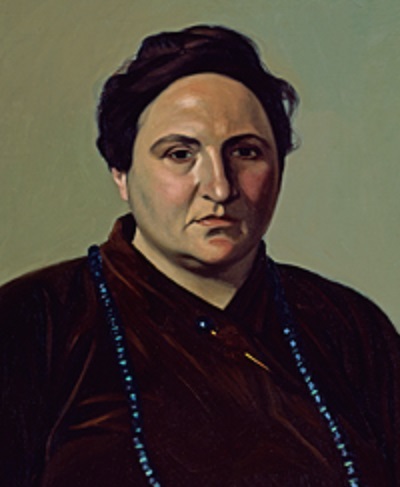
Gertrude Stein American 1874 – 1946
A purse was not green, it was not straw color, it was hardly seen and it had a use a long use and the chain, the chain was never missing, it was not misplaced, it showed that it was open, that is all that it showed.
We present this work in honor of Independence Day.
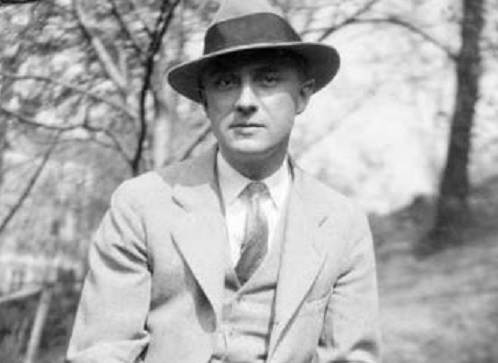
Delmore Schwartz American 1913 – 1966
Jeremiah Dickson was a true-blue American, For he was a little boy who understood America, for he felt that he must Think about everything; because that’s all there is to think about, Knowing immediately the intimacy of truth and comedy, Knowing intuitively how a sense of humor was a necessity For one and for all who live in America. Thus, natively, and Naturally when on an April Sunday in an ice cream parlor Jeremiah Was requested to choose between a chocolate sundae and a banana split He answered unhesitatingly, having no need to think of it Being a true-blue American, determined to continue as he began: Rejecting the either-or of Kierkegaard, and many another European; Refusing to accept alternatives, refusing to believe the choice of between; Rejecting selection; denying dilemma; electing absolute affirmation: knowing in his breast The infinite and the gold Of the endless frontier, the deathless West.
“Both: I will have them both!” declared this true-blue American In Cambridge, Massachusetts, on an April Sunday, instructed By the great department stores, by the Five-and-Ten, Taught by Christmas, by the circus, by the vulgarity and grandeur of Niagara Falls and the Grand Canyon, Tutored by the grandeur, vulgarity, and infinite appetite gratified and Shining in the darkness, of the light On Saturdays at the double bills of the moon pictures, The consummation of the advertisements of the imagination of the light Which is as it was—the infinite belief in infinite hope—of Columbus, Barnum, Edison, and Jeremiah Dickson.
We present this work in honor of the poet’s 95th birthday.
Allen Ginsberg American 1926 – 1997
Blandly mother takes him strolling by railroad and by river -he’s the son of the absconded hot rod angel- and he imagines cars and rides them in his dreams,
so lonely growing up among the imaginary automobiles and dead souls of Tarrytown
to create out of his own imagination the beauty of his wild forebears-a mythology he cannot inherit.
Will he later hallucinate his gods? Waking among mysteries with an insane gleam of recollection?
The recognition- something so rare in his soul, met only in dreams -nostalgias of another life.
A question of the soul. And the injured losing their injury in their innocence -a cock, a cross, an excellence of love.
And the father grieves in flophouse complexities of memory a thousand miles away, unknowing of the unexpected youthful stranger bumming toward his door.






 Poets Corner