We present this work in honor of the poet’s 130th birthday.
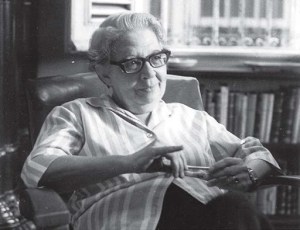
Mariano Brull Cuban 1891 – 1956
Just as soon as Mass is over,
Put our pious airs away;
And with luncheon in our baskets,
To the mountain! To the mountain!
To the mountain for the day!
Hark, the bells of glory ringing
From the belfries of the Spring!—
Sun and sky! — oh, what a blessing
After gloomy days, they bring!
How the water o’er the mill-wheel
Rumbles furious and fast,
Bursting through a thousand echoes
Until — there — ‘tis gone at last!
For the woods our hearts are hungry;
Every bird hears us reply;
Incense seems to sweep our bosoms—
To the mountain! To the mountain!
To the mountain, let us hie!
Every grotto holds a secret;
Every cleft its creed and rite;
On the slopes is scattered grandeur—
Hawthorn flowers and crags in sight!
On the peaks the wind is hymning,—
Heaven is nigh — the town, far down;
Ah, why should not human dwellings
All the free-world mountains crown?—
At the nightfall — with our baskets
Empty — to the town we haste;
All the mountains fill with shadows,—
You come to me at last, just as you were, with your ancient emotion and your unspoiled rose, Lazarus the straggler, a stranger to the fire of hope, forgetting disintegration even as it burned to dust, ashes, nothing more.
You return to me, in one piece and not even out of breath, with your great dream immune to the cold of the tomb, when already Martha and Mary, weary of waiting for miracles and plucking the leaves of twilight, have slowly descended the slope of all the Bethanies in silence.
You come, relying on no more hope than your own hope, no more miracle than your own miracle. Impatient and sure of finding me still yoked to the last kiss.
You come all flowers and new moon, quick to wrap me in your pent-up tides, in your stormy clouds, in your confused fragrances which I begin to recognize one by one.
You come still yourself, safe from time and distance, safe from silence, and bring me like a wedding gift the already-savored secret of death.
But here I am, a bride again, not knowing whether I rejoice or weep at your return, over the terrifying gift you give me, even over the joy which strikes me like a blow. I don’t know whether it is late or early to be glad. Truly, I don’t know; I no longer remember the color of your eyes.
We present this work in honor of the 40th anniversary of the poet’s death.
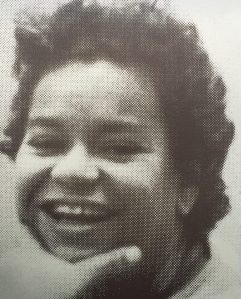
Lourdes Casal Cuban 1938 – 1981
(for Salvador Ocasio)
Torn coat
dusty shoes
thin white hair
Strange gentleman’s stance
I think: This old man has a Unamuno head.
Trenches rather than furrows
line his olive face.
He speaks haltingly.
Moves his hands slowly.
Sixteen years, he says,
Bridgeport and sixteen years of his life.
Sixteen years without sun
for these colourless trousers
and this bitter weariness
that give his smile a steel hue.
We present this work in honor of the poet’s 110th birthday.
José Lezama Lima Cuban 1910 – 1976
An obscure meadow lures me,
her fast, close-fitting lawns
revolve in me, sleep on my balcony.
They rule her beaches, her indefinite
alabaster dome re-creates itself.
On the waters of a mirror,
the voice cut short crossing a hundred paths,
my memory prepares surprise:
fallow dew in the sky, dew, sudden flash.
Without hearing I’m called:
I slowly enter the meadow,
proudly consumed in a new labyrinth.
Illustrious remains:
a hundred heads, bugles, a thousand shows
baring their sky, their silent sunflower.
Strange the surprise in that sky
where unwilling footfalls turn
and voices swell in its pregnant center.
An obscure meadow goes by.
Between the two, wind or thin paper,
the wind, the wounded wind of this death,
this magic death, one and dismissed.
A bird, another bird, no longer trembles.
Put me to death
in the blood of this crystal
that I might go unblemished to God.
An embrace of vineyards and sugarcane
overthrew the quietude in which I rose.
A sweet embrace remembered
will open into the light
the protected, ravelled way,
used for the first time
in centuries of brotherly silence.
Through so much anointing,
through so much stony silence
moist silence of tile sun of flight
— silence revived in cries.
Put me to death
in the mystery of Your wine and Your water
on the side through which I live,
on the rock in which I seek wisdom
through the fog of a mystical tropical morning.
If I am put to death this way
I might live forever in the silence
of a day without soil and brine.
All may come by the roads
we least suspect.
All may come from within, wordless,
or from without, burning
and breaking itself in us, unexpectedly,
or grow, as certain joys grow,
with no one listening.
And everything may open one day in our hands
with wistful surprise
or with bitter surprise, unarmed, undressed,
with the sadness of he who suddenly
comes face to face with a mirror and doesn’t see himself
and looks at his eyes and fingers
and uselessly searches for his laughter.
And that’s the way it is. All may come
in the most incredibly desired way,
so strangely far
and coming, not come
nor leave when left behind and lost.
And, for that encounter, one must gather poppies,
a sweet bit of skin, peaches or child,
clean for the greeting.
All is peace and calm… In the twilight
The aroma of jasmines can be smelled,
And, over the glassy surface of the river,
Is heard the flapping wings of the swans
Which, like a bunch of snowy flowers,
Glide over the smooth water surface.
Now the dusky bats reemerge
From their many secret hiding places,
And a thousand turns, and capricious spins
They make in the tranquil atmosphere;
Or fly very close to the ground,
Barely grazing with their gray wings
The yellow petal of the bitter thistle,
Or the virgin corolla of the humble mallow.
Thou messenger, far wandering,
Who ‘neath my cell art fluttering
And round and round me gayly fly,
Whence comest thou, on restless wing?
And whither, swallow, dost thou hie?
To this south country thou hast flown
In quest of flowers and zephyr’s breath,
While I within my prison moan
And clamor in my dungeon lone
For wintry skies and snowy heath.
With longing heart I long to see
That which thou’st lightly left behind;
I long to fly beyond the sea,
To feel anew the northern wind,
To be a swallow and to flee.
I long again to find my nest
And there, as was wont of old,
Without a fear to mar my rest,
Repose in midst of Love’s sweet fold,
With wife and child to make me blest.
And if my dear ones, lost to me,
Should ask that thou a message bring
When thou again wilt cross the sea,
Pursue thy flight, thou bird of Spring,
Be not detained by thought of me.
For if thou, wanderer, seekest there
To find a drooping willow where
It shades the dust of him that’s free,
Thou swallow fair! thou swallow fair!
Thou’lt seek in vain where I will be.
So seek not thou with restless flight,
To find my dark and hidden grave,
For know’st thou not, thou winged dace?
O’er the poet’s tomb no willows wave,
No cypress marks his resting-place.





 Poets Corner