We present this work in honor of the Vernal Equinox.

Japanese
8th century
In the loneliness of my heart
I feel as if I should perish
Like the pale dew-drop
Upon the grass of my garden
In the gathering shades of twilight.
We present this work in honor of the Vernal Equinox.
In the loneliness of my heart
I feel as if I should perish
Like the pale dew-drop
Upon the grass of my garden
In the gathering shades of twilight.
We present this work in honor of the 10th anniversary of the poet’s death.
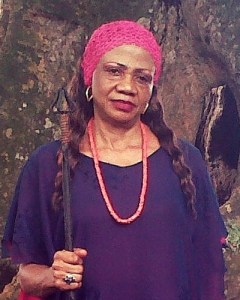
I can still recall their laughter
As they spoke of ‘lost virtue’.
I, Obiajunu
I have learned to live in scarcity.
So, cautiously,
i choose my steps
labouring up the steep hill
bearing on my head
in a clay pot
the spring’s very last drop
but from the bushes
a sweet melody
streams forth
and fills my ears
disarming
tantalising
and the body
is tempted to sway
leading the feet
off the straight path
and the eyes
are tempted to stray
to find the source
the giver of temporal joy
but i must hold fast
my pot of spring water
Though the seller of clay pot
never makes the ‘customer’
though the carrier of clay pot
be the mother of an only son
and though this tune
vibrating in my ears
tempts me to dance
to sway my hips
in unison
with it
beguiling
yet i cannot lose it
this stem
this prop
i have laboured up this hill
through toil and sweat
and i cannot spill it
this water so pure
so clear and sweet
the dying spring’s last drop
i obianuju
i shall provide my children
with plenty
i shall multiply this drop
they will never taste
of the wasted fluid
of the sea
We present this work in honor of St. Patrick’s Day.
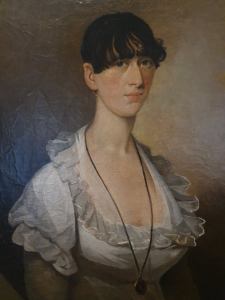
Ah! where is now my peaceful cot?
And where my happy home?
Far distant from that cherished spot,
In banishment, I roam.
From thee, my country! I am driven;
A wanderer forced from thee;
But yet my constant prayer to Heaven
Shall be to make thee free.
How blissful once my lot appeared!
How brightly Fortune smiled!
My daily toil by hope was cheered,
By happiness beguiled.
My blooming children played around;
Their mother blessed each hour;
Till tyrants on our prospects frowned,
And crushed us with their power.
They burned our humble dwelling then
Our little all destroyed;
And left us, the hard-hearted men!
Of every hope devoid.
And thus, my country! I was driven,
A wanderer far from thee;
But yet my ceaseless prayer to Heaven
Has been to make thee free
My helpless children sobbed aloud
Upon the parting day;
My Mary’s head with grief was bowed;
Oh how I wished to stay!
With anguish o’er the spot we mourned,
Where long our cottage stood;
And, as we went, we often turned
To view the neighbouring wood.
And when our vessel put to sea,
As dimmer grew the shore,
My bosom panted heavily,
To think that, never more,
My eyes upon that land should gaze,
Where all my youth was spent;
And where I thought to end my days,
In virtue and content.
Can virtue make content secure,
While tyrants may destroy
The simple blessings of the poor,
And blast their rising joy?
My loved, lost Country! ruined, driven,
An exile far from thee,
My last and fondest prayer to Heaven
Shall be to make thee free.

Boundless
For when we were
Young and playful,
Our joyous laughter
Rang out echoes through
Every street,
Enlivened by our boundless
Youthfulness.
For when we were
Young and playful,
We would jump buses
Standing or moving,
Ticketless to nowhere
And everywhere,
Knowing no limits,
Knowing no particular
Place to get off.
For when we were
Young and playful,
I met a stranger then,
Caring little about
His looks,
Just being young
Curious and fearless
On a moving empty
London bus,
But for us restless
Young and playful ones,
Filling up, No,
Taking over an
Empty London bus
To make life anew,
Posing, loving us
And strangers in
Boundless youthfulness,
Knowing not,
Caring little
What we were,
What we are
Going to become.
We present this work in honor of the poet’s 65th birthday.

Do not say “absence tastes like madness”
Close your eyes
Wherever you are
You will find me…
Immovable as the sea
Wandering about
In the ebb and flow
Never absent.
We present this work in honor of Canberra Day.
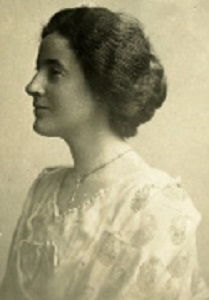
Let others prate of Greece and Rome,
And towns where they may never be,
The muse should wander nearer home.
My country is enough for me;
Her wooded hills that watch the sea,
Her inland miles of springing corn,
At Macedon or Barrakee—
I love the land where I was born.
On Juliet smile the autumn stars
And windswept plains by Winchelsea,
In summer on their sandy bars
Her rivers loiter languidly.
Where singing waters fall and flee
The gullied ranges dip to Lorne
With musk and gum and myrtle tree—
I love the land where I was born.
The wild things in her tangles move
As blithe as fauns in Sicily,
Where Melbourne rises roof by roof
The tall ships serve her at the quay,
And hers the yoke of liberty
On stalwart shoulders lightly worn,
Where thought and speech and prayer are free—
I love the land where I was born.
Princes and lords of high degree,
Smile, and we fling you scorn for scorn,
In hope and faith and memory
I love the land where I was born.

She was the nameless woman who created
images of her children sold away from her.
She suspended her wood babies from a rope
round her neck, before she ate she fed them.
Touched bits of pounded yam and plantains
to sealed lips, always urged them to sip water.
She carved them of wormwood, teeth and nails
her first tools, later she wielded a blunt blade.
Her spit cleaned faces and limbs; the pitch oil
of her skin burnished them. When woodworms
bored into their bellies she warmed castor oil
they purged. She learned her art by breaking
hard rockstones. She did not sign her work.

I remember when the unicorns
roved in herds through the meadow
behind the cabin, and how they would
lately pause, tilting their jewelled
horns to the falling sun as we shared
the tensions of private property
and the need to be alone.
Or as we walked along the beach
a solitary delicate beast
might follow on his soft paws
until we turned and spoke the words
to console him.
It seemed they were always near
ready to show their eyes and stare
us down, standing in their creamy
skins, pink tongues out
for our benevolence.
As if they knew that always beyond
and beyond the ladies were weaving them
into their spider looms.
I knew where they slept
and how the grass was bent
by their own wilderness
and I pitied them.
It was only yesterday, or seems
like only yesterday when we could
touch and turn and they came
perfectly real into our fictions.
But they moved on with the courtly sun
grazing peacefully beyond the story
horns lowering and lifting and
lowering.
I know this is scarcely credible now
as we cabin ourselves in the cold
and the motions of panic
and our cells destroy each other
performing music and extinction
and the great dreams pass on
to the common good.

A tear drop alights
From a car that crosses my eye
And stops
Behind a light that embodies red
And then drops
into bumps and coughs
And pulls a hand break
Stop!
Like a light that turns amber
When the street is quiet
If I don’t run away
In these high heels
To the last light
Someone would want to give me a ride
With hands that go green
like a bud in my eyes
And then blow cigarette smoke
Into my eyes
What a passengerless destiny
My poor tears
Are shot again
My eyes
Got their period again

At oldest moon the tanker is aimed at shore
and scuttled like a much smaller thing;
its prow cocked in the unnatural questioning
of a carcass head; its waterlines, doing marked done.
Empty oil-barrels thrown to sea, herded to shore,
then the loosest fittings, then steeliest ego-structure:
all parts can be turned to mutiny in the end.
In the hull’s darkness a man, as taken as Jonah,
falls off a girder and ends forty feet below,
straddling a crossbeam that splits his pelvis in two.
 Poets Corner