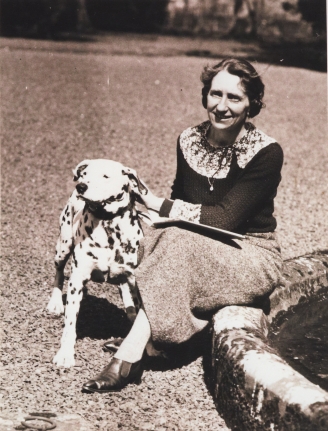
Winter Twilight in West Lothian

03-05 Hutchison
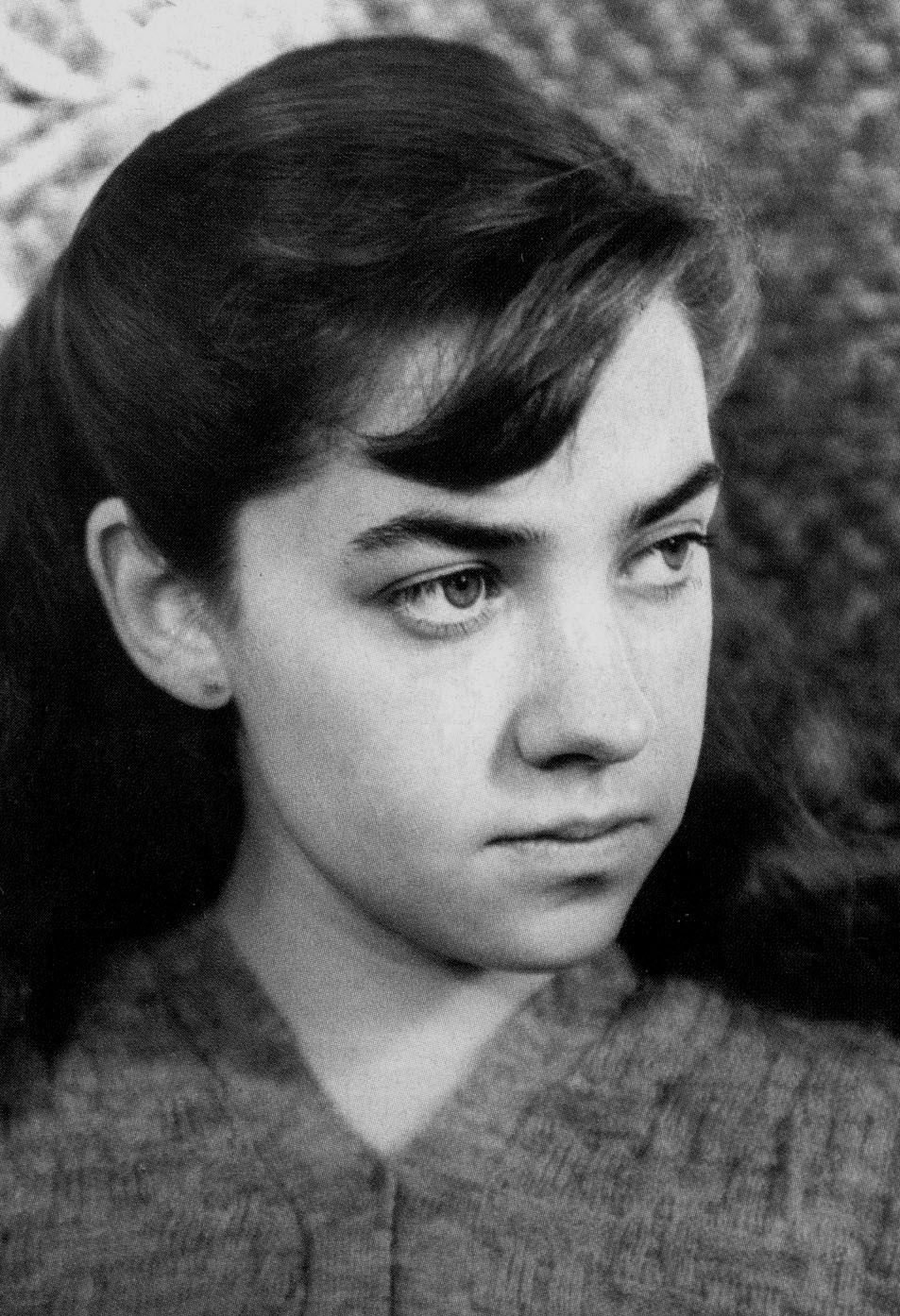
Isobel Wylie Hutchison
Scots
1889 – 1982

The sun’s going down behind the great shale-heap
Over against the village; shadows creep
Shifting from door to door, and all the bings
Of Broxburn stand like tombs of Theban kings
Black on the crimson, crowned by fierce blue stars.

From the fields mist is rising. Motor cars
Pass swiftly through the film of gathering grey,
Their drivers peering apprehensively
For furtive waggons, dazzled by the bits
Of sunset that still float above the pits
And fall into the puddles on the road.

Beyond the hedge the ploughman has bestrode
His horse, or seated edgewise lumbering rides
With feet that flap against the steaming sides
Of his tired beast, homeward beneath the moon,
Now and then whistling snatches of a tune
The harness echoes with its tinkling brass.

From time to time belated miners pass
With uncouth, blackened faces, taciturn;
Behind the bings the fires of sunset burn
To ashes very slowly. In the north
The Bear prowls softly up above the Forth
In a dark gulf the wind has sucked again
Out of the clouds. To-morrow we’ll have rain.
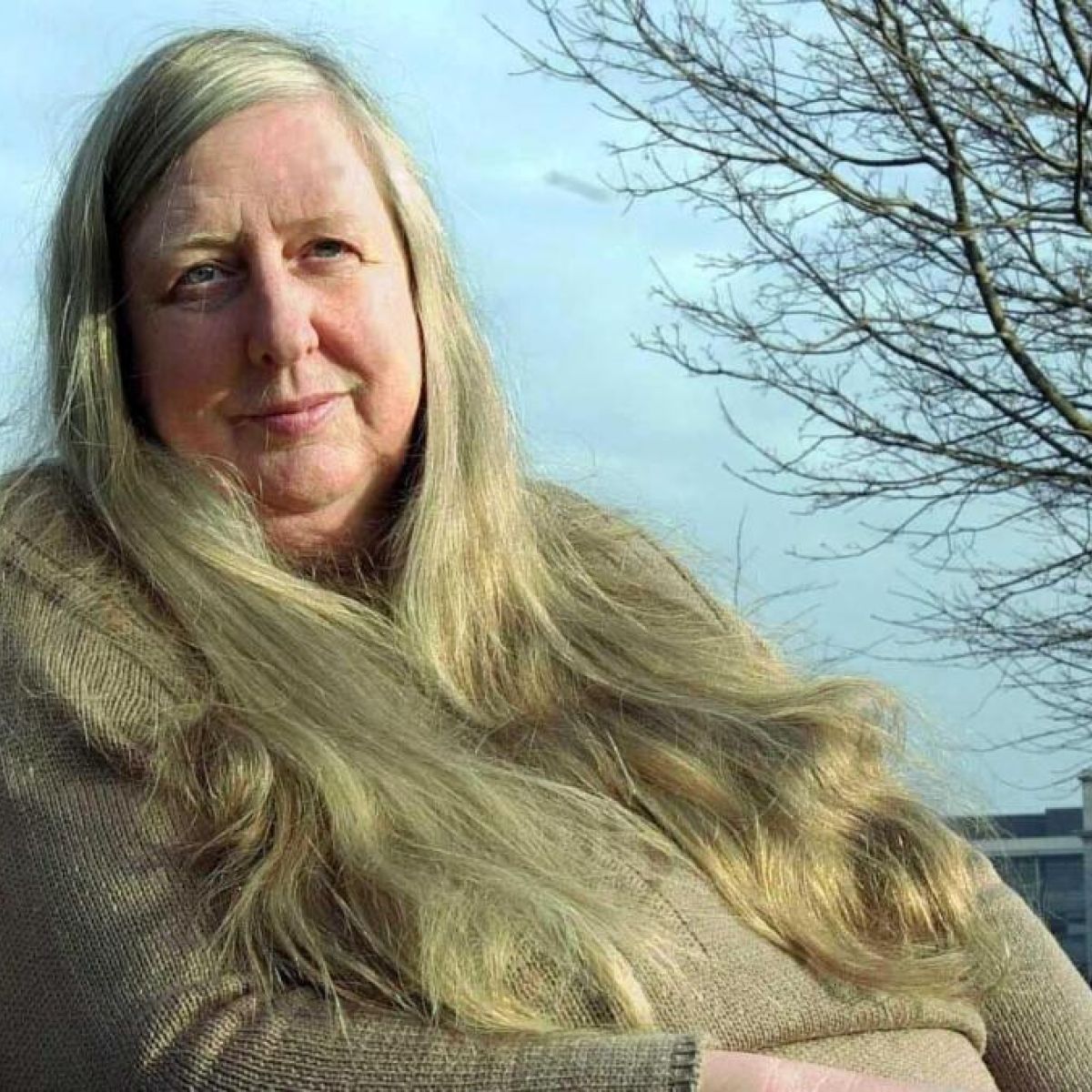

The Cloister of Bones

03-04 Ni Cuilleanain
Eiléan Ní Chuilleanáin
Irish
b. 1942

I begin from the highest point,
Best of all a belltower.

I see the tops of heads, cobbles,
Terraces all scuttling down
As if they hunted something buried
Between ledges where tables are set in the morning,
Under plants that grow over walls and pergolas,
The slopes of sheds, the stashed pruning-shears,
Under the measured walk of cats.

I am searching for a shape, a den, watching
For the cloistering blank of a street wall,
A dark reticence of windows
Banked over an inner court,
Especially rooves, arched and bouncing
Naves; a corseted apse,
And always, even if the chapel sinks
Deep inside, lit from a common well,
I search for hints of doors inside doors,
A built-in waiting about
Of threshold and washed floors,
An avid presence demanding flowers and hush.

If I guess right I hope for
A runner of garden, the right length
For taking a prayerbook for a walk,
A small stitching of cemetery ground,
Strict festivals, an hour for the tremble
Of women’s laughter, corners for mile-high panics:

And to find the meaning of the women’s Christmas.

To an Unknown Poet

03-03 McQueen
Cilla McQueen
Kiwi
b. 1949

I was in the middle
of your poem on the internet
when the electricity went out.

You disappeared and left me
mid-sentence in the darkened room,
whereat I lost the gist

and wandered out to the kitchen to poke the fire.
I cannot tell whether you resolve
the unspoken thing,

or whether it will return to haunt us.
In the sudden darkness
I was leaning towards you

impossibly far, stroking
your temple and whispering
incomprehensible fragments –

Ballad of the Butterfly

02-28 Walsh
María Elena Walsh
Argentine
1930 – 2011

A butterfly once bestowed her passion
Upon a sailor – in her fashion
Flitting about the hotel gate
Waiting, ecstatic, to follow her mate
Upon his white cap to alight
Then onto his white ship,
at dizzying height
She flew to the vessel’s
high-reaching stack
At her first glimpse of ocean
quite taken aback.
On him she lavished all the rapture
Her brief day’s span of life
could capture
Singing: O lovely Sailor!
O Sailor, my love
Our happiness lights
the heavens above
In the afternoon as the sun sank low
From the sailor’s eyes
sad tears did flow
So to distract him from his sorrow
She danced in the air without
thought of the morrow.
From the white masts
she drifted away
As a mighty gust interrupted
her play.
Into the gray sea she fell and drowned
The stalwart sailor heard not a sound
But all unaware a salty tear
Rolled down his cheek,
though he felt no fear,
Marking the end of the love so true
Of the butterfly and the lad in blue.

Good-Bye Rivers, Good-Bye Fountains

We present this work in honor of the poet’s 185th birthday.

02-24 Castro
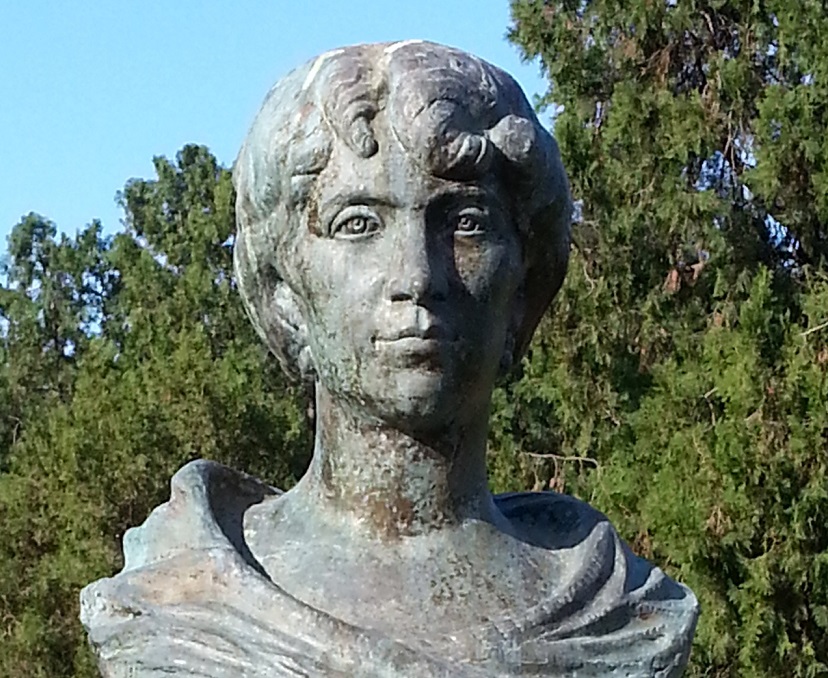
Rosalia de Castro
Spanish
1837 – 1885


Good-bye rivers, good-bye fountains;
Good-bye, little rills;
Good-bye, sight of my eyes:
Don’t know when we’ll see each other again.
Sod of mine, sod of mine,
Sod where I was raised,
Small orchard I love so,
Dear fig trees that I planted,

Meadows, streams, groves,
Stands of pine waved by the wind,
Little chirping birds,
Darling cottage of my joy,

Mill in the chestnut wood,
Clear nights of brilliant moonlight,
Cherished ringing bells
Of the tiny parish church,

Blackberries in the brambles
That I used to give my love,
Narrow footpaths through the cornfields,
Good-bye, for ever good-bye!
Good-bye, heaven! Good-bye, happiness!
I leave the house of my birth,
I leave the hamlet that I know
For a world I haven’t seen!
I leave friends for strangers,
I leave the lowland for the sea,
I leave, in short, what I well love…
Would I didn’t have to go!
But I’m poor and—base sin!—
My sod is not my own
For even the shoulder of the road
Is loaned out to the wayfarer
Who was born star-crossed.
I must therefore leave you,
Small orchard I loved so,
Beloved fireplace of home,
Dear trees that I planted,
Favourite spring of the livestock.
Good-bye, good-bye, I’m leaving,
Hallowed blades of grass in the churchyard
Where my father lies buried,
Saintly blades of grass I kissed so much,
Dear land that brought us up.
Good-bye Virgin of the Assumption
White as a seraph,
I carry you in my heart:
Plead with God on my behalf,
Virgin of the Assumption mine,
Far, very far away hear
The church bells of Pomar;
For hapless me—alas—
They shall never ring again.
Hear them still farther away
Every peal deals out pain,
I part alone without a friend…
Good-bye land of mine, good-bye!
Farewell to you too, little darling…!
Farewell forever perhaps…!
I send you this farewell crying
From the precious coastline.
Don’t forget me, little darling,
If I should die of loneliness…
So many leagues offshore…
My dear house! My home!


Translation by Eduardo Freire Canosa

Proem to the Martyrdom of Cyprian

02-18 Eudocia
Aelia Eudocia
Greek
c. 401


When God in heaven brought light to earth
and the true voice of wondrous men was accomplished,
a life-producing radiance filled the whole world
through the words of (other) prophets, the evangelists.
For all robust men embraced one God,
the Heavenly Father, Lord of all, and his Son,
and in the name of the Holy Spirit were washed with water
from the many sins staining their bodies.


Translation by Brian P. Sowers

Ms. Bourgeois

02-16 Mattei
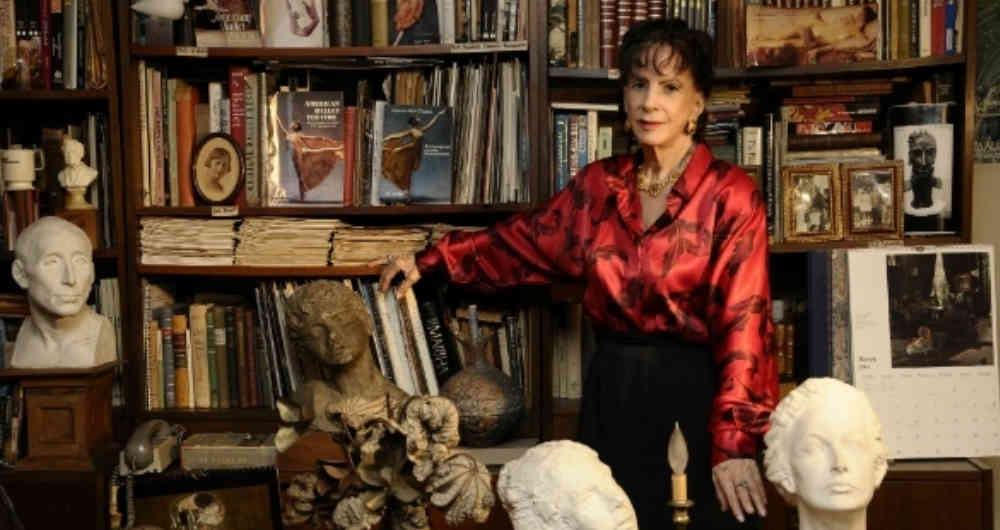
Olga Elena Mattei
Colombian
b. 1933

I am a bourgeois lady
and have a swollen belly.
I try to write my thoughts
despite my sore throat.

I behave the way
some others want.
In common ground, the standard lie.
But,
for human beings
it is despicable to bear
labels which say:
“Dry clean only.”
“Handle with care.”

I have been a prodigious child,
a little brat,
a bad student,
a beauty queen,
a fashion model,
and one of those
that advertise
soups or sundries.

I got myself
into this inevitable mess,
by falling in love,
then sacrificing
a handsome man,
turning him
into a husband,
a sad situation.

(Not to mention
what kind of person
I have become!)

I have committed
an inconvenient
social crime:
adding five children to the crowd.

I have failed
as a mother,
and a wife,
as a lover,
as a reader
of philosophy.

All I can do,
with sad mediocrity,
is to be
a bourgeois wife,
unforgivably inconsequential,
deaf and blind:
a useless kind
of human mind.

And that
is
why
I always
have
a swollen belly,
and sometimes I want to scream
with such anger,
that my own raging words
do irritate my throat.

Then I write poetry
which has the sound
of a bass cord
inside my core.
Because
I know the truth:
that there’s a war, and violence, and crime
each single day,
while I am at the same time
sitting here
with no fear…
For dumb,
so doomed.
For deaf
So damned.

Not knowing what to do
I choose inertia.
I look the other way.
But inside myself, I cry.
Because
I remember
the hunger,
the children in tears
watching us
with open eyes…
far away or near,
the children
as real
as I.

At exactly
the same hour
we the ladies,
the socialites
keep sitting here
blinded,
surrounded
by disposable
happiness.

I do nothing
to see
if we can move the world
against poverty and drugs,
against violence and war!

Instead
there’s this insanity,
staying still,
contented with being
just ass holes.

Bathing

We present this work in honor of the 55th anniversary of the poet’s death.

02-13 Farrokhzad
Forough Farrokhzad
Persian
1935 – 1967


I shed my clothes in the lush air
to bathe naked in the spring water,
but the quiet night seduced me
into telling it my gloomy story.

The water’s cool shimmering waves
moaned and lustily surrounded me,
urged with soft crystal hands
my body and spirit into themselves.

A far breeze hurried in,
poured a lapful of flowers in my hair,
breathed into my mouth Eurasian mint’s
pungent, heart-clinging scent.

Silent and soaring, I closed my eyes,
pressed my body against the soft young rushes,
and like a woman folded into her lover’s arms
gave myself to the flowing waters.

Aroused, parched, and fevered, the water’s lips
rippled trembling kisses on my thighs,
and we suddenly collapsed, intoxicated, gratified,
both sinners, my body and the spring’s soul.


Translation by Sholeh Wolpé

A half-man

02-08 El Saadawi
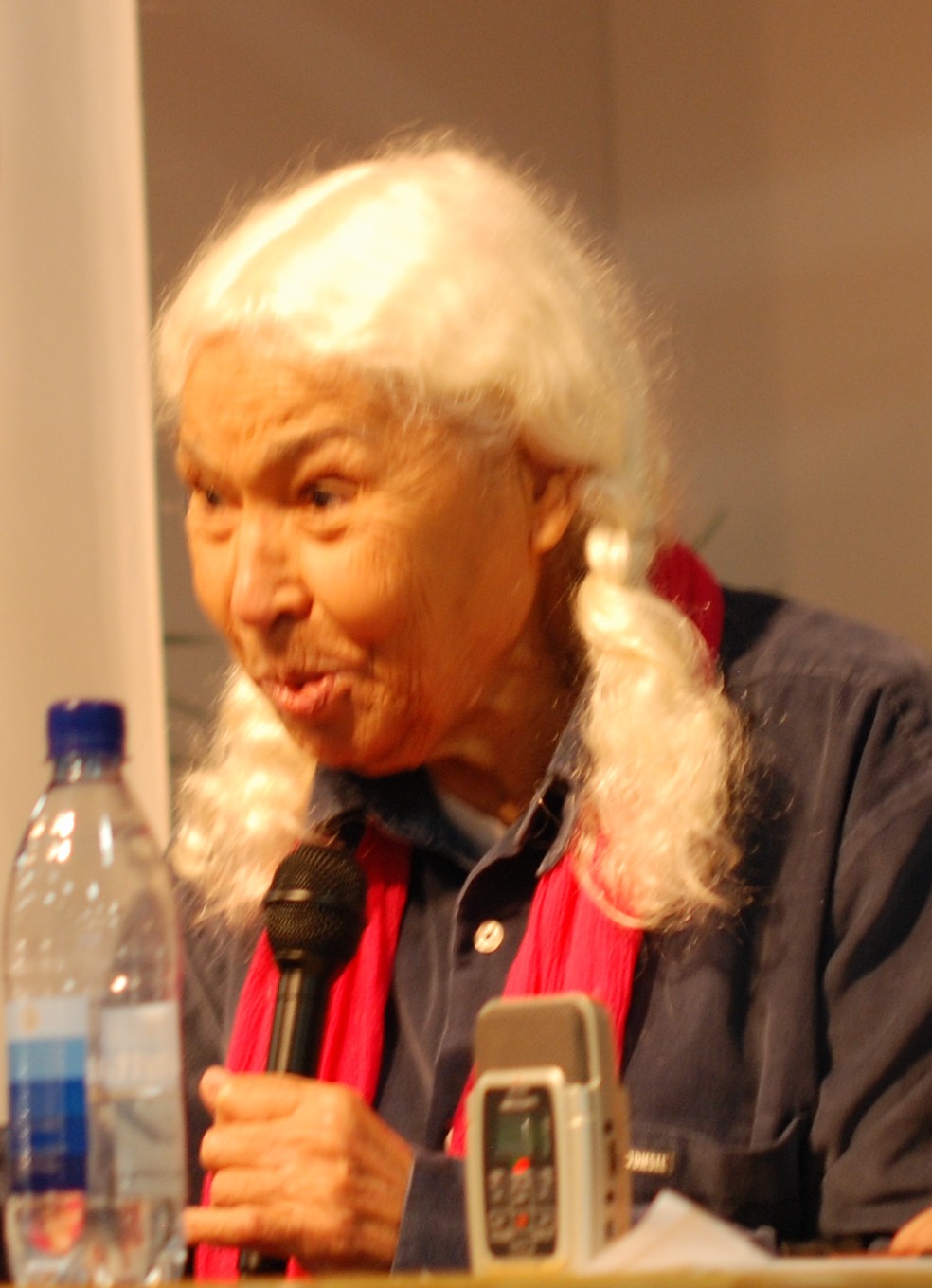
Nawal El Saadawi
Egyptian
b. 1931


My friend is married to a man married also to another.
He divides his life fairly and squarely between them,
One half for my friend and the second half for the other woman.
A married man once came to me and said ‘I love you.’
I asked him what he wanted.
He said a lawful wife in accordance with God’s precepts.
I said being a whole woman I could not accept half a man.
He went livid and accused me of heresy.
Pointing his gun at my head, he said,
‘Death to the woman who does not know God.’
So I pointed my gun at his head saying,
‘Death to the half men.’
So he retracted and went back to his wife.


Translation by Amira Nowaira