We present this work in honor of the Argentine holiday, Dia de la Memoria.
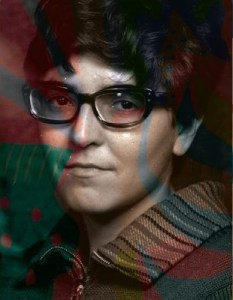
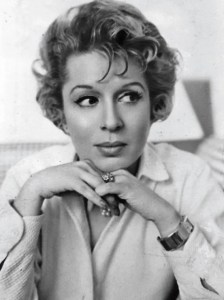
Susana Thénon Argentine 1935 – 1991
i got married
i got married to myself
i said yes
a yes that took years to arrive
years of unspeakable suffering
crying with the rain
locking myself up in my room
because i—the great love of my existence—
was not calling myself up
was not writing to myself
was not visiting myself
and sometimes
when i dared call myself
to say: hello, am i OK?
I would deny myself
i even managed to write my name in a list of bores
i did not really want to join
because they babbled too much
because they’d not leave me alone
because they’d fence me in
because i could not stand them
at the end I did not even pretend
when I needed myself
i intimated to myself
nicely
that i was fed up
and once i stopped calling myself
and stopped calling myself
and so much time went by that I missed myself
so i said
how long has it been since my last call?
ages
must have been ages
and i called myself up and i answered and could not believe it
because even if it seems incredible
i had not healed
i had only shed blood
then i told myself: hello, is it me?
it’s me, i told myself, and added:
such a long time no see
me from myself myself from me
do i want to come home?
yes, i said
and we got together again
peacefully
i felt good together with myself
just like me
i felt good together with myself
and so
from one day to the next
i got married and i got married
and am together
and not even death can separate me
With sadden’d heart and tearful eye the mother went her way,
The Patriarch’s mandate had gone forth, and Hagar must not stay.
Oh! who can tell the emotions deep that pressed on Abra’am’s heart —
As thus, obedient to his God, from Ismael called to part!
But God had spoken, and he knew His word was changeless truth,
He could not doubt His blessing would protect the friendless youth;
He bade him go, nor would he heed the anguish of his soul;
He turned aside, — a father’s woe in silence to control.
Now hand in hand they wend their way, o’er hills and vale and wild;
The mother’s heart was full of grief, but smiled in glee her child:
Fearless and free, he felt restraint would never gall him now —
And hail’d with joy the fresh’ning breeze that fann’d his fair young brow.
His mother’s heart was desolate, and tears swell’d in her eye;
Scarce to his artless words of love her quiv’ring lips reply.
She only saw the future as a lone and dreary wild:
The present stood before the lad in joyance undefil’d.
She knew, alas! his boyish strength too soon would droop and fade;
And who was, in that lonely scene, to give them food and aid?
With trembling gaze she oft would mark the flushing of his cheek,
And list in terror, lest he should ‘gin falteringly to speak!
Fatigue she felt not for herself, nor heeded care nor pain —
But nearer, nearer to her breast her boy at times she’d strain;
Beersheba’s wilderness they see before them dark and wide;
Oh, who across its scorching sand their wandering steps will guide?
The flush departed from the cheek which she so oft has kiss’d;
To his glad tones of childish glee no longer may she list;
A pallor as of death is spread o’er those sweet features now —
She sees him droop before the blast that fann’d his aching brow.
“Oh, mother lay me down,” he cried, “I know not what I feel,
But something cold and rushing seems thro’ all my limbs to steal —
Oh kiss me, mother dear, and then ah, lay me down to sleep —
Nay, do not look upon me thus — kiss me and do not weep!”
Scarce could her feeble arms support her child, and lay him where
Some clustering shrubs might shield him from the heavy scorching air;
His drooping eyelids closed; his breath came painfully and slow —
She bent her head on his a while in wild yet speechless woe.
Then from his side she hurried, as impelled she knew not why,
Save that she could not linger there — she could not see him die —
She lifted up her voice and wept — and o’er the lonely wild
“Let me not see his death!” was borne, “my Ismael, my child!”
And silence came upon her then, her stricken soul to calm;
And suddenly and strange there fell a soft and soothing balm —
And then a voice came stealing, on the still and fragrant air —
A still small voice that would be heard, tho’ solitude was there.
“What aileth thee, oh Hagar?” thus it spoke: fear not, for God hath heard
The lad’s voice where he is, — and thou, trust in thy Maker’s word!
Awake! arise! lift up the lad and hold him in thine hand —
I will of him a nation make, before Me, he shall stand.”
It ceased, that voice; and silence now, as strangely soft and still,
The boundless desert once again with eloquence would fill —
And strength returned to Hagar’s frame, for God hath oped her eyes —
And lo! amid the arid sands a well of water lies!
Quick to her boy, with beating heart, the anxious mother flies,
And to his lips, and hands, and brow, the cooling draught applies —
He wakes! he breathes! the flush of life is mantling on his cheek —
He smiles! he speaks! oh those quick tears his mother’s joy shall speak!
She held him to her throbbing breast, she gazed upon his face —
The beaming features, one by one, in silent love to trace
She bade him kneel to bless the Hand that saved him in the wild —
But oh! few words her lips could speak, save these — “My child, my child!”
Don’t throw out the loaves
with the dishes mother,
its not the double-takes so much
its that they take you by the double.
And where have all the Nelly’s gone
and all the missus Kelly’s gone
you might have had the cleanest step on your street
but so what mother,
nowadays it not the step but the mile that matters.
Meanwhile the Bally Bane Taliban
are battling it out over that football
that will bring the local yokels
to a deeper meaning of over the barring it,
and then some scarring will occur
as in cracked skull for your troubles.
They don’t just integrate, they limp-pa-grate,
your sons are shrinking mother.
Before this they were gods of that powerful thing
gods of the apron string.
They could eat a horse and they often did,
with your help mother.
Even Tim who has a black belt in sleep walking
and border lining couldn’t torch a cigarette
much less the wet-hay-stack of desire ,
even he can see, Ireland is changing mother.
Listen to black belt Tim mother.
When they breeze onto the pitch like some Namibian Gods
the local girls wet themselves.
They say in a hurry, o-ma-god, o-ma-god!
Not good for your sons mother
who claim to have invented everything
from the earwig to the slíothar.
They were used to seizing Cynthia’s hips
looking into her eyes and saying
I’m Johnny come lately, love me.
Now the Namibian gods and the Bally Bane Taliban
are bringing the local yokels
to their menacing senses
and scoring more goals than Cú Chúllainn.
Ireland is changing mother
tell yourself, tell your sons.
A distinctive knock
on my door.
I pay no attention.
I’m surrounded
by permanent visitors.
They lie on the table,
the floor,
jostling each other
for room,
sprawling shamelessly
resting their bent spines
and broken backs.
The knock gets louder.
I expect no one.
The tiny harbor
circles its bay
like a slack, half-opened mouth
where the only sounds
are the cicada’s drone
and the endless rehearsals
of the sea.
Even the mailman
is under house arrest.
Peevishly, I open the door.
No one’s there.
Only down the street
two white-sheeted nereids
I won’t tell you about truth,
because the word’s going to die
and others
will need it.
You came bearing the word
and I was sensitive to it.
I said:
give me a little of it…
I was weak
and I took the word from your shoulder.
You see:
it’s so heavy
that I, too, double over.
I want to say the word
over your grave,
but a flower already blooms there.
Between the final truth
and immortality
stands the poet
whose word was murdered by gunfire.
They killed your word
and covered you with earth,
but it doesn’t matter,
you’ll sing in the seeds.
The usurers will see their bellies swell bigger than gourds
In size and exposed to Ahmada.
They will rise on the Last Day as if possessed of the Devil
The Qur’an told their fate, Ahmada.
The stink of the adulterer is worse than the stench of carrion:
He will be driven away, so that he is far from Ahmada.
The slanderer, the hypocrite
And he who gives false witness will not see Ahmada.
With their tongues hanging down to their chests, they will be exposed
For they will not get salvation from Ahmada.
Why have I become detached from the
mysterious and eternal current that I was
cast into, to forever be enslaved
by this tenacious and independent frame?
Why did I become a living being
that carries blood made of lava
and a dark anguish excavated from
knowing that my audacity is powerless?
Thinking of my matter
considering myself absurd and numb,
masqueraded by solitude and by misery,
ludicrous creature of disregard,
a worthless mask from a pointless carnival
and an echo that doesn’t proceed sound!




 Poets Corner