Back then the masts on the houses were
like the masts of Columbus’ ships,
and every raven that stood on their tips,
heralded a different continent.
The knapsacks of travelers walked the streets
and the language of a foreign country
pierced the heatwave
like the blade of a cold knife.
How can the air of this small city
lift up so many
childhood memories, cast off loves,
rooms emptied out somewhere?
Like pictures blackening inside a camera
they turned—pure winter nights,
rainy summer nights across the sea,
and the grey mornings of the cities.
But footsteps beat behind your back,
the marching tune of a foreign army.
And it seems—if you just turn your head, in the sea
your city’s church is sailing.
One. I’m going to stop lying. I’m going to stop
smoking. I’m going to stop being afraid of the dark.
Two. I’m never going to make mistakes again just
because it’s nighttime or it’s cold or there’s a
melancholy cloud over my head.
Three. I have to stop wasting time. When I get
home I’m going to start writing. I’m not going to
answer the phone or eat the leftovers from my
fridge or read all those books waiting on my
bedside table like skyscrapers.
Four. I’m thirty tomorrow. Instead of having a party
I’m going to get in the bath and read my old diaries.
How old are you when youth ends?
Five. I can’t hear my heart under the water. I could
die now and I’d never know. If I die I want to be
cremated and my ashes scattered in the sea or the
river or flushed down the toilet. I’d rather be dead
under water than dead under ground.
Six. I have to learn to breathe better. I’d like the air
to leave me without my realizing, as if I were a
mermaid at the bottom of a bathtub.
You gave birth to me. I bore wings.
The blood of the dead was kept
in the trough.
It was Entroido, Carnival. I believed in the open sincerity of accordions.
There’s snow, so much snow in the fields and in the language I speak,
inside the political stomach of cows.
2
You gave birth to me striking softly
in the difficult percussion of my body.
The theatrical walls of the wellsprings burst
in the crystal of night.
I took flight.
3
You had four children, and forty years.
You gave birth in the kitchen of a dirt-floored house.
My blood was a knot in your domed belly.
4
You danced, and brought in the harvest.
I had whooping cough and
was expiring in your arms.
5
“I’ve two godmothers. Two meadows. Two pasts. Two trains. I’m two women, two sisters, two neighbour ladies, two wee boats.”
6
“There at that baptism, in 1972, was my godmother Marisol who wanted to name me for a tiny Virgin revered in that dark, chilly, lovely church. Also there /present and absent / were my godmother Virtudes and godfather Antonio. They lived in Germany, in the emigration of flowers. Virtudes’s eyes are wide-open blue camellias. Antonio was a decent and elegant man from Hermida. Though he’s dead, he keeps giving me gifts.”
Night is memory . . .
7
Mother camouflaged. Nest for birds.
Cuddle. Linguistic embraces.
I went hunting for birds.
8
I love you, with my mute fingers.
With butterflies of air I make you tatted lace.
With the blind power of my sad eyes
I rehearse a work of theatre for you.
With my love I make you
a forest.
I learn to listen to clouds, to work earth and to read heaven, in your lap.
9
“You gave birth to me, and your man looked on in silence, bursting with happiness and trees. I brought electric shadows.”
10
You screamed,
ate sops,
sipped Sanson fortified wine.
11
From your body mine was born,
as if you were sharing
the mystery of magpies.
12
You had no dreams
because village women don’t dream.
The economic backwardness of Galicia
was a form of artistic avant-garde.
The socks
the pants
the water in the iron basin reflect her hair
it lie there
engrossed by the stare
of our mamma
our mamma
our story teller
our dear
The sun shines on her voice
with rays of pleasantries
with strokes of plenitude
an air of delight
as she speaks with so much power
so much power and so much might
Our eyes survey her presence
and she asks that we not despair
this is about life
about the lives that was
and those to come
and those to regain
for pleasure and not shame
of lives and land
to reclaim and rename
of experiences unknown
untold but bold
but behold
mamma talks
tells the story
and so it unfolds:
We hear mamma talk about the shore
the tip of Africa — our home — our life
about the white man’s dreams
and oh, so galore
she tells their desires
of the young Black girls they admire
of the girls who they ask to parade
not in the sunlight
but in their shade
where they lie and compete
for fresh Black women’s meat
and so they explore
on every possible shore
forever and ever
for Black women for their dela
for their tings dat hang like grapes
for der tings dat hold dem men tings tight
for der dela brings delight
delight and pleasure
to the white man’s liesure
Der story is not finished
we are told dat there is more
we know all about der shore
about der rules and der law
about der women who lived before
about der times when we were more
Mamma tells about der times
when the rivers ran and ran
when they covered all the land
when der women washed in der shore
when they were grabbed and spoke no more
We want to cry
but mamma says “No”
there’s no tears for what happened
no tears for all der years
no time to reminisce
if we are only going to miss
the objective of the lesson
of the lesson and the story
of our pain and future glory
of the glory still to come
if we stand and fight as one
and build our hearts and hopes
and dream about the land that’s ours
and keep our dela safe ashore
in our bloomers
shut behind our door
Our dela
our heritage
and still our fight
our knowledge
our history
our right
our land
our culture
in their hands tight
The plan is clear as daylight
our legs apart
our hearts crossed
our fists clenched
our mouths sealed
pressed hard against our will
our dela pinched closed
our teeth chattering to our spirits
our spirits racing to the future
racing for the day
when our dela can be ours
and only ours
to have and to hold
to savour and to fold
We clasp our hands together
and jpin mamma loud in song
it’s a pray and a story
a story and a song
a story overdue
overdue
so long
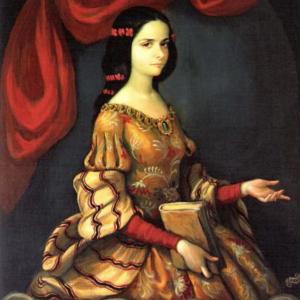
We present this work in honor of the 325th anniversary of the poet’s death.
Sor Juana Inés de la Cruz Mexican 1651 – 1695
This that you see, the false presentment planned
With finest art and all the colored shows
And reasonings of shade, doth but disclose
The poor deceits by earthly senses fanned!
Here where in constant flattery expand
Excuses for the stains that old age knows,
Pretexts against the years’ advancing snows,
The footprints of old seasons to withstand;
‘Tis but vain artifice of scheming minds;
‘Tis but a flower fading on the winds;
‘Tis but a useless protest against Fate;
‘Tis but stupidity without a thought,
A lifeless shadow, if we meditate;
‘Tis death, tis dust, tis shadow, yea, ‘tis nought.
My father used to say,
“Superior people never make long visits,
have to be shown Longfellow’s grave
nor the glass flowers at Harvard.
Self reliant like the cat—
that takes its prey to privacy,
the mouse’s limp tail hanging like a shoelace from its mouth—
they sometimes enjoy solitude,
and can be robbed of speech
by speech which has delighted them.
The deepest feeling always shows itself in silence;
not in silence, but restraint.”
Nor was he insincere in saying, “`Make my house your inn’.”
Inns are not residences.
We present this work in honor of the Qingming Festival.
Liu Rushi Chinese 1618 – 1664
he is gone
gone but dreams of him persistently come
memories of our times mostly wordless
now secretly regretting our vast distance
only in dreams returns my happiness
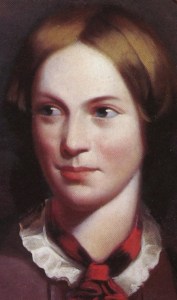
We present this work in honor of the 165th anniversary of the poet’s death.
Charlotte Brontë English 1816 – 1855
The human heart has hidden treasures,
In secret kept, in silence sealed;¬
The thoughts, the hopes, the dreams, the pleasures,
Whose charms were broken if revealed.
And days may pass in gay confusion,
And nights in rosy riot fly,
While, lost in Fame’s or Wealth’s illusion,
The memory of the Past may die.
But, there are hours of lonely musing,
Such as in evening silence come,
When, soft as birds their pinions closing,
The heart’s best feelings gather home.
Then in our souls there seems to languish
A tender grief that is not woe;
And thoughts that once wrung groans of anguish,
Now cause but some mild tears to flow.
And feelings, once as strong as passions,
Float softly back ¬a faded dream;
Our own sharp griefs and wild sensations,
The tale of others’ sufferings seem.
Oh ! when the heart is freshly bleeding,
How longs it for that time to be,
When, through the mist of years receding,
Its woes but live in reverie!
And it can dwell on moonlight glimmer,
On evening shade and loneliness;
And, while the sky grows dim and dimmer,
Feel no untold and strange distress¬
Only a deeper impulse given
By lonely hour and darkened room,
To solemn thoughts that soar to heaven,
Seeking a life and world to come.



 Poets Corner