
Japanese
1929 – 2011
scattering seeds
on the earth
ripening fruits
piling up fallen leaves
these are also events
on the sky
scattering seeds
on the earth
ripening fruits
piling up fallen leaves
these are also events
on the sky
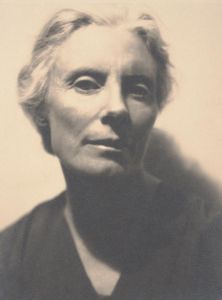
Blow high, blow low,
O wind from the West;
You come from the country
I love the best.
O say have the lilies
Yet lifted their heads
Above the lake-water
That ripples and spreads?
Do the little sedges
Still shake with delight,
And whisper together
All through the night?
Have the mountains the purple
I used to love,
And peace about them,
Around and above?

Ah, Grief, I should not treat you
like a homeless dog
who comes to the back door
for a crust, for a meatless bone.
I should trust you.
I should coax you
into the house and give you
your own corner,
a worn mat to lie on,
your own water dish.
You think I don’t know you’ve been living
under my porch.
You long for your real place to be readied
before winter comes. You need
your name,
your collar and tag. You need
the right to warn off intruders,
to consider
my house your own
and me your person
and yourself
my own dog.
We present this work in honor of the 125th anniversary of the poet’s death.
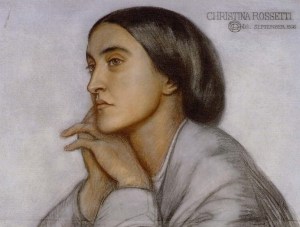
I tell my secret? No indeed, not I:
Perhaps some day, who knows?
But not today; it froze, and blows, and snows,
And you’re too curious: fie!
You want to hear it? well:
Only, my secret’s mine, and I won’t tell.
Or, after all, perhaps there’s none:
Suppose there is no secret after all,
But only just my fun.
Today’s a nipping day, a biting day;
In which one wants a shawl,
A veil, a cloak, and other wraps:
I cannot ope to everyone who taps,
And let the draughts come whistling thro’ my hall;
Come bounding and surrounding me,
Come buffeting, astounding me,
Nipping and clipping thro’ my wraps and all.
I wear my mask for warmth: who ever shows
His nose to Russian snows
To be pecked at by every wind that blows?
You would not peck? I thank you for good will,
Believe, but leave the truth untested still.
Spring’s an expansive time: yet I don’t trust
March with its peck of dust,
Nor April with its rainbow-crowned brief showers,
Nor even May, whose flowers
One frost may wither thro’ the sunless hours.
Perhaps some languid summer day,
When drowsy birds sing less and less,
And golden fruit is ripening to excess,
If there’s not too much sun nor too much cloud,
And the warm wind is neither still nor loud,
Perhaps my secret I may say,
Or you may guess.
In honor of the Emperor’s Birthday, we present this work by one of modern Japan’s finest poets.

Splendor of an evening sky,
Who can ever fathom its timeless mystery?
Million eyes, when sparkling bright
In the sable sky,
Touch my heart, my lonely heart with serenity.
More than all the countless sands
Ganges river holds
Are the infinite Buddhas who fill this universe,
Ever watchful over us, Throughout day and night.
Hearing this, my lonely heart,
Fills with lasting peace.
We present this work in honor of the 55th anniversary of the poet’s death.
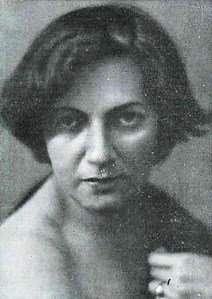
A man of iron!
Iron the flesh of his invincible chest.
Iron his biceps and triceps, his arm raised in triumphant sign.
His hands of iron and his belly.
And his thighs potent columns of iron, and his calves,
brave pedestals sustaining that formidible Titan,
with his foot nailed to the earth, with clawed fingers he seizes
the roots of the tree from the Biblical Adam.
Iron his eyes.
Iron his teeth.
Iron his brain, his lungs and heart,
his kidneys, spleen, and sex.
Inside and out a man completely made of iron.
Strength!
The greatest strength that time has launched
is his incarnation.
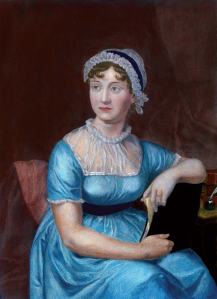
Love, they say, is like a rose;
I’m sure ‘tis like the wind that blows,
For not a human creature knows
How it comes or where it goes.
It is the cause of many woes:
It swells the eyes and reds the nose,
And very often changes those
Who once were friends to bitter foes.
But let us now the scene transpose
And think no more of tears and throes.
Why may we not as well suppose
A smiling face the urchin shows?
And when with joy the bosom glows,
And when the heart has full repose,
‘Tis mutual love the gift bestows.

Shirtsleeved afternoons
turn toward leather as the trees
blush, scatter a last
few bright, weary wisps across
the great bruised heart of the South.
The spirit cup drifts
down the pond’s moon-sparked highway.
Far laughter, shadows.
Love or poison? Your turn. Drink
to the star-drenched latitudes
In honor of the Day of the Virgin of Guadalupe, we present this work by one of Mexico’s premier colonial poets.

You foolish men who lay
the guilt on women,
not seeing you’re the cause
of the very thing you blame;
if you invite their disdain
with measureless desire
why wish they well behave
if you incite to ill.
You fight their stubbornness,
then, weightily,
you say it was their lightness
when it was your guile.
In all your crazy shows
you act just like a child
who plays the bogeyman
of which he’s then afraid.
With foolish arrogance
you hope to find a Thais
in her you court, but a Lucretia
when you’ve possessed her.
What kind of mind is odder
than his who mists
a mirror and then complains
that it’s not clear.
Their favour and disdain
you hold in equal state,
if they mistreat, you complain,
you mock if they treat you well.
No woman wins esteem of you:
the most modest is ungrateful
if she refuses to admit you;
yet if she does, she’s loose.
You always are so foolish
your censure is unfair;
one you blame for cruelty
the other for being easy.
What must be her temper
who offends when she’s
ungrateful and wearies
when compliant?
But with the anger and the grief
that your pleasure tells
good luck to her who doesn’t love you
and you go on and complain.
Your lover’s moans give wings
to women’s liberty:
and having made them bad,
you want to find them good.
Who has embraced
the greater blame in passion?
She who, solicited, falls,
or he who, fallen, pleads?
Who is more to blame,
though either should do wrong?
She who sins for pay
or he who pays to sin?
Why be outraged at the guilt
that is of your own doing?
Have them as you make them
or make them what you will.
Leave off your wooing
and then, with greater cause,
you can blame the passion
of her who comes to court?
Patent is your arrogance
that fights with many weapons
since in promise and insistence
you join world, flesh and devil.
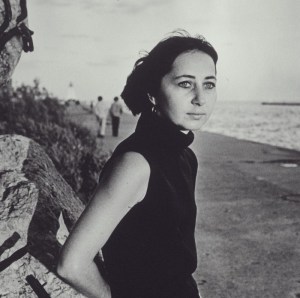
This land like a mirror turns you inward
And you become a forest in a furtive lake;
The dark pines of your mind reach downward,
You dream in the green of your time,
Your memory is a row of sinking pines.
Explorer, you tell yourself, this is not what you came for
Although it is good here, and green;
You had meant to move with a kind of largeness,
You had planned a heavy grace, an anguished dream.
But the dark pines of your mind dip deeper
And you are sinking, sinking, sleeper
In an elementary world;
There is something down there and you want it told.
 Poets Corner